
Acta Chimica Slovaca
metrics 2024
Exploring the Frontiers of Chemistry Together
Introduction
Acta Chimica Slovaca is a prominent peer-reviewed journal dedicated to advancing the field of chemistry, focusing on high-quality research and innovative studies across various chemical disciplines. Published by SCIENDO, this journal aims to provide a platform for researchers, professionals, and students to disseminate their findings, share insights, and foster collaboration in the vibrant scientific community. With an ISSN of 1337-978X and an E-ISSN of 1339-3065, Acta Chimica Slovaca is recognized for its commitment to the integrity and rigor of research publication. Although specific metrics such as H-index and impact factor were not provided, the journal's alignment with international standards and open access principles emphasizes its goal of maximizing the visibility and accessibility of chemical research. Articles published in this journal cover a broad scope, facilitating comprehensive discussions on theoretical, experimental, and applied aspects of chemistry, thus playing a crucial role in the ongoing education and development of the next generation of chemists.
Metrics 2024
 -0.900.90-
Metrics History
Rank 2024
IF (Web Of Science)
JCI (Web Of Science)
Quartile History
Similar Journals

Molbank
Exploring the Frontiers of Biochemistry and BeyondMolbank is an open-access journal published by MDPI, dedicated to the fields of Biochemistry, Organic Chemistry, and Physical and Theoretical Chemistry. Established in 2002, this journal has served as a vital platform for the dissemination of research findings, where researchers and professionals share original articles focusing on molecular chemistry, synthesis, and related studies. With a commitment to open access, Molbank enables global access to scientific knowledge, fostering collaboration and innovation among scientists. While currently categorized in the fourth quartile for its field rankings, it provides a unique opportunity for emerging scholars to contribute to and engage with the scientific community. The journal is based in Switzerland, operating from its office at ST ALBAN-ANLAGE 66, CH-4052 BASEL, SWITZERLAND, and continues to attract submissions until 2024. Researchers, students, and professionals looking to expand their knowledge and participate in the dialogue of current molecular chemistry can benefit significantly from engaging with the content published in Molbank.
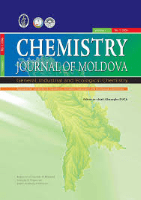
Chemistry Journal of Moldova
Connecting Ideas: Where Chemistry Meets Practical SolutionsChemistry Journal of Moldova is a pioneering open-access journal dedicated to fostering the dissemination of significant research in the diverse fields of chemistry, including Environmental Chemistry, Process Chemistry and Technology, and more. Published by the esteemed Academia Sciences Moldova, Institute of Chemistry, this journal has been at the forefront of scientific inquiry since its establishment in 2006. With an ISSN of 1857-1727 and a digital presence through its E-ISSN of 2345-1688, it provides an accessible platform for researchers, students, and professionals to share and engage with cutting-edge findings. Although currently ranked in the Q4 quartile in several chemistry categories, the journal is committed to improving its impact within the academic community and aims to highlight emerging trends and technologies in the chemistry domain. The journal's office is located at 3 Academiei Str, Chisinau MD-2028, Moldova. As it converges its publication years from 2016 to 2024, the Chemistry Journal of Moldova invites all contributors and readers to explore its rich repository of research that bridges innovative ideas to practical applications.

Revista Virtual de Quimica
Bridging Disciplines with Cutting-edge Chemistry InsightsRevista Virtual de Quimica, published by the SOC BRASILEIRA QUIMICA, is a dynamic online journal based in Brazil, dedicated to promoting innovative research in the field of chemistry and related disciplines. Established in 2011, the journal has made significant strides in contributing to the academic landscape, receiving an impact factor that highlights its relevance, although it currently holds a Q4 quartile ranking in the miscellaneous category of Chemistry and Mathematics as of 2023. The journal is committed to open access, ensuring that scholarly articles are readily available to researchers, professionals, and students worldwide. Its focus encompasses diverse areas within general chemistry, aiming to foster knowledge sharing and collaboration among the scientific community. By providing a platform for high-quality research publications, Revista Virtual de Quimica stands as an essential resource for advancing chemical sciences and encouraging interdisciplinary studies.
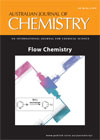
AUSTRALIAN JOURNAL OF CHEMISTRY
Advancing chemical knowledge, one article at a time.The Australian Journal of Chemistry, with an ISSN of 0004-9425 and an E-ISSN of 1445-0038, is a distinguished publication from CSIRO PUBLISHING, dedicated to advancing the field of chemistry since its inception in 1948. Based in Australia, this journal serves as a platform for original research articles, reviews, and innovative studies that encompass a wide spectrum of chemical disciplines, aiming to foster communication and collaboration among researchers globally. Despite its Q3 ranking in the Chemistry (Miscellaneous) category and standing at rank #236 in Scopus’ general chemistry classification, it remains an essential resource for professionals and students seeking to stay informed about emerging trends and discoveries in chemistry. The journal does not offer open access, emphasizing the premium quality of peer-reviewed content that adheres to rigorous academic standards. By bridging theory and practice, the Australian Journal of Chemistry continues to play a crucial role in shaping the future of chemical sciences.

Studia Universitatis Babes-Bolyai Chemia
Advancing the Dialogue in ChemistryStudia Universitatis Babes-Bolyai Chemia, published by UNIV BABES-BOLYAI in Romania, serves as a pivotal platform for the dissemination of innovative research in the field of chemistry. With an ISSN of 1224-7154, this journal has been actively publishing since 2009 and aims to foster scientific collaboration and knowledge sharing among researchers, professionals, and students alike. Although currently categorized in Q4 of the Chemistry (miscellaneous) field, the journal provides an essential venue for emerging studies that contribute to the diverse landscape of chemical research. With its commitment to accessibility and scholarly discourse, Studia Universitatis Babes-Bolyai Chemia remains an important resource for those seeking to stay abreast of the latest developments and trends in general chemistry, holding a Scopus rank within the lower quartiles. Researchers and practitioners are encouraged to engage with its content to enrich their own work and to aid in the advancement of the scientific community.
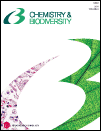
CHEMISTRY & BIODIVERSITY
Illuminating the Chemistry Behind Biological Complexity.CHEMISTRY & BIODIVERSITY is a prominent peer-reviewed journal published by Wiley-V C H Verlag GmbH, serving as a vital resource in the intersecting fields of biochemistry, bioengineering, and miscellaneous chemistry. With an ISSN of 1612-1872 and an E-ISSN of 1612-1880, this journal has established itself over its converged years from 2004 to 2024 as a platform for innovative research that contributes significantly to the understanding of chemical processes in biological systems. The journal's impact is reflected in its category quartiles, particularly notable in Q2 in Chemistry and various Q3 and Q4 rankings across multiple related disciplines. While it is not an open-access publication, it continues to attract a diverse readership, including researchers, academics, and students, who are keen to explore the complexities of chemistry's role in biodiversity. Through high-quality articles and comprehensive reviews, CHEMISTRY & BIODIVERSITY plays an essential role in fostering advances in molecular biology and biochemistry, positioning itself as a key contributor to the ongoing discourse in the life sciences.
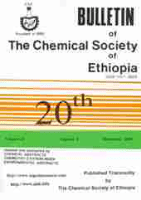
BULLETIN OF THE CHEMICAL SOCIETY OF ETHIOPIA
Empowering Global Research in Ethiopian ChemistryBULLETIN OF THE CHEMICAL SOCIETY OF ETHIOPIA (ISSN: 1011-3924; E-ISSN: 1726-801X), published by the Chemical Society of Ethiopia, serves as a pivotal platform for the dissemination of innovative research and developments within the field of chemistry. Since its inception in 1996 and now an open access journal since 2012, it has provided researchers, academics, and students with unrestricted access to critical studies and findings, thus fostering collaboration and the advancement of knowledge in the discipline. The journal's current standing in the Q3 quartile in the 2023 Chemistry category underlines its commitment to maintaining high academic standards, while its Scopus ranking, positioned at #250 out of 408 in general chemistry, showcases its growing influence and contribution to the scientific community. Hailing from Ethiopia and targeted toward a global readership, the journal aims to highlight local and international research, engaging scholars and practitioners alike in discussions that propel the science of chemistry forward.

JOURNAL OF THE CHEMICAL SOCIETY OF PAKISTAN
Connecting Local Insights with Global Impact.JOURNAL OF THE CHEMICAL SOCIETY OF PAKISTAN is a premier academic journal published by the Chemical Society of Pakistan, focusing on advancing the field of chemistry through rigorous research and scholarship. Established in 1996, this journal aims to disseminate high-quality research articles, reviews, and insights pertaining to various subfields of chemistry, making substantial contributions to both local and international scientific communities. With a current impact factor placing it in the Q4 category, the journal continues to foster discussions on emerging trends and innovations within the discipline. Additionally, it holds a Scopus rank of #305 out of 408, highlighting its growing influence despite being positioned in the 25th percentile. Although it is not an open-access journal, it provides a crucial platform for researchers and professionals in Pakistan and worldwide. The JOURNAL OF THE CHEMICAL SOCIETY OF PAKISTAN serves as a valuable resource for students, educators, and industry professionals alike, facilitating the exchange of knowledge and promoting advancements in chemical sciences.

Macroheterocycles
Bridging Theory and Practice in MacroheterocyclesMacroheterocycles is a premier academic journal dedicated to the exploration and advancement of Analytical Chemistry and Organic Chemistry, published by the esteemed Ivanovo State University of Chemical Technology. Since its inception in 2008, this open-access journal has focused on providing a platform for innovative research and breakthrough discoveries in the field of heterocyclic compounds. With its current ranking in the Q3 quartile for Analytical Chemistry and Q4 quartile for Organic Chemistry, Macroheterocycles is rapidly establishing itself as a valuable resource for scientists, researchers, and students seeking to enrich their understanding of complex chemical structures and analytical techniques. Its comprehensive publication model ensures that the latest findings are accessible to a global audience, fostering collaboration and discourse in the scientific community. With ongoing contributions aimed at addressing contemporary challenges in chemistry, this journal is poised to make significant impacts in the field while encouraging the dissemination of knowledge within and beyond Russia.
RUSSIAN CHEMICAL BULLETIN
Unveiling the Future of Chemistry, One Bulletin at a Time.RUSSIAN CHEMICAL BULLETIN, published by SPRINGER, serves as a pivotal resource in the field of general chemistry, covering a wide array of topics that impact both theoretical and applied chemistry. With an ISSN of 1066-5285 and a presence since 1993, this journal provides a platform for disseminating significant research findings, practical applications, and novel methodologies within the broader chemistry community. While it currently holds a Q3 ranking in the Chemistry (miscellaneous) category and occupies the 230th position out of 408 in the Scopus rankings, its reputation continues to grow, fostering collaboration and innovation among researchers and professionals alike. Although the journal does not offer an open-access model, it is committed to making findings accessible within the academic community, ensuring that valuable insights can inform future research. With an anticipated convergence of studies extending to 2024, the RUSSIAN CHEMICAL BULLETIN remains an essential reference for those dedicated to advancing chemical science.