AGING & MENTAL HEALTH
Scope & Guideline
Advancing Knowledge in Geriatric Psychology
Introduction
Aims and Scopes
- Mental Health and Aging:
The journal investigates the mental health challenges faced by older adults, including depression, anxiety, and cognitive decline, and how these issues impact overall well-being. - Cultural and Social Factors:
Research is focused on how cultural backgrounds and social contexts influence mental health outcomes and caregiving practices among older adults. - Resilience and Coping Strategies:
The journal emphasizes studies on resilience, coping mechanisms, and the psychological resources that help older adults manage stress and adversity. - Interventions and Support Mechanisms:
It publishes research on non-pharmacological interventions, community support programs, and therapeutic approaches designed to improve mental health in older populations. - Impact of Technology and Digital Inclusion:
The journal explores the role of technology in enhancing mental health outcomes, particularly in terms of digital health interventions and social media use among older adults. - Family and Caregiver Dynamics:
Research on the dynamics between older adults, their caregivers, and family support systems is a crucial area of focus, examining how these relationships affect mental health.
Trending and Emerging
- Impact of COVID-19 on Mental Health:
Research focusing on the mental health implications of the COVID-19 pandemic for older adults has surged, highlighting issues such as loneliness, anxiety, and coping strategies during lockdowns. - Intersectionality in Aging:
There is a rising interest in intersectional studies that explore how various social identities (e.g., race, gender, sexual orientation) interact to influence mental health outcomes in older adults. - Digital Health and Telehealth Interventions:
The use of technology and telehealth solutions to support mental health in older populations is increasingly prominent, driven by the necessity introduced by the pandemic. - Community-Based Support Systems:
Research on community engagement and support systems for older adults is gaining traction, focusing on the role of social networks and community resources in promoting mental well-being. - Resilience and Positive Psychology:
An emerging focus on resilience, positive psychology, and strengths-based approaches is evident, emphasizing the potential for older adults to thrive despite challenges. - Cultural Competence in Caregiving:
Studies addressing cultural competence in caregiving practices are on the rise, reflecting the need for culturally sensitive approaches to mental health care for diverse populations.
Declining or Waning
- Pharmacological Treatments:
There appears to be a waning emphasis on pharmacological interventions for mental health issues in older adults, as the focus shifts towards non-pharmacological solutions and holistic approaches. - Generalized Studies on Aging:
Broad studies that do not specifically target mental health aspects of aging have become less prevalent as the journal increasingly prioritizes targeted research that directly addresses mental health challenges. - Traditional Psychotherapeutic Approaches:
There has been a decline in studies solely focused on traditional psychotherapeutic approaches, with a growing interest in innovative, integrative, and community-based interventions.
Similar Journals
Journal of Aging Research
Elevating geriatric research to new heights.The Journal of Aging Research, an esteemed publication under the auspices of HINDAWI LTD, has been a cornerstone for the dissemination of research in the field of aging since its inception in 2010. With an impact factor reflective of its significance in the discipline, this journal is categorized in the 3rd quartile (Q3) for Geriatrics and Gerontology, and ranks 43rd out of 116 in its field according to Scopus rankings, positioning it in the 63rd percentile for quality research. The journal operates with a fully Open Access model, ensuring that all published articles are freely available to researchers, practitioners, and the broader public, expanding the reach and impact of scholarly work. Set to converge from 2010 to 2024, the journal is dedicated to advancing the understanding of the aging process through rigorous research, comprehensive reviews, and innovative insights, making it an invaluable resource for anyone involved in the study or practice of geriatric health care and related disciplines.
GERONTOLOGIST
Empowering Professionals in Geriatric CareThe GERONTOLOGIST, published by Oxford University Press Inc, is a premier journal in the field of geriatrics and gerontology, with a distinguished history since its inception in 1961. This esteemed journal stands out with its impressive Q1 rankings in prominent categories, including Geriatrics and Gerontology, reflecting its vital role in disseminating innovative research and advancing knowledge within these critical disciplines. With an impact factor that ranks it among the top journals in both Nursing Gerontology and Medicine, the GERONTOLOGIST serves as a key resource for researchers, professionals, and students dedicated to enhancing the health and well-being of older adults. Although it operates under a traditional access model, the journal remains committed to publishing cutting-edge studies that address the complexities of aging and inform evidence-based practices. By fostering a rich dialogue among scholars and practitioners, the GERONTOLOGIST is instrumental in shaping the future of gerontological research and policy.
INTERNATIONAL JOURNAL OF GERIATRIC PSYCHIATRY
Exploring the vital link between aging and mental well-being.International Journal of Geriatric Psychiatry, published by Wiley, stands as a premier journal dedicated to advancing the field of mental health in older adults. With an impressive impact factor reflective of its Q1 categorization in both Geriatrics and Gerontology, as well as Psychiatry and Mental Health, this journal addresses the critical intersection of aging and mental health, providing a platform for impactful research from 1986 through 2024. Researchers and professionals will find the journal invaluable, as it offers comprehensive insights into a range of subjects pertinent to geriatric mental health, with its ranking in Scopus highlighting its academic rigor and relevance (Rank #147/567 in Psychiatry and Mental Health; Rank #37/116 in Geriatrics and Gerontology). Though it operates on a traditional subscription model, the journal's significant contributions to the understanding of psychiatric disorders in the elderly make it a key resource for anyone involved in geriatric care and research.
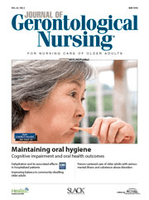
Journal of Gerontological Nursing
Pioneering Research for Aging PopulationsThe Journal of Gerontological Nursing, published by SLACK INC, is a leading peer-reviewed journal dedicated to advancing the field of gerontological nursing through innovative research, clinical practice, and educational advancements. Since its inception in 1975, this journal has become a crucial resource for researchers, healthcare professionals, and students interested in the care and management of older adults. With an impact factor that reflects its significance within the disciplines of gerontology and nursing (Category Quartiles: Q3 in Gerontology and Q3 in Nursing), it serves as a platform for disseminating vital findings, best practices, and evidence-based approaches aimed at improving the quality of life for the aging population. While the journal maintains a print-only format, its content is invaluable for those looking to stay ahead in the rapidly evolving landscape of gerontological care. As it continues to publish until 2024, the Journal of Gerontological Nursing invites contributions that foster dialogue and innovation within this essential area of healthcare.

Canadian Geriatrics Journal
Leading the way in geriatric scholarship and practice.Canadian Geriatrics Journal, published by MULTIMED INC, is a prominent platform dedicated to advancing the field of geriatrics and gerontology. With its esteemed status as a Q2 journal in both Geriatrics and Gerontology categories for 2023, it ranks favorably within the academic community, holding a 73rd percentile in Nursing Gerontology and a 59th percentile in Medicine Geriatrics and Gerontology according to Scopus metrics. Since its inception in 2011, the journal has aimed to foster innovation and disseminate pivotal research that addresses the complexities of aging populations. Researchers, healthcare professionals, and students interested in the intricacies of geriatric care will find a wealth of open-access resources that contribute significantly to enhancing practice and care methodologies in Canada and beyond. With its address located at 66 Martin St, Toronto, ON L9T 2R2, Canada, the journal stands as a vital resource for stakeholders in the geriatric field.
PSYCHOLOGY AND AGING
Exploring the psychological dimensions of aging.Psychology and Aging, published by the American Psychological Association, is a premier journal dedicated to advancing the field of psychology as it relates to aging. ISSN 0882-7974 and E-ISSN 1939-1498, this esteemed journal has been a key resource since its inception in 1986 and continues to shape the discourse surrounding aging-related psychological phenomena. The journal boasts impressive rankings in various academic categories, placing in Q2 for Aging, Q1 for Geriatrics and Gerontology, and Q1 for Social Psychology in 2023, highlighting its significance in multiple disciplines. With Scopus rankings that position it within the top tier of psychology and medical journals, Psychology and Aging serves as a vital forum for researchers, professionals, and students alike, facilitating the exchange of rigorous empirical research and novel theoretical insights. This journal is instrumental in elucidating the complexities of psychological function across the lifespan, ultimately contributing to improved interventions and policies affecting older adults.
JOURNAL OF AGING AND HEALTH
Innovating research for a healthier aging population.The JOURNAL OF AGING AND HEALTH, published by SAGE PUBLICATIONS INC, is a preeminent peer-reviewed journal dedicated to advancing research in the field of gerontology and related disciplines. With an impressive impact factor and ranked Q1 across multiple categories including Community and Home Care, Geriatrics and Gerontology, and Health (Social Science), this journal has established itself as a vital resource for academics, clinicians, and policymakers alike. Spanning over three decades of publication from 1989 to 2024, it serves as a platform for innovative research and multifaceted discussions on aging, health, and the interplay of social factors influencing the elderly population. The journal's rigorous standards for publication ensure high-quality contributions that are impactful and relevant, making it an essential read for those dedicated to improving the health and quality of life for older adults. Although it is not an open-access journal, it provides comprehensive insights that are critical to understanding the complexities of aging in today's society.
Geriatrics
Exploring innovative solutions in geriatric care.Geriatrics is a leading academic journal committed to advancing the understanding and research within the expansive field of gerontology and geriatric medicine. Published by MDPI since 2016 and featuring an Open Access model, this journal aims to disseminate high-quality research that addresses the challenges and opportunities associated with aging populations. Based in Switzerland, Geriatrics has rapidly gained recognition, achieving notable rankings in various categories such as Q2 in Gerontology and Q3 in both Aging and Geriatrics and Gerontology, making its contributions significant within the scholarly community. The journal welcomes original articles, reviews, and case studies, focusing not only on clinical aspects but also on social science perspectives related to health. Researchers and professionals in the field will find this journal a vital resource for the latest insights and trends that are crucial to improving elderly care and enhancing quality of life for aging individuals globally. With its commitment to open access, Geriatrics ensures that crucial research findings are readily available to all stakeholders, thus promoting informed dialogue and collaboration across disciplines.
Clinical Gerontologist
Bridging disciplines to enhance the lives of older adults.The Clinical Gerontologist is a premier journal published by Routledge Journals, Taylor & Francis Ltd, that focuses on the interdisciplinary field of gerontology and clinical psychology. With its rich history dating back to 1982 and extending until 2024, this journal serves as a vital resource for researchers, practitioners, and students interested in the complex dynamics of aging and the psychological aspects of care for older adults. Boasting a commendable impact factor and ranking in the top quartiles across multiple categories—including Social Sciences, Geriatrics, and Clinical Psychology—the Clinical Gerontologist demonstrates its commitment to advancing knowledge and best practices within this critical area. Its rigorous peer-reviewed articles address emerging trends, evidence-based practices, and policy implications, making it essential reading for anyone involved in geriatric care and research. While not an open-access journal, it provides access to its diverse range of scholarly articles and research findings, ensuring that critical information reaches those dedicated to enhancing the well-being of the older population.
EDUCATIONAL GERONTOLOGY
Pioneering research for a wiser, more educated aging population.EDUCATIONAL GERONTOLOGY, published by Taylor & Francis Inc, is a leading academic journal dedicated to the study of education and aging. With an ISSN of 0360-1277 and an E-ISSN of 1521-0472, this journal has been an essential resource since its inception in 1976, continuing to provide invaluable insights until 2024. As an authoritative platform in the fields of Education and Gerontology, it ranks in the Q2 category for Education and Q3 in Geriatrics and Gerontology, reflecting its significant contribution to these domains. The journal is well-regarded for its rigorous peer-reviewed articles that explore innovative educational practices for older adults and address the challenges faced by this demographic. Researchers, professionals, and students alike can benefit from the multidisciplinary approaches and comprehensive research findings presented within its pages, making it a vital tool for advancing knowledge and practice in educational gerontology.