
Journal of Gerontology and Geriatrics
Scope & Guideline
Fostering Insights into the Aging Experience
Introduction
Aims and Scopes
- Aging and Health:
The journal explores various aspects of health in older adults, including chronic diseases, mental health issues, and overall wellness. It aims to provide insights into effective health interventions and management strategies. - Geriatric Medicine and Care Models:
Research on innovative care models for geriatric patients, including comprehensive geriatric assessments and integrated care approaches, is a core focus, particularly in improving outcomes for frail and complex patients. - Social and Psychological Aspects of Aging:
This area covers the social dynamics, psychological well-being, and cognitive health of older adults, addressing issues such as resilience, social integration, and mental health disorders. - Nutrition and Oral Health in the Elderly:
The journal emphasizes the importance of nutrition, oral health, and their impacts on overall health and functional capabilities in older adults, reflecting the interconnectedness of these domains. - Exercise and Rehabilitation:
Research related to physical activity, rehabilitation strategies, and their effects on functional autonomy and quality of life in older adults is a significant part of the journal's scope.
Trending and Emerging
- Impact of COVID-19 on Older Adults:
Research focusing on the effects of the COVID-19 pandemic on older populations has surged, exploring mental health, healthcare access, and social isolation, emphasizing the need for tailored interventions. - Technology in Geriatric Care:
There is an increasing trend towards the exploration of technological solutions, such as telehealth and digital health interventions, to enhance the quality of care for older adults. - Multidisciplinary Approaches to Aging:
A growing emphasis on multidisciplinary and integrated care approaches reflects an understanding of the complex needs of older adults, promoting collaboration across various healthcare fields. - Sarcopenia and Physical Function:
Research on sarcopenia, muscle health, and its implications for aging has gained prominence, addressing the importance of maintaining physical function as a key aspect of healthy aging. - Mental Health and Cognitive Decline:
The relationship between mental health issues, cognitive decline, and dementia is increasingly being explored, highlighting the critical need for comprehensive mental health strategies in geriatric care.
Declining or Waning
- Pharmacological Interventions:
While still relevant, the focus on traditional pharmacological treatments for geriatric conditions appears to have waned, with a shift towards non-pharmacological interventions and holistic care models. - Isolated Case Reports:
There has been a noticeable decrease in the publication of isolated case reports, indicating a potential shift towards larger studies and systematic reviews that provide broader insights into geriatric care. - Specific Disease Focus in Diabetes:
Research specifically targeting diabetes management in older adults has declined, suggesting a trend toward more integrative approaches that encompass multiple chronic conditions rather than focusing solely on diabetes. - Age Discrimination Studies:
Although still a critical issue, studies specifically addressing age discrimination in healthcare settings have become less frequent, perhaps overshadowed by broader discussions of health equity and access. - Traditional Models of Geriatric Assessment:
There is a reduced emphasis on traditional models of geriatric assessment, with newer frameworks and interdisciplinary approaches gaining traction.
Similar Journals
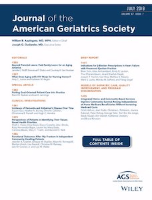
JOURNAL OF THE AMERICAN GERIATRICS SOCIETY
Fostering Collaboration in Geriatric Health InnovationsJOURNAL OF THE AMERICAN GERIATRICS SOCIETY, published by Wiley, stands as a leading resource in the field of geriatrics and gerontology. Established in 1953 and converging into a comprehensive academic platform through 2024, this esteemed journal is recognized for its high impact, holding a Q1 ranking in its category for 2023. It serves as a vital conduit for innovative research, clinical practices, and policy discussions aimed at improving the health and well-being of older adults. With a commitment to advancing geriatric medicine, the journal contributes significantly to the ongoing dialogue among researchers, healthcare professionals, and students dedicated to this rapidly evolving field. Although currently not offering open access options, the journal remains invaluable for those seeking to access pivotal studies and reviews that shape the future of geriatrics.

Aging Medicine and Healthcare
Innovating Insights in Geriatric MedicineAging Medicine and Healthcare is a leading Open Access journal dedicated to advancing the understanding of geriatric health and the complexities of aging. Published by the Asia Pacific League Clinical Gerontology & Geriatrics, this innovative journal began its journey in 2019 and has since established itself as an important resource for healthcare professionals, researchers, and students interested in the fields of geriatrics and gerontology. With an impact factor that reflects its growing significance (ranked in the 21st percentile within its category), the journal aims to disseminate high-quality research and practical insights that can inform clinical practice and enhance patient care for aging populations. As an Open Access publication, it ensures that research findings are freely accessible, fostering collaboration and knowledge sharing among academics and practitioners globally. The journal is poised to be a vital platform for innovative studies, systematic reviews, and case reports that illuminate the challenges and opportunities in aging medicine.
Geriatrics
Empowering research to enhance the quality of life for the elderly.Geriatrics is a leading academic journal committed to advancing the understanding and research within the expansive field of gerontology and geriatric medicine. Published by MDPI since 2016 and featuring an Open Access model, this journal aims to disseminate high-quality research that addresses the challenges and opportunities associated with aging populations. Based in Switzerland, Geriatrics has rapidly gained recognition, achieving notable rankings in various categories such as Q2 in Gerontology and Q3 in both Aging and Geriatrics and Gerontology, making its contributions significant within the scholarly community. The journal welcomes original articles, reviews, and case studies, focusing not only on clinical aspects but also on social science perspectives related to health. Researchers and professionals in the field will find this journal a vital resource for the latest insights and trends that are crucial to improving elderly care and enhancing quality of life for aging individuals globally. With its commitment to open access, Geriatrics ensures that crucial research findings are readily available to all stakeholders, thus promoting informed dialogue and collaboration across disciplines.

Turkish Journal of Geriatrics-Turk Geriatri Dergisi
Transforming the landscape of aging research.The Turkish Journal of Geriatrics (Türk Geriatri Dergisi), with ISSN 1304-2947 and E-ISSN 1307-9948, is a distinguished scholarly publication dedicated to the field of geriatrics and gerontology, proudly published by the Turkish Geriatrics Society. Established to foster knowledge and research in the aging population, this journal plays a crucial role in disseminating significant findings and advancements in the medical care of elderly individuals. Since its inception in 1998, the journal has committed to high-quality, peer-reviewed articles that explore diverse aspects of geriatric medicine, contributing vital insights to practitioners and researchers alike. Although it currently holds a Q4 ranking in the category of Geriatrics and Gerontology, the Turkish Journal of Geriatrics is on an upward trajectory, making it an essential resource for those specializing in the care of older adults. Researchers and professionals are encouraged to explore its rich archive and benefit from the open-access publishing model, promoting broader access to impactful research. For those invested in the well-being of the elderly, the Turkish Journal of Geriatrics serves not only as a platform for scholarly communication but also as a catalyst for innovation in geriatric care.

Salmand-Iranian Journal of Ageing
Empowering research on the journey of ageing.Salmand-Iranian Journal of Ageing is a pioneering open-access publication dedicated to advancing the knowledge and understanding of ageing and geriatric health. Launched in 2006 by NEGAH INST SCIENTIFIC COMMUNICATION, this journal serves as a vital resource for researchers, professionals, and students within the fields of Geriatrics and Gerontology. Published in Iran, it aims to provide a platform for disseminating innovative research and clinical findings pertaining to ageing, with a commitment to accessibility and scholarly excellence. The journal holds recognition in its category with a Q4 designation in Aging and a Q3 classification in Geriatrics and Gerontology (2023), indicating its growing influence in academic circles. Despite a current H-index designation of '-', the journal's impact within its scope continues to develop. As it converges research efforts from 2018 to 2024, it seeks to address the pressing challenges faced by the ageing population. With no cost barriers for readers, the Salmand-Iranian Journal of Ageing remains an essential tool for fostering dialogue and collaboration in the quest for improved senior health outcomes.
Journal of Nutrition Health & Aging
Advancing the science of aging through nutrition.Welcome to the Journal of Nutrition Health & Aging, a prestigious publication dedicated to advancing knowledge in the critical fields of nutrition, gerontology, and geriatrics. Published by Elsevier Science Inc, this journal boasts an impressive impact factor and is recognized in the top quartile (Q1) of multiple categories including Geriatrics and Gerontology, Medicine (miscellaneous), and Nutrition and Dietetics. Since its inception in 1997, it has served as a vital platform for researchers, practitioners, and students alike to disseminate innovative research and practical applications relevant to aging populations. With a Scopus rank placing it in the top 15% of its field, it underscores its commitment to high-quality and impactful scholarship. Although it is not an open access journal, its significant reach ensures that valuable insights will continue to inform best practices and policy decisions in health and nutrition. We invite you to explore and contribute to this vital conversation surrounding health and well-being in older adults.
International Journal of Gerontology
Navigating the challenges of aging with cutting-edge research.International Journal of Gerontology is a distinguished peer-reviewed journal dedicated to advancing the field of gerontology and addressing the multifaceted challenges associated with aging. Published by the Taiwan Society of Geriatric Emergency & Critical Care Medicine, this innovative journal has been an open-access platform since 2018, ensuring that vital research is accessible to a global audience. With an ISSN of 1873-9598, it serves as a crucial resource for researchers and practitioners focused on the biological, psychological, and social aspects of aging. The journal is indexed in Scopus with a rank of #103/116 in the Medicine category (Geriatrics and Gerontology) as of 2023, placing it in the Q4 quartile—a testament to its evolving impact in the field. Spanning works published from 2007 to 2024, the International Journal of Gerontology facilitates the dissemination of critical research findings and clinical practices that inform and enhance geriatric care and research methodologies.
Canadian Geriatrics Journal
Leading the way in geriatric scholarship and practice.Canadian Geriatrics Journal, published by MULTIMED INC, is a prominent platform dedicated to advancing the field of geriatrics and gerontology. With its esteemed status as a Q2 journal in both Geriatrics and Gerontology categories for 2023, it ranks favorably within the academic community, holding a 73rd percentile in Nursing Gerontology and a 59th percentile in Medicine Geriatrics and Gerontology according to Scopus metrics. Since its inception in 2011, the journal has aimed to foster innovation and disseminate pivotal research that addresses the complexities of aging populations. Researchers, healthcare professionals, and students interested in the intricacies of geriatric care will find a wealth of open-access resources that contribute significantly to enhancing practice and care methodologies in Canada and beyond. With its address located at 66 Martin St, Toronto, ON L9T 2R2, Canada, the journal stands as a vital resource for stakeholders in the geriatric field.
ARCHIVES OF GERONTOLOGY AND GERIATRICS
Pioneering research for the evolving landscape of aging.The Archives of Gerontology and Geriatrics, published by Elsevier Ireland Ltd, is a leading journal in the fields of Aging and Geriatrics and Gerontology. With an ISSN of 0167-4943 and an E-ISSN of 1872-6976, it has established itself as a crucial platform for disseminating high-quality research focused on the biological and psychosocial aspects of aging. The journal holds an impressive Q2 ranking in both Aging and Geriatrics and Gerontology, and a Q1 ranking in Gerontology and Health (Social Science) as of 2023, reflecting its significant impact in these disciplines. Additionally, the journal is ranked #33/371 in Social Sciences (Health) and #5/39 in Nursing (Gerontology) according to Scopus, showcasing its esteemed position in the academic community. Although currently not open access, the journal offers a wealth of research articles from 1982 to the upcoming 2025 that are vital for stakeholders including researchers, healthcare professionals, and students aiming to advance their understanding of aging processes and policies. Titles published within its pages contribute to shaping agendas in public health and gerontological practice, making it an essential resource for those involved in the study of the elderly population.
Geriatric Nursing
Elevating the standard of care for older adults through scholarly excellence.Geriatric Nursing is a premier peer-reviewed journal dedicated to advancing the field of gerontology and nursing care for older adults. Published by MOSBY-ELSEVIER, this esteemed journal holds a significant place in the academic community with its Q2 ranking in both Gerontology and Medicine (miscellaneous) as of 2023, reflecting its importance and influence in the study and practice of healthcare for the elderly. With a comprehensive coverage extending from 1980 to 2024, Geriatric Nursing addresses the latest research, clinical practices, and policies impacting geriatric care, making it an essential resource for researchers, practitioners, and students alike. Although it does not provide open access options, its rigorous content garners attention with a Scopus Rank of #14 out of 39 in Nursing and Gerontology, placing it in the 65th percentile for its field. For those dedicated to improving the health and wellbeing of older populations, Geriatric Nursing remains a critical platform for innovation and knowledge dissemination.