
ANNALI DELL ISTITUTO SUPERIORE DI SANITA
Scope & Guideline
Empowering knowledge in medicine and public health.
Introduction
Aims and Scopes
- Public Health Research:
The journal publishes studies that investigate various aspects of public health, including disease prevention, health promotion, and health behavior, with a strong emphasis on the Italian context. - Epidemiological Studies:
It features epidemiological research that explores disease patterns, risk factors, and health outcomes in different populations, contributing to the understanding of health trends and informing public health strategies. - Health Policy and Management:
The journal addresses issues related to health policy, management practices, and healthcare systems, analyzing the effectiveness of interventions and policies in improving health services. - Clinical and Translational Research:
Research focusing on translating clinical findings into public health practice is a core area, highlighting the importance of integrating scientific evidence into health policy and practice. - Environmental Health:
The journal also covers studies related to environmental factors affecting health, such as pollution and chemical exposures, underscoring the interplay between the environment and public health.
Trending and Emerging
- Impact of COVID-19:
A significant number of recent publications focus on the effects of COVID-19, including its long-term health impacts, mental health consequences, and healthcare system responses, highlighting the pandemic's ongoing relevance. - Mental Health and Well-being:
There is an increasing emphasis on mental health topics, particularly in relation to perinatal mental health, the psychological impact of the COVID-19 pandemic, and mental health support strategies, indicating a growing recognition of mental health as a critical component of public health. - Health Disparities and Social Determinants:
Recent studies are increasingly addressing health disparities, focusing on socio-economic factors affecting health outcomes, particularly among vulnerable populations, which underscores a shift towards more equitable health research. - Digital Health and Technology:
The incorporation of digital health technologies and artificial intelligence in healthcare practices is emerging as a significant theme, as researchers explore innovative solutions to enhance healthcare delivery and patient outcomes. - Sustainability and Environmental Health:
Research related to environmental health and sustainability is gaining traction, reflecting a growing awareness of the impact of environmental factors on public health and the need for sustainable practices.
Declining or Waning
- Traditional Epidemiological Approaches:
There is a noticeable decrease in studies relying solely on traditional epidemiological methods, as the journal increasingly embraces interdisciplinary approaches that incorporate social, behavioral, and environmental factors. - Focus on Infectious Diseases:
Research centered on infectious diseases, particularly pre-pandemic topics, seems to be waning, likely due to the shift in focus towards long-term health effects and chronic conditions arising from the COVID-19 pandemic. - Single-Disease Studies:
The journal is moving away from studies that focus on single diseases without considering broader public health implications, favoring research that addresses multifactorial health issues and systemic approaches.
Similar Journals

Revista de Salud Publica-Cordoba
Championing open access to vital health research for all.Revista de Salud Publica-Cordoba is a distinguished open-access journal published by the Universidad Nacional de Córdoba, Escuela de Salud Pública. Since its inception in 2005, this journal has actively contributed to the field of public health, providing a platform for researchers, professionals, and students to share and disseminate valuable insights and advancements in health-related studies. With its ISSN 1853-1180 and E-ISSN 1852-9429, the journal emphasizes the accessibility of research findings to a global audience, thereby fostering innovation and collaboration within the public health community. The journal aims to address pressing public health issues through rigorous research and interdisciplinary approaches, making it a crucial resource for those committed to improving global health outcomes. Researchers, professionals, and students are encouraged to engage with this vital publication to stay informed on contemporary public health challenges and solutions.
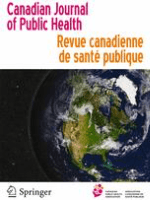
CANADIAN JOURNAL OF PUBLIC HEALTH-REVUE CANADIENNE DE SANTE PUBLIQUE
Fostering innovation in health systems worldwide.The Canadian Journal of Public Health - Revue Canadienne de Santé Publique, published by Springer International Publishing AG, stands as a pivotal platform for scholarly discourse in the fields of public health and environmental health. With its esteemed position in the Q1 category for both Medicine (miscellaneous) and Public Health, the journal boasts an impressive Scopus ranking that places it within the 80th percentile, reflecting its contribution to advancing knowledge and best practices in public health since its inception in 1945. Situated in Switzerland, this journal serves a global audience of researchers, professionals, and students dedicated to improving public health outcomes. Although it offers traditional access options, its rigorous peer-review process ensures that high-quality research remains at the forefront of its publications. Whether addressing emerging health issues or environmental challenges, the journal plays a vital role in shaping the conversation and policies that influence health systems worldwide.

Clinical Epidemiology and Global Health
Innovating research to transform global health landscapes.Clinical Epidemiology and Global Health, published by Elsevier - Division Reed Elsevier India Pvt Ltd, is a leading open-access journal dedicated to the dissemination of research in the crucial fields of epidemiology and global health. With an ISSN of 2452-0918 and an E-ISSN of 2213-3984, this journal has been a platform for innovative studies since its inception in 2013, converging into a comprehensive resource through 2024. Operating from the Netherlands and ensuring accessibility from anywhere in the world since its transition to an open-access model in 2021, it fosters the global exchange of knowledge. The journal's impact is reflected in its current quartile rankings, including Q2 in Public Health, Environmental and Occupational Health and Q3 in Epidemiology, Infectious Diseases, and Microbiology. With a growing reputation bolstered by SCOPUS rankings that place it in the top percentiles, Clinical Epidemiology and Global Health stands as an essential resource for researchers, professionals, and students dedicated to advancing public health and epidemiological research.
Indian Journal of Community Medicine
Empowering Public Health Solutions for Diverse CommunitiesIndian Journal of Community Medicine, with its ISSN 0970-0218 and E-ISSN 1998-3581, operates under the esteemed Wolters Kluwer Medknow Publications. This peer-reviewed, open access journal, established in 2005, has been at the forefront of disseminating research in the fields of public health, community medicine, and environmental health, forging connections among researchers, practitioners, and policymakers in India and beyond. With a notable impact factor and a Q3 ranking in Public Health, Environmental and Occupational Health for 2023, this journal maintains a commitment to improving community health through empirical research, policy analysis, and best practice sharing. The journal is pivotal not only in addressing prevalent health issues but also in fostering innovative solutions tailored to the unique challenges faced by diverse communities. With publication convergence from 2009 to 2024, the Indian Journal of Community Medicine continues to serve as a vital resource for academics, professionals, and students looking to contribute to and engage with the evolving landscape of community health research.

Environmental Epidemiology
Advancing knowledge at the intersection of environment and health.Environmental Epidemiology is a leading open-access journal published by Lippincott Williams & Wilkins, dedicated to advancing the field of environmental and public health research. Since its establishment in 2017, this journal has emerged as a vital platform for scholars and practitioners interested in the intricate relationships between environmental factors and health outcomes. With an impressive impact factor reflecting its rigorous peer-review process and a robust Scopus ranking—notably holding Q1 positions in categories such as Health, Toxicology and Mutagenesis, and Public Health—this journal is essential for those seeking to explore the latest findings and methodological advances in environmental epidemiology. Open access since 2018, it ensures wide dissemination of research findings, promoting accessibility and engagement among a global audience of researchers, policymakers, and students. As it continues to converge through 2024, Environmental Epidemiology remains committed to publishing high-quality articles that address pressing environmental health challenges, fostering interdisciplinary collaboration and knowledge sharing that is crucial for developing effective public health interventions.

Central European Journal of Public Health
Advancing Knowledge for Effective Health InterventionsThe Central European Journal of Public Health, ISSN 1210-7778 and E-ISSN 1803-1048, is a vital academic forum published by the NATIONAL INSTITUTE OF PUBLIC HEALTH, Czech Republic. With its comprehensive coverage of contemporary issues in public health and medicine since its inception in 1993, this journal aims to bridge the gap between research and practice, fostering a deeper understanding of health dynamics within Central Europe and beyond. As a Q3 ranked journal in both the fields of Medicine (miscellaneous) and Public Health, Environmental and Occupational Health as per 2023 metrics, it provides an accessible platform for innovative studies, policy analyses, and reviews that contribute to the global discourse on public health challenges. Though primarily based in the Czech Republic, it welcomes contributions from a worldwide audience, enhancing its scope and impact. Researchers, practitioners, and students will find invaluable insights that not only enrich academic scholarship but also inform effective public health interventions.
PAEDIATRIC AND PERINATAL EPIDEMIOLOGY
Advancing the Frontiers of Child Health ResearchPAEDIATRIC AND PERINATAL EPIDEMIOLOGY is a premier journal in the field of epidemiology, published by WILEY. Established in 1987, it provides an invaluable forum for researchers, professionals, and students interested in the intersections of pediatric health and perinatal epidemiology. With its strong reputation, the journal holds a distinguished Q2 ranking in Epidemiology and a Q1 ranking in Pediatrics, Perinatology, and Child Health as of 2023, indicating its influential role in advancing knowledge and practice. The journal is indexed in Scopus, boasting impressive rankings, including Rank #52 out of 330 in Pediatrics, with an 84th percentile standing, demonstrating its significant impact in the field. Although not an Open Access journal, PAEDIATRIC AND PERINATAL EPIDEMIOLOGY equips its readers with high-quality research aimed at improving child and maternal health outcomes, making it a vital resource for anyone committed to advancing public health in these critical areas.
Revista Espanola de Salud Publica
Innovating Public Health Solutions Through Quality ResearchRevista Española de Salud Pública, published by the Ministerio de Sanidad y Consumo, is a vital open-access journal dedicated to the field of public health. Since its inception in 1991, the journal has served as a platform for disseminating high-quality research and insights that address critical health issues in Spain and beyond. With an ISSN of 1135-5727 and an E-ISSN of 2173-9110, the journal covers a wide array of topics across medicine, public health, and environmental health, reflecting its significant contributions to the field as evidenced by its ranking in the Q3 quartile for both Medicine and Public Health categories in 2023. Researchers and practitioners benefit from the journal's comprehensive perspectives and findings, which span from 1995 to 2024, ensuring a rich repository of knowledge. Based in Madrid, Spain, this journal plays a crucial role in fostering collaboration among health professionals and researchers, making it an indispensable resource for those committed to improving public health outcomes.
Archives of Public Health
Exploring critical insights in public and environmental health.Archives of Public Health, published by BMC, is an esteemed open-access journal dedicated to advancing knowledge in the fields of public health, environmental health, and occupational health. With an ISSN of 0778-7367 and an E-ISSN of 2049-3258, this journal has maintained a prestigious position in its category, achieving a Q1 ranking in the latest 2023 metrics. Operating since 1996, and fully open access since 2011, it strives to disseminate pioneering research, innovative public health strategies, and critical reviews that benefit both academia and practice. The journal holds a notable Scopus rank of #192 out of 665, situating it in the 71st percentile within the medicine category. Based in the United Kingdom, its mission is to provide a platform for researchers, practitioners, and students to share and discuss groundbreaking findings that influence policy and practice in public health globally. As a vital resource for professionals dedicated to health improvement, the Archives of Public Health serves as an essential touchstone for contemporary public health discourse.

Iranian Journal of Public Health
Advancing public health research for a healthier tomorrow.Iranian Journal of Public Health is a premier publication dedicated to advancing the field of public health research. Established in 2001 and published by the Iranian Scientific Society Medical Entomology, this Open Access journal provides an invaluable platform for disseminating innovative findings and practices aimed at addressing public health challenges both locally and globally. With its roots tracing back to 1973, the journal has evolved through multiple converged years, reflecting a rich history of commitment to the health sciences. Currently categorized in Q3 within Public Health, Environmental, and Occupational Health, as per the 2023 rankings, it ranks 406 out of 665 in the Scopus database, placing it in the 39th percentile. This significant positioning underscores its role in fostering high-quality research that informs policy and enhances community health outcomes. The editorial team is dedicated to upholding rigorous academic standards while embracing diverse perspectives that resonate within the dynamic landscape of public health. It is an essential resource for researchers, professionals, and students alike, fostering collaborative efforts in the relentless pursuit of health equity and sustainability.