Annals of Laboratory Medicine
Scope & Guideline
Exploring Breakthroughs in Clinical Biochemistry
Introduction
Aims and Scopes
- Molecular Diagnostics and Genomics:
The journal emphasizes the role of molecular techniques, including next-generation sequencing and optical genome mapping, in diagnosing genetic disorders and cancers. It highlights the integration of genomic data into clinical practice for improved patient outcomes. - Clinical Laboratory Innovations:
Research on novel laboratory techniques and technologies is a core focus. This includes the development and evaluation of assays, automation, and point-of-care testing that enhance diagnostic efficiency and accuracy. - Infectious Disease and Antimicrobial Resistance:
The journal covers studies related to infectious diseases, particularly focusing on the epidemiology, diagnosis, and management of antimicrobial resistance, showcasing the critical role of laboratory medicine in public health. - Quality Assurance and Laboratory Standards:
A significant aspect of the journal is the discussion of quality control measures, standardization of laboratory practices, and the evaluation of laboratory results to ensure accuracy and reliability in patient diagnostics. - Biomarkers and Clinical Utility:
Research on biomarkers for various diseases, including their role in diagnosis, prognosis, and treatment response, is prevalent. This includes studies that assess the utility of biomarkers in specific patient populations.
Trending and Emerging
- Integration of Artificial Intelligence and Machine Learning:
Recent publications indicate a growing interest in the application of AI and machine learning in laboratory settings, focusing on enhancing diagnostic accuracy and predictive analytics in patient management. - Personalized Medicine and Targeted Therapies:
There is a rising trend in research that supports personalized medicine approaches, including the use of genetic testing and biomarkers to tailor treatments to individual patient needs. - Telemedicine and Remote Diagnostics:
The COVID-19 pandemic has accelerated research into telemedicine and remote diagnostic tools, highlighting their importance in maintaining healthcare access and continuity during public health crises. - Immunological and Serological Testing:
An increased focus on immunological assays, particularly in the context of vaccine efficacy and immune response monitoring, has emerged in light of the ongoing global health challenges. - Sustainability and Quality Improvement in Laboratory Practices:
Emerging themes include sustainability in laboratory practices and ongoing quality improvement initiatives, reflecting a commitment to enhancing laboratory efficiency and reducing environmental impact.
Declining or Waning
- Traditional Diagnostic Methods:
There is a noticeable decrease in publications related to conventional diagnostic methods as the journal shifts towards more innovative and advanced technologies, such as molecular diagnostics and automation. - General Laboratory Practices:
Research focusing on broad laboratory practices without specific clinical applications has seen reduced prominence. The journal's emphasis is now more on targeted studies that demonstrate clinical relevance and impact. - Invasive Diagnostic Procedures:
There has been a decline in studies related to invasive diagnostic techniques, as non-invasive options and advanced imaging methods gain preference in clinical settings. - Single-Center Studies:
The journal has increasingly favored multicenter studies or larger cohort analyses over single-center research, which may limit broader applicability and generalizability of findings. - Basic Science Research in Laboratory Medicine:
There is less emphasis on basic science research that does not directly translate to clinical applications. The focus has shifted towards translational research that bridges laboratory findings with clinical practice.
Similar Journals
JOURNAL OF CLINICAL PATHOLOGY
Pioneering Research in Clinical PathologyJOURNAL OF CLINICAL PATHOLOGY, published by BMJ PUBLISHING GROUP, stands at the forefront of advancements in the field of clinical pathology, offering a platform for groundbreaking research and insights from 1948 to the present. With an impressive impact factor and categorized as Q1 in both Medicine (miscellaneous) and Pathology and Forensic Medicine for 2023, the journal holds a distinguished position in the academic community, ranking 22nd out of 208 journals in its category on Scopus and representing the 89th percentile. While the journal does not currently offer open access, it remains a vital resource for researchers, healthcare professionals, and students seeking to stay current with innovative methodologies, clinical techniques, and diagnostic advancements. Located in London, United Kingdom, the journal aims to bridge the gap between laboratory findings and clinical practice, emphasizing the importance of evidence-based pathology in improving patient care and treatment outcomes. Engage with the JOURNAL OF CLINICAL PATHOLOGY to enhance your understanding and contribute to the evolving landscape of clinical pathology research.
LABORATORY MEDICINE
Connecting researchers to the pulse of laboratory innovation.LABORATORY MEDICINE, published by Oxford University Press, is a pivotal journal in the fields of biochemistry and clinical biochemistry, officially indexed under ISSN 0007-5027 and E-ISSN 1943-7730. Since its inception in 1973, it has provided a vital platform for the dissemination of high-quality research, facilitating scholarly communication and innovation in laboratory diagnostics and biochemistry practices. The journal is classified in the Q3 quartile for medical biochemistry and Q4 for clinical biochemistry, reflecting its commitment to enhancing the scientific community's understanding of laboratory science. With its quarterly publications and rigorous peer-review process, LABORATORY MEDICINE serves as an essential resource for researchers, professionals, and students alike, offering insights into the latest developments and methodologies in the field. As a part of a rapidly evolving discipline, the journal is not only dedicated to publishing original research but also aims to present reviews, case studies, and expert opinions that contribute to the advancement of laboratory medicine. In a global context, it emerges as a significant player, prioritizing accessibility, though currently maintaining a subscription-based model, facilitating informed research and clinical application.

Advances in Laboratory Medicine-Avances en Medicina de Laboratorio
Connecting Scholars for a Healthier Future.Advances in Laboratory Medicine - Avances en Medicina de Laboratorio is a distinguished open-access journal published by Walter de Gruyter GmbH, dedicated to the field of medical laboratory technology and the broader aspects of laboratory medicine. Launched in 2020, this journal aims to disseminate high-quality research, innovative methodologies, and critical reviews that foster advancements in laboratory practices. With significant rankings, including Q3 in Medical Laboratory Technology and Q4 in Education and Medicine (miscellaneous) as of 2023, it serves as a vital resource for researchers, professionals, and students interested in enhancing their understanding and implementation of laboratory protocols. Based in Germany, the journal not only emphasizes accessibility through its open-access model but also contributes significantly to the evolving landscape of medical laboratory science. Join a community of scholars striving to improve patient outcomes and elevate standards within the laboratory domain.
BRITISH JOURNAL OF BIOMEDICAL SCIENCE
Bridging Research and Practice in Biomedical ScienceBRITISH JOURNAL OF BIOMEDICAL SCIENCE is a distinguished peer-reviewed journal dedicated to publishing high-quality research in the field of biomedical science. Published by FRONTIERS MEDIA SA, this journal aims to advance knowledge in essential disciplines such as biochemistry, immunology, microbiology, and infectious diseases. Since its inception in 1993, the journal has maintained a solid reputation, achieving notable rankings across multiple Scopus categories, including Q2 in Biochemistry (medical) and Q3 in Clinical Biochemistry and Infectious Diseases. With an emphasis on open access, it facilitates the widespread dissemination of scientific knowledge, ensuring that researchers, professionals, and students can access cutting-edge studies and findings essential for driving innovation in medical and clinical practices. The journal's rigorous editorial standards and commitment to scientific excellence make it an invaluable resource for anyone looking to stay at the forefront of research in biomedical sciences.

Journal of Clinical and Diagnostic Research
Elevating Standards in Diagnostic Research and ApplicationWelcome to the Journal of Clinical and Diagnostic Research, a leading open-access journal published by the PREMCHAND SHANTIDEVI RESEARCH FOUNDATION since 2007. This journal serves as a crucial platform for researchers and professionals in the fields of biochemistry, genetics, and molecular biology, with a particular focus on clinical biochemistry. The journal is recognized for its commitment to disseminating high-quality research, fostering academic dialogue, and enabling practitioners to stay at the forefront of advancements in diagnostic methods. With an ISSN of 2249-782X, the journal enhances accessibility to critical research findings and discussions, ensuring that the scientific community and interested students can engage with valuable insights. Although coverage has been discontinued in Scopus since 2018, its rankings within the clinical biochemistry domain reflect a dedicated scholarly impact that continues to influence research trajectories. We invite you to explore the wealth of knowledge presented in the Journal of Clinical and Diagnostic Research and contribute to the evolving discourse in clinical science.
Pathology and Laboratory Medicine International
Fostering global collaboration in pathology and laboratory sciences.Pathology and Laboratory Medicine International is a premier open-access journal, published by DOVE MEDICAL PRESS LTD, dedicated to advancing the field of pathology and laboratory medicine. Since its inception in 2009, this journal has provided a vital platform for researchers, clinicians, and educators to disseminate findings, challenges, and innovations that shape laboratory practices and pathology diagnostics. With an emphasis on peer-reviewed, high-quality research, Pathology and Laboratory Medicine International aims to enhance knowledge and improve clinical outcomes by sharing best practices and emerging trends in the discipline. As an open-access publication, it ensures global accessibility to critical research findings, fostering an inclusive academic environment. The journal holds a commendable reputation within the scientific community, making it a valuable resource for students, professionals, and researchers committed to excellence in the field.
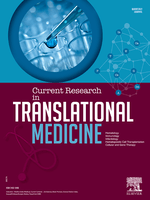
Current Research in Translational Medicine
Connecting Science and Practice for Better Health OutcomesCurrent Research in Translational Medicine, published by ELSEVIER FRANCE-EDITIONS SCIENTIFIQUES MEDICALES ELSEVIER, is a dynamic open-access journal that has been at the forefront of innovative research since its inception in 2016. With a strong commitment to advancing the fields of biochemistry, hematology, infectious diseases, oncology, and transplantation, the journal provides an invaluable platform for researchers and practitioners to share novel findings that bridge laboratory discoveries and clinical applications. Currently recognized in prestigious categories such as Q1 and Q2 quartiles, this journal emphasizes the importance of translational science in improving health outcomes, supported by a rigorous editorial process and a commitment to high-quality research dissemination. Being listed in reputable databases like Scopus, it enables authors to reach a wide audience, ensuring that their impactful work contributes to the global dialogue on critical medical advancements. With its open access model, Current Research in Translational Medicine encourages widespread collaboration and engagement among the scientific community, solidifying its role as a leading journal in medicine and related fields.
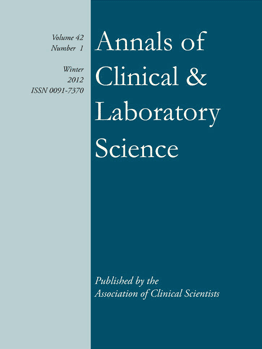
ANNALS OF CLINICAL AND LABORATORY SCIENCE
Transforming Healthcare Through Scientific DiscourseANNALS OF CLINICAL AND LABORATORY SCIENCE, published by the Association of Clinical Scientists, is a pivotal journal in the fields of clinical biochemistry, hematology, immunology, and medical laboratory technology. Since its inception in 1971, this journal has become a vital resource for researchers and practitioners aiming to advance their knowledge and skills in laboratory sciences. Although currently not an open access journal, its rich repository of peer-reviewed articles and studies contributes significantly to the academic discourse in diagnostic and therapeutic practices. The journal is categorized in various quartiles, reflecting its impact and contributions to multiple scientific domains, such as Q4 in Clinical Biochemistry and Q3 in Pathology and Forensic Medicine as of 2023. With an extensive convergence of years up to 2024, it proves to be a timeless source for emerging trends and research innovations. The ANNALS OF CLINICAL AND LABORATORY SCIENCE not only supports the professional development of its readers but also encourages interdisciplinary collaboration, making it an essential tool for professionals, students, and researchers dedicated to improving health outcomes through advanced laboratory sciences.
Annals of Clinical and Analytical Medicine
Advancing healthcare through innovative research.Annals of Clinical and Analytical Medicine, published by BAYRAKOL MEDICAL PUBLISHER, is a premier open-access journal dedicated to advancing the field of clinical and analytical medicine. With the evolving landscape of healthcare, this journal serves as a crucial platform for the publication of high-quality research that encompasses a wide range of topics in medical science, offering insights into innovative clinical practices and analytical methodologies. The journal, identifiable by its E-ISSN 2667-663X, promotes the dissemination of knowledge by providing unrestricted access to its articles, thus ensuring that researchers, healthcare professionals, and students can stay abreast of the latest findings and developments. As it continues to gain recognition, Annals of Clinical and Analytical Medicine aims to foster an inclusive dialogue within the global medical community, encouraging collaboration and promoting high-impact research that addresses pressing healthcare challenges.
CRITICAL REVIEWS IN CLINICAL LABORATORY SCIENCES
Elevating Laboratory Science Through Insightful ReviewsCRITICAL REVIEWS IN CLINICAL LABORATORY SCIENCES, published by Taylor & Francis Ltd, stands as a premier journal in the field of clinical laboratory science, addressing pivotal advancements and challenges since its inception in 1970. With a commendable impact factor derived from its ranking in Q1 categories across multiple disciplines—including Biochemistry, Genetics and Molecular Biology, and Clinical Biochemistry—this journal is a critical resource for researchers, clinicians, and educators aiming to deepen their understanding and application of laboratory science. The journal's rigorous peer-review process ensures that only the highest quality research is published, providing a platform for profound discussions that influence laboratory practices globally. Although not an open-access journal, it offers various subscription options to facilitate access to its wealth of knowledge. Operating out of Abingdon, England, CRITICAL REVIEWS IN CLINICAL LABORATORY SCIENCES continues to shape the future of clinical biochemistry and laboratory research through its insightful articles, systematic reviews, and expert commentaries, making it an essential read for professionals eager to stay at the forefront of their field.