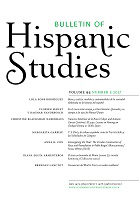
BULLETIN OF HISPANIC STUDIES
metrics 2024
Innovating Research in Hispanic Linguistics and Literary Theory
Introduction
BULLETIN OF HISPANIC STUDIES, published by Liverpool University Press, is a distinguished peer-reviewed journal dedicated to the exploration of Hispanic cultures, literatures, and linguistic studies. With an ISSN of 1475-3839 and an E-ISSN of 1478-3398, this journal is a vital platform for researchers, scholars, and students alike, offering critical insights and innovative research from a broad spectrum of perspectives within its fields. Notably, as of 2023, it holds a commendable position in Q2 of Linguistics and Language and Q1 in Literature and Literary Theory, demonstrating its significant impact in these disciplines. The journal spans a period from 2002 to 2024, providing a rich historical arc of scholarship in Hispanic studies. It operates in the United Kingdom and remains accessible through subscription-only models, ensuring a quality curation of content. With a native address at 4 Cambridge St, Liverpool L69 7ZU, England, the BULLETIN OF HISPANIC STUDIES remains committed to advancing knowledge and fostering dialogue in the ever-evolving landscape of linguistic and literary inquiry.
Metrics 2024
 0.170.100.109
Metrics History
Rank 2024
Scopus
JCI (Web Of Science)
Quartile History
Similar Journals

Monteagudo
Pioneering Research in the Heart of MurciaMonteagudo, published by UNIV MURCIA, is an important academic journal dedicated to the fields of Arts and Humanities, particularly focusing on Literature, Literary Theory, Visual Arts, and Linguistics. Since its inception in 2019, it has aimed to provide a scholarly platform for innovative research and critical discourse within these disciplines. With an ISSN of 0580-6712 and an E-ISSN of 1989-6166, the journal seeks to enhance the visibility of emerging ideas and methodologies, while fostering an inclusive academic dialogue. Although Monteagudo does not currently offer Open Access options, its significance is reflected in its Scopus rankings, which position it within the 14th to 32nd percentile across various categories. With its operations based in the heart of Murcia, Spain, the journal is poised to influence both regional and international scholarly conversations, making it an essential resource for researchers, professionals, and students aiming to expand their understanding of contemporary issues in Arts and Humanities.
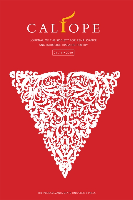
Caliope-Journal of the Society for Renaissance and Baroque Hispanic Poetry
Engaging with the Essence of Golden Age VersesCaliope: Journal of the Society for Renaissance and Baroque Hispanic Poetry is a prestigious academic journal published by Penn State University Press, dedicated to exploring the rich tradition of Hispanic poetry from the Renaissance and Baroque eras. With an ISSN of 1084-1490 and an E-ISSN of 2377-9551, this journal serves as a vital resource for scholars and enthusiasts of the field, particularly within its converged years of 2019 to 2023. Ranking in the Q2 and Q3 quartiles across various categories such as History, Literature and Literary Theory, and Linguistics, Caliope has positioned itself as a significant contributor to the academic discourse surrounding Hispanic poetic traditions and their historical context. While the journal is not currently open access, it provides in-depth analyses and innovative research that are crucial for both current scholars and future researchers in the humanities. Engage deeply with the rhythmic and cultural expressions of a transformative period in literature and join a community that values the intricate beauty and societal reflections of Renaissance and Baroque Hispanic poetry.

CUADERNOS HISPANOAMERICANOS
Connecting Scholars through Cultural DiscourseCUADERNOS HISPANOAMERICANOS, published by the Agencia Española Cooperación Internacional para el Desarrollo (AECID), serves as a vital platform for scholars and practitioners within the fields of Arts and Humanities as well as Social Sciences, particularly focusing on cultural studies pertaining to the Hispanic world. With a rich history since its inception in 1971, the journal has curated a wealth of knowledge, although its coverage in prominent databases like Scopus was discontinued after 2019. Ranked in the 23rd percentile in Arts and Humanities and the 17th percentile in Cultural Studies, CUADERNOS HISPANOAMERICANOS continues to stimulate discourse among researchers by offering critical insights into the socio-cultural dynamics of Latin America. The journal is not Open Access, which maintains a level of selectivity regarding its readership. By prioritizing high-quality and impactful research, CUADERNOS HISPANOAMERICANOS plays an essential role in the ongoing scholarly dialogue and development of knowledge related to Hispanic studies.
ROMANCE QUARTERLY
Advancing Critical Discourse in Romance StudiesROMANCE QUARTERLY is an esteemed journal published by Routledge Journals, Taylor & Francis Ltd, focusing on critical discussions and innovative research in the fields of Cultural Studies and Literature and Literary Theory. With its inception in 1986, this journal has diligently documented the evolving landscape of romance literature, making significant contributions through interdisciplinary approaches that resonate across literature and cultural scholarship. Holding a commendable position in academic rankings, it is classified in the second quartile for Literature and Literary Theory, and in the third quartile for Cultural Studies as of 2023, highlighting its relevance and impact within these domains. While it operates under a traditional access model, the required scholarly discourse and access to contemporary studies make it a crucial resource for researchers, educators, and students alike. ROMANCE QUARTERLY serves not merely as a platform for publishing but as a vibrant hub for the exploration and analysis of romance narratives, offering invaluable insights into their impact on cultural and societal constructs, surely a must-read for anyone passionate about these subjects.

Dicenda-Cuadernos de Filologia Hispanica
Unveiling the Richness of Hispanic Literary HeritageDicenda-Cuadernos de Filologia Hispanica, published by UNIV COMPLUTENSE MADRID, SERVICIO PUBLICACIONES, is a distinguished academic journal in the fields of linguistics, literature, and literary theory. Since its transition to Open Access in 2017, it has facilitated unrestricted dissemination of knowledge, making it an invaluable resource for researchers, scholars, and students interested in the rich tapestry of Hispanic philology. With an impact factor reflected by its Scopus rankings—at Q3 in Linguistics and Language and Q2 in Literature and Literary Theory—Dicenda serves as a vital platform for innovative research and critical discourse. The journal actively encourages submissions that explore contemporary and historical perspectives within its scope. Located in Madrid, Spain, the journal has steadily established itself as a significant contributor to the ongoing dialogue in the humanities, fostering a deeper understanding of linguistic and literary phenomena.

KEATS-SHELLEY JOURNAL
Fostering Critical Dialogues on RomanticismKEATS-SHELLEY JOURNAL, published by the Keats-Shelley Association of America, Inc., serves as a pivotal scholarly platform dedicated to the study of Romantic literature, with a particular focus on the works and influence of John Keats and Percy Bysshe Shelley. As a respected publication within the field, the journal is currently ranked in the Q2 category of Literature and Literary Theory for 2023, reflecting its significance in advancing literary scholarship. This journal has provided insights and critical discussions from 2002 to 2011, and intermittently from 2013, 2016, and 2018 to 2021, though coverage has been discontinued in Scopus. Despite its traditional publication model, the journal remains a vital resource for researchers, professionals, and students interested in the Romantic period and its lasting impact on contemporary literary discourse. The editorial board prioritizes high-quality research contributing to the understanding of literary themes, historical contexts, and critical interpretations relevant to Keats and Shelley, making it an essential reading for anyone engaged in Romantic studies or literary theory.

Nueva Revista Filologia Hispanica
Fostering Insightful Dialogues in LinguisticsNueva Revista Filologia Hispánica, published by COLEGIO MEXICO, A C, DEPT PUBLICACIONES, has been a pivotal resource in the field of Hispanic philology since its establishment in 1966, transitioning to an open-access model that enhances the accessibility of scholarly works in the area. With an ISSN of 0185-0121 and an E-ISSN of 2448-6558, the journal is housed in Mexico City and aims to publish innovative research that contributes to the understanding of the linguistic and cultural dynamics of the Spanish language. It consistently ranks in the Q3 category of Linguistics and Language for 2023, reflecting its commitment to academic excellence as demonstrated by its Scopus ranking in both Arts and Humanities and Social Sciences. With converged years from 2011 to 2024, the journal encourages contributions that inspire further discourse among researchers, professionals, and students, thus solidifying its importance as a scholarly platform in the linguistics landscape.

Literary Voice
Advancing Critical Thought in LiteratureLiterary Voice is a pioneering journal dedicated to the exploration and critique of literature and its multifaceted dimensions. Established in Punjab, India, and published by LITERARY VOICE, this journal aims to serve as a vital platform for scholars, researchers, and enthusiasts in the field of literary studies. With its ISSN 2277-4521 and E-ISSN 2583-8199, Literary Voice strives to foster intellectual discourse and encourage innovative scholarship through diverse thematic issues. While currently operating without an open access model, the journal provides a crucial space for the dissemination of original research and critical analysis that contribute to the enrichment of literary understanding. As an emerging publication in the humanities, Literary Voice invites submissions from across the globe, making it an essential resource for those looking to engage with contemporary literary debates and foster cross-cultural dialogues.
ELH
Advancing Interdisciplinary Scholarship in Literary TheoryELH is a prestigious journal published by the Johns Hopkins University Press, dedicated to the interdisciplinary exploration of historical literature and literary theory. With an ISSN of 0013-8304 and an E-ISSN of 1080-6547, this esteemed publication ranks in the Q1 category for both History and Literature and Literary Theory as of 2023, reflecting its significant influence in the field. Recognized in the top quartile of journals, ELH serves as a vital platform for scholarly research, boasting a commendable Scopus ranking of #176 out of 1106 in Literature and Literary Theory and #557 out of 1760 in History, positioning it within the 84th and 68th percentiles, respectively. Though not an open-access journal, ELH provides critical insights and discussions relevant to emerging scholars, seasoned researchers, and academic professionals alike. Published continuously from 2001 to 2024, this journal plays an essential role in shaping dialogues around literary discourse and historical contexts, making it an indispensable resource for those advancing research and scholarship in these dynamic fields.

Cartaphilus
Bridging Ideas, Cultivating KnowledgeCartaphilus is a distinguished academic journal published by UNIV MURCIA, focusing on a multidisciplinary approach to the humanities and social sciences. Based in Spain, the journal aims to foster dialogue and collaboration among researchers, practitioners, and students in these fields. Although specific metrics like the impact factor and H-index are currently not available, Cartaphilus strives to be a vital resource for original research, innovative ideas, and critical discourse, contributing to the advancement of knowledge in the humanities. The journal is particularly valuable for scholars seeking an open platform for their work, as it emphasizes accessibility and inclusivity in scholarly communication. By bridging various disciplines and perspectives, Cartaphilus plays a crucial role in the academic landscape, encouraging new insights and enriching the scholarly community.