BASIC & CLINICAL PHARMACOLOGY & TOXICOLOGY
Scope & Guideline
Advancing Knowledge at the Intersection of Medicine and Toxicology
Introduction
Aims and Scopes
- Pharmacological Mechanisms and Drug Actions:
The journal emphasizes studies that elucidate the pharmacological effects of drugs at molecular, cellular, and system levels. This includes research on drug metabolism, pharmacodynamics, and pharmacokinetics, focusing on how drugs exert their therapeutic effects. - Toxicology and Safety Assessments:
Research on the toxicological profiles of pharmaceuticals, including adverse drug reactions, drug interactions, and environmental toxicology. The journal publishes studies evaluating the safety of drugs, including preclinical and clinical toxicology assessments. - Clinical Pharmacology and Therapeutics:
The journal covers clinical studies that assess drug efficacy and safety in human populations. This includes pharmacotherapy, personalized medicine, and the impact of genetic factors on drug responses. - Innovative Drug Development and Delivery Systems:
Research related to new drug formulations, delivery mechanisms, and innovative therapies. This includes studies on nanomedicine, drug repurposing, and advanced therapeutic strategies. - Pharmacogenomics and Personalized Medicine:
The journal publishes articles that explore the influence of genetic variations on drug metabolism and response, highlighting the importance of tailoring pharmacotherapy to individual patients. - Environmental Pharmacology and Ecotoxicology:
Research focusing on the environmental impact of pharmaceuticals and the understanding of drug interactions with ecological systems.
Trending and Emerging
- Neuropharmacology and Neurotoxicity:
A significant increase in studies exploring the pharmacological and toxicological aspects of neurodegenerative diseases, neuroprotection, and the effects of various drugs on neurological health has been observed, reflecting growing concerns over mental health and neurodegenerative disorders. - Pharmacogenomics and Personalized Medicine:
There is a rising interest in research related to pharmacogenomics, with studies focusing on how genetic variations affect drug response, paving the way for personalized medicine approaches tailored to individual genetic profiles. - Drug-Drug Interactions and Polypharmacy:
As polypharmacy becomes more prevalent, especially among older adults, there is an increasing focus on understanding drug-drug interactions and their implications for clinical practice. - Environmental Toxicology and Drug Safety:
Emerging themes include the environmental impact of pharmaceuticals and the safety of drugs in ecological contexts, reflecting growing awareness of the need for sustainable practices in drug development and usage. - Innovative Therapeutics and Drug Delivery Systems:
Research on novel therapeutic agents, including biologics and gene therapies, and advanced drug delivery systems is trending, highlighting the importance of innovation in addressing complex health issues. - Mental Health Pharmacotherapy:
There is an increasing focus on the pharmacological treatment of mental health disorders, particularly in relation to the development and evaluation of new therapeutic strategies for conditions such as depression and anxiety.
Declining or Waning
- Traditional Herbal Medicine:
There has been a noticeable decline in publications focusing on traditional herbal medicines and their pharmacological evaluations, likely due to a shift towards more rigorous clinical and preclinical studies involving synthetic compounds or well-characterized natural products. - Basic Toxicological Studies:
Research that primarily focuses on basic toxicological mechanisms without direct clinical implications appears to be waning. There is a growing preference for studies that connect basic findings to clinical outcomes or therapeutic applications. - Animal Model Studies:
The frequency of studies solely based on animal models without translational aspects has decreased, as there is a stronger push for research that can directly inform human health outcomes. - Pharmaceutical Manufacturing Processes:
Research focused on the manufacturing processes of pharmaceuticals has declined, possibly due to an increasing emphasis on clinical efficacy and safety rather than production methodologies.
Similar Journals
CLINICAL PHARMACOKINETICS
Elevating Pharmacological Knowledge Since 1976CLINICAL PHARMACOKINETICS, published by ADIS INT LTD, is a premier journal dedicated to the field of pharmacology, with a distinguished reputation since its inception in 1976. With an impressive impact factor and categorized in the Q1 quartile for both general pharmacology and medical pharmacology, this journal ranks #29 out of 272 and #53 out of 313 in its respective categories in Scopus, highlighting its high academic influence and the quality of research it publishes. CLINICAL PHARMACOKINETICS serves as a vital resource for researchers, professionals, and students interested in the latest advancements in drug metabolism, therapeutic efficacy, and clinical applications of pharmacokinetic studies. As it continues to evolve through 2024 and beyond, the journal remains committed to fostering a deeper understanding of pharmacotherapy and its implications in clinical practice. While it does not currently offer open access, the journal ensures that cutting-edge research is accessible through various academic platforms.
BRITISH JOURNAL OF CLINICAL PHARMACOLOGY
Championing High-Impact Research in Clinical PharmacologyBritish Journal of Clinical Pharmacology, published by Wiley, is a premier peer-reviewed journal that has been at the forefront of pharmacology research since its inception in 1974. Renowned for its high academic rigor, it stands out with an impressive impact factor that places it in the Q1 quartile within both the general pharmacology and medical pharmacology categories. With a Scopus ranking reflecting its esteemed status—ranked #68 out of 272 in medical pharmacology and #109 out of 313 in pharmacology, toxicology, and pharmaceutics—the journal serves as a critical resource for researchers, clinicians, and students who are keen to explore innovations and advancements in drug therapy. The journal's scope encompasses a wide array of topics, including clinical trials, drug safety, and pharmacokinetics, making it an essential platform for disseminating cutting-edge pharmacological findings. Although it does not offer open access, the stringent selection of articles ensures that only the highest-quality research is published, further contributing to the ongoing discourse in clinical pharmacology.
BRITISH JOURNAL OF PHARMACOLOGY
Advancing pharmacological science for a healthier tomorrow.British Journal of Pharmacology is a premier, peer-reviewed journal published by Wiley, specializing in the dynamic field of pharmacology. With a robust impact factor, this journal ranks in the top quartile (Q1) for pharmacology according to the 2023 category rankings, emphasizing its significance and reputation among the global scientific community. As an essential resource for researchers, professionals, and students alike, the journal provides a platform for innovative research spanning foundational studies to clinical applications in pharmacology, toxicology, and pharmaceutics. Since its inception in 1966, the journal has consistently contributed to the advancement of pharmacological science, fostering a deeper understanding of drug action mechanisms and therapeutic advancements. Although primarily subscription-based, the British Journal of Pharmacology is committed to disseminating high-quality research that shapes the future of the field.
BIOLOGICAL & PHARMACEUTICAL BULLETIN
Elevating Knowledge in Medicine and Drug InnovationBIOLOGICAL & PHARMACEUTICAL BULLETIN, published by the PHARMACEUTICAL SOC JAPAN, is a prominent peer-reviewed journal that serves the fields of medicine, pharmaceutical science, and pharmacology. With an ISSN of 0918-6158 and an E-ISSN of 1347-5215, this publication has been crucial in disseminating innovative research since its inception in 1993, and it continues to contribute significantly to the body of knowledge as it converges towards 2024. Despite being classified as a non-open access journal, it maintains a respectable Q3 ranking in Medicine (miscellaneous) and Q2 in Pharmaceutical Science, highlighting its critical role in advancing scientific discourse in these areas. With Scopus rankings placing it in the 51st percentile for Pharmaceutical Science and 38th percentile for Pharmacology, BIOLOGICAL & PHARMACEUTICAL BULLETIN is an essential resource for researchers, professionals, and students looking to stay abreast of cutting-edge developments and trends in biomedicine and drug development.

Iranian Journal of Pharmaceutical Research
Fostering a vibrant community of pharmaceutical researchers.Welcome to the Iranian Journal of Pharmaceutical Research, a pioneering publication in the field of pharmacology, toxicology, and pharmaceutics, published by BRIEFLAND. Established in 2002, this journal has been a crucial platform for disseminating innovative research and scholarly articles, contributing significantly to the advancement of pharmaceutical sciences in Iran and beyond. With an impressive trajectory leading towards a convergence of knowledge by 2024, it proudly holds a Q3 ranking in Pharmacology (Medical) and a Q2 ranking in the broader realm of Pharmacology, Toxicology, and Pharmaceutics for 2023. The journal's influence is underscored by its Scopus rank of #25/80 in General Pharmacology, Toxicology, and Pharmaceutics, placing it within the 69th percentile, therefore appealing to researchers, professionals, and students alike. Although the journal operates under a non-open access model, it remains dedicated to providing high-quality research articles that explore the latest advancements in pharmaceutical sciences, making it an essential resource for anyone involved in this vibrant field of study.
European Journal of Pharmacology
Delivering cutting-edge findings from the forefront of drug research.The European Journal of Pharmacology, a prestigious publication by Elsevier, serves as a vital resource in the field of pharmacology, offering rich insights into drug development and therapeutic applications. Since its inception in 1967, this journal has evolved to encompass groundbreaking research, including pharmacokinetics, toxicology, and innovative pharmacological methodologies, making it an essential platform for researchers and professionals alike. With an impressive impact factor that places it in the Q1 category of pharmacological journals and a Scopus ranking of #49 out of 313, the journal is recognized in the 84th percentile within its category, solidifying its significance in the academic community. Although the journal is not open access, it continues to attract contributions from leading scientists worldwide, ensuring that cutting-edge findings are disseminated effectively. The European Journal of Pharmacology not only highlights advancements in drug discovery and clinical applications but also promotes interdisciplinary collaboration, ultimately contributing to the progress of healthcare globally.
DRUG DEVELOPMENT RESEARCH
Driving the evolution of medicine with impactful research.DRUG DEVELOPMENT RESEARCH is a premier interdisciplinary journal published by Wiley, focusing on the latest advancements in drug discovery, pharmacology, and toxicology. With an ISSN of 0272-4391 and an E-ISSN of 1098-2299, this esteemed publication has been a cornerstone in the field since its inception in 1981 and continues to provide cutting-edge research until 2024. Its rigorous peer-review process and strategic placement in Q2 of the Drug Discovery category, as well as ranking #60 out of 157 in Scopus, underscore the journal's relevance and influence, boasting a respectable 62nd percentile ranking. While the journal does not currently offer open access, it remains a vital resource for researchers, professionals, and students seeking to expand their knowledge on the processes of drug development, identifying new therapeutic targets, and assessing the efficacy and safety of novel compounds. Situated in Hoboken, NJ, this journal stands at the forefront of pharmaceutical innovation, making significant contributions to the advancement of medical science.

BMC Pharmacology & Toxicology
Unveiling the complexities of drug action and safety.Welcome to BMC Pharmacology & Toxicology, a premier open-access journal dedicated to advancing the fields of pharmacology and toxicology. Published by BMC since 2012, this esteemed journal offers a platform for researchers, professionals, and students to disseminate cutting-edge research and innovative findings that explore the intricate interactions between drugs and biological systems. With its robust Q2 ranking in both general medicine and pharmacology categories for 2023, BMC Pharmacology & Toxicology is recognized for its significant contributions to the academic community, reflected in its strategic positioning within the 61st and 49th percentiles in Scopus rankings for related disciplines. The journal's commitment to open access ensures that vital research is accessible to a global audience, fostering collaboration and informed discussions. We invite you to engage with the latest studies, reviews, and innovative methodologies that shape the future of pharmacological and toxicological sciences.
DRUG METABOLISM AND DISPOSITION
Exploring the Frontiers of PharmacologyDrug Metabolism and Disposition is a premier journal published by the American Society for Pharmacology and Experimental Therapeutics, focusing on crucial advancements in the fields of pharmaceutical sciences and pharmacology. Since its inception in 1973, this esteemed journal has established itself as a leading platform for innovative research, earning a prestigious Q1 rating in both Pharmaceutical Science and Pharmacology categories as of 2023. With an impressive Scopus ranking of #52 out of 183 in Pharmaceutical Science and #105 out of 313 in Pharmacology, it occupies a vital place in an increasingly competitive academic landscape. Researchers, professionals, and students alike benefit from its rigorous peer-reviewed articles that delve into drug metabolism processes and their physiological implications, making it an indispensable resource for anyone aiming to advance their understanding of drug disposition and efficacy. This crucial journal contributes significantly to the ongoing dialogue in pharmacology and toxicology, providing insights that help shape future therapeutic strategies and regulatory policies.
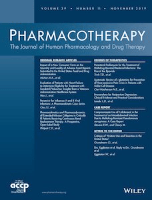
PHARMACOTHERAPY
Championing Innovation in Drug UtilizationPHARMACOTHERAPY, an esteemed journal published by WILEY, stands as a pivotal resource within the field of medical pharmacology. With its ISSN 0277-0008 and E-ISSN 1875-9114, this journal has been at the forefront of pharmacological research since its inception in 1981. Renowned for its rigorous peer-review process and impactful contributions, it currently holds a prestigious Q1 quartile ranking in the pharmacology category, underscoring its significance as a leading publication in the field. It ranks #40 out of 272 journals in Scopus, placing it in the top 15% percentile of its category. While not an open-access publication, PHARMACOTHERAPY remains committed to advancing knowledge and understanding in pharmacological sciences, making it an indispensable resource for researchers, healthcare professionals, and students dedicated to improving therapeutic outcomes and drug utilization. Based in the United States, at 111 River St, Hoboken, NJ, the journal is poised to continue its impact through to 2024 and beyond, welcoming contributions that further the discourse in pharmacotherapy.