FUNDAMENTAL & CLINICAL PHARMACOLOGY
Scope & Guideline
Fostering excellence in pharmacological sciences and clinical practice.
Introduction
Aims and Scopes
- Pharmacological Mechanisms and Drug Actions:
This area encompasses studies that investigate the biochemical and molecular mechanisms through which drugs exert their effects, including receptor interactions, signaling pathways, and pharmacodynamics. - Clinical Pharmacology and Therapeutics:
Research focusing on the clinical implications of pharmacotherapy, including the efficacy and safety of drugs in specific patient populations, therapeutic drug monitoring, and the optimization of dosing regimens. - Pharmacovigilance and Drug Safety:
The journal emphasizes the importance of pharmacovigilance, reporting adverse drug reactions, and monitoring drug safety in clinical practice, particularly in vulnerable populations. - Pharmacogenetics and Personalization of Therapy:
Studies exploring genetic factors influencing drug metabolism and response, aiming to tailor pharmacotherapy to individual patient profiles for better outcomes. - Innovative Drug Development and Therapeutic Strategies:
Research on new therapeutic agents, drug repurposing, and innovative approaches to enhance treatment efficacy and minimize side effects. - Epidemiology and Public Health:
This scope includes studies assessing drug utilization patterns, the impact of drug policies on public health, and the epidemiological trends of drug-related issues.
Trending and Emerging
- Personalized Medicine and Pharmacogenomics:
There is a marked increase in research focusing on tailoring pharmacotherapy based on genetic profiles, emphasizing the need for personalized approaches to enhance drug efficacy and minimize adverse effects. - Real-World Evidence and Pragmatic Trials:
Growing interest in studies that evaluate drug effectiveness and safety in real-world settings, moving beyond controlled clinical trials to understand how drugs perform in diverse patient populations. - Immunotherapy and Biologics:
Research into immunotherapy, particularly the use of monoclonal antibodies and checkpoint inhibitors, is expanding, reflecting an increasing recognition of their potential in treating various conditions, including cancer. - Digital Health and Pharmacovigilance Technologies:
Emerging technologies for monitoring drug safety and efficacy, including mobile health applications and artificial intelligence, are gaining traction as tools for enhancing pharmacovigilance. - Neuropharmacology and Mental Health:
There is a rising focus on the pharmacological management of mental health disorders, exploring novel therapeutic agents and their mechanisms of action in neurological contexts.
Declining or Waning
- Traditional Herbal Medicine:
Research on herbal medicines and their pharmacological effects has seen a decline, possibly due to the increasing focus on synthetic drugs and biologics that provide more consistent results in clinical settings. - Basic Toxicology Studies:
While toxicology remains a crucial area, the focus on basic toxicological mechanisms has waned in favor of more applied studies that directly address clinical implications and drug safety. - Animal Models of Drug Action:
Although animal studies are still important, there has been a shift towards human-based research and clinical trials, with less emphasis on preclinical animal models compared to previous years. - Drug Formulation Studies:
Research focused solely on the formulation aspects of drug development has decreased, as the field moves towards integrated approaches that combine formulation with clinical efficacy and safety assessments.
Similar Journals
ANNALS OF PHARMACOTHERAPY
Connecting Research and Practice in PharmacologyANNALS OF PHARMACOTHERAPY, published by SAGE PUBLICATIONS INC, is a leading journal in the realm of pharmacology and therapeutic science, dedicated to advancing research, clinical practice, and education in the field of medicine. With a solid history dating back to its first publication in 1981, this journal offers a platform for high-quality research articles that explore the latest innovations and methodologies in pharmacotherapy. Although it operates under a subscription-based model, the journal maintains a robust academic reputation, reflected in its Scopus ranking in the 68th percentile within the category of Medicine - Pharmacology (Rank #85/272). The impact factor is continually evolving, as is the scope, which encompasses a diverse range of topics from clinical trials to the therapeutic applications of newly-developed drugs. Researchers, professionals, and students alike will find valuable insights and cutting-edge research in the ANNALS OF PHARMACOTHERAPY, making it an essential resource for anyone engaged in the field of pharmacology.
JOURNAL OF PHARMACOLOGY AND EXPERIMENTAL THERAPEUTICS
Innovating Therapeutic Strategies for a Healthier TomorrowThe JOURNAL OF PHARMACOLOGY AND EXPERIMENTAL THERAPEUTICS, published by the American Society for Pharmacology and Experimental Therapeutics, stands as a pivotal platform in the fields of pharmacology and molecular medicine. With an impressive convergence of knowledge from 1945 to 2024, this esteemed journal is recognized for its rigorous peer-reviewed research, contributing significantly to our understanding of drug action and therapeutic interventions. It holds a commendable position in the Q2 quartile in both Molecular Medicine and Pharmacology, emphasizing its relevance and impact within the contemporary scientific landscape, as evidenced by its Scopus ranking that places it amongst the leading journals in its category. Aimed at researchers, professionals, and students, the journal not only fosters a deeper insight into toxicology, pharmacodynamics, and therapeutic strategies but also encourages innovation through its comprehensive access to groundbreaking experimental methodologies. The journal continues to foster discourse and disseminate research that shapes the future of pharmacological science.

International Journal of Pharmacology
Advancing the Frontiers of Pharmacological ResearchWelcome to the International Journal of Pharmacology, a key publication in the field of pharmacology, published by ASIAN NETWORK SCIENTIFIC INFORMATION (ANSINET). Since its inception in 2006, this journal has provided a vital platform for researchers and professionals to disseminate their findings and insights in pharmacology, toxicology, and pharmaceutics. Despite recent discontinuation in Scopus coverage, the journal's dedication to fostering scientific dialogue continues to attract contributions from esteemed scholars globally. With an **ISSN of 1811-7775** and **E-ISSN of 1812-5700**, the journal seeks to bridge the gap between laboratory research and clinical application, promoting a deeper understanding of drug actions and interactions. Although it operates under traditional access options, the relevance of its published studies to ongoing pharmacological research remains significant.
BASIC & CLINICAL PHARMACOLOGY & TOXICOLOGY
Fostering Insights in Pharmacology and Toxicology for Better HealthBASIC & CLINICAL PHARMACOLOGY & TOXICOLOGY, published by WILEY, serves as a vital resource in the fields of medicine, pharmacology, and toxicology. With an ISSN of 1742-7835 and E-ISSN 1742-7843, this journal has established a robust reputation, reflected in its Q2 classification across its categories in 2023. It aims to disseminate high-quality research and reviews that bridge the gap between basic scientific findings and clinical applications. Operating from the United States with an address at 111 RIVER ST, HOBOKEN 07030-5774, NJ, this journal focuses on the intersection of drug action and toxicity, making it an essential platform for researchers, healthcare professionals, and students. With a converged publication timeline from 2004 to 2024, BASIC & CLINICAL PHARMACOLOGY & TOXICOLOGY continues to make significant contributions to understanding pharmacological treatments and toxicological challenges. Open access options are available to broaden the reach and impact of its published work.
FARMACIA
Exploring the Frontiers of Pharmacology and Toxicology.FARMACIA is a renowned academic journal published by the SOC STIINTE FARMACEUTICE ROMANIA, specializing in the field of pharmacology, toxicology, and pharmaceutics. With a rich history dating back to its initial publication years of 1945 to 1946, and ongoing contributions since 2008, the journal has established itself as a significant platform for disseminating cutting-edge research in the pharmaceutical sciences. Indexed in Scopus, it holds a commendable Q2 ranking in the Pharmacology, Toxicology and Pharmaceutics category, reflecting its importance in the field. The journal aims to foster knowledge sharing and innovation among researchers, professionals, and students alike, making it an essential resource for advancing pharmaceutical research. Although it does not currently offer Open Access, the content is accessible to a broad academic audience, ensuring valuable insights into current trends and discoveries in pharmacotherapy and drug development. For those seeking a deeper understanding of the evolving landscape of pharmaceutical sciences, FARMACIA provides a critical lens through which to explore and engage with the latest scientific advancements.

Journal of Pharmacology & Pharmacotherapeutics
Illuminating the Future of Pharmacology and Patient CareJournal of Pharmacology & Pharmacotherapeutics is a vital academic resource published by SAGE Publications Inc., focusing on the diverse and evolving fields of pharmacology and pharmacotherapy. With an ISSN of 0976-500X and E-ISSN 0976-5018, this journal serves as a platform for rigorous research and innovative insights from 2010 to 2024, reflecting the latest advancements and challenges within the pharmacological landscape. Despite being placed in the Q4 quartile for both general pharmacology and medical pharmacology in 2023, it continues to be an essential resource for researchers, professionals, and students striving to understand the complexities of drug action, therapy optimization, and pharmaceutical sciences. The journal underscores the importance of disseminating critical findings to stimulate further research and collaborative dialogue. Although currently not open access, it can be accessed through leading academic databases, positioning itself as a significant entity in the medical and pharmacological research community.
INTERNATIONAL JOURNAL OF CLINICAL PHARMACOLOGY AND THERAPEUTICS
Exploring innovative therapies through rigorous research.INTERNATIONAL JOURNAL OF CLINICAL PHARMACOLOGY AND THERAPEUTICS, published by DUSTRI-VERLAG DR KARL FEISTLE in Germany, is a vital scholarly platform dedicated to advancing the field of pharmacology through rigorous research and innovative therapeutic strategies. Established in 1994, this journal has maintained its relevance in the evolving landscape of clinical pharmacology, achieving a Q3 rank in both general and medical pharmacology categories as of 2023. With an ISSN of 0946-1965, it is positioned as an essential resource for researchers, healthcare professionals, and students seeking to enhance their understanding of drug therapy and pharmacological applications. Though it currently does not offer open access, its comprehensive scope covers a wide array of topics within pharmacology, promising to contribute significantly to scientific discussions and knowledge dissemination from 1994 to 2024. Whether you are looking for the latest studies or historical insights, the journal remains a fixture for anyone invested in the pharmacological sciences.
CLINICAL THERAPEUTICS
Innovating pharmacology for a healthier tomorrow.Clinical Therapeutics, published by Elsevier, is a highly esteemed peer-reviewed journal that has been pivotal in advancing the field of pharmacology since its inception in 1977. With an impressive impact factor and recognition as Q2 in Pharmacology and Q1 in Medical Pharmacology for 2023, it stands at the forefront of research and discussions on innovative therapeutic strategies and pharmacological advancements. This journal not only caters to a broad audience of researchers and clinicians but also plays a vital role in disseminating critical information that supports the enhancement of patient care and safety. As a repository of high-quality, evidence-based articles, Clinical Therapeutics is a crucial resource for those involved in drug development, medical research, and clinical practice, making it an essential read for anyone dedicated to improving health outcomes through pharmaceutical sciences.
NAUNYN-SCHMIEDEBERGS ARCHIVES OF PHARMACOLOGY
Illuminating the Complexities of Drug MechanismsNAUNYN-SCHMIEDEBERGS ARCHIVES OF PHARMACOLOGY is a prestigious journal published by SPRINGER, focusing on the dynamic fields of pharmacology and toxicology. With an ISSN of 0028-1298 and an E-ISSN of 1432-1912, this esteemed publication has been a staple in the scientific community since its inception in 1969, continuing to wield influence with a convergence of research that reaches through 2024. Ranked in the Q2 category for both medicine and pharmacology, it stands at an impressive 111th out of 313 in the Scopus rankings for pharmacology, reflecting its significant impact in the field. Though not offering open access, the journal remains a vital resource for researchers, professionals, and students seeking to explore groundbreaking studies and advancements in pharmacological science. With its high standards and comprehensive coverage, NAUNYN-SCHMIEDEBERGS ARCHIVES OF PHARMACOLOGY is essential reading for those dedicated to understanding the mechanisms of drug action and the complexities of therapeutic interventions.
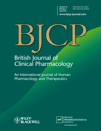
BRITISH JOURNAL OF CLINICAL PHARMACOLOGY
Exploring Innovations in Pharmacological ScienceBritish Journal of Clinical Pharmacology, published by Wiley, is a premier peer-reviewed journal that has been at the forefront of pharmacology research since its inception in 1974. Renowned for its high academic rigor, it stands out with an impressive impact factor that places it in the Q1 quartile within both the general pharmacology and medical pharmacology categories. With a Scopus ranking reflecting its esteemed status—ranked #68 out of 272 in medical pharmacology and #109 out of 313 in pharmacology, toxicology, and pharmaceutics—the journal serves as a critical resource for researchers, clinicians, and students who are keen to explore innovations and advancements in drug therapy. The journal's scope encompasses a wide array of topics, including clinical trials, drug safety, and pharmacokinetics, making it an essential platform for disseminating cutting-edge pharmacological findings. Although it does not offer open access, the stringent selection of articles ensures that only the highest-quality research is published, further contributing to the ongoing discourse in clinical pharmacology.