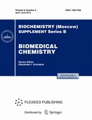
Biochemistry Moscow-Supplement Series B-Biomedical Chemistry
Scope & Guideline
Empowering Researchers to Transform Biochemical Discoveries into Solutions.
Introduction
Aims and Scopes
- Molecular Mechanisms in Disease:
Research often delves into the molecular underpinnings of various diseases, including cancer, cardiovascular conditions, and metabolic disorders, highlighting the biochemical pathways involved. - Biochemical Markers and Diagnostics:
The journal emphasizes the identification and validation of biochemical markers that can serve as diagnostic tools or therapeutic targets, reflecting a commitment to translational research. - Innovative Therapeutic Approaches:
A significant focus is placed on developing new therapeutic strategies, including the exploration of small molecules, peptides, and biologics, as potential treatments for diseases. - Technological Advances in Biochemistry:
The journal showcases studies utilizing cutting-edge methodologies such as molecular dynamics simulations, RNA sequencing, and in silico modeling to enhance understanding of biochemical processes. - Interdisciplinary Research:
Research often integrates concepts from various disciplines, including genetics, microbiology, and pharmacology, demonstrating the journal's commitment to holistic approaches in biomedical research.
Trending and Emerging
- Omics Technologies in Cancer Research:
Recent publications indicate an increasing use of omics technologies (genomics, proteomics, metabolomics) to understand cancer biology, which is crucial for developing targeted therapies. - MicroRNA and Non-Coding RNA Research:
There is a growing interest in the role of microRNAs and other non-coding RNAs as biomarkers and therapeutic targets, reflecting a trend towards understanding gene regulation and its implications in disease. - Artificial Intelligence and Machine Learning Applications:
The introduction of AI and machine learning methods in biochemistry, such as for binding site prediction, represents a significant trend, highlighting the journal's commitment to integrating modern computational tools in biomedical research. - Focus on Aging and Age-Related Diseases:
Research on aging and related diseases, such as sarcopenia and age-related macular degeneration, is increasingly prominent, indicating a broader interest in how biochemical processes affect aging populations. - Biochemical Interactions in Immune Responses:
Emerging studies exploring the biochemical interactions in immune responses, particularly in the context of infections like SARS-CoV-2, show a rising focus on immunology and its biochemical foundations.
Declining or Waning
- Traditional Pharmacological Studies:
There seems to be a waning interest in purely traditional pharmacological studies, as the focus shifts towards more innovative and interdisciplinary approaches to drug discovery and development. - Basic Biochemical Processes:
Research emphasizing basic biochemical processes without direct clinical relevance appears to be decreasing, as the journal pivots towards studies that have clear implications for health and disease. - Animal Model Studies:
There is a noticeable decline in the number of studies exclusively relying on animal models, suggesting a shift towards more human-relevant research methodologies, including in vitro and clinical studies.
Similar Journals

Journal of Medical Biochemistry
Unveiling the Biochemical Secrets to Better HealthJournal of Medical Biochemistry is a distinguished peer-reviewed journal published by the SOC MEDICAL BIOCHEMISTS SERBIA, focusing on the significant intersection of biochemistry and medicine. With an e-ISSN of 1452-8266, this Open Access journal has been enriching the academic community since 2007, providing vital insights and research findings that advance the field of medical biochemistry. Based in Belgrade, Serbia, the journal plays a pivotal role in disseminating contemporary research, highlighted by its impressive standings in the 2023 quartile rankings, featuring Q2 in Medical Biochemistry and Q3 in Clinical Biochemistry. The journal is recognized in Scopus with rankings that position it within the discerning area of medical biochemistry and clinical biochemistry, attesting to its influence and relevance. By promoting innovative research and facilitating an open exchange of scientific ideas, the Journal of Medical Biochemistry is a crucial resource for researchers, professionals, and students dedicated to uncovering the biochemical underpinnings essential to improving human health.

CELL BIOCHEMISTRY AND BIOPHYSICS
Empowering Scientists with Cutting-edge InsightsCELL BIOCHEMISTRY AND BIOPHYSICS is a distinguished journal published by HUMANA PRESS INC, focusing on critical advancements in the fields of biochemistry, biophysics, and cell biology. Since its establishment, the journal has provided a robust platform for the dissemination of cutting-edge research, covering diverse aspects of cellular biochemistry and the physical principles that underlie biological systems. With an emphasis on interdisciplinary studies, the journal aims to facilitate knowledge exchange among researchers, professionals, and students from various scientific backgrounds. As reflected in its 2023 category rankings, it holds a respectable position in Q3 for Biochemistry and Cell Biology, and Q2 for both Biophysics and Medicine (miscellaneous), indicating its significant contribution to these fields. Although it operates under a subscription model, the journal's commitment to maintaining high publication standards ensures that only impactful studies are shared with its audience. With a range of articles spanning theoretical insights to practical applications, CELL BIOCHEMISTRY AND BIOPHYSICS is an essential resource for those aiming to stay at the forefront of biochemical and biophysical research.

PROGRESS IN BIOCHEMISTRY AND BIOPHYSICS
Exploring the Dynamics of Life at the Molecular LevelPROGRESS IN BIOCHEMISTRY AND BIOPHYSICS, published by the Chinese Academy of Sciences, Institute of Biophysics, serves as a vital platform for advancing the field of biochemistry and biophysics. With a legacy dating from 1996 through 2024, this journal has been instrumental in disseminating critical research findings and innovative methodologies that push the boundaries of our understanding of biochemical processes and biophysical phenomena. Though currently unlisted as Open Access, the journal embodies rigorous peer-reviewed scholarship, positioned in the competitive Q4 quartile for both biochemistry and biophysics categories as per the 2023 metrics. It caters to a diverse audience, including researchers, professionals, and students who are keen to explore foundational and emerging concepts within these dynamic fields. By publishing comprehensive studies and reviews, the journal not only highlights progress but also fosters collaboration and dialogue among scholars worldwide, making it an essential resource for anyone invested in biochemical and biophysical research.

INDIAN JOURNAL OF BIOCHEMISTRY & BIOPHYSICS
Connecting scholars through groundbreaking discoveries.INDIAN JOURNAL OF BIOCHEMISTRY & BIOPHYSICS is a well-regarded academic journal that serves as a vital platform for researchers in the fields of biochemistry and biophysics. Published by the NATL INST SCIENCE COMMUNICATION-NISCAIR since its inception in 1972, this Open Access journal has committed itself to disseminating high-quality research and advancements in these dynamic fields, allowing readers worldwide to access vital findings since 2009. The journal maintains a robust presence in the academic landscape, achieving noteworthy rankings in 2023, placing it in the Q4 category for Biochemistry and Q3 for both Biophysics and miscellaneous Medicine, alongside its respectable Scopus rankings. With an emphasis on original research articles, reviews, and educational contributions, the INDIAN JOURNAL OF BIOCHEMISTRY & BIOPHYSICS plays an essential role in fostering scientific dialogue and collaboration among professionals and students alike. For scholars seeking to stay at the forefront of biochemistry and biophysics research, this journal is an indispensable resource that fosters knowledge exchange and elevates the field on both a national and international scale.

Biochemistry and Biophysics Reports
Fostering collaboration through impactful research and findings.Biochemistry and Biophysics Reports, published by Elsevier, serves as a vital platform for the dissemination of innovative research in the fields of biochemistry, biophysics, cell biology, and molecular biology. With an Open Access model initiated in 2015, this journal aims to facilitate the unimpeded sharing of knowledge, allowing researchers, professionals, and students free access to significant findings and developments. The journal has established a presence in the academic community, currently holding a Q3 ranking in Biochemistry, Q2 in Biophysics, alongside its Q3 standings in both Cell Biology and Molecular Biology categories for 2023. These metrics underscore its commitment to quality and relevance, garnering attention with Scopus ranks reflecting its emerging influence. Located in the Netherlands, Biochemistry and Biophysics Reports continues to foster dialogue and collaboration among the scientific community through high-quality research outputs, contributing to advancements in understanding the intricate biochemical processes and biophysical principles that underpin life sciences.

Biomedicines
Advancing biomedical knowledge for a healthier future.Biomedicines, published by MDPI, is a prestigious open-access journal dedicated to the rapidly evolving fields of biochemistry, genetics, and molecular biology, as well as broader aspects of medicine. Since its inception in 2013, Biomedicines has established itself as a leading platform for researchers, practitioners, and students to disseminate high-quality research and innovative findings, reflected in its impressive Q1 ranking in both the Biochemistry, Genetics and Molecular Biology and Medicine categories. With its commitment to accessibility and impactful scholarship, the journal has quickly garnered an international readership, positioning itself as a vital resource in advancing scientific knowledge and fostering collaboration in the biomedical community. Operating from its headquarters in Basel, Switzerland, Biomedicines continues to thrive with features such as rigorous peer review and a fast publication process, making it an essential journal for those looking to contribute to and stay updated in their respective fields.
FREE RADICAL RESEARCH
Connecting Researchers in the Realm of Free Radical StudiesFREE RADICAL RESEARCH, published by TAYLOR & FRANCIS LTD, stands at the forefront of studies in biochemistry and medicine, with a distinguished trajectory since its inception in 1985. This esteemed journal, which boasts an ISSN of 1071-5762 and an E-ISSN of 1029-2470, is recognized for its impactful contributions within the scientific community, as evidenced by its Q2 ranking in the 2023 category quartiles for both Biochemistry and miscellaneous Medicine. Utilizing rigorous peer-review standards, FREE RADICAL RESEARCH disseminates critical findings on the role of free radicals in biological systems, facilitating knowledge exchange among researchers, healthcare professionals, and students. Although it is not an open-access journal, its reach through academic databases ensures visibility and accessibility of groundbreaking research, making it an indispensable resource for those engaged in the dynamic fields of biochemistry and molecular biology. As the journal continues to evolve until 2024, it remains committed to advancing our understanding of oxidative stress and its implications for health and disease.
Indian Journal of Clinical Biochemistry
Bridging Lab Discoveries and Clinical ApplicationsThe Indian Journal of Clinical Biochemistry, published by SPRINGER INDIA, serves as a pivotal platform for researchers and professionals in the field of clinical biochemistry. With an ISSN of 0970-1915 and E-ISSN 0974-0422, this esteemed journal has been disseminating high-quality research since its inception in 1986. As a Q3 ranked journal in Clinical Biochemistry according to the 2023 category quartiles, it occupies a significant position within the realm of biochemistry, genetics, and molecular biology—ranked #61 out of 117 in Scopus. The journal's scope emphasizes the advancement of knowledge and practices in clinical diagnostics, aiming to bridge the gap between laboratory research and clinical application. Positioned in the vibrant academic landscape of India, the Indian Journal of Clinical Biochemistry is a crucial resource for students, researchers, and professionals seeking to stay abreast of the latest trends and innovations in the field, thus fostering the development of clinical biochemistry both nationally and globally.
Molecular Biomedicine
Exploring the Intersection of Biology and MedicineMolecular Biomedicine is a prestigious peer-reviewed journal published by SpringerNature, dedicated to advancing the fields of molecular biology and molecular medicine. With a commendable Q1 ranking in both categories for 2023, this journal stands out for its rigorous exploration of the biochemical processes underlying health and disease. Operating out of Germany, Molecular Biomedicine aims to provide comprehensive insights into cutting-edge research, facilitating interdisciplinary collaboration among researchers, healthcare professionals, and students alike. The journal's impact is reflected in its Scopus rankings, placing it in the upper echelons of the fields of biochemistry, genetics, and molecular biology. As an open access platform, it commits to disseminating knowledge widely, ensuring that pivotal discoveries are accessible to all. Researchers looking to publish in a dynamic environment that prioritizes innovation and application in the biomedical sciences will find Molecular Biomedicine an ideal outlet for their work.
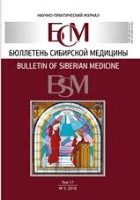
Byulleten Sibirskoy Meditsiny
Championing Open Access to Transform Healthcare SolutionsByulleten Sibirskoy Meditsiny, published by the Siberian State Medical University, is a pivotal open-access journal in the field of Molecular Medicine, with its current edition indexed under the ISSN 1682-0363. Since its transition to open access in 2013, the journal aims to disseminate high-quality research and advancements in biomedical sciences, particularly focusing on molecular mechanisms and therapeutic interventions. Despite its relatively recent recognition in Molecular Medicine, where it ranks in the 6th percentile, the journal is dedicated to fostering knowledge exchange and collaboration among researchers, professionals, and students alike. With a modest impact factor and quarterly publication, Byulleten Sibirskoy Meditsiny is positioned to serve as a valuable resource for those engaged in the intricate realms of molecular biology, biochemistry, and general medicine, contributing to the broader scientific discourse in the Russian Federation and beyond.