BIOMETRICAL JOURNAL
Scope & Guideline
Bridging theory and practice in biomedical research.
Introduction
Aims and Scopes
- Statistical Methodology Development:
The journal publishes original research that introduces new statistical methodologies suitable for complex data structures, including high-dimensional data, longitudinal data, and survival analysis. - Biostatistics Applications:
A core focus of the journal is the application of statistical methods to biological and health sciences, including clinical trials, epidemiological studies, and genetic research. - Data Analysis Techniques:
The journal emphasizes diverse data analysis techniques, such as Bayesian methods, machine learning, and robust statistical modeling, tailored for specific research questions in health and biology. - Methodological Research:
It encourages methodological research that addresses challenges in statistical inference, such as missing data, variable selection, and causal inference in observational studies. - Interdisciplinary Collaboration:
The journal promotes interdisciplinary research that combines statistics with biology, medicine, and public health, fostering collaborations among statisticians and health researchers.
Trending and Emerging
- Machine Learning and AI Integration:
There is a notable increase in the integration of machine learning and artificial intelligence techniques into statistical methodologies, reflecting a trend towards utilizing advanced computational methods for predictive modeling and data analysis. - Bayesian Approaches:
Bayesian methods are gaining traction, with an emphasis on their application in clinical trials, epidemiological studies, and health data analysis, highlighting their flexibility and capability in handling uncertainty. - Causal Inference Techniques:
Research focusing on causal inference, particularly in observational studies and randomized controlled trials, is on the rise, reflecting the need for robust methodologies that can address confounding and bias. - Adaptive Designs in Clinical Trials:
Adaptive trial designs are increasingly featured, showcasing innovative approaches that allow for modifications based on interim results, thereby enhancing the efficiency of clinical research. - Statistical Methods for Emerging Health Issues:
The journal is increasingly featuring studies that address pressing health issues, such as COVID-19, demonstrating an adaptive response to current global health challenges through innovative statistical modeling.
Declining or Waning
- Traditional Parametric Models:
There appears to be a decreasing emphasis on traditional parametric models, such as linear regression, as researchers increasingly favor more flexible and robust approaches that can better handle complex data structures. - Basic Statistical Theory:
The focus on foundational statistical theory has waned, possibly due to the growing interest in applied methodologies and real-world data analysis that prioritize practical applications over theoretical discussions. - Single-method Studies:
Research that emphasizes single statistical methods without integration into broader frameworks or comparisons is becoming less frequent, as there is a growing preference for studies that explore multiple methodologies or hybrid approaches.
Similar Journals
Annals of Applied Statistics
Advancing the Frontiers of Applied StatisticsThe Annals of Applied Statistics, published by the Institute of Mathematical Statistics (IMS), is a leading academic journal that serves as a crucial repository for groundbreaking research in the fields of statistics and probability applications. Since its inception in 2008 and continuing through 2024, this journal has established itself as an influential platform with a notable reputation, boasting a prestigious Q1 classification in 2023 across critical categories such as Modeling and Simulation and Statistics, Probability, and Uncertainty. With its rigorous peer-review process and significant Scopus rankings—including a position of #78 in Statistics and Probability—Annals of Applied Statistics aims to foster innovative statistical methods and their applications in a variety of disciplines. Researchers, professionals, and students interested in the latest advancements in analytical methods will find this journal essential for navigating the evolving landscape of applied statistics. The journal does not offer open access options, ensuring that published content reflects the highest academic standards.
BIOSTATISTICS
Exploring the synergy of statistics and biomedicine.BIOSTATISTICS is a premier academic journal dedicated to the intersection of statistical methodologies and their applications in the field of biomedicine, published by Oxford University Press. With its ISSN 1465-4644 and E-ISSN 1468-4357, the journal has established itself as a crucial resource for researchers and professionals in the broad disciplines of statistics and probability, particularly within medical contexts. The journal proudly holds a Q1 ranking in multiple categories as of 2023, including Medicine (miscellaneous), Statistics and Probability, as well as Statistics, Probability, and Uncertainty, placing it at the forefront of statistical research. It has also achieved notable Scopus rankings, underscoring its influence and reach—ranking 27th in Mathematics (Statistics and Probability) and 94th in Medicine (General Medicine). Although it does not currently offer open access options, BIOSTATISTICS remains committed to advancing scholarly conversation and innovation in statistical science, making it an essential outlet for both established and emerging researchers. With contributions spanning from 2003 to 2024, this journal is actively seeking to foster an understanding of complex statistical approaches in biomedicine, enabling professionals in the field to apply robust statistical techniques to real-world problems.
JOURNAL OF THE ROYAL STATISTICAL SOCIETY SERIES B-STATISTICAL METHODOLOGY
Shaping the Future of Statistical ApplicationsJOURNAL OF THE ROYAL STATISTICAL SOCIETY SERIES B-STATISTICAL METHODOLOGY, published by OXFORD UNIVERSITY PRESS, is a leading academic journal dedicated to advancing the field of statistical methodology. With a distinguished Q1 ranking in both Statistics and Probability and Statistics, Probability and Uncertainty as of 2023, this journal stands at the forefront of statistical research, serving as a vital resource for researchers, professionals, and students alike. The journal has been committed to fostering innovative statistical techniques and methodologies since its inception in 1997, covering a wide scope of topics that push the boundaries of statistical applications in various disciplines. Based in the United Kingdom, the journal maintains its reputation through rigorous peer-review practices and high-quality content, making it an indispensable platform for those looking to disseminate their findings and engage with current trends in statistical science. Although the journal does not offer open access, the impact and scholarly significance of its articles remain profoundly influential in shaping contemporary statistical discourse.
ANNALS OF STATISTICS
Advancing Statistical Science Through Rigorous ResearchANNALS OF STATISTICS, published by the Institute of Mathematical Statistics (IMS), stands as a premier journal in the field of statistical science, particularly recognized for its rigorous peer-reviewed articles and innovative contributions. With an impressive impact factor and categorized in the Q1 quartile for both Statistics and Probability, as well as Statistics, Probability, and Uncertainty, this journal is a vital resource for researchers, professionals, and students alike. Covering a comprehensive array of statistical theories and methodologies from 1996 to 2024, it aims to foster the advancement of mathematical statistics while addressing contemporary challenges in data analysis and interpretation. The journal, operating without an Open Access model, remains a key platform for disseminating high-quality research, evident from its commendable Scopus rankings of Rank #9 out of 278 in Statistics and Probability and Rank #9 out of 168 in Decision Sciences. Located in Cleveland, Ohio, the ANNALS OF STATISTICS is not just a journal but a beacon of knowledge that continues to influence statistical practices globally.
STATISTICAL METHODS IN MEDICAL RESEARCH
Transforming health data into actionable insights.STATISTICAL METHODS IN MEDICAL RESEARCH is a leading academic journal dedicated to advancing the field of statistical methodologies as they apply to medical research. Published by SAGE Publications Ltd, this prestigious journal focuses on innovative statistical techniques that are pivotal for health-related data analysis and interpretation. With its Q1 ranking in Epidemiology, Health Information Management, and Statistics and Probability as of 2023, it stands out as a vital resource for researchers and practitioners alike. The journal, which has been in circulation since 1992, is widely recognized for its robust contributions to evidence-based medicine and public health, ensuring that practitioners have access to cutting-edge research. Although it currently does not offer Open Access options, the high-impact nature indicated by its rankings and percentile positions solidifies its importance as a go-to source for statistical theories and applications in health research. Researchers, healthcare professionals, and students are encouraged to explore the rich content of this journal to stay abreast of the latest advancements and methodologies.
STATISTICS
Empowering researchers to shape the future of statistics.STATISTICS is a distinguished journal published by Taylor & Francis Ltd, dedicated to advancing the field of statistical science since its inception in 1985. With a strong focus on both the theoretical and practical aspects of Statistics and Probability, this journal serves as a vital platform for researchers, professionals, and students seeking to disseminate their findings and contribute to critical discussions in the discipline. Although categorized in the Q3 quartile for both Statistics and Probability and Statistics, Probability and Uncertainty, the journal's commitment to quality research is evidenced by its inclusion in relevant Scopus rankings. It holds respectable positions, ranked #132/168 in Decision Sciences and #219/278 in Mathematics. By providing a venue for high-quality research articles and reviews, STATISTICS aims to foster innovation, reinforce methodological advancements, and address contemporary challenges in statistical applications. The journal does not currently offer open access, but it is widely distributed, ensuring that significant research reaches the communities that need it most. Researchers are encouraged to submit their work to this essential resource that continues to shape the landscape of statistical inquiry.
BIOMETRIKA
Exploring the Intersection of Theory and ApplicationBIOMETRIKA, published by the esteemed Oxford University Press, stands as a pivotal journal in the fields of statistics, probability, and applied mathematics since its inception in 1908. With ISSN number 0006-3444 and E-ISSN 1464-3510, this journal maintains an impressive reputation, consistently achieving Q1 rankings across multiple categories including Agricultural and Biological Sciences, Applied Mathematics, and Statistics. Addressed to a global audience from its base in Oxford, United Kingdom, BIOMETRIKA serves as an essential platform for disseminating rigorous research aimed at advancing statistical methodologies and their applications. While the journal does not offer Open Access options, it is recognized for its high-impact output, holding significant positions in Scopus rankings - specifically attaining a 94th percentile rank in General Mathematics and a 91st percentile in Statistics and Probability. Scholars, professionals, and students alike will find in BIOMETRIKA a wealth of knowledge that bridges theory and practice within the vast domain of statistical science, making it indispensable for ongoing research and education in the field.
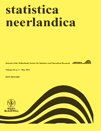
STATISTICA NEERLANDICA
Exploring the forefront of statistics and probability.STATISTICA NEERLANDICA is a prestigious peer-reviewed journal published by Wiley, focusing on the fields of statistics and probability. Established in 1946 and addressing key issues in statistical theory and its applications, the journal has significantly contributed to the development of modern statistical practices. With an impressive Q2 categorization in both Statistics and Probability, as well as Statistics, Probability, and Uncertainty, STATISTICA NEERLANDICA stands out within its field, ranking in the 62nd percentile among its peers in mathematics, specifically in statistics and probability. Researchers, professionals, and students can benefit from its rigorous scholarship and innovative methodologies, aiding in the advancement of statistical science. Although the journal does not operate under an open access model, it maintains a commitment to disseminating high-quality research, making it a vital resource for those engaged in statistical inquiry.
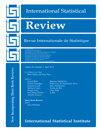
INTERNATIONAL STATISTICAL REVIEW
Elevating Insights in Statistics and ProbabilityINTERNATIONAL STATISTICAL REVIEW is a prestigious journal published by Wiley, recognized for its significant contributions to the field of statistics and probability. With an impact factor reflecting its high citation rate and ranking in the top quartile (Q1) of relevant categories, this journal is a vital resource for researchers, professionals, and students alike. Covering a broad range of topics within statistical theory and application, it aims to disseminate innovative research findings and methodological advancements that shape the discipline. The journal's extensive history, converging years from 1982 to 2024, establishes its longstanding commitment to fostering scholarly communication in statistics. While it operates under a subscription model, its rigorous peer-review process ensures that published articles are of the highest quality, providing readers with insightful, reliable, and impactful content. For those looking to stay at the forefront of statistical research, the INTERNATIONAL STATISTICAL REVIEW is an indispensable addition to their academic resources.

BIOMETRICS
Advancing Knowledge in Biometrics and BeyondBIOMETRICS, published by WILEY, stands as a prestigious journal that has made substantial contributions across diverse fields, including Agricultural and Biological Sciences, Applied Mathematics, and Biochemistry. With an impressive track record from its inception in 1946 and continuing through to 2024, this journal is recognized for its rigorous peer-reviewed research and high-impact findings, evidenced by its Q1 ranking in various categories such as Medicine and Statistics. Researchers and professionals alike will find a wealth of knowledge within its pages, making it an essential resource for anyone involved in these dynamic and evolving disciplines. While BIOMETRICS does not offer open access, its reputation for delivering high-quality research ensures its continued importance in advancing the scientific ecosystem. For those seeking to stay ahead in their fields, engaging with the latest studies published in this journal is indispensable.