Statistics in Biosciences
Scope & Guideline
Advancing Statistical Insights in Biosciences
Introduction
Aims and Scopes
- Causal Inference and Statistical Modeling:
Focuses on developing and applying statistical methodologies for causal inference, particularly in biomedical research and public health contexts. - Bayesian Methods in Biosciences:
Emphasizes the use of Bayesian statistics for analyzing complex data structures, including high-dimensional data and longitudinal studies. - Genomics and Bioinformatics:
Concentrates on statistical approaches tailored for genomic data analysis, including microbiome studies and genetic association analyses. - Clinical Trials and Epidemiology:
Explores statistical designs and methodologies for clinical trials, emphasizing innovative approaches to improve trial efficiency and data interpretation. - Machine Learning and Data Science:
Integrates machine learning techniques with traditional statistical methods to address challenges in biosciences, enhancing predictive modeling and data analysis. - Longitudinal and Survival Analysis:
Investigates statistical methods for analyzing longitudinal data and survival outcomes, with applications in chronic disease research and health outcomes. - Multivariate and Complex Data Analysis:
Focuses on statistical techniques for analyzing multivariate data, particularly in the context of health studies and environmental exposures.
Trending and Emerging
- Integrative Data Analysis:
There is an increasing interest in methodologies that integrate diverse data types (e.g., genomic, clinical, and environmental) to provide a more comprehensive understanding of health outcomes. - Machine Learning Applications:
The application of machine learning techniques in statistical analysis is on the rise, particularly for predictive modeling and handling complex datasets in biosciences. - Causal Machine Learning:
The intersection of causal inference and machine learning is becoming a focal point, with research aiming to improve causal estimation in high-dimensional settings. - Health Data Science:
The emergence of health data science as a field is reflected in studies that leverage large-scale health data for innovative statistical methodologies. - Microbiome and Metagenomics:
Growing emphasis on statistical methods for microbiome data analysis and its implications for health and disease is a notable trend in recent publications. - Real-World Evidence and Data Utilization:
There is a marked increase in studies utilizing real-world data to inform clinical decision-making and enhance the robustness of statistical findings. - Adaptive Trial Designs:
Adaptive designs in clinical trials, which allow for modifications based on interim results, are increasingly featured, reflecting a shift towards more flexible trial methodologies.
Declining or Waning
- Traditional Frequentist Methods:
There has been a noticeable shift towards Bayesian methodologies, leading to a decline in the publication of traditional frequentist approaches. - Basic Statistical Theory:
Papers focused on foundational statistical theory are becoming less common, as the journal increasingly emphasizes applied and interdisciplinary research. - Single-Domain Studies:
Research that focuses solely on a single domain without integrating multiple data sources or interdisciplinary approaches seems to be diminishing. - Descriptive Statistics:
There is a decline in studies that primarily present descriptive statistics without substantial inferential or predictive modeling components. - Static Data Analysis:
The journal is moving away from studies that analyze static datasets, favoring those that employ dynamic or longitudinal data analysis.
Similar Journals
STATISTICA NEERLANDICA
Empowering professionals with high-quality statistical inquiries.STATISTICA NEERLANDICA is a prestigious peer-reviewed journal published by Wiley, focusing on the fields of statistics and probability. Established in 1946 and addressing key issues in statistical theory and its applications, the journal has significantly contributed to the development of modern statistical practices. With an impressive Q2 categorization in both Statistics and Probability, as well as Statistics, Probability, and Uncertainty, STATISTICA NEERLANDICA stands out within its field, ranking in the 62nd percentile among its peers in mathematics, specifically in statistics and probability. Researchers, professionals, and students can benefit from its rigorous scholarship and innovative methodologies, aiding in the advancement of statistical science. Although the journal does not operate under an open access model, it maintains a commitment to disseminating high-quality research, making it a vital resource for those engaged in statistical inquiry.
STATISTICAL METHODS IN MEDICAL RESEARCH
Driving progress in medical research through statistical excellence.STATISTICAL METHODS IN MEDICAL RESEARCH is a leading academic journal dedicated to advancing the field of statistical methodologies as they apply to medical research. Published by SAGE Publications Ltd, this prestigious journal focuses on innovative statistical techniques that are pivotal for health-related data analysis and interpretation. With its Q1 ranking in Epidemiology, Health Information Management, and Statistics and Probability as of 2023, it stands out as a vital resource for researchers and practitioners alike. The journal, which has been in circulation since 1992, is widely recognized for its robust contributions to evidence-based medicine and public health, ensuring that practitioners have access to cutting-edge research. Although it currently does not offer Open Access options, the high-impact nature indicated by its rankings and percentile positions solidifies its importance as a go-to source for statistical theories and applications in health research. Researchers, healthcare professionals, and students are encouraged to explore the rich content of this journal to stay abreast of the latest advancements and methodologies.
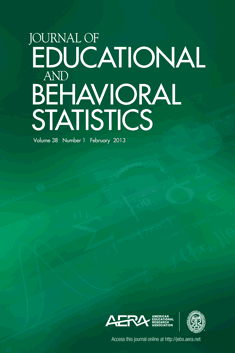
JOURNAL OF EDUCATIONAL AND BEHAVIORAL STATISTICS
Exploring New Horizons in Behavioral ResearchJOURNAL OF EDUCATIONAL AND BEHAVIORAL STATISTICS, published by SAGE Publications Inc, stands as a pivotal resource in the domains of education and social sciences. With an impressive impact factor reflecting its influence, it is categorized in the esteemed Q1 quartile for both Education and Social Sciences (miscellaneous), positioning it among the top-tier journals in these fields. The journal, bearing the ISSN 1076-9986 and E-ISSN 1935-1054, prides itself on disseminating rigorous research and innovative methodologies applicable to educational and behavioral statistics. Since its inception in 1996, it has continually evolved, featuring cutting-edge studies that address contemporary challenges in educational assessment and statistical techniques. Researchers, educators, and students alike will find invaluable insights within its pages, making it an essential publication for those seeking to advance their understanding and application of statistical methods in education. The journal's commitment to excellence and relevance ensures it remains a cornerstone for scholarly discourse through 2024 and beyond.
BIOMETRICAL JOURNAL
Innovating statistical solutions for complex health challenges.BIOMETRICAL JOURNAL is a prestigious academic publication dedicated to advancing the fields of Medicine and Statistics. Published by WILEY since its inception in 1977, this journal plays a critical role in disseminating cutting-edge research and methodologies that bridge the gap between statistical theory and real-world medical applications. With an impressive Q1 ranking in both Medicine (miscellaneous) and Statistics, Probability and Uncertainty, it is recognized for its high-impact contributions to the scientific community. The journal actively encourages submissions that utilize innovative statistical techniques to address complex biomedical issues, making it an essential resource for researchers, professionals, and students aiming to enhance their understanding of quantitative approaches in health and medicine. Although the journal is not open access, its rigorous peer-review process guarantees the quality and relevance of published works, further establishing its significance in the academic landscape.

Japanese Journal of Statistics and Data Science
Pioneering the Future of Statistics and Data ScienceJapanese Journal of Statistics and Data Science, published by SPRINGERNATURE, is a leading academic journal dedicated to the advancement of statistical methodologies and data science applications, with a focus on fostering innovative research and discourse within the field. Since its inception in 2018, the journal has sought to bridge theory and practice, embracing emerging trends and interdisciplinary approaches that contribute to the ever-evolving landscape of statistics, probability, and computational theory. Hailing from Germany, the journal holds an impressive Q3 ranking in both Computational Theory and Mathematics and Statistics and Probability, reflecting its commitment to high-quality, impactful research. With an accessible ISSN of 2520-8756 and E-ISSN 2520-8764, the journal invites a global audience of researchers, professionals, and students to explore its rich array of articles and findings, all aimed at furthering knowledge and application in the realm of data science.
CANADIAN JOURNAL OF STATISTICS-REVUE CANADIENNE DE STATISTIQUE
Empowering Researchers with Rigorous InsightsCanadian Journal of Statistics - Revue Canadienne de Statistique is a prestigious publication in the field of statistics, managed by Wiley. Since its inception in 1973, this journal has served as an essential resource for researchers, practitioners, and students, offering insights into a diverse range of statistical methodologies and applications. With its impact reflected in its 2023 categorization as Q2 in Statistics and Probability and Q3 in Statistics, Probability and Uncertainty, the journal stands out among its peers, exemplifying rigorous standards in empirical research. The journal's ISSN is 0319-5724 and its E-ISSN is 1708-945X, providing a robust platform for the dissemination of knowledge in the field. While it does not offer open access, the journal remains highly regarded and well-cited, contributing significantly to the advancement of statistical theory and practice. As it continues to publish cutting-edge research through to 2024, the Canadian Journal of Statistics is a must-read for anyone seeking to stay informed on the latest trends and developments in statistics.
STATISTICS IN MEDICINE
Elevating biomedical research through rigorous statistical dialogue.Statistics in Medicine, published by Wiley, is a prestigious journal dedicated to the advancement of statistical methods and their application in biomedical research. Established in 1982, this journal has become a cornerstone in the fields of Epidemiology and Statistics and Probability, demonstrating its importance by consistently achieving a Q1 ranking in the 2023 category quartiles. With an impressive ISSN of 0277-6715 and an E-ISSN of 1097-0258, it serves as a vital platform for disseminating high-quality research that enhances evidence-based medicine. Although the journal does not currently offer open access, it remains highly regarded, holding a Scopus rank of #66 in Mathematics and #80 in Medicine, indicating its significant impact on the academic community. By publishing cutting-edge research, Statistics in Medicine aims to bridge the gap between statistical theory and practical application in health domains, fostering a rigorous dialogue among researchers, clinicians, and statisticians alike.
Annals of Applied Statistics
Advancing the Frontiers of Applied StatisticsThe Annals of Applied Statistics, published by the Institute of Mathematical Statistics (IMS), is a leading academic journal that serves as a crucial repository for groundbreaking research in the fields of statistics and probability applications. Since its inception in 2008 and continuing through 2024, this journal has established itself as an influential platform with a notable reputation, boasting a prestigious Q1 classification in 2023 across critical categories such as Modeling and Simulation and Statistics, Probability, and Uncertainty. With its rigorous peer-review process and significant Scopus rankings—including a position of #78 in Statistics and Probability—Annals of Applied Statistics aims to foster innovative statistical methods and their applications in a variety of disciplines. Researchers, professionals, and students interested in the latest advancements in analytical methods will find this journal essential for navigating the evolving landscape of applied statistics. The journal does not offer open access options, ensuring that published content reflects the highest academic standards.
Journal of Statistical Planning and Inference
Elevating Applied Mathematics with Cutting-Edge ResearchThe Journal of Statistical Planning and Inference, published by ELSEVIER, stands as a significant platform within the fields of applied mathematics and statistics. With a history of rigorous scholarship since its inception in 1977, this journal provides a vital forum for researchers to share their advancements in statistical methodologies, planning, and inference techniques. As of 2023, it holds a respectable impact factor reflected in its Q2 rankings across multiple categories, including Applied Mathematics and Statistics and Probability, showcasing its influence and relevance in academic discourse. The journal is indexed in Scopus, with commendable rankings that affirm its scholarly merit, making it vital for professionals and students seeking the latest developments and research trends in statistical sciences. With a commitment to high-quality publications aimed at fostering innovation and practical solutions in statistical applications, the Journal of Statistical Planning and Inference is essential for anyone involved in empirical research and data-driven decision-making.
STATISTICAL SCIENCE
Pioneering New Paths in Statistics and Probability.STATISTICAL SCIENCE, published by the Institute of Mathematical Statistics (IMS), stands as a premier journal in the fields of Statistics and Probability, commencing its journey in 1986 and continuing through 2024. With an impressive track record reflected in its Q1 quartile rankings in Mathematics, Statistics and Probability, and Statistics, Probability and Uncertainty for 2023, it holds a distinguished position in the academic community. The journal is recognized for its rigorous peer-review process and for publishing high-quality research that significantly contributes to advancing statistical methodology and its applications across various domains. Researchers and professionals are encouraged to engage with its contents to stay abreast of the latest developments and methodologies in statistical science. Although it does not offer open access, the valuable insights provided within its pages are essential for any scholar dedicated to the pursue of statistical excellence. As you navigate the complexities of data analysis and interpretation, STATISTICAL SCIENCE is your go-to resource for groundbreaking research, innovative techniques, and comprehensive reviews.