
International Journal of Biostatistics
Scope & Guideline
Pioneering Research for Informed Healthcare Decisions.
Introduction
Aims and Scopes
- Biostatistical Methodology Development:
The journal emphasizes the development of new statistical methods tailored for biostatistical applications, including survival analysis, causal inference, and longitudinal data analysis. - Application of Advanced Statistical Techniques:
It covers the application of advanced techniques such as Bayesian methods, machine learning, and ensemble learning in analyzing biomedical data. - Health Data Analysis:
The journal focuses on statistical analyses that address health outcomes, treatment effects, and disease progression, often utilizing real-world data and complex datasets. - Clinical Trial Design and Analysis:
It presents innovative methodologies for designing and analyzing clinical trials, including adaptive designs, sample size determination, and handling of compliance issues. - Interdisciplinary Approaches:
The journal encourages interdisciplinary research that combines biostatistics with fields such as epidemiology, genetics, and health economics to enhance the understanding of health-related phenomena.
Trending and Emerging
- Machine Learning and AI Techniques:
Recent publications show a strong trend toward incorporating machine learning and artificial intelligence methodologies, particularly in predictive modeling and data mining within health data. - Bayesian Methods:
There is an increasing focus on Bayesian statistical methods, particularly for clinical trials and causal inference, reflecting a shift towards incorporating prior information and uncertainty into analyses. - Causal Inference and Mediation Analysis:
Emerging themes in causal inference, particularly methods for mediation analysis and handling confounding variables, are gaining prominence as researchers look to understand complex relationships in health data. - Integrative Approaches:
There is a trend toward integrative approaches that combine data from various sources and methodologies, such as the integration of imaging data with traditional clinical data, to provide a comprehensive analysis. - Adaptive and Efficient Clinical Trial Designs:
An increasing number of studies focus on adaptive designs for clinical trials, highlighting the need for flexibility and efficiency in trial methodologies, particularly in the context of personalized medicine.
Declining or Waning
- Traditional Frequentist Methods:
There appears to be a decreasing emphasis on traditional frequentist approaches in favor of Bayesian and machine learning techniques, which may offer more robust solutions for complex problems. - Basic Descriptive Statistics:
The use of basic descriptive statistics has diminished as the field increasingly favors more sophisticated inferential techniques and modeling approaches. - Simplistic Models for Survival Analysis:
There is a noticeable decline in simpler survival analysis models, as researchers now prefer more complex models that account for various types of censoring and heterogeneous treatment effects.
Similar Journals

Advances and Applications in Statistics
Pioneering Advances for Real-World ImpactAdvances and Applications in Statistics is a pivotal academic journal devoted to the dissemination of high-quality research findings in the field of statistics and its diverse applications. Published by PUSHPA PUBLISHING HOUSE, this journal aspires to serve as a dynamic platform for researchers, professionals, and students who aim to share innovative statistical methodologies and explore their practical implications across various disciplines. The journal, with its influential ISSN 0972-3617, fosters open discussion and collaboration within the statistical community, aiming to bridge theoretical advancements with real-world applications. As part of its ongoing commitment to academic integrity and excellence, Advances and Applications in Statistics encourages submissions that not only advance statistical theory but also illustrate their utility in solving contemporary issues in industries such as healthcare, finance, and economics. Although currently lacking an impact factor, the journal's dedication to quality research positions it as a significant contributor to the field. Researchers and academics looking to publish their work in a stimulating and supportive environment will find in this journal a valuable resource.
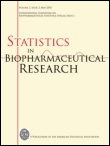
Statistics in Biopharmaceutical Research
Empowering researchers through cutting-edge statistical insights.Statistics in Biopharmaceutical Research, published by Taylor & Francis Inc, is a premier journal that occupies a crucial space in the realms of Pharmaceutical Science and Statistics and Probability. With a robust impact factor affirmed by its Q1 rankings in both categories, the journal stands as a beacon for innovative statistical methodologies and their applications in biopharmaceutical research. Researchers and professionals will find a rich repository of high-quality articles that address contemporary challenges in drug development, clinical trials, and regulatory frameworks. Since its inception in 2011, the journal has continued to foster interdisciplinary collaboration, making significant strides towards enhancing statistical practice in biomedicine. With a commitment to academic rigor and practical relevance, Statistics in Biopharmaceutical Research is an essential resource for anyone looking to advance their understanding and application of statistical techniques in the pharmaceutical industry.
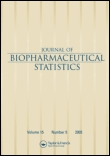
Journal of Biopharmaceutical Statistics
Innovating biostatistics for the future of pharmacology.Journal of Biopharmaceutical Statistics, published by Taylor & Francis Inc, is a premier scholarly journal that has been contributing to the fields of biostatistics and pharmacology since its inception in 1991. With an impressive track record spanning over three decades, it holds a significant place in the academic landscape, particularly evidenced by its Q2 quartile rankings in Pharmacology, Pharmacology (Medical), and Statistics and Probability as of 2023. The journal serves as a vital platform for researchers, professionals, and students, disseminating critical statistical methodologies and innovative analyses that enhance drug development and biopharmaceutical research. Although not open access, it provides invaluable insights through meticulously peer-reviewed articles that tackle pressing issues in pharmacometric modeling, clinical trial design, and statistical theory. As the biopharmaceutical industry evolves, Journal of Biopharmaceutical Statistics remains pivotal in fostering scientific discovery and excellence.
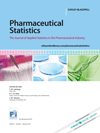
PHARMACEUTICAL STATISTICS
Transforming Data into Knowledge in Pharmaceutical SciencesPHARMACEUTICAL STATISTICS is a premier academic journal published by Wiley, focusing on the intersection of pharmacology and statistics. With the ISSN 1539-1604 and E-ISSN 1539-1612, this journal has established itself as a leading resource in the field since its inception in 2004, with a targeted convergence year extending to 2024. Notably, it ranks in the Q1 category for both pharmacology and statistics, reflecting its high impact and significance within these disciplines. The journal embraces a wide scope, encompassing statistical methodology and its application in pharmaceuticals, thus serving as an essential platform for researchers, professionals, and students committed to advancing their knowledge and practice. Its notable placement in Scopus rankings further reinforces its academic credibility, making it a valuable reference point for high-quality research. Although this journal does not currently offer open access options, it remains a vital source of insights and research advancements in the pharmaceutical sciences.

International Journal of Agricultural and Statistical Sciences
Advancing Research at the Intersection of Agriculture and StatisticsInternational Journal of Agricultural and Statistical Sciences, published by DR RAM KISHAN, is a prominent peer-reviewed journal dedicated to advancing research in the fields of agricultural sciences and statistical methodologies. With the ISSN 0973-1903 and E-ISSN 0976-3392, this journal serves as a vital platform for disseminating innovative research findings, data analyses, and theoretical approaches relevant to these areas. Although the journal's coverage in Scopus has been discontinued, it has previously demonstrated significant contributions to the academic community, holding ranks in the 45th percentile in both the 'Mathematics _ Statistics and Probability' and 'Agricultural and Biological Sciences' categories. Researchers and professionals can enhance their understanding of statistical applications in agriculture by engaging with the diverse range of articles published from 2009 to 2022. The journal values accessibility and aims to connect scholars globally, despite being a non-open access publication. This journal is essential for students, researchers, and practitioners seeking to bridge the gap between statistical science and agricultural practices.
CANADIAN JOURNAL OF STATISTICS-REVUE CANADIENNE DE STATISTIQUE
Your Gateway to Cutting-Edge Statistical ResearchCanadian Journal of Statistics - Revue Canadienne de Statistique is a prestigious publication in the field of statistics, managed by Wiley. Since its inception in 1973, this journal has served as an essential resource for researchers, practitioners, and students, offering insights into a diverse range of statistical methodologies and applications. With its impact reflected in its 2023 categorization as Q2 in Statistics and Probability and Q3 in Statistics, Probability and Uncertainty, the journal stands out among its peers, exemplifying rigorous standards in empirical research. The journal's ISSN is 0319-5724 and its E-ISSN is 1708-945X, providing a robust platform for the dissemination of knowledge in the field. While it does not offer open access, the journal remains highly regarded and well-cited, contributing significantly to the advancement of statistical theory and practice. As it continues to publish cutting-edge research through to 2024, the Canadian Journal of Statistics is a must-read for anyone seeking to stay informed on the latest trends and developments in statistics.
BIOSTATISTICS
Advancing statistical methodologies for biomedical breakthroughs.BIOSTATISTICS is a premier academic journal dedicated to the intersection of statistical methodologies and their applications in the field of biomedicine, published by Oxford University Press. With its ISSN 1465-4644 and E-ISSN 1468-4357, the journal has established itself as a crucial resource for researchers and professionals in the broad disciplines of statistics and probability, particularly within medical contexts. The journal proudly holds a Q1 ranking in multiple categories as of 2023, including Medicine (miscellaneous), Statistics and Probability, as well as Statistics, Probability, and Uncertainty, placing it at the forefront of statistical research. It has also achieved notable Scopus rankings, underscoring its influence and reach—ranking 27th in Mathematics (Statistics and Probability) and 94th in Medicine (General Medicine). Although it does not currently offer open access options, BIOSTATISTICS remains committed to advancing scholarly conversation and innovation in statistical science, making it an essential outlet for both established and emerging researchers. With contributions spanning from 2003 to 2024, this journal is actively seeking to foster an understanding of complex statistical approaches in biomedicine, enabling professionals in the field to apply robust statistical techniques to real-world problems.

Electronic Journal of Applied Statistical Analysis
Catalyzing Progress in Applied Statistical ResearchWelcome to the Electronic Journal of Applied Statistical Analysis, a pivotal platform for researchers and practitioners in the domains of Statistics and Probability, as well as Modeling and Simulation. Published by Università del Salento in Italy, this journal has been dedicated to disseminating valuable insights and advancements in applied statistical methodology since its inception in 2008. With its ISSN of 2070-5948, the journal operates within an esteemed academic framework, contributing significantly to the field despite its current Q4 ranking in both Statistics and Probability and Modeling and Simulation categories as of 2023. As we continue to explore complex statistical models and simulation techniques, the journal encourages submissions that advance theoretical and practical understandings, inviting the global academic community to engage with transformative research endeavors. For those looking to stay informed and ahead in the dynamic world of applied statistics, the Electronic Journal of Applied Statistical Analysis is an essential resource.
JOURNAL OF APPLIED STATISTICS
Exploring the forefront of applied statistics across disciplines.JOURNAL OF APPLIED STATISTICS, published by Taylor & Francis Ltd, is a prestigious scholarly resource that has been at the forefront of advancing the field of statistics since its inception in 1970. With ISSN 0266-4763 and E-ISSN 1360-0532, this esteemed journal focuses on the application of statistical methods across various disciplines, emphasizing practical implementations that provide significant insights into real-world problems. As a Q2 journal in both Statistics and Probability and Statistics, Probability and Uncertainty, it holds remarkable standings in Scopus, with ranks in the 77th and 74th percentiles, respectively. Researchers and professionals will find a wealth of rigorous methodologies and innovative analyses within its pages, aiming to bridge the gap between theory and practice. Although it adopts a traditional subscription model, its extensive archive—from 1970 to the present—offers invaluable resources for statisticians and data analysts. The journal serves as an essential platform for disseminating impactful research, making it a vital tool for students, researchers, and practitioners committed to the advancement of statistical science.
STATISTICS IN MEDICINE
Bridging the gap between theory and practice in health statistics.Statistics in Medicine, published by Wiley, is a prestigious journal dedicated to the advancement of statistical methods and their application in biomedical research. Established in 1982, this journal has become a cornerstone in the fields of Epidemiology and Statistics and Probability, demonstrating its importance by consistently achieving a Q1 ranking in the 2023 category quartiles. With an impressive ISSN of 0277-6715 and an E-ISSN of 1097-0258, it serves as a vital platform for disseminating high-quality research that enhances evidence-based medicine. Although the journal does not currently offer open access, it remains highly regarded, holding a Scopus rank of #66 in Mathematics and #80 in Medicine, indicating its significant impact on the academic community. By publishing cutting-edge research, Statistics in Medicine aims to bridge the gap between statistical theory and practical application in health domains, fostering a rigorous dialogue among researchers, clinicians, and statisticians alike.