
Cadernos de Estudos Linguisticos
metrics 2024
Exploring the nuances of language for a global audience.
Introduction
Cadernos de Estudos Linguisticos, published by UNIV ESTADUAL CAMPINAS, INST ESTUDOS LINGUAGEM, stands as a pivotal platform in the field of linguistic studies since its inception in 1978. With its commitment to Open Access, this journal fosters the dissemination of cutting-edge research, ensuring that knowledge is accessible to a global audience. This also enhances collaboration among researchers, professionals, and students dedicated to exploring the nuances of language. The journal proudly carries the ISSN 0102-5767 and E-ISSN 2447-0686, attesting to its uninterrupted quality and relevance in linguistic scholarship. By addressing various facets of language studies, including syntax, semantics, and sociolinguistics, this esteemed journal is a vital resource for advancing understanding and innovation in the field.
Metrics 2024
 -0.100.10-
Metrics History
Rank 2024
JCI (Web Of Science)
Quartile History
Similar Journals

Voprosy Yazykoznaniya
Unveiling the Complexities of CommunicationVoprosy Yazykoznaniya, published by the esteemed Russian Academy of Sciences and the State Academy of Humanities (GAUGN), stands as a leading journal in the field of linguistics and language studies. With an impressive Q2 rank in Linguistics and Language for 2023 and a strong position within Scopus rankings, this journal fosters scholarly dialogue and pushes the boundaries of linguistic research by providing a platform for innovative studies, reviews, and analyses. Although not open access, its publication ensures high academic standards and visibility within the global academic community. Researchers, professionals, and students alike can benefit from the rich insights and diverse perspectives presented in this journal, serving as a vital resource for anyone interested in the intricacies of language and its role in society. Operating since 2009 and continuing to 2024, Voprosy Yazykoznaniya is an essential reference point for contemporary linguistic scholarship in the Russian Federation and beyond.
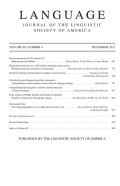
LANGUAGE
Elevating Academic Discourse in Linguistic StudiesLANGUAGE, published by the Linguistic Society of America, is a premier academic journal dedicated to the rigorous study of linguistic theory and practice. With an ISSN of 0097-8507 and E-ISSN 1535-0665, this esteemed journal has established itself as a leading publication in the field of linguistics since its inception. The journal has consistently maintained a high impact factor, being ranked in the Q1 category in Linguistics and Language for 2023, placing it among the top tier of academic journals. Notably, it also holds impressive Scopus rankings, being positioned at #75 out of 1088 in Arts and Humanities, and #89 out of 1167 in Social Sciences, demonstrating a significant impact and reach in the discipline. While it is not an open-access journal, LANGUAGE provides crucial insights into linguistic research, fostering a vibrant academic community. Spanning years from 1996 to 2024, it continues to be an essential resource for researchers, professionals, and students alike, aiming to advance the understanding of language in its myriad forms and functions.
RUSSIAN LINGUISTICS
Illuminating the intersections of language and psychology.RUSSIAN LINGUISTICS is a peer-reviewed academic journal published by Springer, dedicated to advancing the understanding of the Russian language and its interplay with various linguistic frameworks. With a longstanding history that spans from its inception in 1974, the journal encompasses a broad range of topics within the fields of linguistics and language studies, offering valuable insights especially in *Developmental and Educational Psychology* and the intricacies of linguistics at large. Currently ranked in the Q2 quartile for Linguistics and Language, and holding substantial positions within Scopus rankings, RUSSIAN LINGUISTICS serves as an essential resource for researchers, educators, and students alike, fostering dialogue and collaboration within the international linguistic community. The journal notably provides critical access to research findings that enhance the comprehension of Russian linguistics' role in a global context, despite operating under a traditional access model. For those pursuing scholarly excellence, RUSSIAN LINGUISTICS remains a pivotal platform for disseminating innovative research and promoting the study of language.
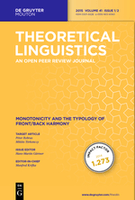
THEORETICAL LINGUISTICS
Navigating the Intricacies of Language StudiesTHEORETICAL LINGUISTICS, published by Walter de Gruyter GmbH, is a prominent journal dedicated to exploring the intricate dimensions of linguistics, positioning itself as an essential resource for scholars and practitioners in the field. Established in 1974, this Germany-based journal has undergone significant evolution, contributing to the theoretical and empirical understanding of language with a focus on diverse linguistic phenomena. As evidenced by its Q2 ranking in the Linguistics and Language category for 2023, THEORETICAL LINGUISTICS engages with innovative theoretical discussions and methodologies, making it a vital platform for researchers navigating the complexities of language structure and usage. Though not an open-access journal, it ensures accessibility through robust distribution networks, fostering collaboration and knowledge-sharing within the academic community. With a consistent output from 1990 to 2024, this journal stands at the intersection of linguistics and language studies, appealing to a wide audience of researchers, professionals, and students alike.
Journal of Slavic Linguistics
Advancing Knowledge in Slavic Language StudiesJournal of Slavic Linguistics, published by SLAVICA PUBLISHERS, is a key academic resource dedicated to the exploration of Slavic languages and linguistics. Established to provide a comprehensive platform for scholarly research, this journal addresses the intricate dynamics of Slavic phonetics, syntax, semantics, and discourse, making significant contributions to both theoretical and applied linguistics. The journal holds an impact factor that reflects its value in the linguistic community, particularly as it is ranked in the Q4 category in Linguistics and Language for 2023. With a focus on a wide range of topics within the field, the Journal of Slavic Linguistics serves as an essential reference for researchers, educators, and students alike, fostering an appreciation and deeper understanding of Slavic linguistic phenomena. Although currently not an Open Access journal, it remains accessible to a broad audience keen on engaging with contemporary linguistic scholarship.
English Language & Linguistics
Innovating Insights in Language and SocietyEnglish Language & Linguistics is a prestigious journal published by Cambridge University Press, specializing in the dynamic fields of linguistics and language studies. With an impressive Q1 ranking in both Linguistics and Language categories for 2023 and a notable placement in the Scopus metrics, where it ranks #142 out of 1088 in Arts and Humanities, the journal is recognized for its high-quality research contributions and robust impact in the scholarly community. Since its inception in 1997, English Language & Linguistics has provided a forum for researchers to explore various aspects of language, facilitating the dissemination of innovative ideas and empirical studies. With no open access options currently available, the journal remains a valuable resource within the United Kingdom and beyond, fostering a deeper understanding of language intricacies and their broader societal implications. For practitioners and academicians alike, this journal is a critical resource for keeping abreast of the latest advancements in linguistics.
Sintagma is a prominent academic journal dedicated to advancing the field of Linguistics and Language, published by the Universitat de Lleida in Spain. With an ISSN of 0214-9141 and an E-ISSN of 2013-6455, this journal has established itself as an open-access platform since 1989, thereby ensuring wide accessibility and dissemination of research. The journal's commitment to quality is reflected in its ranking within the Q4 quartile of Linguistics and Language in 2021 and a similar standing in Social Sciences and Arts and Humanities, which underscores its emerging importance in these fields despite recent challenges. Covering topics that span theoretical inquiries to applied linguistic studies, Sintagma invites researchers, professionals, and students to contribute to and engage with its evolving landscape from its unique academic perspective. With the convergence of research years from 2011 to 2018 and upcoming issues through 2024, the journal remains poised to provide insightful content that addresses the linguistic dimensions of contemporary society.

RLA-Revista de Linguistica Teorica y Aplicada
Fostering scholarly dialogue in the realm of language studies.RLA-Revista de Linguística Teórica y Aplicada, published by Universidad de Concepción, Facultad de Humanidades y Arte, stands as a vital resource in the field of linguistics, delivering cutting-edge research and scholarly articles that contribute to both theoretical and applied linguistics. With its ISSN 0718-4883, this journal aims to foster robust discussions and innovations in linguistic theory, language acquisition, sociolinguistics, and applied linguistics methodologies. Although the journal currently does not provide open access options, it endeavors to reach a diverse audience, including researchers, professionals, and students, who are keen to explore the rich tapestry of language studies. By offering insights from both local and global perspectives, RLA does not only advance linguistic discourse but also encourages interdisciplinary collaboration, thereby solidifying its role as a pivotal publication in the linguistic academic community.
Journal of French Language Studies
Fostering Academic Excellence in French Language StudiesJournal of French Language Studies, published by Cambridge University Press, is a prestigious and leading journal in the field of linguistics and language that provides a platform for scholarly articles and research findings relevant to the French language and its various dimensions. With an impressive Q1 ranking in the 2023 categorization and ranked #257 out of 1088 in Scopus for Language and Linguistics, this journal plays a pivotal role in advancing the study of French linguistic methodologies, sociolinguistics, and applied linguistics. Since its inception in 1991, the journal has continually contributed to the academic community, attracting innovative investigations and theoretical discussions that enrich understanding and research in the field. Researchers and students enjoy comprehensive access to critical analysis and emerging trends, and as it continues to converge towards 2024, the journal promises to remain an essential resource for exploring the evolving landscape of French language studies.

Russian Journal of Linguistics
Unlocking the Rich Tapestry of Language StudiesWelcome to the Russian Journal of Linguistics, a prestigious journal published by Peoples Friendship University of Russia that has made significant strides in the realm of linguistic studies since its inception. With an Open Access policy established in 2019, this journal provides unparalleled opportunities for researchers, professionals, and students to share and disseminate groundbreaking linguistic research. The journal is currently ranked in the Q1 category for Linguistics and Language and boasts impressive Scopus rankings, placing 129th out of 1088 in the Arts and Humanities, and 148th out of 1167 in the Social Sciences. Focusing on a diverse range of linguistics topics, the journal aims to facilitate cross-disciplinary dialogue and foster advancements in the study of language. Located in Moscow, Russia, it champions the vibrant linguistic community by consistently publishing high-quality research that contributes to the global understanding of language dynamics. We invite you to explore the wealth of knowledge and insight the Russian Journal of Linguistics has to offer.