
Central European Journal of Communication
Scope & Guideline
Connecting Scholars, Practitioners, and Ideas in Communication
Introduction
Aims and Scopes
- Media Systems and Transitions:
Investigates the evolution and dynamics of media systems in post-communist societies, focusing on how transitions affect media practices and public discourse. - Public Communication and Democracy:
Explores the role of media in shaping public opinion, political communication, and democratic engagement, particularly during crises such as the COVID-19 pandemic. - Digital Media and Datafication:
Analyzes the impact of digital technologies on communication practices, including the rise of social media, datafication of public opinion, and the challenges posed by misinformation. - Cultural and Gender Studies in Media:
Examines how media representations intersect with cultural identities, gender dynamics, and societal norms, contributing to broader discussions on representation and inclusivity. - Journalism and Ethics:
Focuses on the evolving landscape of journalism, including issues of media accountability, self-regulation, and the ethical challenges faced by journalists in contemporary contexts.
Trending and Emerging
- COVID-19 and Misinformation:
A marked increase in research related to the COVID-19 pandemic, particularly concerning misinformation, public health communication, and the role of social media in shaping public perceptions. - Datafication and Public Opinion:
The rise of datafication as a significant theme, focusing on how data influences public opinion, media consumption, and the implications for democratic processes. - Media and Political Polarization:
Growing attention to how media contributes to political polarization, particularly in the context of populism and the framing of social movements within Central and Eastern Europe. - Visual and Digital Culture:
Emerging interest in the analysis of visual culture, particularly in relation to social media, memes, and their impact on public discourse and identity formation. - Gender and Media Representation:
An increasing focus on gender studies within media, exploring representation, audience reception, and the implications for cultural citizenship.
Declining or Waning
- Traditional Media Analysis:
There has been a noticeable reduction in studies focusing exclusively on traditional media formats, such as print and broadcast journalism, as the emphasis shifts towards digital and social media. - Historical Media Studies:
Research centering on historical perspectives of media systems, while still relevant, is appearing less frequently as contemporary issues take precedence in the discourse. - Local Media Dynamics:
The exploration of localized media dynamics and community journalism has diminished, possibly due to a greater focus on global or transnational media phenomena.
Similar Journals
Global Media and China
Navigating the Evolving Landscape of Chinese Media and CommunicationGlobal Media and China, published by SAGE Publications Ltd, is an esteemed open-access journal dedicated to fostering scholarly dialogue and research in the rapidly evolving dynamics between global media and Chinese communication practices. Launched in 2016, this journal has rapidly ascended within the academic community, achieving a remarkable Q1 ranking in both the Communication and Cultural Studies categories as of 2023, and holding significant positions in the Scopus rankings at the 95th and 81st percentiles respectively. Situated in the United Kingdom, the journal serves as a crucial platform for researchers, professionals, and students seeking to explore the intricate intersections of media influence, cultural policies, and communication trends originating from China. With a clearly defined scope and a commitment to open-access publication, Global Media and China is poised to continue its impactful contribution to global conversations surrounding media studies and cultural contemporary issues through to 2024 and beyond.

Connectist-Istanbul University Journal of Communication Sciences
Fostering Interdisciplinary Connections in Media StudiesConnectist-Istanbul University Journal of Communication Sciences is a distinguished academic publication under the auspices of Istanbul University, Faculty of Communication, dedicated to advancing the field of communication studies. Since its inception, this Open Access journal has facilitated the dissemination of groundbreaking research and innovative methodologies, particularly since it embraced an open access model in 2017, promoting wider accessibility and engagement. As a pivotal resource for researchers, practitioners, and students alike, Connectist fosters interdisciplinary dialogue, exploring contemporary issues in communication, media studies, and related disciplines. With a commitment to rigorous peer review and scholarly excellence, the journal serves as an essential platform for cutting-edge insights and developments in communication sciences, thereby contributing significantly to the academic community and beyond.
Communications-European Journal of Communication Research
Pioneering Research for a Dynamic Communication LandscapeCommunications-European Journal of Communication Research is a premier journal published by DE GRUYTER MOUTON, dedicated to fostering scholarly discourse in the field of communication studies. With a publication history spanning over four decades, from 1976 through to 2024, this journal serves as a vital resource for researchers and practitioners interested in the latest advancements and theoretical developments in communication. The journal is recognized for its rigorous peer-review process and has earned a commendable reputation, evidenced by its ranking in the Q2 quartile in both Arts and Humanities (miscellaneous) and Communication categories for 2023. Its Scopus rankings signify its relevance and impact, positioning it within the top quartile of the discipline's literature. Although not an open access journal, it provides access to a wide range of research that contributes significantly to the understanding of communication practices across diverse contexts. Scholars, professionals, and students alike will find a wealth of knowledge that not only sharpens their academic pursuits but also enriches practical applications in the communication landscape.

International Journal of Communication
Empowering voices through open access scholarship.International Journal of Communication, published by USC Annenberg Press, is a premier open access journal dedicated to advancing the field of communication studies. Since its inception in 2007, the journal has provided a vital platform for researchers, professionals, and students to engage with cutting-edge research, theoretical frameworks, and empirical studies. With an impressive Q1 quartile ranking in Communication for 2023 and a notable Scopus rank of 156 out of 511 in the Social Sciences Communication category, the journal consistently contributes to high-quality scholarly discourse. It covers a wide array of topics, making it a crucial resource for those looking to stay informed about the latest developments in communication research. The journal's commitment to open access enhances its reach and impact, fostering a global community of academics and practitioners dedicated to exploring the complexities of communication in contemporary society. This makes the International Journal of Communication an essential read for anyone interested in understanding the dynamics of communication today.

Revista de Comunicacion-Peru
Connecting Scholars, Inspiring Change.Revista de Comunicación-Perú is a distinguished open-access journal published by Universidad de Piura, with a dedicated focus on communication studies. Since its inception in 2002, the journal has provided a vital platform for researchers, professionals, and students to disseminate knowledge and foster discourse in the field of communication. As of 2023, it proudly holds a Q1 classification in the Communication category and ranks impressively in Scopus, placing at #117 out of 1304 in Cultural Studies and #160 out of 511 in Communication, demonstrating its significant impact within the academic community. The journal’s scope encompasses diverse topics related to communication, cultural discourse, and media analysis, making it an essential resource for those seeking to explore contemporary issues in these areas. With a commitment to promoting scholarly exchange, Revista de Comunicación-Perú continues to play a pivotal role in shaping the communication landscape in Peru and beyond.
JAVNOST-THE PUBLIC
Navigating the Intersections of Society and MediaJAVNOST - THE PUBLIC is a prestigious academic journal that has established itself as a leading platform within the field of communication. Published by Routledge Journals, Taylor & Francis Ltd in the United Kingdom, this journal caters to researchers, professionals, and students interested in the multifaceted dynamics of public communication and societal engagement. With an impressive Q1 ranking in the Communication category as of 2023 and a Scopus ranking of #166/511, placing it in the 67th percentile, it is widely recognized for its rigorous research contributions and theoretical insights. The journal has been in continuous circulation since its inception in 1994, and it actively seeks to publish high-quality, empirical studies that explore the nuances of public discourse, media influence, and societal interactions. Though a traditional publication, JAVNOST - THE PUBLIC remains committed to advancing the field by offering valuable resources and knowledge crucial for addressing contemporary challenges in public communication.
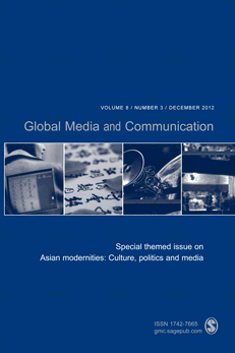
Global Media and Communication
Illuminating the Complex Ties Between Media and CultureGlobal Media and Communication is a premier journal dedicated to advancing the fields of media and communication studies, published by SAGE Publications Ltd. With an ISSN of 1742-7665 and an E-ISSN of 1742-7673, this journal offers a platform for scholarly discourse and innovative research that explores the intricate relationships between global media practices and communication strategies. Recognized as a Q1 journal in both the Arts and Humanities (Miscellaneous) and Communication categories for 2023, it stands out in its commitment to delivering high-quality, peer-reviewed articles that contribute to the understanding of contemporary media landscapes. Located in London, United Kingdom, the journal benefits from being at the heart of cultural and digital innovation. Researchers, professionals, and students can look forward to insightful articles that not only critique existing frameworks but also propose new methodologies, ensuring that Global Media and Communication remains a vital resource for anyone interested in navigating the evolving dynamics of media and communication on a global scale.
Revista Latina de Comunicacion Social
Empowering Voices in the Evolving Communication LandscapeRevista Latina de Comunicación Social is a prestigious and influential journal in the field of Communication, published by Historia Sistemas Informativos - HISIN. Established in 1998, this Open Access journal has continually contributed to the dissemination of high-quality research and innovative perspectives within the discipline. Based in Madrid, Spain, it has established itself as a vital platform for scholars, professionals, and students alike, particularly with its impressive ranking in the 2023 Scopus Ranks, where it sits at Rank #47 out of 511 journals in the Communication category, placing it in the 90th percentile. The journal embraces a broad scope that tracks the evolving trends and technologies in communication, with its Q1 status in Communication underlining its commitment to publishing impactful research. As it converges its years from 2011 to 2025, the journal remains dedicated to fostering academic discourse and engaging with emerging themes that shape the digital and traditional communication landscapes.
Palabra Clave
Advancing Knowledge in Arts and CommunicationPalabra Clave is a leading open-access journal published by the UNIV SABANA, FAC COMUNICACION in Colombia, dedicated to advancing the fields of Arts and Humanities as well as Communication. Since its inception in 2001, the journal has committed to providing a platform for innovative research and critical discourse, garnering an impressive Q2 classification in both respective fields. The journal is indexed in Scopus, with a commendable ranking of #26 out of 173 in Arts and Humanities, representing the 85th percentile, and #263 out of 511 in the Communication category, indicating its significant impact within the academic community. With its converged years from 2012 to 2024, Palabra Clave encourages scholars, professionals, and students to engage with contemporary issues through a lens of interdisciplinary scholarship. Accessible through its open-access model, this journal fosters the democratization of knowledge and aims to connect researchers across the globe.
COMMUNICATION REVIEW
Elevating Discourse Through Innovative InsightsCOMMUNICATION REVIEW is a premier journal dedicated to the dynamic and multifaceted field of communication, published by Routledge Journals, Taylor & Francis Ltd. With both ISSN 1071-4421 and E-ISSN 1547-7487, this journal has established itself as a vital resource for researchers, professionals, and students interested in innovative theories, cutting-edge research, and critical analyses within the field. Boasting a respected Q1 quartile ranking in Communication for 2023, it operates within the top tier of its category, underscored by a strong Scopus rank of #119 out of 511, placing it in the 76th percentile among its peers. Although not an open-access publication, it provides essential insights and findings that contribute significantly to the academic discourse on communication, making it a crucial reference for anyone looking to deepen their understanding of the subject. Enthusiasts and scholars alike will find COMMUNICATION REVIEW an invaluable journal that encapsulates the evolution and breadth of communication studies throughout its publication years from 1995 to 2001 and from 2003 to 2024.