Clinical Gerontologist
Scope & Guideline
Bridging disciplines to enhance the lives of older adults.
Introduction
Aims and Scopes
- Mental Health and Psychological Well-Being:
The journal emphasizes research on mental health issues affecting older adults, including depression, anxiety, and cognitive decline. Studies often explore interventions aimed at improving psychological well-being. - Caregiver Support and Interventions:
A significant focus is placed on the challenges faced by caregivers of older adults, including the development and evaluation of support programs and interventions designed to alleviate caregiver burden. - Aging and Chronic Disease Management:
Research on managing chronic diseases among older populations, including studies on the interplay between physical health, mental health, and social factors. - Diversity and Cultural Competence in Aging:
The journal highlights research addressing the unique needs and experiences of diverse older adult populations, including ethnic minorities and LGBTQ+ individuals. - Technology and Aging:
Exploration of how technology can be utilized to enhance the quality of life and care for older adults, including telehealth and digital interventions. - Social Inclusion and Isolation:
Research that investigates the impact of social connections and community engagement on the health and well-being of older adults.
Trending and Emerging
- Mental Health Literacy and Stigma Reduction:
Recent studies underscore the importance of mental health literacy among older adults and initiatives aimed at reducing stigma associated with seeking mental health services. - Digital Health Interventions:
There is a growing trend in exploring the effectiveness of digital health solutions, such as telehealth and mobile health applications, to improve care and mental health outcomes for older adults. - Intersectionality in Aging Research:
Emerging themes focus on the intersection of age with other identity factors such as gender, ethnicity, and sexual orientation, particularly in understanding the unique challenges faced by diverse older populations. - Crisis Response and Resilience during COVID-19:
Research examining the psychological and social impacts of the COVID-19 pandemic on older adults and caregivers is prevalent, highlighting resilience and coping strategies. - Focus on Caregiver Mental Health:
An increasing body of literature is directed towards understanding the mental health of caregivers, emphasizing their experiences and the need for targeted support.
Declining or Waning
- Traditional Biomedical Approaches:
There is a noticeable decrease in research centered solely on biomedical models of aging and health, with a shift towards more holistic, psychosocial approaches. - General Aging Research without Specific Focus:
Research that lacks a specific focus on mental health, caregiving, or technology in aging is becoming less frequent, as the journal increasingly prioritizes studies with clear implications for practice. - Single-Disease Focus:
Studies concentrating solely on one disease or condition without considering the broader context of aging and comorbidities are less common, reflecting a trend towards integrated care approaches.
Similar Journals

EXPERIMENTAL AGING RESEARCH
Advancing the Science of AgingEXPERIMENTAL AGING RESEARCH, published by Taylor & Francis Inc., is a leading journal that has been at the forefront of aging research since its inception in 1975. With an ISSN of 0361-073X and an E-ISSN of 1096-4657, this journal has earned a notable reputation, including a Q3 ranking in the field of Aging and impressive Q1 and Q2 rankings in Arts and Humanities and Geriatrics and Gerontology respectively. This positions the journal within the top percentile of its category, highlighting its significant impact and contribution to the scientific community. Covering a broad scope that intersects various disciplines, EXPERIMENTAL AGING RESEARCH aims to disseminate pioneering research, foster interdisciplinary collaboration, and provide a platform for innovative studies that enhance understanding of the aging process. While it currently does not offer Open Access, researchers and academics can access its rich repository of knowledge that spans multiple facets of aging, from physiological changes to psychological impacts. As the field of aging continues to evolve, this journal remains an essential resource for researchers, professionals, and students dedicated to advancing knowledge and practices concerning aging and longevity.
AGING & MENTAL HEALTH
Elevating the Discourse on Aging and Psychological WellnessAGING & MENTAL HEALTH, published by Routledge Journals, Taylor & Francis Ltd, is a leading academic journal that focuses on the dynamic intersection of aging and mental health, critically addressing issues pertinent to geriatric psychology and psychiatry. Established in 1997, this journal covers a wide range of topics including mental health disorders in older populations, cognitive decline, and social implications of aging. With an impressive reputation, it currently ranks in the Q1 category in Geriatrics and Gerontology, Gerontology, and Psychiatry and Mental Health, showcasing its significant contribution to these fields. The journal is recognized for its high-quality, peer-reviewed research and holds esteemed positions in Scopus rankings, emphasizing its relevance and impact in psychiatric nursing and gerontology. While it does not offer open access, AGING & MENTAL HEALTH remains a vital resource for researchers, professionals, and students dedicated to advancing our understanding of mental health in the aging population.
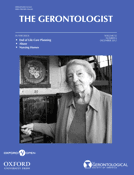
GERONTOLOGIST
Exploring New Frontiers in AgingThe GERONTOLOGIST, published by Oxford University Press Inc, is a premier journal in the field of geriatrics and gerontology, with a distinguished history since its inception in 1961. This esteemed journal stands out with its impressive Q1 rankings in prominent categories, including Geriatrics and Gerontology, reflecting its vital role in disseminating innovative research and advancing knowledge within these critical disciplines. With an impact factor that ranks it among the top journals in both Nursing Gerontology and Medicine, the GERONTOLOGIST serves as a key resource for researchers, professionals, and students dedicated to enhancing the health and well-being of older adults. Although it operates under a traditional access model, the journal remains committed to publishing cutting-edge studies that address the complexities of aging and inform evidence-based practices. By fostering a rich dialogue among scholars and practitioners, the GERONTOLOGIST is instrumental in shaping the future of gerontological research and policy.

Gerontology and Geriatric Medicine
Exploring the complexities of aging with interdisciplinary studies.Gerontology and Geriatric Medicine is a distinguished journal published by SAGE Publications Inc, focusing on the vital field of gerontology and geriatrics. With an impressive Q2 ranking in Geriatrics and Gerontology as of 2023, this journal serves as a crucial platform for disseminating high-quality research and innovation related to aging and elderly care. Since embracing an Open Access model in 2015, it has broadened its reach, enabling scholars, researchers, and practitioners worldwide to access valuable insights without barriers. The journal’s scope encompasses a variety of interdisciplinary studies that address the multifaceted aspects of geriatric medicine, making it an essential resource for anyone dedicated to advancing knowledge and practices in this critical domain. With its commitment to enhancing the understanding of aging populations, Gerontology and Geriatric Medicine is poised to contribute significantly to the ongoing discourse and research developments in the care for older adults.
JOURNALS OF GERONTOLOGY SERIES B-PSYCHOLOGICAL SCIENCES AND SOCIAL SCIENCES
Unraveling the Complexities of Aging Through ResearchJOURNALS OF GERONTOLOGY SERIES B: PSYCHOLOGICAL SCIENCES AND SOCIAL SCIENCES, published by Oxford University Press Inc, stands as a premier scholarly outlet dedicated to the interdisciplinary study of aging, psychological sciences, and social relations. With a notable E-ISSN of 1758-5368 and a track record from 1995 to 2024, this journal has firmly established itself within the top quartile (Q1) across multiple domains including Clinical Psychology, Geriatrics, Gerontology, and Social Psychology. Its rigorous standards propel significant research that contributes to understanding the complexities of aging in contemporary society. Researchers and professionals engaged in these fields benefit from its high-impact publications, underscored by impressive rankings—such as 6th in Geriatrics and Gerontology—positioning it amongst the leading journals globally. While there are currently no Open Access options available, the journal remains a vital resource for advancing knowledge on life-span and life-course studies, ensuring that critical insights reach its dedicated audience of scholars and practitioners.

Journal of Gerontology and Geriatrics
Pioneering Studies in Gerontology and GeriatricsJournal of Gerontology and Geriatrics, published by PACINI EDITORE, is a crucial resource for those dedicated to the study of aging and geriatric health. Since its inception in 2016, this journal has aimed to disseminate high-quality research and findings that address the intricate biological, social, and psychological aspects of aging. With ISSN 2499-6564 and E-ISSN 2499-6564, it strives to foster discussions that enhance our understanding of gerontology and geriatrics on a global scale, despite its current positioning in the Q4 quartile of academic rankings. Located in Pisa, Italy, the journal invites contributions from researchers, professionals, and students who are passionate about advancing knowledge in these critical fields. Although it currently does not offer open access, the journal plays a vital role in connecting the community with essential insights that guide both research and practice in geriatric care.

Salmand-Iranian Journal of Ageing
Connecting researchers to enhance senior health outcomes.Salmand-Iranian Journal of Ageing is a pioneering open-access publication dedicated to advancing the knowledge and understanding of ageing and geriatric health. Launched in 2006 by NEGAH INST SCIENTIFIC COMMUNICATION, this journal serves as a vital resource for researchers, professionals, and students within the fields of Geriatrics and Gerontology. Published in Iran, it aims to provide a platform for disseminating innovative research and clinical findings pertaining to ageing, with a commitment to accessibility and scholarly excellence. The journal holds recognition in its category with a Q4 designation in Aging and a Q3 classification in Geriatrics and Gerontology (2023), indicating its growing influence in academic circles. Despite a current H-index designation of '-', the journal's impact within its scope continues to develop. As it converges research efforts from 2018 to 2024, it seeks to address the pressing challenges faced by the ageing population. With no cost barriers for readers, the Salmand-Iranian Journal of Ageing remains an essential tool for fostering dialogue and collaboration in the quest for improved senior health outcomes.
Advances in Gerontology
Illuminating Pathways in Gerontological StudiesAdvances in Gerontology is a pivotal academic journal dedicated to the field of gerontology, published by PLEIADES PUBLISHING INC. With its ISSN 2079-0570 and E-ISSN 2079-0589, this journal serves as an essential platform for researchers, healthcare professionals, and students focused on aging and related health issues. Although currently not an open-access journal, it aspires to enrich the scholarly community by disseminating high-quality research from 2011 through 2024. The journal is recognized in the lower quartile of its category, ranking Q4 in both Geriatrics and Gerontology, reflecting its commitment to addressing emerging topics in the aging population despite its lower visibility in the competitive landscape. As it continues to explore critical areas in gerontology, Advances in Gerontology invites contributions that advance knowledge, foster understanding, and inform practices within this essential field of study.
INTERNATIONAL JOURNAL OF GERIATRIC PSYCHIATRY
Enhancing understanding of psychiatric disorders in older adults.International Journal of Geriatric Psychiatry, published by Wiley, stands as a premier journal dedicated to advancing the field of mental health in older adults. With an impressive impact factor reflective of its Q1 categorization in both Geriatrics and Gerontology, as well as Psychiatry and Mental Health, this journal addresses the critical intersection of aging and mental health, providing a platform for impactful research from 1986 through 2024. Researchers and professionals will find the journal invaluable, as it offers comprehensive insights into a range of subjects pertinent to geriatric mental health, with its ranking in Scopus highlighting its academic rigor and relevance (Rank #147/567 in Psychiatry and Mental Health; Rank #37/116 in Geriatrics and Gerontology). Though it operates on a traditional subscription model, the journal's significant contributions to the understanding of psychiatric disorders in the elderly make it a key resource for anyone involved in geriatric care and research.
JOURNAL OF WOMEN & AGING
Innovating Perspectives on Aging and Gender StudiesJournal of Women & Aging, published by Routledge Journals, Taylor & Francis Ltd, stands as a pivotal resource in the interdisciplinary study of women’s health and gerontology. With a rich history since its inception in 1989 and an impressive convergence period extending to 2024, this journal addresses critical issues affecting women as they age, exploring topics that span from social policy to health care and psychological well-being. As a recognized publication in the fields of Gender Studies (Q2) and Geriatrics and Gerontology (Q3), it ranks favorably in Scopus, highlighting its commitment to advancing research and knowledge in these significant areas. Researchers, professionals, and students alike will find valuable insights within its pages as the journal seeks to promote understanding and foster discussion on the unique challenges and contributions of older women in society.