
JOURNAL OF GERONTOLOGICAL SOCIAL WORK
Scope & Guideline
Fostering dialogue on critical aging issues.
Introduction
Aims and Scopes
- Interdisciplinary Research on Aging:
The journal emphasizes interdisciplinary studies that explore the complexities of aging, integrating perspectives from social work, psychology, public health, and gerontology. - Quality of Life and Well-Being:
A core focus is on understanding and improving the quality of life for older adults, including mental health, social support, and overall well-being. - Caregiving Dynamics:
Research related to caregiving, including the experiences of caregivers, their challenges, and the services available to support them, is a prominent theme. - Policy and Practice Implications:
The journal often highlights studies that have direct implications for social work practice and policy development, particularly in areas affecting older adults. - Cultural and Diversity Considerations:
It addresses the diverse experiences of aging across different cultural contexts, examining issues like race, ethnicity, and socio-economic status. - Technological Integration in Aging Services:
The journal explores the role of technology in enhancing the lives of older adults, including digital literacy and the use of assistive technologies.
Trending and Emerging
- Impact of COVID-19 on Older Adults:
A significant increase in research addressing the effects of the COVID-19 pandemic on older adults, including mental health, caregiving, and service delivery adaptations. - Community-Based Interventions:
There is a growing focus on interventions designed to support older adults within their communities, emphasizing social engagement and support systems. - Technology and Digital Inclusion:
Emerging studies on the role of technology in enhancing the lives of older adults, including digital literacy programs and the use of telehealth services. - Financial Exploitation and Empowerment:
An increase in research addressing financial exploitation among older adults and the importance of financial literacy and empowerment programs. - Intergenerational Programs:
Research exploring the benefits of intergenerational initiatives that promote interaction between older adults and younger generations is gaining traction. - Mental Health and Loneliness:
A heightened focus on the mental health challenges faced by older adults, particularly in relation to loneliness and social isolation, has emerged as a critical area of study.
Declining or Waning
- Traditional Aging Models:
There appears to be a declining emphasis on traditional models of aging that do not incorporate contemporary challenges such as technology use and social isolation. - Generalized Aging Research:
Research that discusses aging in a broad context without specific applications to social work practice or policy is less frequently addressed, indicating a shift towards more targeted studies. - Institutional Care Perspectives:
Papers focusing solely on institutional care settings, such as nursing homes, are becoming less prevalent as the journal shifts towards community-based and holistic approaches. - Ageism Awareness:
While still relevant, the discourse on ageism as a standalone topic has seen less emphasis, possibly due to a broader integration of this theme within other research areas.
Similar Journals

Salmand-Iranian Journal of Ageing
Connecting researchers to enhance senior health outcomes.Salmand-Iranian Journal of Ageing is a pioneering open-access publication dedicated to advancing the knowledge and understanding of ageing and geriatric health. Launched in 2006 by NEGAH INST SCIENTIFIC COMMUNICATION, this journal serves as a vital resource for researchers, professionals, and students within the fields of Geriatrics and Gerontology. Published in Iran, it aims to provide a platform for disseminating innovative research and clinical findings pertaining to ageing, with a commitment to accessibility and scholarly excellence. The journal holds recognition in its category with a Q4 designation in Aging and a Q3 classification in Geriatrics and Gerontology (2023), indicating its growing influence in academic circles. Despite a current H-index designation of '-', the journal's impact within its scope continues to develop. As it converges research efforts from 2018 to 2024, it seeks to address the pressing challenges faced by the ageing population. With no cost barriers for readers, the Salmand-Iranian Journal of Ageing remains an essential tool for fostering dialogue and collaboration in the quest for improved senior health outcomes.
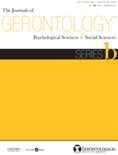
JOURNALS OF GERONTOLOGY SERIES B-PSYCHOLOGICAL SCIENCES AND SOCIAL SCIENCES
Exploring the Intersections of Psychology and GerontologyJOURNALS OF GERONTOLOGY SERIES B: PSYCHOLOGICAL SCIENCES AND SOCIAL SCIENCES, published by Oxford University Press Inc, stands as a premier scholarly outlet dedicated to the interdisciplinary study of aging, psychological sciences, and social relations. With a notable E-ISSN of 1758-5368 and a track record from 1995 to 2024, this journal has firmly established itself within the top quartile (Q1) across multiple domains including Clinical Psychology, Geriatrics, Gerontology, and Social Psychology. Its rigorous standards propel significant research that contributes to understanding the complexities of aging in contemporary society. Researchers and professionals engaged in these fields benefit from its high-impact publications, underscored by impressive rankings—such as 6th in Geriatrics and Gerontology—positioning it amongst the leading journals globally. While there are currently no Open Access options available, the journal remains a vital resource for advancing knowledge on life-span and life-course studies, ensuring that critical insights reach its dedicated audience of scholars and practitioners.
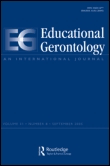
EDUCATIONAL GERONTOLOGY
Exploring the evolving landscape of education for older adults.EDUCATIONAL GERONTOLOGY, published by Taylor & Francis Inc, is a leading academic journal dedicated to the study of education and aging. With an ISSN of 0360-1277 and an E-ISSN of 1521-0472, this journal has been an essential resource since its inception in 1976, continuing to provide invaluable insights until 2024. As an authoritative platform in the fields of Education and Gerontology, it ranks in the Q2 category for Education and Q3 in Geriatrics and Gerontology, reflecting its significant contribution to these domains. The journal is well-regarded for its rigorous peer-reviewed articles that explore innovative educational practices for older adults and address the challenges faced by this demographic. Researchers, professionals, and students alike can benefit from the multidisciplinary approaches and comprehensive research findings presented within its pages, making it a vital tool for advancing knowledge and practice in educational gerontology.

Research in Gerontological Nursing
Elevating Standards in Nursing for Older AdultsResearch in Gerontological Nursing is a premier peer-reviewed journal dedicated to advancing the field of nursing as it intersects with gerontology. Published by SLACK INC, this influential journal provides an essential platform for researchers, clinicians, and educators focusing on the health and well-being of older adults. Since its inception in 2008, it has fostered critical discourse and innovation, bridging gaps between nursing practices and gerontological research. The journal proudly holds a Q3 ranking in both Geriatrics and Gerontology as well as Health Policy, and a Q2 ranking in miscellaneous Nursing categories as of 2023, reflecting its commitment to quality and relevance in these vital areas of study. While not open access, the journal offers a subscription-based model that guarantees readership and citation within the academic community. With its Scopus rankings highlighting its growing impact—ranked #23 in Nursing Gerontology and #59 in General Nursing—Research in Gerontological Nursing serves as an indispensable resource for those dedicated to improving care for the aging population.

RASP-Research on Ageing and Social Policy
Empowering Voices in Ageing and Social PolicyRASP - Research on Ageing and Social Policy is a distinguished journal dedicated to exploring the intricate relationship between ageing populations and societal change. Published by HIPATIA PRESS and featuring an Open Access model since 2013, this journal provides invaluable insights into various aspects of social policy as it relates to older adults. As a platform for rigorous academic research, RASP caters to an interdisciplinary audience of researchers, professionals, and students, promoting the exchange of innovative ideas and evidence-based practices. The journal aims to influence policy-making and practice, ensuring that the voices of ageing populations are heard and prioritized in social discourse. With a commitment to high-quality scholarship and a focus on global and local challenges, RASP stands out as a crucial resource for those engaged in the study of ageing and social policy dynamics.

Journal of Aging and Environment
Innovating Solutions for an Aging WorldThe Journal of Aging and Environment, published by Routledge Journals, Taylor & Francis Ltd, serves as a pivotal platform for interdisciplinary research concerning the intersections of aging, environmental factors, and social sciences. With a focus on understanding the implications of environmental changes on the aging population, this journal aims to foster insightful discussions and innovative solutions to address the challenges faced by older adults in diverse contexts. Achieving a Q3 ranking in multiple categories including Environmental Science and Gerontology, this journal not only reflects high-quality research but also contributes to shaping policy and practice in these vital fields. Researchers, academics, and practitioners are invited to engage with original articles and critical reviews that advance knowledge and understanding of aging in an ever-evolving environment. Though it is currently not an Open Access publication, the insights shared within its pages underscore the urgent need for awareness and action concerning the health and well-being of our aging society.
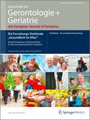
ZEITSCHRIFT FUR GERONTOLOGIE UND GERIATRIE
Illuminating the path to improved elder care practices.ZEITSCHRIFT FUR GERONTOLOGIE UND GERIATRIE, published by SPRINGER HEIDELBERG, is an authoritative journal dedicated to advancing the field of geriatrics and gerontology. With its ISSN 0948-6704 and E-ISSN 1435-1269, this journal has been a significant source of scholarly articles since its inception in 1995, catering to researchers and practitioners amid the growing importance of ageing studies. While it currently holds a Q4 ranking in Geriatrics and Gerontology and a Q3 ranking in Gerontology and Social Sciences, its contribution spans vital topics related to health ethics and legal aspects—reflecting a comprehensive view of the challenges faced in elder care. Although it is not an open-access journal, its rigorous peer-review process ensures that the research published is of high quality and relevance. Based in Heidelberg, Germany, the journal aims to foster discourse and disseminate crucial research findings that impact the health of elderly populations, making it an essential resource for researchers, healthcare professionals, and students devoted to improving geriatric care and understanding the complexities associated with ageing.
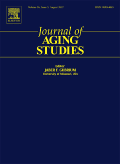
JOURNAL OF AGING STUDIES
Illuminating the Pathways of AgingJOURNAL OF AGING STUDIES is a leading publication dedicated to the interdisciplinary exploration of aging, providing a platform for researchers, professionals, and students interested in the complex dynamics of aging in contemporary society. Published by Elsevier Science Inc, this esteemed journal has established itself as a key resource in various categories, achieving a Q1 ranking in Issues, Ethics and Legal Aspects and a Q2 ranking in multiple health-related disciplines as of 2023. The journal focuses on a broad range of topics, including health policy, social sciences, and life-span studies, contributing significantly to discussions surrounding aging through its rigorous peer-reviewed articles and comprehensive research studies since its inception in 1987. With an ISSN of 0890-4065 and an E-ISSN of 1879-193X, it serves as an essential reference for academic and professional audiences, and remains committed to advancing knowledge and policy in the field of aging.
International Journal of Gerontology
Elevating the discourse on aging and its implications.International Journal of Gerontology is a distinguished peer-reviewed journal dedicated to advancing the field of gerontology and addressing the multifaceted challenges associated with aging. Published by the Taiwan Society of Geriatric Emergency & Critical Care Medicine, this innovative journal has been an open-access platform since 2018, ensuring that vital research is accessible to a global audience. With an ISSN of 1873-9598, it serves as a crucial resource for researchers and practitioners focused on the biological, psychological, and social aspects of aging. The journal is indexed in Scopus with a rank of #103/116 in the Medicine category (Geriatrics and Gerontology) as of 2023, placing it in the Q4 quartile—a testament to its evolving impact in the field. Spanning works published from 2007 to 2024, the International Journal of Gerontology facilitates the dissemination of critical research findings and clinical practices that inform and enhance geriatric care and research methodologies.
International Journal of Older People Nursing
Advancing Knowledge in Gerontological Nursing.The International Journal of Older People Nursing is a pivotal publication in the field of gerontology, focusing on the unique nursing care and health challenges faced by older adults. Published by WILEY and based in the United Kingdom, this journal aims to disseminate innovative research and practice insights from 2010 to 2024, making it an essential resource for academics and practitioners alike. With an impressive 2023 Category Quartile of Q2 in Gerontology, the journal ranks in the top tier of its field, placing it at 15th among 39 journals in Nursing Gerontology according to Scopus. The journal is committed to providing a platform for rigorous scientific inquiry, facilitating improvements in nursing practices, and promoting evidence-based care for older adults. Researchers, professionals, and students can benefit from the high-impact contributions that address the complexities and richness of aging, thus enhancing the quality of care and life for older populations.