Clinical Lung Cancer
Scope & Guideline
Elevating standards in oncology and respiratory health.
Introduction
Aims and Scopes
- Clinical Trials and Therapeutics:
The journal extensively covers clinical trials assessing novel therapies, including immunotherapy, targeted therapy, and combinations thereof, particularly in non-small cell lung cancer (NSCLC) and small cell lung cancer (SCLC). - Genomic and Molecular Characterization:
Research articles focus on the genomic landscape of lung cancers, including mutations, fusions, and biomarkers that guide personalized treatment options. - Real-World Outcomes and Patient-Centered Care:
An emphasis on real-world outcomes, patient preferences, and quality of life in lung cancer management reflects the journal’s commitment to patient-centered approaches. - Innovative Diagnostic Techniques:
Papers discussing advancements in diagnostic tools such as liquid biopsies, imaging techniques, and molecular profiling underscore the journal's focus on early detection and treatment stratification. - Multidisciplinary Management Strategies:
The journal promotes studies that incorporate multidisciplinary teams in the treatment of lung cancer, highlighting the collaboration between surgical, medical, and radiation oncologists.
Trending and Emerging
- Immunotherapy and Combination Therapies:
The rise of studies evaluating immunotherapy, particularly checkpoint inhibitors, and their combinations with other treatments, signifies a major trend in lung cancer treatment. - Real-World Evidence Studies:
There is an increasing emphasis on real-world evidence that captures the effectiveness of treatments in diverse populations, providing insights that complement clinical trial data. - Artificial Intelligence and Machine Learning Applications:
The integration of AI and machine learning in predicting treatment outcomes and personalizing therapy is an emerging focus, reflecting technological advancements in healthcare. - Patient-Reported Outcomes and Quality of Life Assessments:
Research focusing on patient-reported outcomes and overall quality of life is gaining importance, highlighting the need for holistic patient care. - Molecular Targeted Therapies for Rare Mutations:
An increase in studies addressing targeted therapies for less common genetic mutations in lung cancer, such as MET and RET alterations, indicates a trend towards more personalized treatment strategies.
Declining or Waning
- Traditional Chemotherapy Approaches:
There has been a noticeable decrease in studies focusing solely on traditional chemotherapy regimens, as the field increasingly shifts towards personalized medicine and targeted therapies. - Basic Science Research:
Research that delves into the basic science of lung cancer biology, while still important, appears less frequently as clinical applications and trials take precedence. - Surgical Techniques Without Context:
Papers discussing surgical techniques in isolation, without integration into broader treatment strategies or multidisciplinary approaches, are becoming less common. - Epidemiological Studies:
There is a waning interest in purely epidemiological studies without a clear clinical or therapeutic implication, as the focus shifts to actionable insights and clinical applications. - Single-Agent Studies:
Research centered on single-agent therapies is declining in favor of combination therapies that increase efficacy and address resistance mechanisms.
Similar Journals
Translational Lung Cancer Research
Bridging laboratory discoveries to clinical excellence.Translational Lung Cancer Research is a leading journal dedicated to advancing the field of oncology, particularly focusing on groundbreaking discoveries in lung cancer treatment and management. Published by AME Publishing Company, this journal boasts an impressive Q1 classification in the 2023 Oncology category, reflecting its significant contribution to the scientific community, with an outstanding Scopus rank of #92 out of 404 in Medicine _ Oncology, placing it in the 77th percentile. With its commitment to open access, the journal fosters international collaboration and accessibility, making cutting-edge research available to a wide audience. The scope of Translational Lung Cancer Research encompasses clinical trials, experimental studies, and translational research that bridge the gap between laboratory findings and clinical applications. Researchers, professionals, and students seeking to keep abreast of the latest developments in lung cancer research will find invaluable insights within its pages. For further information, please contact at FLAT-RM C 16F, KINGS WING PLAZA 1, NO 3 KWAN ST, SHATIN, HONG KONG.
International Journal of Clinical Oncology
Advancing the Frontiers of Cancer CareInternational Journal of Clinical Oncology, published by SPRINGER JAPAN KK, is a leading peer-reviewed journal dedicated to advancing research and clinical practices in the fields of oncology, hematology, and surgery. With its impact factor reflecting its significance and reach in the academic community, this journal serves as a solid platform for researchers, professionals, and students to share and disseminate groundbreaking discoveries and methodologies. Notably, it has secured prestigious rankings in the Q1 category in Medicine (miscellaneous) and Surgery, and Q2 in Hematology and Oncology, illustrating its prominent position in the medical literature. The journal's comprehensive scope addresses pivotal clinical issues from 1996 through 2024, further solidifying its relevance in the ever-evolving landscape of cancer research. Despite not offering open access, the depth and quality of research articles ensure that vital information remains accessible to those committed to improving clinical outcomes in oncology. With a focus on innovative treatments and patient care, the International Journal of Clinical Oncology embodies a commitment to fostering excellence in medical research.
Annals of Thoracic Medicine
Shaping the future of thoracic medicine with cutting-edge insights.Annals of Thoracic Medicine is a prominent open-access journal, published by Wolters Kluwer Medknow Publications, focusing on the critical fields of cardiology, pulmonary and respiratory medicine, and surgery. With an ISSN of 1817-1737 and an E-ISSN of 1998-3557, this journal aims to disseminate cutting-edge research, clinical findings, and innovative practices that can significantly impact the health outcomes of patients dealing with thoracic diseases. Since its inception in 2006, it has established itself as a reputable source of knowledge, achieving Q2 quartile rankings in 2023 across its main categories. Currently ranked #126 in Medicine & Surgery and exhibiting a growing SCOPUS percentile, the journal plays an essential role in advancing the understanding and treatment of thoracic conditions. Open access options ensure that research is readily available to a global audience, facilitating collaboration and knowledge sharing among researchers, healthcare professionals, and students in the field.

Breathe
Uniting expertise to enhance respiratory health.Breathe, published by the European Respiratory Society Journals Ltd, is a prominent open-access journal dedicated to advancing the field of pulmonary and respiratory medicine. With an ISSN of 1810-6838 and an E-ISSN of 2073-4735, this journal has been contributing to scholarly discourse since 2008. Nestled in the United Kingdom, it serves as a vital platform for researchers, clinicians, and educators, particularly in the areas of respiratory pathophysiology, diagnostic methods, and therapeutic interventions. Currently classified in the third quartile (Q3) for pulmonary and respiratory medicine, Breathe ranks 91st out of 155 in Scopus, reflecting its growing influence in the discipline. The journal aims to publish high-quality, peer-reviewed research that fosters collaboration and innovation in lung health, making significant strides toward improving patient outcomes. Whether you are a seasoned professional or an up-and-coming researcher, Breathe offers a wealth of knowledge and resources to support your work in this crucial area of medicine.
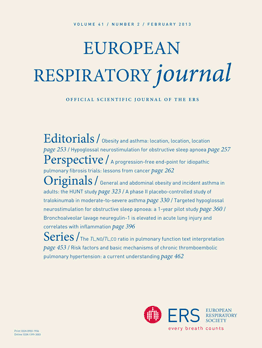
EUROPEAN RESPIRATORY JOURNAL
Exploring Innovations in Respiratory ResearchThe EUROPEAN RESPIRATORY JOURNAL, published by EUROPEAN RESPIRATORY SOC JOURNALS LTD, is at the forefront of advancing knowledge in the fields of pulmonary and respiratory medicine. With its ISSN 0903-1936 and E-ISSN 1399-3003, this esteemed journal has established itself as a leading platform since its inception in 1988, currently converging towards 2024. Ranked in the Q1 category for both Medicine (miscellaneous) and Pulmonary and Respiratory Medicine in 2023, it stands as the 3rd of 155 journals in its field, reflecting an impressive 98th percentile Scopus ranking. The journal boasts a rigorous selection of peer-reviewed articles that encompass innovative research, clinical studies, and reviews, thereby enhancing the understanding and treatment of respiratory diseases. Although it does not currently offer an Open Access option, the journal remains crucial for researchers, clinicians, and healthcare professionals committed to improving respiratory health across Europe and beyond. Join a community dedicated to groundbreaking research and advancements in respiratory medicine.
Journal of Thoracic Disease
Shaping the future of respiratory disease management.Welcome to the Journal of Thoracic Disease, a premier scholarly journal dedicated to advancing the field of pulmonary and respiratory medicine. Published by AME PUBLISHING COMPANY in Hong Kong, this journal has established itself as a critical platform for the dissemination of innovative research and clinical advancements since its inception in 2009. With an impressive Q2 ranking in the Scopus category of Pulmonary and Respiratory Medicine, it is recognized for its contribution to the academic community, featuring a broad range of original research, reviews, and case studies that address contemporary challenges in thoracic disease management. The journal is committed to Open Access principles, ensuring that high-quality research is readily available to a global audience, further enhancing its impact factor and reach. Researchers, healthcare professionals, and students alike will find invaluable insights within its pages, making Journal of Thoracic Disease an essential resource for those invested in the respiratory health domain.

Lung Cancer-Targets and Therapy
Elevating the Standards of Oncology ResearchLung Cancer - Targets and Therapy, published by Dove Medical Press Ltd, serves as a pivotal Open Access journal dedicated to advancing knowledge and research in the field of oncology, specifically focusing on lung cancer. Since its inception in 2010, this journal has provided a platform for disseminating high-quality research articles, reviews, and clinical studies, thereby enhancing the understanding of lung cancer mechanisms, therapies, and clinical outcomes. Currently ranked in the Q2 quartile within the oncology category and positioned at rank #80 out of 404 in Scopus, it resides in the 80th percentile of its field, reflecting its significant impact and relevance. With a commitment to promoting innovative therapies and strategies, Lung Cancer - Targets and Therapy is an essential resource for researchers, healthcare professionals, and students eager to contribute to the evolving landscape of cancer treatment and research.

Zeitschrift fur Pneumologie
Bridging Research and Practice in Respiratory MedicineZeitschrift für Pneumologie is a pivotal journal in the field of Pulmonary and Respiratory Medicine, published by Springer Heidelberg, a renowned name in academic publishing. With its ISSN number 2731-7404, it serves as a vital platform for disseminating innovative research and clinical studies relevant to lung health and diseases. This German-based journal aims to bridge the gap between research and practice, encouraging submissions that advance knowledge in respiratory medicine, including pathophysiology, treatment modalities, and patient care strategies. Although currently categorized in the Q4 quartile within its field, its commitment to quality research and emerging insights positions it as an essential resource for researchers, healthcare professionals, and students dedicated to improving respiratory health. The journal operates within the convergence period from 2022 to 2024, promising a dynamic evolution of its content. With limited open access availability, it encourages readership and contribution from its audience, fostering a collaborative academic environment.
Thoracic Cancer
Unlocking breakthroughs in thoracic malignancies.Thoracic Cancer is a distinguished open-access journal published by WILEY, dedicated to advancing the field of thoracic oncology. Since its establishment in 2010, the journal has emerged as a crucial platform for the dissemination of innovative research and clinical studies relating to lung cancer and other thoracic malignancies. With a commendable impact reflected in its 2023 Q2 rankings in the categories of Medicine (Miscellaneous), Oncology, and Pulmonary and Respiratory Medicine, the journal features high-quality articles that are vital for researchers, clinicians, and students aspiring to enhance their understanding of thoracic cancers. Operating out of Australia, Thoracic Cancer has embraced a commitment to open access since 2015, ensuring that vital research is readily available to a global audience. The journal's rigorous peer-review process and emphasis on novel findings make it an indispensable resource for professionals seeking to stay at the forefront of this rapidly evolving field.
LUNG CANCER
Pioneering Insights in Oncology and Pulmonary MedicineLUNG CANCER, published by Elsevier Ireland Ltd, is a pivotal academic journal dedicated to advancing knowledge in the fields of Cancer Research, Oncology, and Pulmonary and Respiratory Medicine. With an impressive impact factor reflected by its Q1 ranking across three key categories for 2023, this journal occupies a prestigious position within the research community, emphasizing quality and significance in published works. Since its inception in 1985, LUNG CANCER has provided a comprehensive platform for researchers and clinicians to disseminate findings and novel insights, enhancing the understanding and treatment of lung cancer. The journal stands out with Scopus rankings, placing it in the top percentile across multiple relevant fields, including a notable rank of #20 in Pulmonary and Respiratory Medicine. By fostering collaboration among scholars, the journal aims to facilitate innovative research and promote evidence-based practices that could transform patient outcomes. As such, LUNG CANCER is an essential resource for those navigating this complex area of study, from seasoned researchers to aspiring professionals.