
Clinical Pharmacology in Drug Development
Scope & Guideline
Innovating therapeutics through rigorous research.
Introduction
Aims and Scopes
- Pharmacokinetics and Pharmacodynamics:
Research that explores the absorption, distribution, metabolism, and excretion of drugs, alongside their biological effects, is a core focus. This includes studies on drug-drug interactions and the impact of genetic factors on drug response. - Bioequivalence Studies:
The journal frequently publishes studies assessing the bioequivalence of generic and branded drugs, which are critical for regulatory approvals and market access. - Safety and Tolerability Assessments:
A significant portion of the research is dedicated to evaluating the safety profiles of new drugs, including adverse effects and tolerability in diverse populations. - Population Pharmacokinetics:
Studies that utilize population pharmacokinetic modeling to analyze drug behavior in specific patient groups, including those with comorbidities or differing ethnic backgrounds, are highlighted to enhance personalized medicine. - Phase I Clinical Trials:
The journal emphasizes research from Phase I trials, which are essential for understanding the initial safety, tolerability, and pharmacokinetic profiles of new therapeutic agents. - Innovative Drug Development Methodologies:
The journal encourages submissions that explore new methodologies in drug development, including model-informed approaches and adaptive trial designs.
Trending and Emerging
- Personalized Medicine Approaches:
There is an increasing emphasis on studies that explore personalized medicine, particularly how individual genetic makeup influences drug response and safety, reflecting a broader trend in healthcare towards tailored therapies. - Innovations in Drug Delivery Systems:
Research focusing on novel drug delivery systems, including sustained-release formulations and targeted delivery mechanisms, has gained traction, highlighting advancements in improving drug efficacy and patient compliance. - Real-World Evidence and Post-Marketing Surveillance:
The journal is increasingly publishing studies that utilize real-world evidence to assess drug performance post-approval, emphasizing the importance of understanding drug effects in everyday clinical practice. - Complex Drug Interactions:
The complexity of drug-drug interactions, especially involving polypharmacy in older populations or patients with comorbid conditions, is becoming a more prominent area of research, reflecting the realities of modern healthcare. - Evolving Regulatory Science:
There is a growing interest in the regulatory aspects of drug development, including submissions that discuss the implications of new regulations on clinical trial designs and drug approval processes.
Declining or Waning
- Traditional Drug Formulations:
There has been a noticeable decline in studies focused solely on traditional drug formulations without considering innovative delivery systems or combinations. The shift towards more complex formulations and combination therapies is evident. - Non-Clinical Studies:
Research that primarily focuses on non-clinical or preclinical studies has decreased, as the journal emphasizes clinical data and results from human trials. - Fixed-Dose Combinations without Novel Insights:
Publications that discuss fixed-dose combinations without providing new insights into their pharmacokinetic profiles or novel therapeutic outcomes have become less frequent, as the field moves towards more innovative combinations. - Pharmacogenomics Studies:
Although pharmacogenomics remains important, the specific focus on genetic polymorphisms affecting pharmacokinetics has seen a decline, possibly due to the broader integration of such analyses into standard pharmacokinetic studies.
Similar Journals
INTERNATIONAL JOURNAL OF CLINICAL PHARMACOLOGY AND THERAPEUTICS
Pioneering insights in clinical pharmacology since 1994.INTERNATIONAL JOURNAL OF CLINICAL PHARMACOLOGY AND THERAPEUTICS, published by DUSTRI-VERLAG DR KARL FEISTLE in Germany, is a vital scholarly platform dedicated to advancing the field of pharmacology through rigorous research and innovative therapeutic strategies. Established in 1994, this journal has maintained its relevance in the evolving landscape of clinical pharmacology, achieving a Q3 rank in both general and medical pharmacology categories as of 2023. With an ISSN of 0946-1965, it is positioned as an essential resource for researchers, healthcare professionals, and students seeking to enhance their understanding of drug therapy and pharmacological applications. Though it currently does not offer open access, its comprehensive scope covers a wide array of topics within pharmacology, promising to contribute significantly to scientific discussions and knowledge dissemination from 1994 to 2024. Whether you are looking for the latest studies or historical insights, the journal remains a fixture for anyone invested in the pharmacological sciences.
European Journal of Pharmacology
Fostering interdisciplinary collaboration in the realm of pharmacology.The European Journal of Pharmacology, a prestigious publication by Elsevier, serves as a vital resource in the field of pharmacology, offering rich insights into drug development and therapeutic applications. Since its inception in 1967, this journal has evolved to encompass groundbreaking research, including pharmacokinetics, toxicology, and innovative pharmacological methodologies, making it an essential platform for researchers and professionals alike. With an impressive impact factor that places it in the Q1 category of pharmacological journals and a Scopus ranking of #49 out of 313, the journal is recognized in the 84th percentile within its category, solidifying its significance in the academic community. Although the journal is not open access, it continues to attract contributions from leading scientists worldwide, ensuring that cutting-edge findings are disseminated effectively. The European Journal of Pharmacology not only highlights advancements in drug discovery and clinical applications but also promotes interdisciplinary collaboration, ultimately contributing to the progress of healthcare globally.
CPT-Pharmacometrics & Systems Pharmacology
Innovating the landscape of pharmacometrics for better health outcomes.CPT-Pharmacometrics & Systems Pharmacology, published by WILEY, is a leading open access journal dedicated to advancing the fields of pharmacometrics and systems pharmacology. Since its inception in 2012, it has established itself as a vital resource for researchers and practitioners, boasting a remarkable impact factor and occupying prestigious Q1 quartiles in categories such as Cardiology and Cardiovascular Medicine, Modeling and Simulation, and Pharmacology (Medical). The journal covers a broad spectrum of topics aimed at enhancing the understanding of drug development, efficacy, and patient safety through innovative modeling and simulation approaches. With its consistent ranking in the top tiers of its field, CPT-Pharmacometrics & Systems Pharmacology provides invaluable insights and fosters scholarly dialogue among its audience, including researchers, educators, and students. The journal is accessible to all, promoting knowledge dissemination and collaborative growth in the pharmacology community.
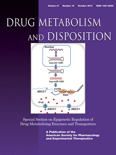
DRUG METABOLISM AND DISPOSITION
Exploring the Frontiers of PharmacologyDrug Metabolism and Disposition is a premier journal published by the American Society for Pharmacology and Experimental Therapeutics, focusing on crucial advancements in the fields of pharmaceutical sciences and pharmacology. Since its inception in 1973, this esteemed journal has established itself as a leading platform for innovative research, earning a prestigious Q1 rating in both Pharmaceutical Science and Pharmacology categories as of 2023. With an impressive Scopus ranking of #52 out of 183 in Pharmaceutical Science and #105 out of 313 in Pharmacology, it occupies a vital place in an increasingly competitive academic landscape. Researchers, professionals, and students alike benefit from its rigorous peer-reviewed articles that delve into drug metabolism processes and their physiological implications, making it an indispensable resource for anyone aiming to advance their understanding of drug disposition and efficacy. This crucial journal contributes significantly to the ongoing dialogue in pharmacology and toxicology, providing insights that help shape future therapeutic strategies and regulatory policies.
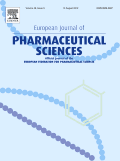
EUROPEAN JOURNAL OF PHARMACEUTICAL SCIENCES
Empowering Researchers to Transform Pharmaceutical PracticesThe European Journal of Pharmaceutical Sciences is a prestigious academic journal dedicated to advancing the field of pharmaceutical science. Published by Elsevier, the journal boasts an impressive impact factor and is categorized in the Q1 quartile for pharmaceutical science as of 2023, signifying its influence and reputation within the academic community. With a Scopus ranking of #20 out of 183 in the fields of pharmacology, toxicology, and pharmaceutics, the journal provides a vital platform for researchers and practitioners to disseminate innovative studies and groundbreaking research that push the boundaries of drug development and delivery. Based in the Netherlands and operating since 1993, the journal seeks to cover a broad scope of topics related to pharmaceutical sciences, encouraging rigorous evaluations and discussions that enhance the understanding and application of this critical field. The absence of open access underscores the commitment to maintaining high scholarly standards, while still offering avenues for libraries and institutions to provide access to cutting-edge research. As the journal converges towards its 2024 milestones, it continuously aims to foster a vibrant exchange of knowledge among its diverse readership, comprising committed researchers, professionals, and students.
DRUGS IN R&D
Leading the charge in pharmacology and toxicology advancements.DRUGS IN R&D is a premier open access journal dedicated to advancing the field of pharmacology and drug development. Published by Springer International Publishing AG, this journal has been a valuable resource for researchers and professionals since its inception in 1999, contributing critical insights into the pharmacological sciences. With an impressive Impact Factor reflecting its significance, DRUGS IN R&D ranks in the Q2 quartile for Pharmacology, according to 2023 metrics, and ranks #151 out of 313 in the field of pharmacology and toxicology on Scopus. This journal offers an open access format, ensuring high visibility and accessibility of research findings to a global audience, supporting the intrepid pursuit of knowledge in drug research and development. By facilitating comprehensive discussions and innovative research findings, DRUGS IN R&D plays a crucial role in shaping the future landscape of pharmacological studies and advancements.
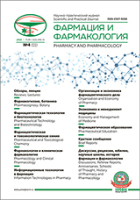
Pharmacy & Pharmacology-Farmatsiya i Farmakologiya
Advancing the frontiers of pharmaceutical research.Pharmacy & Pharmacology-Farmatsiya i Farmakologiya is a distinguished journal published by the Pyatigorskii Mediko-Farmatsevticheskii Inst in the Russian Federation, dedicated to advancing research in the fields of pharmacy and pharmacology. Since its transition to an Open Access format in 2013, it has become an invaluable resource for researchers and professionals seeking to disseminate and access high-quality findings. With its ISSN 2307-9266 and E-ISSN 2413-2241, this journal covers a broad range of topics, providing a platform for the latest developments in pharmaceutical sciences. It is noteworthy that, as of 2023, Farmatsiya i Farmakologiya is categorized in various quartiles, with its Q2 ranking in Pharmacology (nursing) and Q3 in Pharmacy indicating its growing impact and relevance within its field. With the journal's commitment to fostering innovation and collaboration in pharmacy and pharmacology research, it serves as an essential hub for academics, practitioners, and students aiming to contribute to and stay informed about the dynamic landscape of this critical discipline.
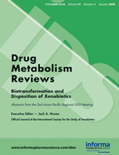
DRUG METABOLISM REVIEWS
Exploring the intricacies of drug metabolism.Drug Metabolism Reviews is a premier journal dedicated to the dissemination of scientific research and reviews in the field of pharmacology, toxicology, and pharmaceutics, published by Taylor & Francis Ltd. With its inception dating back to 1972, this journal has consistently provided an authoritative platform for scholars and professionals from diverse disciplines to explore the intricate mechanisms of drug metabolism and their implications for therapeutic applications. The journal enjoys commendable rankings, placing in the Q2 quartile for Pharmacology (medical) and the Q1 quartile in the miscellaneous subfield, signaling its significant impact within the community. Notably, it is recognized within the top 96th percentile in General Pharmacology, Toxicology and Pharmaceutics, affirming its esteemed position among academic publications. Although it operates under a subscription model, Drug Metabolism Reviews remains an essential resource for researchers, professionals, and students seeking to deepen their understanding of drug interactions, safety, and efficacy. The insights shared within its pages contribute vital knowledge to the global discourse on drug development and personalized medicine.
CLINICAL PHARMACOLOGY & THERAPEUTICS
Leading the way in pharmacology and therapeutics excellence.CLINICAL PHARMACOLOGY & THERAPEUTICS, published by WILEY, stands at the forefront of pharmacological research, serving as a pivotal resource for researchers, healthcare professionals, and students in the medical field. With its prestigious Q1 rating in both Pharmacology and Pharmacology (medical) categories, and ranking in the top 4% of journals in the field, it provides cutting-edge insights into drug therapy, pharmacokinetics, and innovative treatment strategies. The journal features a wide range of articles, from original research to comprehensive reviews, all aimed at advancing knowledge and clinical practice in pharmacology. With a publication history dating back to 1960 and continuing through 2024, its commitment to excellence is evident in its robust impact factor and high visibility in the academic community. For professionals striving to stay at the forefront of pharmacological advancements, CLINICAL PHARMACOLOGY & THERAPEUTICS remains an essential platform for disseminating and accessing vital research findings.

DARU-Journal of Pharmaceutical Sciences
Pioneering insights in the evolving landscape of pharmaceuticals.DARU-Journal of Pharmaceutical Sciences is a leading peer-reviewed journal published by SPRINGER INT PUBL AG that focuses on the dynamic and rapidly evolving fields of pharmaceutical sciences, including drug discovery, pharmacology, and toxicology. With an impressive Q2 ranking in both Drug Discovery and Miscellaneous Medicine categories for 2023, this journal stands out as a vital resource for researchers, professionals, and students alike, offering a platform for significant contributions to the scientific community. Covering a comprehensive scope from 2000 to 2024 and indexed by Scopus, the journal ranks within the top percentile in its field, with a ranking of #66/313 in Pharmacology and #34/157 in Drug Discovery, reaffirming its impact and relevance. The journal promotes open access to foster widespread dissemination of knowledge in pharmaceutical sciences, ultimately aiming to bridge the gap between research and clinical applications. For those looking to stay at the forefront of pharmaceutical innovation, DARU represents an invaluable connection to the latest studies and breakthrough findings.