
Co-herencia
Scope & Guideline
Advancing interdisciplinary dialogue in arts and humanities.
Introduction
Aims and Scopes
- Philosophical Inquiry into the Good Life:
The journal consistently examines the philosophical underpinnings of what constitutes a 'good life', engaging with classical and contemporary theories to explore ethical, social, and political dimensions. - Cultural and Literary Analysis:
There is a clear emphasis on the analysis of literature and cultural narratives, investigating how these mediums reflect and shape societal values, particularly in the context of Latin American experiences. - Historical Contextualization:
The journal frequently situates contemporary issues within historical frameworks, analyzing how past events and ideologies influence current socio-political realities. - Interdisciplinary Approaches:
'Co-herencia' promotes interdisciplinary research, merging insights from sociology, ethics, literature, and history, providing a holistic understanding of complex themes. - Critical Theory Engagement:
The journal engages with critical theory, particularly in relation to modernity, utopian imaginaries, and the critique of contemporary societal structures.
Trending and Emerging
- Exploration of Ethical Dilemmas:
There is an increasing focus on ethical dilemmas related to modern life, including discussions on bioethics, the good life, and the implications of academic productivism. - Resonance and Relationships with the World:
The concept of resonance has emerged as a significant theme, examining how individuals relate to their environments and the impact of societal structures on personal and collective experiences. - Interrogation of Modernity and Dystopia:
Recent papers critically engage with the themes of modernity and dystopia, reflecting a growing concern with contemporary crises, including the implications of acceleration and alienation in modern life. - Hybrid Forms of Narrativity:
The journal is witnessing an increase in interest in hybrid forms of narrative, particularly in how traditional literary forms interact with modern mediums such as virtual reality and interactive narratives. - Social and Political Critique:
Emerging themes include a strong critique of societal structures and political systems, focusing on issues like accelerationism, alienation, and the political implications of cultural production.
Declining or Waning
- Traditional Narratives in History:
There appears to be a decline in papers focusing on traditional historiographical narratives, suggesting a shift towards more contemporary and critical historical analyses that engage with current socio-political issues. - Purely Theoretical Philosophical Discussions:
Papers that engage solely in abstract philosophical discussions without practical implications for real-world issues are less frequent, indicating a preference for applied philosophy that addresses contemporary challenges. - Focus on Individual Literary Figures:
The emphasis on studies centered around individual authors or literary figures seems to be waning, with a broader focus on thematic and contextual analyses becoming more prevalent. - Humanitarianism as a Central Theme:
Although humanitarian themes were prominent in earlier publications, there is a noticeable decline in articles that specifically address humanitarian issues, suggesting a shift towards other pressing social concerns.
Similar Journals

Valenciana
Driving transformative ideas in an open access landscape.Valenciana is an esteemed, peer-reviewed journal published by the University of Guanajuato, dedicated to advancing scholarly discourse in the fields of humanities and social sciences. Since its inception in 2008, this Open Access journal has facilitated unrestricted access to high-quality research, fostering collaboration and innovation among researchers, professionals, and students. With an ISSN of 2007-2538 and an E-ISSN of 2448-7295, Valenciana is committed to publishing original research, reviews, and theoretical contributions that illuminate contemporary issues and cultural phenomena. The journal not only serves as a platform for emerging voices in academia but also enhances its visibility in the global research landscape, driving interdisciplinary dialogue and engagement. Situated in Guanajuato, Mexico, Valenciana embraces the rich academic heritage of the region while also appealing to a broader audience, making it a vital resource for those seeking to explore new ideas and perspectives in their respective fields.

Escritura e Imagen
Unveiling the Synergy of Text and ImageEscritura e Imagen is a distinguished academic journal published by UNIV COMPLUTENSE MADRID, SERVICIO PUBLICACIONES, focusing on the dynamic interplay of literature, visual arts, and philosophy. With its ISSN 1885-5687 and E-ISSN 1988-2416, this journal has rapidly emerged as a vital resource in the fields of Arts and Humanities, particularly excelling in Literature and Literary Theory where it ranks in the top Q1 category. Operating from Spain, it provides a platform for innovative research and discourse, bridging traditional boundaries of artistic expression. Furthermore, it holds impressive Scopus rankings, with notable performance across various categories, reflecting its commitment to scholarly excellence. Although currently not open access, the journal offers nuanced insights and critical perspectives essential for researchers, professionals, and students who wish to delve into contemporary cultural studies and interdisciplinary dialogue.
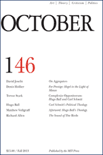
OCTOBER
Advancing Critical Discourse in the HumanitiesOCTOBER is a seminal journal published by MIT PRESS that spans a diverse array of interdisciplinary themes within the humanities, specifically focusing on literature and literary theory, music, and the visual arts and performing arts. Established in 2002, this journal has become a cornerstone for scholars and practitioners seeking critical discourse and innovative research across its converged fields, maintaining a respectable impact factor that attests to its influence in academic circles. While OCTOBER currently does not offer open access, it provides valuable insights and analysis that drive contemporary thought and discussion, positioned in the Q2 and Q3 quartiles of Scopus rankings. The journal’s commitment to high-quality scholarship makes it an essential resource for those looking to deepen their understanding of cultural and artistic practices, reflecting the evolving landscape of the arts and humanities from a rigorously theoretical perspective.

Teksty Drugie
Exploring the Depths of Literary TheoryTeksty Drugie is a premier academic journal dedicated to the field of Literature and Literary Theory, published by the Polish Academy of Sciences, Institute of Literary Research. With its issuance beginning in 2008 and extending intermittently to 2020, this journal has been a significant contributor to literary scholarship in Poland and beyond. The journal holds a commendable Q2 ranking in its category for 2023, indicating its influential status amongst peers in the Arts and Humanities realm, and an impressive Scopus rank of #736 out of 934 in the Literature and Literary Theory domain, with a 21st percentile ranking. Researchers and students will find this journal invaluable for its rigorous academic standards and insightful contributions to contemporary literary discourse. While traditionally available through subscription, Teksty Drugie remains an essential resource for those engaged in the study of literature, offering critical theoretical perspectives and a forum for scholarly debate. The journal is located at ul. Nowy Świat 72, Pałac Staszica, Room 1, Warszawa 00-330, Poland.
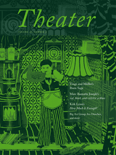
THEATER
Fostering Dialogue Between Literature and PerformanceTHEATER, an esteemed journal published by DUKE UNIVERSITY PRESS, stands at the intersection of scholarly discourse in the fields of Literature, Literary Theory, and the Visual and Performing Arts. Established in 2002, this journal offers a platform for critical analysis and innovative research, aiming to enrich the understanding of theatrical practices and their broader cultural implications. With a current impact factor that places it in the Q3 category for both Literary Theory and the Visual Arts in 2023, THEATER caters to a diverse audience of researchers, professionals, and students, fostering engagement and dialogue through its rigorous peer-reviewed articles. Although it does not currently offer open access, its commitment to scholarly excellence makes it a vital resource for anyone involved in the performing arts landscape. The journal appreciated for its analytical depth and diverse perspectives, aims to illuminate the ways theater intertwines with contemporary cultural discussions, thereby establishing itself as an important publication within the academic community.

CHASQUI-REVISTA DE LITERATURA LATINOAMERICANA
Engaging with the Complexities of Latin American Literary HeritageCHASQUI-REVISTA DE LITERATURA LATINOAMERICANA is an esteemed academic journal published by Arizona State University, dedicated to the exploration and dissemination of research in the fields of Literature and Literary Theory and Cultural Studies. With an ISSN of 0145-8973 and an E-ISSN of 2327-4247, the journal serves as a critical platform for scholars examining the complexities of Latin American literature from diverse perspectives. Notably ranked in the second quartile in its field as of 2023, CHASQUI reflects its commitment to quality and impactful scholarship. The journal operates within a two-year converged publication cycle, ensuring it remains at the forefront of contemporary discussions and innovations in its disciplines. Although there are no open access options, researchers and students alike will find valuable insights within its pages, bolstered by a robust academic community. Through its dedication to fostering literary scholarship, CHASQUI plays an integral role in advancing the understanding of Latin American narratives and cultural expressions.

CLIO-A JOURNAL OF LITERATURE HISTORY AND THE PHILOSOPHY OF HISTORY
Bridging Disciplines: Where Literature Meets PhilosophyCLIO: A Journal of Literature, History, and the Philosophy of History, published by Indiana University-Purdue University, serves as a pivotal platform for scholars and students alike. Since its inception, this journal has offered a unique convergence of literary analysis, historical context, and philosophical inquiry, creating a rich dialogue across disciplines. With an ISSN of 0884-2043, CLIO has evolved alongside the academic landscape from its early days in the late 20th century, reflecting the changing paradigms of literature, history, and philosophical thought. Although currently categorized in the Q4 quartile across its three relevant fields—History, Literature and Literary Theory, and Philosophy—it continues to invite contributions that challenge traditional boundaries and foster interdisciplinary research. While not currently an Open Access journal, CLIO remains an essential resource for those invested in the critical exploration of historical narratives and literary expressions, appealing to all who seek to understand the intricate weave between past and present.

Common Knowledge
Unraveling the Threads of Culture and ThoughtCommon Knowledge is a distinguished journal published by DUKE UNIVERSITY PRESS, focusing on the interstices of cultural studies, literature, and philosophy. With an ISSN of 0961-754X and an E-ISSN of 1538-4578, this journal has made significant strides in the academic landscape since its inception in 2010, with a projected convergence until 2024. Although it does not currently offer open-access options, its scholarly contributions are invaluable, notably ranking Q4 in Cultural Studies, Q3 in Literature and Literary Theory, and Q3 in Philosophy as of 2023. Moreover, it holds respectable standings in Scopus, with literature and literary theory ranked at the 71st percentile. The journal is essential for researchers and students delving into contemporary discourse on culture and theory, fostering an engaged community committed to deepening the understanding of knowledge in an increasingly complex world. Its address, 905 W MAIN ST, STE 18-B, DURHAM, NC 27701, positions it within a vibrant academic atmosphere, further enhancing its relevance in the humanities.

Estudios de Teoria Literaria-Revista Digital-Artes Letras Humanidades
Unveiling Complex Theoretical FrameworksEstudios de Teoria Literaria-Revista Digital-Artes Letras Humanidades is a prominent scholarly journal published by UNIV NAC MAR PLATA in Argentina, dedicated to advancing the fields of Literary Theory, Communication, and Cultural Studies. Established with an Open Access model since 2012, the journal fosters global dissemination of research without financial barriers, encouraging a broader dialogue among scholars, practitioners, and students alike. Notably, it enjoys a presence in Scopus, with various category quartiles indicating its commitment to quality and relevance, particularly with rankings such as Q3 in Literature and Literary Theory. By providing a platform for innovative scholarship, Estudios de Teoria Literaria aims to explore complex theoretical frameworks and cultural discourses, making significant contributions to ongoing debates in the humanities. The journal is published from its base in Mar del Plata, Buenos Aires, and continues to expand its influence in both regional and international academic communities.

REVISTA DE OCCIDENTE
Engaging Minds Through Scholarly Discourse.REVISTA DE OCCIDENTE, published by the FUNDACION JOSE ORTEGA Y GASSET, is a distinguished scholarly journal based in Spain that explores a myriad of topics within the realms of Cultural Studies, History, Literature and Literary Theory, and Visual Arts and Performing Arts. With its ISSN 0034-8635, the journal has made significant contributions to the discourse in these fields from its established years of convergence spanning from 2002 to 2004 and 2007 to the present. Although designated in the lower quartiles of the Scopus rankings, with notable distinctions in Q4 and Q3 categories as of 2023, REVISTA DE OCCIDENTE is recognized for its commitment to fostering critical dialogue and interdisciplinary research. Readers can delve into rich analyses and diverse perspectives that engage with contemporary cultural phenomena and historical narratives, aiming to enrich academic pursuits and professional practice. Located at REVISTA DE OCCIDENTE, FORTUNY 53, 28010 MADRID, SPAIN, the journal seeks submissions from scholars worldwide eager to contribute to its mission, despite operating under a traditional access model, thus ensuring content rigor and quality.