
Communiquer
Scope & Guideline
Empowering Voices, Enriching Perspectives.
Introduction
Aims and Scopes
- Interdisciplinary Communication Studies:
The journal explores communication from multiple academic perspectives, integrating insights from sociology, media studies, cultural studies, and more. This approach allows for a comprehensive understanding of communication phenomena in diverse contexts. - Focus on Digital Transformation:
A significant aspect of the journal's scope is the examination of how digital technologies reshape communication practices, including the impact of platforms on media consumption and production. - Cultural and Social Identity:
The journal frequently addresses themes of identity, particularly how food, religion, and cultural practices communicate social values and heritage. This includes the representation of various identities through media. - Crisis Communication and Public Health:
A notable focus on communication strategies during crises, particularly health-related crises such as the COVID-19 pandemic, highlighting the role of communication in public health messaging and community engagement. - Sustainability and Food Communication:
The journal investigates the communicative aspects of sustainability, especially in the agri-food sector, analyzing how food practices and policies are communicated to various stakeholders.
Trending and Emerging
- Impact of the COVID-19 Pandemic:
There is a significant increase in research addressing the effects of the COVID-19 pandemic on communication practices, including the use of digital tools and the transformation of social interactions. - Food and Sustainability Communication:
Emerging themes related to food representation and sustainability are gaining traction, highlighting how communication shapes perceptions and practices in the agri-food sector. - Digital Ethnography and Social Media:
The journal is increasingly publishing studies that utilize digital ethnography to explore social media dynamics, particularly how individuals and communities engage with digital content. - Health Communication Strategies:
Research focusing on health communication, particularly in crisis contexts, is becoming more prominent, emphasizing the importance of effective messaging and community engagement. - Cultural Representations in Digital Spaces:
There is a growing interest in how cultural identities and practices are represented in digital media, reflecting broader societal discussions about diversity and inclusion.
Declining or Waning
- Traditional Media Analysis:
There appears to be a waning interest in conventional media forms and their analysis. Recent publications focus more on digital platforms and their influence, suggesting that traditional media studies are less of a priority. - Niche Cultural Practices:
Topics centered on very specific cultural practices, such as niche religious or local community rituals, are less frequently addressed, indicating a potential shift towards broader societal issues and mainstream communication practices. - Static Communication Models:
Previous explorations of static or traditional communication models seem to be declining. The journal is increasingly favoring dynamic, context-sensitive approaches that account for evolving communication landscapes.
Similar Journals

Plaridel
Advancing Communication Scholarship, One Insight at a Time.Plaridel is an esteemed academic journal dedicated to the field of communication, published by the University of the Philippines Diliman. With the ISSN 1656-2534, this journal embraces a significant role in fostering scholarly dialogue and advancing research within the rapidly evolving landscape of communication studies. As one of the platforms in the Philippines, it aims to uplift local and international discourse by featuring innovative research, critical reviews, and theoretical explorations relevant to various facets of communication. Although currently rated in the Q4 quartile for 2023 in the Communication category, Plaridel's commitment to quality and scholarly rigor reflects a promising trajectory for future impact. The journal has been operational since 2018 and welcomes a wide array of contributions, especially from emerging scholars. Open access provides greater accessibility to researchers and enthusiasts, promoting broader engagement with the journal’s content. Plaridel holds an important place within the academic community, aspiring to elevate standards of communication research and practice in the Philippines and beyond.
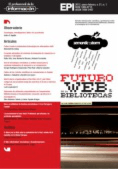
Profesional de la Informacion
Championing Quality Research for a Global AudienceProfesional de la Informacion is a leading academic journal dedicated to advancing research in the fields of Communication, Cultural Studies, Information Systems, and Library and Information Sciences. Published by EDICIONES PROFESIONALES INFORMACION SL-EPI, this journal has established itself as a pivotal resource for scholars and practitioners alike since its inception in 2006, holding an impressive Q1 ranking across its categories in 2023. With an impactful presence reflected in its Scopus Rankings—33rd out of 511 in Communication and 26th out of 280 in Library and Information Sciences—Profesional de la Informacion provides a forum for innovative research and discussion. Although it operates under a subscription model, the journal’s commitment to quality research contributes significantly to the knowledge base within its fields, making it an essential read for those who are passionate about information and communication studies. Positioned in the vibrant academic landscape of Barcelona, Spain, this journal encourages submissions that explore contemporary challenges and advancements in these vital areas of study, solidifying its role as a cornerstone of scholarly discourse.
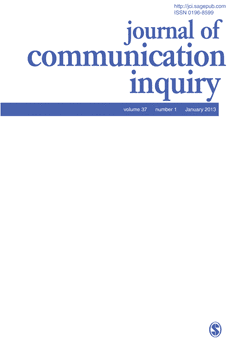
Journal of Communication Inquiry
Fostering Innovative Research in Communication and Cultural InquiryJournal of Communication Inquiry, published by SAGE PUBLICATIONS INC, is a premier interdisciplinary journal that serves as a vital platform for scholars and practitioners in the fields of communication, cultural studies, and the arts and humanities. With a rich history dating back to its inception in 1974, the journal has consistently upheld rigorous academic standards, reflected in its impressive rankings within the Q1 and Q2 quartiles across various disciplines according to the latest metrics. The journal's comprehensive scope encompasses theoretical and empirical research, catering to a diverse readership who are keen to explore contemporary communication issues and cultural dynamics. While the impact factor is not explicitly stated, the journal's Scopus ranks position it favorably within its categories, with notable percentiles that highlight its influence in the academic community. As an essential resource for researchers, professionals, and students alike, the Journal of Communication Inquiry invites contributions that advance the discourse surrounding communication practices and cultural phenomena, contributing to the ongoing dialogue in these evolving fields.
Revista Espanola de Comunicacion en Salud
Elevating Health Literacy Through Interdisciplinary ResearchRevista Española de Comunicación en Salud, published by UNIV CARLOS III MADRID, is a prestigious open-access journal dedicated to advancing the field of health communication. Since its inception in 2010, this journal has fostered a collaborative platform that encourages interdisciplinary research and dialogue among professionals, researchers, and students interested in the impact of communication on health behaviors and outcomes. With a commitment to enhancing public understanding of health issues, the journal serves as a vital resource for disseminating innovative findings, methodologies, and practices. Its comprehensive scope covers key areas such as health education, patient-provider communication, and the influence of media on public health perceptions, ensuring that it remains at the forefront of scholarly discourse. The journal is accessible to a global audience, providing valuable insights that are crucial in today's rapidly evolving health landscape.

JOURNAL OF COMMUNICATION
Fostering Scholarly Dialogue in Communication and Linguistics.Welcome to the JOURNAL OF COMMUNICATION, a premier academic publication in the fields of Communication and Linguistics, published by Oxford University Press Inc. Since its inception in 1951, this journal has been dedicated to fostering scholarly dialogue and advancing research in the dynamic landscape of communication studies. With an impressive impact factor and Q1 ranking in both Communication and Linguistics categories for 2023, it stands among the most influential journals, ranking 6th out of 1088 in Language and Linguistics and 10th out of 511 in Communication, reflecting its esteemed position in the academic community. The journal aims to publish innovative and rigorous research that explores the multifaceted dimensions of communication, making it an essential resource for researchers, professionals, and students alike. Although it is not an open-access journal, readers can access the valuable insights and groundbreaking studies contained within its pages at Journals Dept, 2001 Evans Rd, Cary, NC, 27513, United States, ensuring that crucial findings and theoretical advancements remain within reach of those passionate about the field.
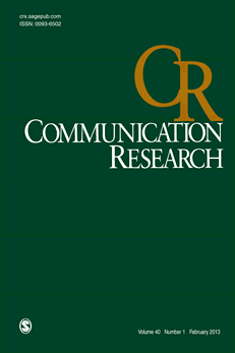
COMMUNICATION RESEARCH
Elevating Scholarship in Communication Studies.COMMUNICATION RESEARCH, published by SAGE Publications Inc, stands as a premier journal in the fields of Communication and Linguistics, boasting an impressive impact factor that reflects its influential contributions to academic scholarship. Since its inception in 1974, this esteemed journal has provided rigorous, peer-reviewed research that delves into the dynamics of human communication, making it a vital resource for researchers, practitioners, and students alike. With a commendable ranking within the Q1 category for both Communication and Linguistics and consistently placed within the 99th percentile across Scopus ranks, COMMUNICATION RESEARCH is at the forefront of academic inquiry, fostering a deeper understanding of communication processes in diverse contexts. While not an Open Access journal, it offers extensive access options facilitating widespread dissemination of knowledge. Researchers can look forward to an engaging array of cutting-edge studies and theoretical advancements in forthcoming issues, making it an indispensable tool for those studying the complexities of language and communication.
Frontiers in Communication
Innovating Dialogues in a Dynamic WorldFrontiers in Communication is a prestigious open-access journal published by FRONTIERS MEDIA SA, dedicated to advancing the field of communication studies. Established in 2016 and situated in Switzerland, this journal has quickly ascended to notable ranks, achieving a Q1 category in both Communication and Social Sciences (miscellaneous) as of 2023. With an impressive Scopus rank, positioning it in the 75th and 78th percentiles for its respective categories, Frontiers in Communication serves as a vital platform for innovative research, interdisciplinary dialogue, and the dissemination of knowledge in the rapidly evolving landscape of communication. The journal emphasizes accessibility and intellectual exchange, providing an open-access format that ensures unrestricted access for researchers, professionals, and students alike. By fostering collaboration and exploration across various communication frameworks, Frontiers in Communication plays a crucial role in shaping the future discourse within the field.

Fonseca-Journal of Communication
Catalyzing Conversations in Contemporary Academic DiscourseFonseca-Journal of Communication, published by EDICIONES UNIV SALAMANCA in Spain, serves as a vital platform for the dissemination of scholarly research in the fields of Communication, Linguistics, and Social Sciences. Since its transition to Open Access in 2010, this journal has ensured that innovative ideas and research findings are accessible to a global audience, fostering knowledge exchange among researchers, professionals, and students alike. With an impressive ranking in various categories—Q3 in Communication, Q2 in Linguistics and Language, and Q3 in Social Sciences—the journal reflects its commitment to excellence and relevance in contemporary academic discourse. Its Scopus rankings confirm its growing impact in the linguistic and social research spheres, making it a valuable resource for those seeking to advance their understanding and contribute to scholarship in these fields. Through its rigorous peer-review process and diverse content, Fonseca aims to stimulate critical conversations and inspire future research.
Global Media and China
Advancing Understanding of Media Dynamics in ChinaGlobal Media and China, published by SAGE Publications Ltd, is an esteemed open-access journal dedicated to fostering scholarly dialogue and research in the rapidly evolving dynamics between global media and Chinese communication practices. Launched in 2016, this journal has rapidly ascended within the academic community, achieving a remarkable Q1 ranking in both the Communication and Cultural Studies categories as of 2023, and holding significant positions in the Scopus rankings at the 95th and 81st percentiles respectively. Situated in the United Kingdom, the journal serves as a crucial platform for researchers, professionals, and students seeking to explore the intricate intersections of media influence, cultural policies, and communication trends originating from China. With a clearly defined scope and a commitment to open-access publication, Global Media and China is poised to continue its impactful contribution to global conversations surrounding media studies and cultural contemporary issues through to 2024 and beyond.
Global Media and Communication
Innovating Research at the Intersection of Media and SocietyGlobal Media and Communication is a premier journal dedicated to advancing the fields of media and communication studies, published by SAGE Publications Ltd. With an ISSN of 1742-7665 and an E-ISSN of 1742-7673, this journal offers a platform for scholarly discourse and innovative research that explores the intricate relationships between global media practices and communication strategies. Recognized as a Q1 journal in both the Arts and Humanities (Miscellaneous) and Communication categories for 2023, it stands out in its commitment to delivering high-quality, peer-reviewed articles that contribute to the understanding of contemporary media landscapes. Located in London, United Kingdom, the journal benefits from being at the heart of cultural and digital innovation. Researchers, professionals, and students can look forward to insightful articles that not only critique existing frameworks but also propose new methodologies, ensuring that Global Media and Communication remains a vital resource for anyone interested in navigating the evolving dynamics of media and communication on a global scale.