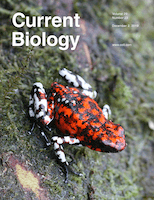
CURRENT BIOLOGY
metrics 2024
Where Cutting-Edge Research Meets Practical Application
Introduction
CURRENT BIOLOGY is a premier academic journal published by CELL PRESS, dedicated to a broad spectrum of fields within biological sciences. With an ISSN of 0960-9822 and E-ISSN 1879-0445, the journal has established itself as a vital resource for groundbreaking research and advancements since its inception in 1991. CURRENT BIOLOGY boasts high prominence in its categories, securing a Q1 quartile ranking in Agricultural and Biological Sciences, Biochemistry, Genetics and Molecular Biology, and Neuroscience, indicating its significant impact and relevance in these fields. Notably, it ranks #9 out of 221 journals in Agricultural and Biological Sciences, placing it in the 96th percentile, while also maintaining a strong presence in the Biochemistry category with a rank of #26. Researchers and professionals can rely on CURRENT BIOLOGY for comprehensive reviews, innovative methodologies, and crucial scientific developments that bridge theoretical knowledge with practical applications. The journal continues to play an essential role in enhancing the global dialogue in biological research, making it indispensable for students, academics, and industry experts aiming to stay at the forefront of the rapidly evolving landscape of life sciences.
Metrics 2024
 2.988.109.80361
Metrics History
Rank 2024
Scopus
IF (Web Of Science)
JCI (Web Of Science)
Quartile History
Similar Journals
Cold Spring Harbor Perspectives in Biology
Advancing Biological Insights for Tomorrow's InnovatorsCold Spring Harbor Perspectives in Biology is a prestigious academic journal published by COLD SPRING HARBOR LAB PRESS that serves as a vital resource in the fields of Biochemistry, Genetics, and Molecular Biology. With an impressive impact factor and categorized in the Q1 quartile for its contributions, this journal is renowned for curating comprehensive reviews that synthesize the latest advancements and ongoing research in these dynamic and interconnected disciplines. Since its inception in 2009, the journal has played a pivotal role in advancing scientific knowledge through high-quality articles that cater to researchers, professionals, and students alike. Although it operates on a traditional subscription model, its contributions are indispensable for those seeking to remain at the forefront of biological research and its myriad applications. With a commendable ranking of #19 out of 221 in general biochemistry, genetics, and molecular biology on Scopus, this journal ensures that its readers have access to cutting-edge insights and a rigorous academic discourse.
INTERNATIONAL JOURNAL OF PLANT SCIENCES
Exploring the frontiers of plant science and ecology.The INTERNATIONAL JOURNAL OF PLANT SCIENCES, published by UNIV CHICAGO PRESS, is a leading journal dedicated to advancing knowledge in the fields of plant sciences and ecology. With an ISSN of 1058-5893 and an E-ISSN of 1537-5315, this journal has been a prominent platform for groundbreaking research since its establishment, featuring works from 1983 to present. It holds an impressive Q2 ranking in both Ecology, Evolution, Behavior and Systematics and Plant Science, reflecting its reputable standing within the academic community. The journal is well-regarded for its rigorous peer-review process and commitment to high-quality publication standards, making it a favored choice for researchers, students, and professionals eager to engage with the latest findings and innovative methodologies in plant research. While it does not currently operate under an Open Access model, the journal provides ample access options for institutions and individuals keen to explore its curated content. By presenting diverse studies that blend theoretical and practical insights, the INTERNATIONAL JOURNAL OF PLANT SCIENCES plays a critical role in fostering interdisciplinary dialogue and advancing the frontiers of plant science research.

Open Biology
Empowering discoveries through open access research.Open Biology is a prestigious, interdisciplinary journal published by the Royal Society that has been paving the way in the fields of Biochemistry, Genetics and Molecular Biology, Immunology, and Neuroscience since its inception in 2011. Catering to a global audience of researchers, professionals, and students, Open Biology operates under an open access model, facilitating the unrestricted dissemination of high-quality research findings. With a current impact factor that positions its categories in the top quartile (Q1) and impressive Scopus rankings—evidencing its influence and reach—this journal serves as a vital platform for innovators and scientific inquiries aimed at advancing our understanding of life sciences. The journal's commitment to publishing cutting-edge research makes it an essential resource for those at the forefront of scientific exploration.
Life Science Alliance
Connecting Disciplines, Inspiring Discoveries.Life Science Alliance, published by LIFE SCIENCE ALLIANCE LLC, is a premier open access journal that has been making significant contributions to the fields of Biochemistry, Genetics and Molecular Biology, Ecology, Health, Toxicology and Mutagenesis, and Plant Science since its inception in 2018. With an impressive ranking in Scopus, including Q1 quartile positions and high percentiles in relevant categories, this journal is a vital resource for researchers, professionals, and students alike who seek to advance knowledge and innovation in life sciences. The journal operates on an open access model, ensuring that research findings are freely available to the global scientific community, thereby enhancing the visibility and impact of published work. With a commitment to fostering collaboration and disseminating high-quality research, Life Science Alliance serves as an essential platform for the promotion and exchange of scientific knowledge, aiming to bridge gaps and stimulate discussions across multiple disciplines.

Biologia Futura
Exploring Innovations in Agricultural and Biological SciencesBiologia Futura, an esteemed journal published by SPRINGER HEIDELBERG, serves as a vital platform for researchers and professionals in the fields of Agricultural and Biological Sciences, as well as Biochemistry, Genetics, and Molecular Biology. Established in Hungary, this journal has been at the forefront of scientific inquiry since its inception in 2019 and continues to contribute significantly to advancing knowledge through rigorous peer-reviewed articles. With current rankings placing it in the second quartile for Agricultural and Biological Sciences and third quartile for Biochemistry, Genetics, and Molecular Biology according to Scopus metrics, it reflects a robust academic quality and reach. Scholars are encouraged to share their original research, reviews, and innovations that intersect these dynamic fields. Although not an open access publication, Biologia Futura ensures wide dissemination of high-impact research from its notable address at Tiergartenstraße 17, D-69121 Heidelberg, Germany, aiming to foster collaboration and discovery within the global scientific community.
JOURNAL OF EXPERIMENTAL BIOLOGY
Exploring the Depths of Animal and Aquatic SciencesJOURNAL OF EXPERIMENTAL BIOLOGY, published by COMPANY BIOLOGISTS LTD, stands as a cornerstone in the fields of Animal Science, Aquatic Science, Ecology, Insect Science, and Physiology. With a rich history dating back to 1945, this esteemed journal has continually provided a platform for high-quality research, evidenced by its impressive Q1 rankings across multiple categories in the 2023 Journal Citation Reports. Located in the United Kingdom, it serves an international audience, offering critical insights and advancements in various biological sciences. As a non-open access journal, it provides rigorous peer-reviewed articles that contribute profoundly to our understanding of biological processes and their implications. With an extensive reach among researchers, practitioners, and academia, the JOURNAL OF EXPERIMENTAL BIOLOGY is not only a repository of knowledge but also a catalyst for ongoing research and innovation in experimental biology.
Current Plant Biology
Driving Progress in Plant Science ResearchCurrent Plant Biology is a distinguished peer-reviewed journal published by ELSEVIER, focusing on the dynamic and rapidly evolving field of plant sciences. Since its inception as an Open Access publication in 2014, it has established itself as a leading platform for innovative research, boasting a remarkable Impact Factor that underscores its relevance and contribution to the scientific community. Based in the Netherlands, this journal caters to a diverse audience of researchers, professionals, and students, facilitating the dissemination of key findings in an array of disciplines including biochemistry, genetics, cell biology, and developmental biology. Recognized for its rigorous standards, Current Plant Biology holds a prestigious standing, classified within the Q1 and Q2 quartiles of various Scopus categories, reflecting its impact and reputation in the realms of Plant Science and related fields. The journal is committed to providing accessible and high-quality research outputs that inspire further investigation and collaboration in plant biology.
JOURNAL OF EVOLUTIONARY BIOCHEMISTRY AND PHYSIOLOGY
Pioneering Research in Evolutionary Biochemistry and PhysiologyJOURNAL OF EVOLUTIONARY BIOCHEMISTRY AND PHYSIOLOGY, published by PLEIADES PUBLISHING INC, is a pivotal periodical that delves into the intricate relationships between biochemical processes and evolutionary dynamics. With its ISSN 0022-0930 and E-ISSN 1608-3202, this journal serves as a comprehensive platform for researchers, professionals, and students dedicated to understanding the physiological adaptations and biochemical mechanisms influenced by evolutionary pressures. Although it is not an open access journal, it offers valuable insights across its historically significant coverage spanning from 1972 to 2017, making it an essential resource for those working in agricultural, biological, and molecular sciences. Despite its current Scopus rankings revealing limited visibility within its fields, the journal remains committed to fostering scholarly dialogue and advancing knowledge in the realm of evolutionary biochemistry, especially for those exploring the ecological, genetic, and integrative physiological aspects of life.
JOURNAL OF FISH BIOLOGY
Diving into the Science of Fish RelationshipsJOURNAL OF FISH BIOLOGY, published by Wiley in the United Kingdom, is a distinguished peer-reviewed journal dedicated to advancing the understanding of the biology and relationships of fishes. With a robust history from its inception in 1969 to its future publications extending into 2024, the journal occupies a pivotal position in the academic landscape of aquatic sciences and ecology. Holding a notable Impact Factor and recognized within the second quartile (Q2) for both Aquatic Science and Ecology, Evolution, Behavior and Systematics, it serves as an essential resource for researchers, professionals, and students alike. The journal’s contributors delve into diverse topics ranging from evolutionary biology to conservation strategies, fostering a dynamic interchange of knowledge and innovation within the fish biology community. Access options are currently via subscription, ensuring high-quality, curated content that reflects the latest empirical research and theoretical advancements in the field.
COMPTES RENDUS BIOLOGIES
Pioneering Research for a Sustainable FutureCOMPTES RENDUS BIOLOGIES, published by the esteemed Académie des Sciences, is a prominent journal based in France that contributes significantly to the fields of Agricultural and Biological Sciences, Biochemistry, Genetics and Molecular Biology, as well as Immunology and Microbiology. With a notable Q3 ranking in several categories as of 2023, this journal serves as an essential platform for disseminating groundbreaking research and advancements in these disciplines. Access is currently available under open access options, enhancing the reach and accessibility of its published findings. The journal has been in continuous publication since 1959, with a current focus extending to 2024, ensuring that it remains at the forefront of scientific communication. With its diverse scope and commitment to quality research, COMPTES RENDUS BIOLOGIES plays a crucial role in fostering dialogue and collaboration among researchers, professionals, and students who are dedicated to understanding and addressing complex biological questions.