
CURRENT CARDIOLOGY REVIEWS
Scope & Guideline
Bridging Research and Practice in Cardiology
Introduction
Aims and Scopes
- Cardiovascular Disease Management:
Focuses on innovative and effective management strategies for various cardiovascular conditions, including heart failure, arrhythmias, and coronary artery disease. - Epidemiological Insights:
Presents research on the epidemiology of cardiovascular diseases, identifying risk factors, prevalence, and trends in different populations. - Novel Therapeutic Approaches:
Explores emerging therapies and interventions, including pharmacological treatments, lifestyle modifications, and technological advancements in cardiovascular care. - Diagnostic Innovations:
Reviews advancements in diagnostic tools and techniques, such as imaging modalities and biomarkers, that enhance clinical decision-making in cardiology. - Interdisciplinary Research:
Encourages studies that bridge cardiology with other fields, like neurology and endocrinology, to better understand the multifaceted nature of cardiovascular diseases.
Trending and Emerging
- Machine Learning and AI in Cardiology:
An increasing number of articles explore the application of machine learning and artificial intelligence for diagnosing and predicting cardiovascular events, reflecting the growing importance of technology in healthcare. - Holistic and Integrative Approaches:
There is a rising interest in integrating lifestyle factors, such as diet and exercise, into cardiovascular treatment plans, emphasizing a more comprehensive view of patient health. - Impact of COVID-19 on Cardiovascular Health:
Research focusing on the implications of COVID-19 on cardiovascular conditions has surged, addressing the acute and long-term effects of the pandemic on heart health. - Personalized Medicine:
Emerging themes around genetic determinants of cardiovascular diseases and tailored treatment strategies are becoming prominent, showcasing a shift towards more individualized patient care. - Interdisciplinary Connections:
There is a growing focus on the interplay between cardiovascular diseases and other systemic conditions (e.g., diabetes, autoimmune diseases), highlighting the need for interdisciplinary approaches in research and treatment.
Declining or Waning
- Traditional Pharmacological Approaches:
There has been a noticeable decrease in papers solely focused on traditional pharmacological treatments, as newer therapeutic strategies and personalized medicine gain prominence. - Single-Disease Focus Studies:
Research that concentrates on isolated cardiovascular conditions, without considering comorbidities or systemic implications, is becoming less frequent, indicating a shift towards more holistic approaches. - Basic Science Studies:
The journal has seen fewer submissions centered on basic science research, as clinical and translational studies are prioritized to address immediate clinical challenges.
Similar Journals

Nepalese Heart Journal
Connecting Researchers and Clinicians for a Healthier FutureNepalese Heart Journal, published by the CARDIAC SOC NEPAL, serves as a premier platform for disseminating knowledge in the field of cardiology and cardiovascular health. With an ISSN of 2091-2978, this journal aims to bridge the gap between researchers, clinicians, and academicians by presenting high-quality, peer-reviewed articles that address clinical practices, innovative research, and emerging trends in heart disease management, especially within the context of Nepal and the surrounding region. Although it operates under a traditional publishing model, its commitment to excellence aids in reinforcing the scientific discourse in an area critical to public health. The journal is a valuable resource for professionals and students alike who are focused on advancing their understanding of cardiology and its implications for health policy and practice. Exploring the intersections of local challenges and global advancements in heart health, the Nepalese Heart Journal is poised to contribute meaningfully to the evolving landscape of cardiovascular research.
Archives of Cardiovascular Diseases
Exploring the depths of cardiovascular medicine for global impact.The Archives of Cardiovascular Diseases, published by Elsevier Masson, stands as a leading journal in the field of cardiology and cardiovascular medicine, with an impressive impact factor that underscores its relevance and influence. This esteemed journal, recognized in the Q2 category for both cardiology and miscellaneous medicine, aims to disseminate groundbreaking research, innovative methodologies, and clinical advancements that can shape the future of cardiovascular health. With its diverse array of open access options, researchers and students alike have the ability to engage with high-quality content, ensuring that cutting-edge findings are accessible globally. Since its inception in 2008, the journal has actively contributed to the advancement of knowledge in cardiovascular diseases, fostering collaboration among clinicians, researchers, and educators. Headquartered in Paris, France, Archives of Cardiovascular Diseases remains committed to enhancing our understanding of cardiovascular health and improving patient outcomes worldwide.

Revista de la Federacion Argentina de Cardiologia
Shaping the future of cardiovascular medicine with every publication.Revista de la Federacion Argentina de Cardiologia is a vital publication in the field of Cardiology and Cardiovascular Medicine, providing a platform for researchers and healthcare professionals to share significant findings and innovative concepts since its inception in 2012. Published by the Federacion Argentina Cardiology, this journal specifically addresses contemporary issues and advancements within cardiology, contributing to the scholarly dialogue essential for improving cardiovascular health. Despite being categorized in the Q4 quartile for 2023 and presently ranking #358 out of 387 in its field, the journal remains committed to fostering academic inquiry and disseminating valuable research for both local and global audiences. Although it is not an open-access journal, it strives to balance accessibility with rigorous academic standards, ensuring quality contributions that are critical for practitioners and students alike. The journal’s ongoing evaluation and adaptation in the ever-evolving landscape of cardiology underscore its importance in advancing cardiovascular science and practice.
Journal of Cardiology
Driving breakthroughs in heart health and patient care.Journal of Cardiology, published by ELSEVIER, stands as a prominent resource in the field of cardiology and cardiovascular medicine. With a rich history since its inception in 1987, this peer-reviewed journal aims to disseminate cutting-edge research that enhances the understanding and treatment of cardiovascular diseases. Its 2023 ranking places it in the Q2 category within its discipline, reflecting its significance and impact, as evidenced by a Scopus rank of #123 out of 387 journals, positioning it in the 68th percentile of its field. The journal is headquartered in Japan, providing a unique perspective on cardiological advances relevant not only to the Asian continent but also globally. Though it does not currently offer open access, the Journal of Cardiology remains a vital institutional resource for researchers, clinicians, and students seeking to push the boundaries of cardiovascular science and improve patient outcomes.
Netherlands Heart Journal
Pioneering Research in Cardiology and Cardiovascular MedicineNetherlands Heart Journal is a premier academic publication dedicated to advancing knowledge in the field of cardiology and cardiovascular medicine. Published by BOHN STAFLEU VAN LOGHUM BV, this journal has established itself as a critical platform for researchers, professionals, and students seeking to explore groundbreaking findings and innovative practices in cardiovascular health. With an ISSN of 1568-5888 and E-ISSN 1876-6250, the journal boasts a respectable Q2 ranking in the Cardiology and Cardiovascular Medicine category, placing it in the top half of its field according to the 2023 quartiles. The Scopus ranking places it 130th out of 387 in the relevant category, indicating a commendable percentile rank of 66th, which attests to its influence and quality of published research. Spanning from 2005 to 2024, the journal endeavors to include a diverse array of topics, encompassing clinical practice, technological innovations, and public health considerations related to cardiovascular diseases. Researchers and practitioners are encouraged to engage with the journal's robust content, contributing to and benefiting from the collaborative effort to enhance cardiovascular health worldwide.
Hellenic Journal of Cardiology
Empowering Heart Health Through Innovative ResearchThe Hellenic Journal of Cardiology, a peer-reviewed open-access publication under the esteemed ELSEVIER banner, proudly represents the forefront of research in the field of Cardiology and Cardiovascular Medicine. Established in 1993 and actively publishing since then, this journal has carved a niche in disseminating high-quality research and clinical insights relevant to cardiovascular health in Greece and beyond. With an impressive Q2 ranking in both Cardiology and Cardiovascular Medicine categories as of 2023, the journal holds a commendable position at Rank #126/387 in Scopus, indicative of its critical role in advancing scientific knowledge and practice. The Hellenic Journal of Cardiology transitioned to open access in 2016, ensuring that ground-breaking research is freely accessible, fostering a global dialogue among researchers, clinicians, and students alike. Its publication frequency spans significant years, providing a continuous flow of innovative findings while addressing pressing cardiovascular issues. As the journal builds on its legacy, it aspires to enrich the academic community's understanding of cardiovascular medicine, making it an invaluable resource for anyone invested in heart health.
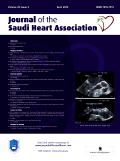
Journal of the Saudi Heart Association
Advancing Cardiovascular Knowledge for a Healthier TomorrowThe Journal of the Saudi Heart Association is a prominent scholarly publication dedicated to advancing knowledge in the fields of cardiology and cardiovascular medicine. Published by DIGITAL COMMONS BEPRESS, this open-access journal has been serving the global community since 2009, providing a vital platform for researchers, practitioners, and students interested in the latest developments in heart health and disease management. With an ISSN of 1016-7315 and a growing repository of knowledge alongside an E-ISSN of 2212-5043, the journal showcases an array of peer-reviewed articles that contribute to the understanding of cardiovascular conditions. Although categorized in the Q4 quartile for 2023, it remains committed to offering valuable insights, particularly within the constraints of the 29th percentile rank specified by Scopus. As the journal converges towards 2024, it continues to foster collaboration, innovation, and inquiry within the Saudi Arabian and international medical communities.

Pakistan Heart Journal
Elevating Cardiovascular Research in Pakistan and Beyond.Pakistan Heart Journal, with the ISSN 0048-2706 and E-ISSN 2227-9199, is a premier publication by the Pakistan Cardiac Society, dedicated to advancing the field of cardiology and cardiovascular medicine. Established as an Open Access journal since 2011, it provides a valuable platform for researchers and clinicians to disseminate innovative findings and insights within this critical area of health. Based in Karachi, Pakistan, at the National Institute of Cardiovascular Diseases, this journal aims to foster an enriched understanding of cardiovascular health by publishing rigorous research, case studies, and review articles. Despite its current categorization as Q4 in the latest 2023 quartiles and a rank of 357/387 in the Scopus database, it plays a vital role in the academic community, encouraging collaborative efforts and dialogue among professionals. The journal aspires to converge diverse perspectives and innovations in cardiology from 2019 to 2024, thereby enhancing the quality and scope of cardiovascular research in the region and beyond.
Clinical Medicine Insights-Cardiology
Elevating Cardiac Care with Groundbreaking ResearchClinical Medicine Insights-Cardiology is a prestigious open-access journal published by SAGE Publications Ltd, focusing on cutting-edge research in the field of cardiology and cardiovascular medicine. With the ever-evolving landscape of cardiovascular health, this journal serves as a vital platform for disseminating significant findings, clinical practices, and innovative therapies. Established in 2007, it has rapidly gained recognition, currently ranked in the Q2 category for cardiology, positioned at #112 out of 387 in Scopus Rankings, and boasting a commendable 71st percentile. The journal not only emphasizes the integration of recent advancements in clinical and laboratory studies but also aims to bridge the gap between research and practice, making it an essential resource for researchers, healthcare professionals, and students alike. Situated in New Zealand and operating with an open-access model, Clinical Medicine Insights-Cardiology promotes the unrestricted dissemination of knowledge, ensuring that critical insights into cardiovascular medicine are accessible globally.
International Heart Journal
Transforming Heart Health Through Open Access ResearchInternational Heart Journal, published by INT HEART JOURNAL ASSOC, serves as a pivotal platform for research and discourse in the fields of cardiology and cardiovascular medicine. With its ISSN 1349-2365 and E-ISSN 1349-3299, this esteemed journal is based in Japan and is located at the University of Tokyo, Graduate School of Medicine, Department of Cardiovascular Medicine. Since its inception in 2005, International Heart Journal has blossomed into a respected publication with an impact factor that signifies its growing relevance, ranking in the Q3 category of both cardiology and miscellaneous medicine as of 2023. This journal not only disseminates vital research findings but also fosters collaboration among researchers and healthcare professionals. Notable for its Open Access options, it ensures the availability of its content to a broader audience, thereby enhancing knowledge transfer and innovation in cardiovascular care. With an ongoing commitment to improve clinical practice and patient outcomes, the journal continues to be an essential resource for those dedicated to advancing the understanding of heart health and disease.