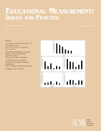
Educational Measurement-Issues and Practice
Scope & Guideline
Empowering Researchers to Enhance Measurement Practices.
Introduction
Aims and Scopes
- Educational Assessment Theory:
Focuses on the foundational theories underpinning educational measurement, including validity, reliability, and fairness in assessments. - Large-Scale Assessment Practices:
Examines the methodologies and implications of large-scale assessments, including standardized testing and program evaluations. - Technological Innovations in Measurement:
Explores the integration of technology in educational assessment, such as automated item generation, machine learning applications, and digital assessment tools. - Cultural and Social Considerations:
Investigates the impact of cultural and social factors on educational assessment practices, promoting equity and inclusivity in measurement. - Professional Development in Measurement:
Addresses the training and competencies required for measurement professionals, emphasizing the importance of ongoing professional development in the field.
Trending and Emerging
- Machine Learning and AI in Assessment:
There is a growing interest in the application of machine learning and artificial intelligence in educational measurement, particularly in areas such as automated scoring and data analysis. - Equity and Social Justice in Measurement:
Recent publications emphasize the need for equity and social justice in educational assessments, addressing issues of bias and advocating for culturally responsive measurement practices. - Impact of COVID-19 on Assessment Practices:
The pandemic has generated significant research on the effects of remote assessments and the validity of different assessment methods during and after COVID-19, revealing new insights into educational measurement. - Professional Competencies for Measurement Practitioners:
An increasing focus on defining and developing foundational competencies for educational measurement professionals, highlighting the need for adaptive skills in a changing job market. - Holistic Approaches to Assessment:
Emerging themes include holistic and multidimensional approaches to assessment, which consider broader aspects of student learning and development beyond traditional score-based evaluations.
Declining or Waning
- Traditional Assessment Formats:
There is a noticeable decline in research focused solely on traditional assessment formats, such as paper-and-pencil tests, as the field shifts towards more innovative and technology-enhanced assessment methods. - Generalized Assessment Models:
The emphasis on generalized models of assessment is decreasing, with a greater focus on specific methodologies like machine learning and diagnostic classification models that provide more nuanced insights. - Static Validity Arguments:
Research centered on static validity arguments is becoming less common, as the field moves towards dynamic and contextualized approaches to validity that consider the complexities of educational settings.
Similar Journals
International Journal of Assessment Tools in Education
Innovating Tools for Effective Educational EvaluationInternational Journal of Assessment Tools in Education is a pioneering scholarly publication dedicated to advancing the field of educational assessment through innovative tools and methodologies. Published by IZZET KARA and based out of the esteemed Pamukkale University in Turkey, this journal is committed to fostering academic discourse among researchers, educators, and policy makers. With an ISSN of 2148-7456, it aims to bridge the gap between assessment theory and practical application, ensuring that the latest insights in educational measurement can be readily accessed by professionals in the field. The journal promotes open access to its articles, enhancing visibility and facilitating the dissemination of knowledge. By publishing rigorous empirical studies, theoretical discussions, and practical reports, it plays an essential role in shaping best practices in educational assessment, making it an invaluable resource for anyone invested in improving educational outcomes.
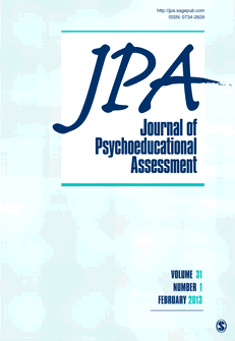
JOURNAL OF PSYCHOEDUCATIONAL ASSESSMENT
Empowering professionals through cutting-edge research in psychoeducation.The JOURNAL OF PSYCHOEDUCATIONAL ASSESSMENT, published by SAGE PUBLICATIONS INC, serves as a leading platform for disseminating high-quality research in the fields of clinical psychology and education. With its ISSN 0734-2829 and E-ISSN 1557-5144, this distinguished journal has been at the forefront of advancing knowledge since its inception in 1983, and it continues to publish innovative studies aimed at enhancing psychoeducational assessment practices. Recognized in the 2023 category quartiles as Q2 in Clinical Psychology, Education, and miscellaneous Psychology, the journal holds significant rankings in Scopus, with Education at rank #479, Clinical Psychology at #126, and General Psychology at #100, reflecting its substantial impact in the social sciences. Although it does not offer Open Access, the valuable insights provided in its articles contribute meaningfully to the ongoing discourse among researchers, professionals, and students alike. The JOURNAL OF PSYCHOEDUCATIONAL ASSESSMENT is an essential resource for those seeking to enhance their understanding of psychoeducational methods and assessments, ultimately aiming to improve educational outcomes and clinical practices.
JOURNAL OF PSYCHOPATHOLOGY AND BEHAVIORAL ASSESSMENT
Fostering knowledge for a healthier tomorrow.JOURNAL OF PSYCHOPATHOLOGY AND BEHAVIORAL ASSESSMENT is a prominent scholarly publication dedicated to advancing the field of clinical psychology through innovative research and comprehensive assessments of psychological disorders. Published by Springer/Plenum Publishers in the United States, this journal has an established history of contributing to the academic community since its inception in 1985, continuing its mission until 2024. With an impact factor that properly reflects its academic rigor and relevance, it ranks in the Q2 category in Clinical Psychology for 2023, placing it within the top tier of academic journals in the field. Researchers, professionals, and students can expect to find a wealth of insightful articles that delve into the complexities of psychopathology and behavioral assessment, fostering a deeper understanding of mental health issues. Although open access options are not available at this time, subscribers and institutions have the privilege of accessing critical findings that could transform clinical practices and inform future research initiatives.
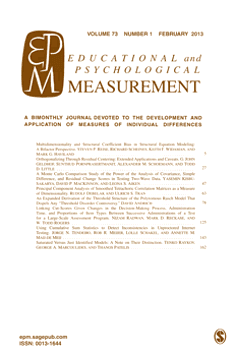
EDUCATIONAL AND PSYCHOLOGICAL MEASUREMENT
Connecting Theory and Practice in MeasurementEDUCATIONAL AND PSYCHOLOGICAL MEASUREMENT, published by SAGE Publications Inc, is a premier journal serving as a vital resource for researchers and practitioners in the fields of educational and psychological assessment. With a rich history dating back to 1941, this esteemed journal encompasses a wide-ranging scope, exploring the intricacies of measurement techniques and their implications within applied mathematics, psychology, and education. Notably categorized in Q1 quartiles across various fields, including Applied Mathematics and Educational Psychology, the journal ranks impressively in Scopus, reflecting its high impact and relevance—ranked #82/635 in Applied Mathematics and #232/1543 in Education. The journal’s commitment to advancing knowledge in educational measurement equips scholars with essential insights and methodologies, making it an essential tool for advancing scholarly inquiry and practice. With no open access limitations, EDUCATIONAL AND PSYCHOLOGICAL MEASUREMENT is dedicated to disseminating quality research that influences educational practices and psychological evaluation, thus reinforcing its esteemed position within academia.
Educational Assessment
Elevating Standards in Educational AssessmentEducational Assessment is a prestigious journal dedicated to the latest advancements and research in the field of education, with a particular focus on the evaluation and assessment practices that shape educational policies and student outcomes. Published by Routledge Journals, Taylor & Francis Ltd, this influential journal boasts an impressive Q1 rating in Education for 2023, highlighting its critical role in disseminating high-quality research. With an ISSN of 1062-7197 and an E-ISSN of 1532-6977, Educational Assessment has been a vital resource for scholars and practitioners since its inception, spanning from 1993 to 1995 and again from 2004 to 2024. Researchers in this field can utilize findings published in this journal to inform best practices, influence pedagogical techniques, and drive improvements in assessment methodologies. Although it is not an Open Access journal, Educational Assessment is recognized for its rigorous peer-review process and valuable contributions to the education landscape, making it an essential read for anyone interested in educational research and assessment strategies.
Studies in Educational Evaluation
Empowering educators through critical evaluations and insights.Studies in Educational Evaluation is a premier journal published by Elsevier, specializing in the critical evaluation of educational practices and policies. Established in 1975, this esteemed journal serves as a vital resource for researchers and practitioners engaged in the ever-evolving field of education. With its impressive Q1 ranking in the Education category and positioned at the 90th percentile among its peers in Scopus rankings, it reflects a high standard of scholarly excellence. The journal aims to disseminate innovative research that fosters deeper understanding and effective assessment frameworks within educational contexts, making it indispensable for educators, policymakers, and researchers alike. Although it currently does not offer open access, the insights found within its pages are crucial for driving improvements in educational evaluation methodologies globally. Located in the United Kingdom, and available for wide readership, Studies in Educational Evaluation is committed to pushing the boundaries of knowledge in education assessment through rigorous, peer-reviewed scholarship.

Journal of Intelligence
Navigating the landscape of experimental psychology.The Journal of Intelligence, published by MDPI, is a premier open access journal dedicated to advancing the understanding of intelligence in its multifaceted forms. Since its inception in 2013, this journal has made significant contributions to the fields of Cognitive Neuroscience, Developmental and Educational Psychology, and Experimental Psychology, consistently reflecting its growing impact within the academic community. Located in Switzerland, the journal benefits from a global reach and has been indexed in Scopus, achieving respectable ranks across various categories—highlighting its relevance and quality in Social Sciences and Psychology. With an impressive 2023 category quartile ranking of Q2 in Education and Q3 in other relevant fields, the journal is a valuable resource for researchers, professionals, and students seeking to explore theoretical and empirical aspects of intelligence. As an open access publication, the Journal of Intelligence not only promotes the free exchange of knowledge but also ensures that cutting-edge research is accessible to a wider audience, thus fostering innovation and collaboration in the quest to understand the nuances of human intelligence.
BEHAVIORAL DISORDERS
Exploring innovative strategies for addressing behavioral challenges.BEHAVIORAL DISORDERS, published by SAGE PUBLICATIONS INC, is a leading journal committed to advancing the understanding of behavioral challenges and disorders in educational settings. With its ISSN 0198-7429 and E-ISSN 2163-5307, the journal serves as an essential resource for researchers, professionals, and students in the fields of Clinical Psychology, Developmental Psychology, and Educational Psychology. Ranked in the Q2 category for both Clinical and Developmental Psychology, and Q1 for Education in 2023, it reflects the significant impact and high-quality research published within its pages. With its operational span from 1996 to 2011, and 2013 to 2024, BEHAVIORAL DISORDERS offers a rigorous platform for the dissemination of research and innovative practices that seek to improve outcomes for individuals facing behavioral disorders. Scholars and practitioners will find valuable insights and evidence-based strategies to inform their work. The journal is based in the United States, with its address at 2455 Teller Rd, Thousand Oaks, CA 91320, and can be accessed through traditional subscription models, ensuring comprehensive access to its influential research for the academic community.
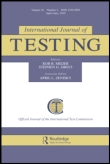
International Journal of Testing
Advancing Testing Methodologies for a Brighter FutureThe International Journal of Testing, published by Routledge Journals, Taylor & Francis Ltd, stands as a pivotal source of knowledge in the realms of education, modeling and simulation, and social psychology. With an ISSN of 1530-5058 and an E-ISSN of 1532-7574, this esteemed journal is recognized for its commitment to advancing the understanding of testing methodologies and their applications across diverse fields. Currently classified in the Q1 category for both Education and Modeling and Simulation, and Q2 for Social Psychology, it maintains a significant impact, ranking 434th among 1543 journals in Educational Social Sciences. The journal fosters high-quality research discussions, providing a platform for researchers, professionals, and students to share innovative insights and findings. Although it is not open access, the journal ensures that groundbreaking studies are disseminated widely to contribute to ongoing academic discourse until 2024 and beyond. With its headquarters in the United Kingdom at 2-4 Park Square, Milton Park, Abingdon OX14 4RN, Oxon, England, the International Journal of Testing continues to be an invaluable resource for anyone involved in testing theory and practice.
TPM-Testing Psychometrics Methodology in Applied Psychology
Cultivating Excellence in Psychological Testing MethodologiesTPM-Testing Psychometrics Methodology in Applied Psychology is a distinguished journal published by CENTRO INFORMAZIONE SCIENTIFICA ECONOMICA SOCIALE-CISES SRL in Italy, focusing on the vital intersection of psychometrics and applied psychology. With an ISSN of 1972-6325, this journal has been an essential resource since its inception in 2005, providing an academic platform for researchers, professionals, and students dedicated to advancing the field. The journal currently holds a Q3 ranking in both Applied Psychology and Psychology (miscellaneous) within the prestigious Scopus database, highlighting its commitment to scholarly excellence and relevance. Although it is not an open-access journal, TPM is a valuable source for rigorous methodologies and innovative applications in psychological testing and assessment. As the field continues to evolve, TPM seeks to address contemporary challenges and promote interdisciplinary collaboration, making it a crucial contributor to the landscape of applied psychology research and practice.