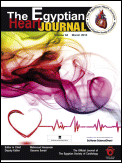
Egyptian Heart Journal
Scope & Guideline
Shaping the future of cardiovascular care through shared knowledge.
Introduction
Aims and Scopes
- Cardiovascular Disease Mechanisms and Management:
Research focusing on the underlying mechanisms of cardiovascular diseases and the development of novel management strategies, including pharmacological and interventional approaches. - Echocardiography and Imaging Techniques:
Studies utilizing advanced imaging modalities such as echocardiography, MRI, and CT to assess cardiac function and structure, enhancing diagnostic accuracy and treatment planning. - Clinical Outcomes and Risk Stratification:
Investigations into clinical outcomes associated with various cardiovascular interventions and the development of risk stratification tools to predict patient prognosis. - Public Health and Epidemiology:
Research aimed at understanding the epidemiology of cardiovascular diseases in Egypt and the impact of public health initiatives on cardiovascular health. - Innovative Therapeutics and Interventions:
Exploration of new therapeutic options, including pharmacotherapies, device-based interventions, and surgical techniques, to improve patient outcomes in cardiovascular disease. - Patient-Centered Care and Quality of Life:
Studies examining the impact of cardiovascular disease and its treatments on patients' quality of life, including psychosocial aspects and patient-reported outcomes.
Trending and Emerging
- Artificial Intelligence and Digital Health:
There is an increasing focus on the application of artificial intelligence and digital health technologies to improve cardiovascular care, from diagnostics to patient management. - Multidisciplinary Approaches to Cardiovascular Care:
Research highlighting the integration of various disciplines, such as cardiology, endocrinology, and public health, is on the rise, reflecting a more holistic approach to cardiovascular health. - Patient-Centered Outcomes and Quality of Life:
An emerging emphasis on studies that measure patient-reported outcomes and quality of life, acknowledging the importance of patient experiences and preferences in cardiovascular care. - Novel Biomarkers and Personalized Medicine:
Growing interest in identifying novel biomarkers for cardiovascular diseases and tailoring treatments based on individual patient profiles, enhancing the precision of cardiovascular medicine. - Telemedicine and Remote Monitoring:
Increased publications on the use of telemedicine and remote monitoring technologies, especially in light of the COVID-19 pandemic, reflecting a shift towards more accessible and flexible healthcare solutions.
Declining or Waning
- Traditional Risk Factors:
Research focused on traditional cardiovascular risk factors, such as hypertension and hyperlipidemia, is becoming less frequent as newer paradigms and comprehensive approaches to cardiovascular health emerge. - Basic Science Research:
There seems to be a waning interest in purely basic science research related to cardiovascular disease, as clinical and translational studies gain more attention. - Surgical Techniques in Isolation:
Papers focusing solely on traditional surgical techniques without integration of newer technologies or multidisciplinary approaches are less frequently published.
Similar Journals
Netherlands Heart Journal
Uniting Researchers to Revolutionize Cardiovascular CareNetherlands Heart Journal is a premier academic publication dedicated to advancing knowledge in the field of cardiology and cardiovascular medicine. Published by BOHN STAFLEU VAN LOGHUM BV, this journal has established itself as a critical platform for researchers, professionals, and students seeking to explore groundbreaking findings and innovative practices in cardiovascular health. With an ISSN of 1568-5888 and E-ISSN 1876-6250, the journal boasts a respectable Q2 ranking in the Cardiology and Cardiovascular Medicine category, placing it in the top half of its field according to the 2023 quartiles. The Scopus ranking places it 130th out of 387 in the relevant category, indicating a commendable percentile rank of 66th, which attests to its influence and quality of published research. Spanning from 2005 to 2024, the journal endeavors to include a diverse array of topics, encompassing clinical practice, technological innovations, and public health considerations related to cardiovascular diseases. Researchers and practitioners are encouraged to engage with the journal's robust content, contributing to and benefiting from the collaborative effort to enhance cardiovascular health worldwide.

REVISTA ESPANOLA DE CARDIOLOGIA
Bridging Theory and Practice in CardiologyREVISTA ESPANOLA DE CARDIOLOGIA is a premier journal dedicated to the dynamic field of cardiology, published by EDICIONES DOYMA S A in Barcelona, Spain. With an impressive Q1 status in the Medicine (miscellaneous) category for 2023, this journal is recognized for its significant contributions to cardiovascular research, evidenced by its rank of #61 out of 387 in the Scopus database, placing it within the top 16% of journals in its field. Covering a broad range of topics within cardiology, the journal aims to disseminate high-quality research, clinical studies, and educational content, fostering knowledge sharing among researchers, clinicians, and students alike. While it does not currently offer open access, the journal maintains a commitment to advancing cardiovascular health through rigorous peer-reviewed articles. With a publication history that spans from 2013 to 2024, REVISTA ESPANOLA DE CARDIOLOGIA is an essential resource for those seeking to stay at the forefront of cardiology advancements and practices.
Aktuelle Kardiologie
Exploring groundbreaking studies in cardiology.Aktuelle Kardiologie is a premier journal in the field of cardiology, published by GEORG THIEME VERLAG KG. With its ISSN 2193-5203 and E-ISSN 2193-5211, it serves as an essential resource for cardiologists, researchers, and healthcare professionals who seek to stay abreast of the latest developments in cardiovascular medicine. Although currently not open access, the journal provides comprehensive insights through its rigorous peer-review process, ensuring high-quality content for its readers. Located in Stuttgart, Germany, the journal’s objectives include fostering the exchange of innovative research, clinical findings, and expert opinions that can significantly enhance patient care and inspire further studies in cardiovascular health. In an era where cardiovascular diseases are a leading public health concern, Aktuelle Kardiologie remains a vital platform for disseminating critical knowledge and advancing the field.
Indian Heart Journal
Elevating Cardiovascular Research to New HeightsIndian Heart Journal, published by Elsevier, is a distinguished peer-reviewed journal dedicated to the field of cardiology and cardiovascular medicine. Founded in 1961, this journal has been a pivotal resource for researchers, healthcare professionals, and students, providing a platform for innovative studies and insights into heart health. The journal transitioned to an Open Access model in 2013, ensuring widespread dissemination of vital research findings to enhance global understanding of cardiovascular diseases. Ranked in the Q3 category for Cardiology and Cardiovascular Medicine in 2023, it holds a reputable position in the medical community, with a Scopus rank of #222 out of 387 journals in the same field, placing it in the 42nd percentile. The Indian Heart Journal strives to foster advances in clinical practice and research while addressing the unique cardiac health challenges faced in India and beyond.
Journal of the Saudi Heart Association
Fostering Innovation in Cardiology for Global ImpactThe Journal of the Saudi Heart Association is a prominent scholarly publication dedicated to advancing knowledge in the fields of cardiology and cardiovascular medicine. Published by DIGITAL COMMONS BEPRESS, this open-access journal has been serving the global community since 2009, providing a vital platform for researchers, practitioners, and students interested in the latest developments in heart health and disease management. With an ISSN of 1016-7315 and a growing repository of knowledge alongside an E-ISSN of 2212-5043, the journal showcases an array of peer-reviewed articles that contribute to the understanding of cardiovascular conditions. Although categorized in the Q4 quartile for 2023, it remains committed to offering valuable insights, particularly within the constraints of the 29th percentile rank specified by Scopus. As the journal converges towards 2024, it continues to foster collaboration, innovation, and inquiry within the Saudi Arabian and international medical communities.
COR ET VASA
Elevating cardiovascular discourse in the European community.COR ET VASA is a prominent peer-reviewed journal in the field of cardiology and cardiovascular medicine, published by the Czech Society of Cardiology and Czech Society of Cardiovascular Surgery. Established in 1961, and continuing its legacy from 2006 to 2024, this journal serves as an essential platform for disseminating significant research findings, clinical studies, and innovative treatments in cardiovascular health. While currently positioned in the Q4 quartile, the journal aims to enhance its impact by fostering knowledge sharing among researchers, clinicians, and students alike. The journal, with its publication in Czech Republic, provides a unique perspective to the European cardiovascular community, allowing for invaluable insights and discourse. Researchers are encouraged to submit their manuscripts and contribute to the growing body of knowledge in this critical area, although it should be noted that COR ET VASA does not offer open access options at this time. As the field of cardiovascular medicine evolves, COR ET VASA remains committed to addressing the latest challenges and advancements, nurturing a rich dialogue within the community.
CIRCULATION
Driving Discoveries in Cardiovascular Health Since 1950.CIRCULATION is a premier journal in the field of cardiology and cardiovascular medicine, published by Lippincott Williams & Wilkins. With a distinguished history dating back to 1950, the journal has consistently been at the forefront of critical research, showcasing significant advancements and discoveries in cardiovascular health. It holds a remarkable Q1 ranking in both the fields of Cardiology and Physiology (medical) according to the 2023 category quartiles, demonstrating its influential role among the top publications in these disciplines. With an impressive Scopus ranking, placed 3rd out of 387 in Cardiology and 2nd out of 113 in Physiology, CIRCULATION is essential reading for researchers, practitioners, and students passionate about advancing their understanding of heart health and related medical sciences. Although the journal is not open access, it continues to foster scholarly exchange and innovation in cardiovascular research, making it an indispensable resource for quality insights and groundbreaking studies.
Hellenic Journal of Cardiology
Connecting Researchers and Clinicians for a Stronger Heart FutureThe Hellenic Journal of Cardiology, a peer-reviewed open-access publication under the esteemed ELSEVIER banner, proudly represents the forefront of research in the field of Cardiology and Cardiovascular Medicine. Established in 1993 and actively publishing since then, this journal has carved a niche in disseminating high-quality research and clinical insights relevant to cardiovascular health in Greece and beyond. With an impressive Q2 ranking in both Cardiology and Cardiovascular Medicine categories as of 2023, the journal holds a commendable position at Rank #126/387 in Scopus, indicative of its critical role in advancing scientific knowledge and practice. The Hellenic Journal of Cardiology transitioned to open access in 2016, ensuring that ground-breaking research is freely accessible, fostering a global dialogue among researchers, clinicians, and students alike. Its publication frequency spans significant years, providing a continuous flow of innovative findings while addressing pressing cardiovascular issues. As the journal builds on its legacy, it aspires to enrich the academic community's understanding of cardiovascular medicine, making it an invaluable resource for anyone invested in heart health.

Cardiology Journal
Connecting researchers to critical cardiac discoveries.Cardiology Journal, published by VIA MEDICA, stands as a prominent resource in the field of cardiology and cardiovascular medicine, with an ISSN of 1897-5593 and an E-ISSN of 1898-018X. Recognized for its Open Access model established since 1994, this journal facilitates widespread dissemination of critical research findings, allowing practitioners and researchers globally to access valuable insights without barriers. Based in Poland, with an address at UL SWIETOKRZYSKA 73, 80-180 GDANSK, it has achieved a respectable Q2 classification in 2023 for both Cardiology and Miscellaneous Medicine categories, reflecting its influence and quality within the scholarly community. With a Scopus ranking placing it at #117 out of 387 in Cardiology, it lies within the 69th percentile, underpinning its commitment to advancing knowledge in cardiovascular health. The journal’s converged years extending from 2006 to 2024 ensure it captures ongoing developments in a rapidly evolving field. As such, the Cardiology Journal serves as an indispensable platform for researchers, professionals, and students dedicated to exploring the frontiers of cardiac science and improving patient care.

Heart Views
Exploring the future of heart health through shared knowledge.Heart Views is a prestigious and influential journal dedicated to the field of cardiology and cardiovascular medicine, published by Wolters Kluwer Medknow Publications. With an Open Access model implemented since 2010, the journal ensures that its valuable research findings are accessible to a global audience, fostering knowledge dissemination and collaboration among researchers, professionals, and students alike. While the current impact factor is not specified, its commitment to quality and peer-reviewed content has established it as a significant resource within the cardiology community. The journal publishes a diverse array of articles, including original research, reviews, and clinical studies aimed at advancing the understanding and treatment of cardiovascular diseases. Heart Views serves as an essential platform for sharing innovative ideas and practices, thereby contributing to improved patient care and outcomes in the dynamic field of heart health.