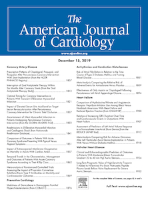
AMERICAN JOURNAL OF CARDIOLOGY
Scope & Guideline
Shaping the Future of Cardiology Through Rigorous Research
Introduction
Aims and Scopes
- Cardiovascular Disease Management:
Research related to the diagnosis, treatment, and management of various cardiovascular diseases, including coronary artery disease, heart failure, and arrhythmias. - Transcatheter Procedures:
Studies focusing on transcatheter interventions, such as transcatheter aortic valve replacement (TAVR) and catheter-based therapies for structural heart diseases. - Risk Assessment and Prevention:
Research on risk factors, prevention strategies, and management of cardiovascular disease, including lifestyle factors, pharmacological therapies, and screening methodologies. - Technological Innovations:
Investigation of new technologies and methodologies in cardiovascular imaging, surgical techniques, and device development, particularly in minimally invasive approaches. - Patient Outcomes and Quality of Life:
Studies assessing the outcomes of various treatments and interventions, including their impact on patients' quality of life and long-term health. - Population Health and Disparities:
Research addressing social determinants of health, health disparities, and the epidemiology of cardiovascular diseases across different populations.
Trending and Emerging
- Artificial Intelligence and Machine Learning:
The integration of artificial intelligence (AI) and machine learning in cardiovascular research is on the rise, focusing on predictive analytics, risk stratification, and personalized medicine. - Cardio-Oncology:
Research at the intersection of cardiology and oncology is gaining momentum, focusing on the cardiovascular implications of cancer therapies and the management of patients with concurrent heart disease. - Heart Failure with Preserved Ejection Fraction (HFpEF):
Increased attention is being given to HFpEF, with studies exploring its pathophysiology, treatment strategies, and impact on patient outcomes, reflecting its growing prevalence. - Telemedicine and Remote Monitoring:
The COVID-19 pandemic has accelerated research into telemedicine and remote patient monitoring, particularly for managing chronic cardiovascular conditions and improving access to care. - Patient-Centered Care:
There is a growing emphasis on patient-reported outcomes and quality of life measures, with research increasingly focusing on how treatments affect patients' daily lives and overall well-being.
Declining or Waning
- Traditional Pharmacological Approaches:
There has been a noticeable decrease in studies focused solely on traditional pharmacological treatments for cardiovascular disease, as newer therapies and combination strategies gain prominence. - Basic Science and Pathophysiology:
Research purely focused on basic science aspects of cardiovascular disease pathophysiology has waned, with a greater emphasis now placed on clinical applications and translational research. - Single-Center Studies:
The prevalence of studies conducted at single centers has diminished, with a shift towards larger, multicenter trials that offer broader generalizability and more robust data. - Invasive Monitoring Techniques:
There is less emphasis on traditional invasive monitoring techniques as non-invasive alternatives and advanced imaging modalities become more prevalent in clinical practice. - General Cardiovascular Risk Scores:
The use of generalized cardiovascular risk scores has declined in favor of more personalized and specific risk assessment models that take into account individual patient characteristics.
Similar Journals
Vasa-European Journal of Vascular Medicine
Exploring the Frontiers of Vascular Medicine TogetherVasa - European Journal of Vascular Medicine is a leading peer-reviewed journal dedicated to advancing the field of vascular medicine, published by HOGREFE AG in Switzerland. With a proud history dating back to 1972, this journal serves as a critical platform for researchers, clinicians, and healthcare professionals committed to enhancing knowledge and practice related to cardiovascular health and vascular disorders. Holding a notable Q2 ranking in the cardiology and cardiovascular medicine category, Vasa’s scholarly contributions reflect high-quality research and innovative insights that drive clinical applications. The journal provides essential access to original articles, reviews, and case studies, fostering a vibrant exchange of ideas within the vascular medicine community. Its Scopus rank of #159 out of 387 further underscores its impact, placing it confidently in the 59th percentile among its peers. Vasa is synonymous with rigorous academic standards and relevance, making it an invaluable resource for anyone seeking to stay at the forefront of vascular research and its clinical implications.
Indian Heart Journal
Innovating Solutions for Heart Health ChallengesIndian Heart Journal, published by Elsevier, is a distinguished peer-reviewed journal dedicated to the field of cardiology and cardiovascular medicine. Founded in 1961, this journal has been a pivotal resource for researchers, healthcare professionals, and students, providing a platform for innovative studies and insights into heart health. The journal transitioned to an Open Access model in 2013, ensuring widespread dissemination of vital research findings to enhance global understanding of cardiovascular diseases. Ranked in the Q3 category for Cardiology and Cardiovascular Medicine in 2023, it holds a reputable position in the medical community, with a Scopus rank of #222 out of 387 journals in the same field, placing it in the 42nd percentile. The Indian Heart Journal strives to foster advances in clinical practice and research while addressing the unique cardiac health challenges faced in India and beyond.

TEXAS HEART INSTITUTE JOURNAL
Driving Progress in Cardiovascular Medicine Since 1982.TEXAS HEART INSTITUTE JOURNAL, published by the renowned Texas Heart Institute, stands as a pivotal resource in the field of cardiology and cardiovascular medicine. With a history spanning over four decades since its establishment in 1982, this journal addresses a wide range of topics within its scope, including clinical studies, innovative treatments, and groundbreaking research in heart health. Despite its Q3 ranking in both Cardiology and Cardiovascular Medicine, the journal is committed to fostering advancement in medical knowledge and practice, providing an essential platform for healthcare professionals and researchers alike. While currently lacking open access, the journal is recognized for its contributions to the field, aiming to illuminate critical healthcare discussions and promote the exchange of ideas. For those interested in staying at the forefront of cardiovascular research, TEXAS HEART INSTITUTE JOURNAL offers invaluable insights and the latest developments shaping the future of heart care.

Journal of Cardiovascular Development and Disease
Advancing cardiovascular knowledge for a healthier tomorrow.Journal of Cardiovascular Development and Disease, an esteemed publication by MDPI, has been a dedicated platform for disseminating cutting-edge research since its inception in 2014. Based in Switzerland, this Open Access journal not only provides unrestricted access to its content but also fosters global collaboration among scholars focusing on cardiovascular health and disease development. With an impressive focus classified as Q1 in Pharmacology, Toxicology and Pharmaceutics for 2023, it attracts a diverse range of interdisciplinary research, supporting advancements in pharmacological applications relevant to cardiac conditions. The journal's ongoing convergence through 2024 highlights its commitment to the evolving landscape of cardiovascular research, making it a vital resource for researchers, professionals, and students alike who are keen to contribute to and learn from significant developments in this critical field.
Netherlands Heart Journal
Fostering Innovation in Heart Health Through Scholarly DiscourseNetherlands Heart Journal is a premier academic publication dedicated to advancing knowledge in the field of cardiology and cardiovascular medicine. Published by BOHN STAFLEU VAN LOGHUM BV, this journal has established itself as a critical platform for researchers, professionals, and students seeking to explore groundbreaking findings and innovative practices in cardiovascular health. With an ISSN of 1568-5888 and E-ISSN 1876-6250, the journal boasts a respectable Q2 ranking in the Cardiology and Cardiovascular Medicine category, placing it in the top half of its field according to the 2023 quartiles. The Scopus ranking places it 130th out of 387 in the relevant category, indicating a commendable percentile rank of 66th, which attests to its influence and quality of published research. Spanning from 2005 to 2024, the journal endeavors to include a diverse array of topics, encompassing clinical practice, technological innovations, and public health considerations related to cardiovascular diseases. Researchers and practitioners are encouraged to engage with the journal's robust content, contributing to and benefiting from the collaborative effort to enhance cardiovascular health worldwide.

Arquivos Brasileiros de Cardiologia
Bridging research and practice in the world of cardiovascular medicine.Arquivos Brasileiros de Cardiologia is a leading open-access journal dedicated to advancing the field of cardiology and cardiovascular medicine. Established in 1950 and published by the ARQUIVOS BRASILEIROS CARDIOLOGIA, this Brazilian journal plays a crucial role in disseminating high-quality research that addresses both emerging and established topics in cardiovascular science. With an impressive history and a commitment to open access since 1997, it provides researchers, healthcare professionals, and students with free and readily available content that significantly contributes to the understanding and management of cardiovascular diseases. The journal is indexed in Scopus and holds a Q3 ranking in the category of Cardiology and Cardiovascular Medicine, demonstrating its relevance and participation within the global research community. Researchers can submit their work and access a wealth of information that spans a variety of subfields, reflecting the journal’s dedication to fostering innovation and collaboration within cardiology. With a mailing address at Avenida Marechal Câmara, 160-330 Centro, Rio de Janeiro, RJ 20,020-907, Brazil, the journal continues to serve as a vital platform for scholarly communication and knowledge exchange in the cardiovascular realm.
Archives of Cardiovascular Diseases
Transforming the future of cardiology with innovative insights.The Archives of Cardiovascular Diseases, published by Elsevier Masson, stands as a leading journal in the field of cardiology and cardiovascular medicine, with an impressive impact factor that underscores its relevance and influence. This esteemed journal, recognized in the Q2 category for both cardiology and miscellaneous medicine, aims to disseminate groundbreaking research, innovative methodologies, and clinical advancements that can shape the future of cardiovascular health. With its diverse array of open access options, researchers and students alike have the ability to engage with high-quality content, ensuring that cutting-edge findings are accessible globally. Since its inception in 2008, the journal has actively contributed to the advancement of knowledge in cardiovascular diseases, fostering collaboration among clinicians, researchers, and educators. Headquartered in Paris, France, Archives of Cardiovascular Diseases remains committed to enhancing our understanding of cardiovascular health and improving patient outcomes worldwide.
American Heart Journal Plus: Cardiology Research and Practice
Bridging Research and Practice in CardiologyAmerican Heart Journal Plus: Cardiology Research and Practice, published by Elsevier, is a prominent open-access platform dedicated to advancing knowledge in the field of cardiology. With an evolving ISSN of 2666-6022, this journal serves as a vital resource for cardiologists, researchers, and healthcare professionals, contributing to the ever-growing discourse surrounding cardiovascular health. With a mission to disseminate high-quality research and innovative practices from 2021 to 2024, it aims to bridge the gap between scientific research and clinical application. Though currently ranked #264 out of 387 in the medicine category for cardiology and cardiovascular medicine, its commitment to quality and accessibility exemplifies the journal's importance in fostering collaboration and knowledge sharing within the medical community. Researchers are encouraged to take advantage of its open-access model to ensure that groundbreaking developments in cardiology are readily available to all stakeholders in the field.
CATHETERIZATION AND CARDIOVASCULAR INTERVENTIONS
Advancing Cardiovascular Care Through Innovative ResearchCatheterization and Cardiovascular Interventions is a leading peer-reviewed journal published by Wiley, dedicated to advancing the fields of cardiology, cardiovascular medicine, and radiology. With an impressive impact factor and categorized in the Q1 quartile across multiple disciplines—including Cardiology, Medicine, and Radiology—this journal serves as an essential resource for researchers, clinicians, and students interested in the latest developments in minimally invasive techniques and innovative cardiovascular therapies. Since its inception in 1999 and continuing through 2024, Catheterization and Cardiovascular Interventions has provided a platform for high-quality original research, reviews, and case studies, highlighting approaches that improve patient outcomes and treatment methodologies. Operating from the United States, the journal offers various access options, making key findings in cardiovascular interventions readily available to its audience. Stay at the forefront of cardiovascular innovation by engaging with this pivotal publication.

International Cardiovascular Research Journal
Innovating heart health through rigorous research.International Cardiovascular Research Journal, published by Shiraz University Medical Sciences, serves as a vital platform for the dissemination of cutting-edge research in the field of cardiology and cardiovascular medicine. Since its inception in 2011, this journal has continuously devoted itself to promoting the highest quality of scholarly communication, helping to bridge the gap between laboratory findings and clinical application. With an ISSN of 2251-9130 and an E-ISSN of 2251-9149, it is indexed in prominent databases, contributing to its visibility and accessibility to a global audience. Although currently classified in the Q4 quartile in the 2023 rankings, the journal is committed to enhancing its impact factor and academic stature. It aims to facilitate open access for all published articles, although specific details on access options are pending. Through its rigorous peer-review process and diverse scope—which encapsulates advancements, clinical studies, and innovative therapeutic strategies—this journal fosters academic collaboration in the realm of cardiovascular health, making it an invaluable resource for researchers, practitioners, and students alike.