
Eirene-Studia Graeca et Latina
Scope & Guideline
Illuminating the Classics for Today's Scholars
Introduction
Aims and Scopes
- Classical Philosophy and Ethics:
Exploring philosophical texts from ancient Greek and Roman thinkers, including ethical discussions and their implications on modern thought. - Literary Analysis of Ancient Texts:
In-depth examinations of classical works, including commentaries and reinterpretations of texts from authors like Aristotle, Ovid, and Thucydides. - Historical Contextualization:
Investigating historical events and figures through the lens of classical literature, providing insights into the socio-political landscapes of ancient civilizations. - Interdisciplinary Approaches:
Integrating archaeology, history, and literature to provide a holistic view of classical studies, fostering discussions that bridge various fields. - Cultural and Religious Studies:
Analyzing the interplay of culture and religion in ancient societies, including studies on early Christianity and Judaism in relation to Hellenism.
Trending and Emerging
- Philosophical Intersections with Medicine and Psychology:
Recent works illustrate a trend towards exploring the connections between ancient philosophical thought and modern concepts in medicine and psychology, particularly concerning human experience and ethics. - Archaeological Insights and Material Culture:
There is an increasing emphasis on archaeological findings and their implications for understanding ancient societies, showcasing the importance of material culture in classical studies. - Intertextuality and Comparative Analyses:
Emerging themes in the journal reflect a growing interest in intertextuality, where authors are drawing connections between various classical texts and exploring their mutual influences. - Cultural Transformations and Religious Discourse:
Recent publications highlight the dynamic interplay between Hellenism, early Judaism, and Christianity, focusing on how ideas transformed across cultures and religious contexts. - Socio-Historical Analyses:
Papers increasingly engage with socio-historical contexts, examining how literature reflects and influences social structures and political thought in ancient times.
Declining or Waning
- Traditional Textual Criticism:
There seems to be a decrease in papers solely dedicated to traditional textual criticism, as the journal has shifted towards more interpretive and contextual analyses of texts. - Narrow Historical Studies:
Specific historical events or figures have received less attention, with a move towards broader thematic explorations rather than isolated historical narratives. - Classical Reception Studies:
Although still relevant, there is a noticeable reduction in the frequency of papers focusing exclusively on classical reception in modern contexts, potentially overshadowed by more interdisciplinary studies.
Similar Journals

Auster
Unlocking knowledge for a transformative educational future.Auster is a prominent open-access journal dedicated to advancing interdisciplinary research within the fields of Humanities and Educational Sciences. Published by the esteemed Universidad Nacional de La Plata, specifically by the Faculty of Humanities and Educational Sciences, this journal has been a cornerstone for scholarly discourse since its establishment in 1996. With an ISSN of 1514-0121 and an E-ISSN of 2346-8890, Auster ensures wide accessibility to innovative research and critical analyses. Its commitment to open access fosters an inclusive academic environment, allowing researchers, students, and professionals in Argentina and beyond to engage with high-quality content that stimulates new ideas and interdisciplinary collaboration. The journal strives to publish timely, relevant articles that explore contemporary challenges in humanities and education, thereby positioning itself as an essential resource for anyone invested in these dynamic fields.

Eikasmos-Quaderni Bolognesi di Filologia Classica
Advancing Scholarship in Classics and LinguisticsEikasmos-Quaderni Bolognesi di Filologia Classica is a distinguished journal that focuses on the fields of Classics, Linguistics, and Language, published by PATRON EDITORE S R L in Italy. With its ISSN 1121-8819, the journal has been a vital platform for the dissemination of scholarly work from 2011 until 2021, contributing significantly to the dialogue within these disciplines. Although recognized in the lower quartiles (Q4) of various categories within Scopus, including Classics and Linguistics, and having ranked in the 37th and 19th percentiles respectively, Eikasmos stands as an invaluable resource for researchers, academics, and students committed to exploring classical philology and its interconnections with modern linguistic studies. The absence of an open access model underscores the importance of institutional support in accessing this scholarly work, which continues to enrich the academic landscape of classical studies.
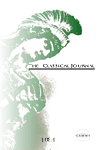
CLASSICAL JOURNAL
Cultivating Knowledge of the Classical WorldCLASSICAL JOURNAL, published by the esteemed Johns Hopkins University Press, stands as a premier academic platform dedicated to the exploration and analysis of classical studies, focusing on ancient Greek and Roman literature, history, and culture. With an impressive impact factor and categorized in the Q1 quartile for Classics in 2023, the journal provides high-quality, peer-reviewed articles that contribute significantly to our understanding of classical antiquity. Researchers and students from around the globe turn to CLASSICAL JOURNAL for groundbreaking insights, as it consistently ranks in the top tier of its field, occupying rank #52 in the Scopus listings within the Arts and Humanities sector, placing it in the 69th percentile. While the journal maintains a traditional subscription model, its rich content and scholarly relevance make it an essential resource for anyone engaged in the study of the classical world, enhancing the academic discourse surrounding this timeless and influential area of study.

Antichthon
Cultivating Knowledge in Classics and BeyondAntichthon, published by Cambridge University Press, stands as a vital platform within the field of Classics. Established in 1986, the journal has evolved to encompass scholarly contributions that explore various dimensions of classical studies, including literature, history, and cultural studies. With its rich publication history extending from 2011 to 2023, Antichthon boasts a commendable Q2 ranking in the latest 2023 Category Quartiles for Classics, reflecting its significant impact in the academic community. Although the journal does not offer an Open Access option, it continues to engage researchers and academics with its curated selection of articles, reviews, and critical insights. Located at the Edinburgh Building, Shaftesbury Rd, Cambridge, England, this journal remains an essential resource for both established scholars and students aiming to deepen their understanding of classical antiquity and its enduring relevance.

Minerva-Revista de Filologia Clasica
Cultivating innovative perspectives in ancient studies.Minerva-Revista de Filologia Clasica, an esteemed academic journal published by the Universidad de Valladolid, is a pivotal resource in the fields of Classics, Linguistics, and Literature. With its ISSN 0213-9634 and E-ISSN 2530-6480, this journal has been championing open access since 2017, making high-quality research accessible to a global audience. Based in Valladolid, Spain, Minerva is dedicated to the exploration and dissemination of scholarly work related to classical philology, offering a platform for the exchange of ideas among researchers, educators, and students alike. Recognized in the 2023 category quartiles as Q3 in Classics and Q4 in Linguistics and Language, this journal provides valuable insights and contributes significantly to its fields, allowing authors and readers to engage with important discussions and innovative perspectives. As the academic landscape evolves, Minerva continues to adapt, fostering a vibrant community committed to the advancement of knowledge in antiquity and its linguistic dimensions.

QUADERNI URBINATI DI CULTURA CLASSICA
Illuminating the Classics through Rigorous AnalysisQUADERNI URBINATI DI CULTURA CLASSICA is a distinguished academic journal dedicated to the interdisciplinary exploration of Classics, Linguistics, and Literary Theory. Published by ACCADEMIA EDITORIALE PISA-ROMA, this journal serves as a vital scholarly platform for researchers and professionals alike, facilitating in-depth discussions and analyses that contribute to these evolving fields. With an ISSN of 0033-4987 and an E-ISSN of 1724-1901, it boasts a robust Scopus ranking, placing it within the second quartile in Classics and the third quartile in related disciplines as of 2023. Although it is not an open-access journal, QUADERNI URBINATI DI CULTURA CLASSICA remains essential for those engaged in the study of language, literature, and classical cultures, encouraging scholarly exchange and innovation from its base in Rome, Italy. Researchers and students will find valuable insights and methodologies within its pages, making it a key resource for fostering academic growth and understanding.
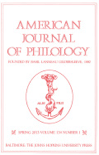
AMERICAN JOURNAL OF PHILOLOGY
Unveiling New Perspectives in Philological ResearchThe American Journal of Philology is a premier scholarly publication dedicated to the field of classics, literature, cultural studies, and linguistics. Published by Johns Hopkins University Press, this esteemed journal boasts an impressive reputation, reflected in its high impact factor and robust rankings—achieving a prestigious Q1 classification in Classics and Literary Theory, while securing a Q2 in Cultural Studies and Linguistics for 2023. The journal provides a rigorous platform for original research, critical essays, and innovative inquiries, contributing significantly to contemporary discourse in the humanities. Its comprehensive scope encompasses interdisciplinary studies, making it a vital resource for researchers, professionals, and students alike. Although it does not operate under an open-access model, the journal ensures that its content remains accessible to a wide audience through institutional subscriptions. With a publication history dating from 1972 to the present, the American Journal of Philology continues to be pivotal in fostering academic excellence and enriching the understanding of philological studies.
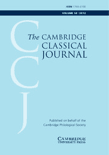
Cambridge Classical Journal
Pioneering New Perspectives in Classical ScholarshipThe Cambridge Classical Journal, published by Cambridge University Press, is a prestigious academic journal that has been a cornerstone of classical scholarship since its inception in 1884. With a focus on advancing knowledge in the fields of Classics, Linguistics, and Literature and Literary Theory, the journal operates with an annual publication cycle, showcasing cutting-edge research that contributes significantly to these disciplines. With a commendable impact factor and ranking in the top quartile (Q1) for Classics and Q2 for Literature and Literary Theory as of 2023, it remains an essential resource for scholars, students, and professionals alike. The journal's commitment to excellence is evident in its rigorous peer-review process and its role in fostering scholarly dialogue on classical texts and their linguistic and cultural implications. While the Cambridge Classical Journal is not an open-access publication, it is invaluable for anyone seeking to deepen their understanding of the classical world and its enduring influence on contemporary thought.

Acta Classica
Connecting Scholars to the Heart of Classical StudiesActa Classica is a distinguished journal dedicated to the field of Classics, published by the Department of English in Classical Languages at the University of Free State, South Africa. With its ISSN 0065-1141 and E-ISSN 2227-538X, this journal has been a pivotal platform for scholarly discourse since its inception in 1973, notably converging and evolving significantly in its content from 2010 to 2023. Although it currently holds a Q4 classification in Classics, its Scopus ranking at #88 out of 170 in the Arts and Humanities reflects its relevance in academic circles, with a 47th percentile standing. The journal aims to publish high-quality research articles, reviews, and critical essays that not only explore the rich tapestry of ancient civilizations but also contribute to contemporary understandings of classical languages and literature. While its content is not openly accessible, Acta Classica remains an essential resource for researchers, professionals, and students who seek to deepen their knowledge and engagement with Classical studies.
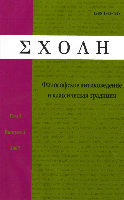
Schole-Filosofskoe Antikovedenie i Klassicheskaya Traditsiya-Schole-Ancient Philosophy and the Classical Tradition
Illuminating the Path of Ancient PhilosophySchole-Filosofskoe Antikovedenie i Klassicheskaya Traditsiya-Schole-Ancient Philosophy and the Classical Tradition is a peer-reviewed academic journal published by NOVOSIBIRSK STATE UNIV, specializing in the fields of Classics and Philosophy. Since its establishment, and particularly with its transition to Open Access in 2007, this journal has become a significant platform for scholarly discourse on ancient philosophical thought and its enduring influence on the classical tradition. The journal's commitment to high academic standards is evidenced by its impressive category quartiles, ranking Q1 in Classics and Q2 in Philosophy as of 2023. With a Scopus rank of #70/170 in Classics and #462/806 in Philosophy, Schole serves as an essential resource for researchers, professionals, and students interested in the intersections of ancient thought and contemporary philosophical inquiry. The journal is based in the Russian Federation and is dedicated to fostering a global dialogue on subjects that shape our understanding of ancient and classical ideas.