English in Education
Scope & Guideline
Shaping Educational Discourse Through Language and Literature
Introduction
Aims and Scopes
- Critical Literacy and Social Justice:
The journal emphasizes critical literacy as a means to address social justice issues in education, exploring how English teaching can empower marginalized voices and foster a more equitable society. - Multimodal and Creative Approaches:
There is a strong focus on multimodal teaching strategies and creative writing, encouraging educators to integrate various forms of expression and communication in their classrooms. - Cultural Responsiveness and Inclusivity:
The journal highlights the importance of culturally responsive pedagogy, aiming to create inclusive learning environments that respect and celebrate diverse linguistic and cultural backgrounds. - Research and Evidence-Based Practices:
Contributions often engage with research evidence and its application in English education, encouraging teachers to reflect critically on their practices and the impact of educational policies. - Interdisciplinary Connections:
The journal promotes interdisciplinary approaches, linking English education with fields such as linguistics, sociology, and psychology to enrich teaching practices and student understanding.
Trending and Emerging
- Anti-Racism and Equity in Education:
Recent publications increasingly focus on anti-racist pedagogy and equity in English education, addressing systemic inequalities and promoting inclusive practices in the classroom. - Mental Health and Well-Being:
There is a growing emphasis on the relationship between literacy, creative writing, and mental health, highlighting the role of English education in fostering positive mental health outcomes for students. - Digital Literacy and Multimodality:
The integration of digital tools and multimodal literacy practices is gaining traction, reflecting the need for educators to adapt to a technologically evolving landscape. - Intergenerational Learning and Community Engagement:
Emerging themes include the exploration of intergenerational learning spaces and community engagement, emphasizing co-creation and collaboration in English education. - Culturally Sustaining Pedagogies:
There is a noticeable trend towards culturally sustaining pedagogies that honor and integrate students' cultural identities and linguistic backgrounds into the curriculum.
Declining or Waning
- Traditional Literary Canon:
There has been a noticeable reduction in discussions centered around the traditional literary canon, as the journal increasingly prioritizes inclusive and diverse literary perspectives. - Standardized Testing and Assessment:
Research focused on standardized testing practices has diminished, possibly indicating a shift towards more holistic and formative assessment approaches in English education. - Teacher-Centric Pedagogies:
The focus on teacher-centric approaches to pedagogy has waned, with a growing emphasis on student agency, collaborative learning, and participatory practices instead. - Grammar Instruction as a Standalone Focus:
There is a declining trend in papers exclusively addressing grammar instruction as a standalone topic, suggesting a shift towards integrating grammar within broader literacy and communication practices. - Literary Theory in Isolation:
Contributions that discuss literary theory in isolation have become less frequent, reflecting a trend towards applying theoretical frameworks in conjunction with practical teaching strategies.
Similar Journals

TESOL Journal
Championing Excellence in TESOL Research and EducationTESOL Journal, published by Wiley, is a premier academic journal dedicated to advancing the field of Teaching English to Speakers of Other Languages (TESOL). With an esteemed reputation reflected in its high impact factor and its Q1 ranking in both Education and Linguistics and Language categories for 2023, this journal serves as a critical resource for researchers, educators, and policy-makers. It covers a wide spectrum of topics related to language acquisition, pedagogical innovations, and educational strategies in TESOL, contributing significantly to the discourse around multilingualism and effective teaching practices. The journal is notable not only for its rigorous peer-review process but also for its commitment to disseminating high-quality research that informs and inspires practice in diverse educational settings. Interested readers can access articles through traditional subscription methods, ensuring that groundbreaking research is available to a broad audience. With converged years spanning from 2010 to 2024, TESOL Journal continues to evolve, making it a vital publication for anyone interested in the complexities of language education.
Literacy
Transforming Literacy Research for Tomorrow's EducatorsLiteracy is a premier academic journal published by Wiley, focusing on critical advancements and research in the fields of education and linguistics. With an impressive impact factor reflected in its Q2 ranking in Education and Q1 in Linguistics and Language, this journal serves as a vital platform for researchers, educators, and students seeking to explore contemporary issues surrounding literacy in diverse contexts. Since its inception in 2005, Literacy has made significant contributions to understanding the evolving nature of literacy practices, promoting dialogue on innovative pedagogies and the sociocultural implications of language use. While it is not an Open Access journal, its accessibility through institutional subscriptions ensures that its valuable insights reach a broad audience. With its robust Scopus rankings, including an 88th percentile in Language and Linguistics and 63rd in Education, Literacy remains an indispensable resource for those committed to advancing literacy education and research.

AAA-ARBEITEN AUS ANGLISTIK UND AMERIKANISTIK
Fostering Academic Excellence in Anglistik and AmerikanistikAAA-ARBEITEN AUS ANGLISTIK UND AMERIKANISTIK, published by GUNTER NARR VERLAG, is a distinguished journal catering to the fields of Linguistics, Language, Literature, and Literary Theory. With its ISSN 0171-5410, this quarterly publication has been a vital resource for scholars since its inception in 2002 and is set to continue until 2024. Situated in Germany, it ranks in the Q3 category for Linguistics and Language and Q2 for Literature and Literary Theory as of 2023, indicating its significant contribution to these disciplines. Despite being non-open access, the journal is recognized for its scholarly rigor, boasting impressive Scopus ranks in both Arts and Humanities and Social Sciences, which underscores its relevance and impact. By fostering comprehensive discussions and analyses of English and American literature, as well as linguistic phenomena, AAA-ARBEITEN AUS ANGLISTIK UND AMERIKANISTIK serves as an essential platform for academics, professionals, and students aiming to deepen their understanding and research in these critical fields.

Radical Teacher
Elevating Diverse Perspectives in TeachingRadical Teacher, published by the University of Pittsburgh, University Library System, is a significant academic journal in the field of education, focusing on critical pedagogy and innovative teaching practices. With an ISSN of 1941-0832, this open-access journal has been committed to accessible educational scholarship since 2013, aiming to foster dialogue and action in social justice education. Situated in the United States, the journal supports researchers, educators, and students alike by providing a platform for diverse voices and alternative perspectives in the educational landscape. Though it currently holds a Q4 classification in education, the journal plays a crucial role in expanding the discourse on education reform and advocating for comprehensive pedagogical change. The publication, encompassing contributions from various educational disciplines, aspires to impact readers by stimulating critical conversations around the complexities of teaching and learning within contemporary societal contexts.

COLLEGE ENGLISH
Connecting Educators and Researchers for Impactful LearningCOLLEGE ENGLISH, ISSN 0010-0994, is a premier academic journal published by the NATIONAL COUNCIL OF TEACHERS OF ENGLISH that serves as a pivotal platform for the advancement of research and scholarly discussion in the fields of education and linguistics. With a strong focus on the intersection of language and teaching, this journal has established its reputation with notable Scopus rankings, achieving a Q2 category in Education and a Q1 category in Linguistics and Language as of 2023. The journal’s commitment to high-quality research is further evidenced by its placement in the top 20th percentile for Arts and Humanities—Language and Linguistics. By providing a rigorous forum for educators, researchers, and students alike, COLLEGE ENGLISH fosters an environment conducive to innovative ideas and interdisciplinary dialogue, promoting deeper understanding and effective teaching practices. Although it does not provide Open Access options, the journal continues to be an essential resource for those aiming to enhance their academic pursuits in the evolving landscape of language education.
Ilha do Desterro-A Journal of English Language Literatures in English and Cultural Studies
Connecting Cultures Through the Lens of LiteratureIlha do Desterro: A Journal of English Language Literatures in English and Cultural Studies, published by the Universidade Federal de Santa Catarina, is a prestigious open-access journal that has been contributing to the fields of literature and cultural studies since 1979. With an ISSN of 0101-4846 and E-ISSN 2175-8026, it has solidified its role as a significant platform for scholars seeking to explore the intricate relationship between English literatures and cultural phenomena. Recognized in the Q2 quartile for Literature and Literary Theory and ranked 370 out of 1106 in the Scopus index (66th percentile), Ilha do Desterro fosters an inclusive environment for research and dialogue, encouraging contributions that examine diverse literary landscapes through various critical lenses. With its commitment to open access, the journal ensures that the findings and discussions within are readily available to researchers, professionals, and students worldwide, enriching the academic discourse in English studies and beyond.
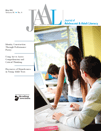
JOURNAL OF ADOLESCENT & ADULT LITERACY
Exploring New Horizons in Literacy DevelopmentJOURNAL OF ADOLESCENT & ADULT LITERACY is a prestigious publication dedicated to the exploration and enhancement of literacy education for adolescents and adults. Published by Wiley, this journal holds an important position in the educational research landscape, marked by its Q2 ranking in Education for 2023, reflecting its commitment to high-quality scholarship. With an ISSN of 1081-3004 and an E-ISSN of 1936-2706, this journal serves as an essential resource for educators, researchers, and policy-makers in understanding literacy development, instructional practices, and the sociocultural factors influencing literacy. Covering a comprehensive timeline from 1995 to 2024, the journal is well-known for its rigorous peer-reviewed articles, providing insights into innovative practices and empirical research that support literacy advancement. Located in the United States, with its headquarters at 111 RIVER ST, HOBOKEN 07030-5774, NJ, the journal does not offer open access but remains an invaluable asset for stakeholders in the realm of education, encouraging discourse and collaboration to foster literacy in diverse and dynamic contexts.

EDUCATIONAL LEADERSHIP
Advancing Knowledge for Effective Educational LeadershipEDUCATIONAL LEADERSHIP, published by the Association for Supervision and Curriculum Development, is a pivotal journal in the field of education, focusing on innovative practices and theories that shape educational leadership today. Established in 1976, this journal addresses critical issues surrounding curriculum development, supervision, and effective leadership strategies within educational institutions. Although it currently does not offer open access, it remains an essential resource for researchers, educators, and administrators seeking to enhance their understanding of educational dynamics and improve school effectiveness. The journal's impact is underscored by its Scopus ranking, placing it 1017 out of 1319 in the Social Sciences Education category. The absence of a current HIndex in the data indicates an opportunity for further citation engagement and scholarly recognition. Additionally, while coverage in Scopus has been discontinued as of 2019, the legacy of EDUCATIONAL LEADERSHIP continues to influence educational practices worldwide, making it an invaluable asset for those dedicated to advancing the field of education.

Journal for Multicultural Education
Empowering diverse voices in educational discourse.Welcome to the Journal for Multicultural Education, an esteemed publication by Emerald Group Publishing Ltd, dedicated to advancing knowledge and practice in the dynamic fields of Cultural Studies, Education, and Linguistics. Since its inception in 2014, this journal has established itself as a leading forum for research, reflection, and discourse, addressing the multifaceted experiences of diverse cultures in educational contexts. With a commendable Scopus Rank placing it in the 87th percentile for Cultural Studies, the journal is positioned in the Q1 quartile, making it a premier outlet for scholars and practitioners looking to contribute to and engage with cutting-edge research. Our commitment to fostering an inclusive dialogue on multicultural education equips our readers with innovative strategies and insights essential for navigating today’s globalized society. While the journal operates under standard access provisions, we invite researchers, educators, and students alike to explore the rich tapestry of scholarly works published within these pages, and partake in a vibrant community dedicated to transformative education.

Changing English-Studies in Culture and Education
Engaging with the Evolving Narratives of Language and Literature.Changing English-Studies in Culture and Education is a leading academic journal published by Routledge Journals, Taylor & Francis Ltd, dedicated to exploring the dynamic intersections of cultural studies and educational practices. With an ISSN of 1358-684X and an e-ISSN of 1469-3585, this journal has maintained notable credibility in the academic community, as evidenced by its impressive rankings—Q1 in Cultural Studies and Q2 in Education for 2023. Spanning from 1994 to 2024, it has become a vital resource for researchers and educators seeking to engage with the evolving narratives of English studies within diverse cultural contexts. The journal aims to illuminate innovative pedagogical approaches and offer critical insights into the cultural implications of language and literature in education. As part of the vibrant scholarly landscape, its contributions play a crucial role in bridging theory and practice, ultimately enriching both academic discourse and educational frameworks.