ETHOS
Scope & Guideline
Exploring the Intersections of Culture and Society
Introduction
Aims and Scopes
- Cultural Anthropology:
The journal primarily investigates cultural phenomena, examining how cultural practices and beliefs influence individual behaviors and societal structures. - Mental Health and Well-being:
A significant focus on the interplay between mental health and cultural contexts, exploring how different societies understand and address mental health issues. - Trauma and Resilience:
Research on trauma—both historical and personal—and the resilience of individuals and communities in the face of such challenges is a core area of inquiry. - Migration and Displacement:
The journal addresses issues related to migration, identity, and the experiences of displaced populations, reflecting on the socio-cultural implications of these movements. - Embodiment and Identity:
Exploration of how physicality and bodily experiences inform identity formation, particularly in contexts of health, illness, and social interaction. - Ethnographic Methodologies:
ETHOS promotes the use of ethnographic methods to provide in-depth insights into the lived experiences of individuals and communities across various cultural settings.
Trending and Emerging
- Digital Culture and Social Media:
An increasing number of studies explore the impacts of digital technology and social media on identity formation, community engagement, and cultural practices. - Intersectionality and Identity Politics:
Research focusing on intersectionality—how overlapping identities affect experiences of discrimination and privilege—is gaining prominence, reflecting a more nuanced understanding of social dynamics. - Environmental Anthropology:
There is a growing emphasis on environmental issues, particularly how cultural practices relate to ecological concerns and the social implications of climate change. - Trauma-informed Care:
Emerging discussions around trauma-informed approaches in various societal contexts highlight the importance of understanding trauma in caregiving and community support. - Global Health Perspectives:
A trend towards exploring health issues from a global perspective, addressing how cultural factors influence health practices and policies in diverse settings. - Experiential Narratives and Personal Stories:
A notable increase in the use of personal narratives and experiential accounts in research underscores the importance of individual stories in understanding broader cultural phenomena.
Declining or Waning
- Traditional Gender Roles:
Research specifically focused on traditional gender roles appears to be decreasing, as discussions evolve toward more fluid understandings of gender and identity. - Euro-American Perspectives on Trauma:
There has been a noticeable reduction in papers solely centered around Euro-American frameworks of trauma, with a shift toward more diverse and global perspectives. - Historical Studies of Colonialism:
While still relevant, the focus on historical colonialism is waning as the journal pivots towards contemporary issues and personal narratives that reflect current socio-political climates. - Generalized Studies of Mental Illness:
Broad studies categorizing mental illness without cultural context are less frequent, as the journal increasingly emphasizes culturally specific understandings of mental health. - Static Views of Community:
Research that portrays communities in a static manner is declining, as the journal embraces dynamic and transformative narratives that reflect ongoing changes in societal structures.
Similar Journals
HAU-Journal of Ethnographic Theory
Unveiling the Complexity of Cultures through Rigorous Ethnographic Theory.HAU-Journal of Ethnographic Theory, published by University of Chicago Press, stands as a leading platform for scholarly discourse in the field of anthropology. Established in 2011, this esteemed journal focuses on ethnographic methodologies and theoretical advancements, offering a significant contribution to the understanding of human cultures and social practices. With an impressive Q2 ranking in anthropology and a strong placement in the 63rd percentile among peers in the Scopus rankings, HAU ensures high visibility and impact within the academic community. Although the journal currently does not offer open access, it is widely available for institutions, fostering a global dialogue among researchers, professionals, and students. As it converges its content towards 2024, HAU remains dedicated to publishing innovative research that challenges existing paradigms and encourages critical reflection, solidifying its importance in the continuous evolution of ethnographic theory.
Emotions and Society
Understanding the heartbeat of society through emotions.Emotions and Society is an esteemed journal published by Bristol University Press & Policy Press, dedicated to advancing the understanding of emotional dynamics within social contexts. With an ISSN of 2631-6897 and E-ISSN 2631-6900, this journal, headquartered in the United Kingdom, serves as a vital platform for researchers and scholars interested in the intersections of cultural studies, sociology, and psychology. Since its inception in 2019, Emotions and Society has achieved remarkable recognition, achieving a prestigious Q1 ranking in Cultural Studies and consistently engaging a diverse audience with a focus on emotional expressions and their societal implications. The journal is committed to open dialogue and innovative research that illuminate how emotions shape individuals and societies both within and across cultural boundaries. With an expanding readership and a dedication to high-quality academic discourse, it is positioned as a key resource for professionals and students alike. For those passionate about exploring the profound nuances of emotions in various social settings, Emotions and Society offers a rich repository of insights and scholarship.
JOURNAL OF HUMANISTIC PSYCHOLOGY
Challenging Perspectives, Enriching LivesThe Journal of Humanistic Psychology, published by SAGE Publications Inc, stands as a leading platform in the fields of psychology, philosophy, and sociology, catering to scholars and practitioners who seek to explore the depth of human experience through a humanistic lens. With an ISSN of 0022-1678 and E-ISSN of 1552-650X, this esteemed journal has a rich history dating back to its inception in 1961 and continues to thrive, with articles that challenge and enhance our understanding of human behavior and values. The journal is recognized in the top quartiles of its categories—Q1 in Philosophy and Sociology and Political Science, and Q2 in Social Psychology—indicating its significant impact and relevance in academia. Additionally, the journal boasts impressive rankings within major databases, including being in the 97th percentile in Arts and Humanities Philosophy and the 88th percentile in Social Sciences Sociology and Political Science. With its commitment to rigorous, qualitative research and a focus on the human condition, the Journal of Humanistic Psychology is essential reading for those dedicated to advancing knowledge and practice in humanistic approaches.
CULTURAL ANTHROPOLOGY
Innovating the Study of Humanity's Rich TapestryCULTURAL ANTHROPOLOGY is a premier journal in the field of anthropology, published by the esteemed SOC CULTURAL ANTHROPOLOGY. With an impressive impact factor and ranking in the Q1 category for both anthropology and arts and humanities, it stands as a leading platform for scholarly discourse and innovative research. Since transitioning to Open Access in 2014, the journal has made substantial contributions to the accessibility of anthropology literature, allowing a broader audience to engage with cutting-edge anthropological insights and findings. The journal's scope encompasses a wide range of cultural studies and anthropological perspectives, catering to a diverse readership that includes researchers, professionals, and students. Published from the Department of Anthropology, Rice University in Houston, Texas, CULTURAL ANTHROPOLOGY continues to shape the conversation in its field, promoting interdisciplinary dialogue and enriching the academic landscape.
International Journal of Applied Psychoanalytic Studies
Innovating Psychoanalytic Insights for Contemporary PracticeWelcome to the International Journal of Applied Psychoanalytic Studies, a pioneering publication in the field of psychoanalysis, published by the reputable WILEY. With ISSN 1742-3341 and E-ISSN 1556-9187, this journal serves as a vital resource for professionals, researchers, and students interested in the intersection of psychoanalytic theory and practical application. Established in 2009, this biannual journal aims to foster innovative research and provide a platform for critical discussions spanning various aspects of psychoanalysis within the psychological realm. Although currently categorized in the Q3 quartile of Psychology (miscellaneous) and ranked #158 in Scopus's general psychology category, the journal aspires to enhance its impact and reach by continuously improving the quality of published works. Access to this journal is available primarily through subscription, ensuring the highest standards of scientific and editorial rigor. Join us in exploring and advancing the frontiers of psychoanalytic knowledge and its implications for contemporary psychological practice.
CULTURE MEDICINE AND PSYCHIATRY
Decoding the Cultural Dimensions of Mental HealthCULTURE MEDICINE AND PSYCHIATRY is a distinguished interdisciplinary journal published by SPRINGER, dedicated to examining the intricate relationships between culture, health, and psychiatry. With an ISSN of 0165-005X and an E-ISSN of 1573-076X, the journal has established a significant presence in the academic community, showcasing impactful research since its inception in 1977. It is recognized for its excellence, currently ranked in the Q1 category in Anthropology and Arts and Humanities, and achieving Q2 rankings in Health (social science) and Medicine (miscellaneous) as of 2023. The journal provides a vital platform for scholars to explore the social determinants of health, the influence of cultural practices on mental well-being, and the role of psychiatry across diverse contexts. Although it is not an open-access journal, researchers, professionals, and students can access a wealth of knowledge and groundbreaking studies that push the boundaries of understanding in these critical fields. CULTURE MEDICINE AND PSYCHIATRY is an essential academic resource for those keen on enhancing their insight into the dynamic interplay between culture and mental health.

Slovensky Narodopis-Slovak Ethnology
Connecting Cultures through EthnologySlovensky Narodopis-Slovak Ethnology is a leading academic journal dedicated to the exploration of ethnology and cultural studies, published by the Slovak Academy of Sciences at the Institute of Ethnology. With an Open Access policy since 2013, it strives to make high-quality research readily accessible to a global audience, enhancing the dialogue around Slovak cultural heritage and broader anthropological topics. The journal holds a notable position in the field, currently ranked Q2 in anthropology for 2023, indicating its substantial contribution to the discipline. It is indexed in Scopus, with a current rank of 245 out of 502 in the Social Sciences category, reflecting its value within the academic community. Researchers and students alike can look forward to a rich array of original research articles, reviews, and essays that not only delve into Slovak ethnology but also engage with international perspectives, thereby enriching the understanding of cultural dynamics and practices.
JOURNAL OF CROSS-CULTURAL PSYCHOLOGY
Unpacking the Complexity of Culture in PsychologyJOURNAL OF CROSS-CULTURAL PSYCHOLOGY, published by SAGE PUBLICATIONS INC, is a premier journal dedicated to the exploration and understanding of psychological phenomena across diverse cultural contexts. With an impressive impact factor reflective of its significance in the academic community, this journal ranks in the top quartile (Q1) for Anthropology, Cultural Studies, and Social Psychology, making it a vital resource for researchers and professionals alike. Spanning from its inception in 1970 to the upcoming year of 2024, the journal covers a wide array of topics that illuminate the nuances of human behavior and cultural interactions, supported by rigorous empirical research. It holds notable rankings in Scopus, including a remarkable 42nd position in Cultural Studies, ensuring its content reaches a high-impact audience. Researchers, students, and practitioners interested in the intersection of culture and psychology will find the journal invaluable for advancing their knowledge and contributing to this dynamic field.

Boletin Antropologico
Bridging Knowledge and Culture in AnthropologyBoletin Antropologico, published by UNIV LOS ANDES, is a vital academic journal dedicated to the field of anthropology, focusing on the diverse cultural practices, social structures, and historical contexts of societies, particularly within Latin America. With its ISSN of 0257-750X, this journal aims to provide a platform for researchers and scholars to disseminate their findings and engage in meaningful discussions that advance the understanding of anthropological issues. Although Boletin Antropologico currently does not follow an open-access model, it remains a significant resource for professionals seeking peer-reviewed content that reflects rigorous academic standards. With a commitment to fostering intellectual growth and collaboration among anthropologists, the journal serves as an essential reference for students and practitioners keen on exploring the rich tapestry of human cultures and societies.
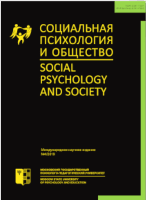
Social Psychology and Society
Exploring the Intersection of Minds and SocietySocial Psychology and Society, published by Moscow State University Psychology & Education, stands at the confluence of psychology and societal studies, offering a critical platform for discourse in the realms of Applied Psychology and Social Psychology. Since its launch, this Open Access journal, indexed in Scopus and recognized for its inclusive approach, has been dedicated to fostering engaging and interdisciplinary research that explores the nuances of social behaviors and societal influences. With a commitment to disseminate knowledge freely since 2015, the journal ensures that researchers, students, and professionals across the globe have access to high-quality studies, thus promoting a broader understanding of the psychological factors shaping societal dynamics. Although currently positioned in Quartile 4 in both Applied Psychology and Social Psychology, and Quartile 3 in the wider Social Sciences, its impact is steadily rising, reflected in its strategic rankings, and it continues to seek innovative contributions that enhance empirical and theoretical frameworks within the field. Our objective is to cultivate a scholarly community that critically engages with contemporary issues, promotes psychological well-being, and contributes to meaningful societal change.