EUROPEAN JOURNAL OF PHYCOLOGY
metrics 2024
Unveiling the Secrets of Freshwater Ecosystems
Introduction
The EUROPEAN JOURNAL OF PHYCOLOGY, published by TAYLOR & FRANCIS LTD, stands as a prominent platform in the fields of Aquatic Science and Plant Science, reflecting its significant contribution to the understanding of algae and freshwater ecosystems. With an ISSN of 0967-0262 and an E-ISSN of 1469-4433, this journal has been disseminating valuable research since its inception in 1993, and it continues to play a pivotal role in advancing scientific knowledge through to 2024. Recognized in the Q2 category for both Aquatic and Plant Sciences in the 2023 rankings, it holds a commendable position in Scopus, being ranked #125 out of 516 and #63 out of 247, respectively. The journal is particularly valuable for researchers, professionals, and students seeking to explore innovative studies and methodologies in phycology and related disciplines. Although it does not currently offer open access, it provides an essential resource for those looking to deepen their understanding of algae's ecological roles and applications.
Metrics 2024
 0.532.002.4079
Metrics History
Rank 2024
Scopus
IF (Web Of Science)
JCI (Web Of Science)
Quartile History
Similar Journals

ACTA SOCIETATIS BOTANICORUM POLONIAE
Innovating the Future of Plant Ecology and ConservationACTA SOCIETATIS BOTANICORUM POLONIAE is a reputable open-access journal dedicated to the field of Plant Science, published by the Polskie Towarzystwo Botaniczne since 1923. With an ISSN of 0001-6977 and an E-ISSN of 2083-9480, this journal has made significant contributions to the botanical sciences, fostering the dissemination of research from Poland and beyond. The journal has ranked in the third quartile (Q3) within its category in the 2023 journal metrics, demonstrating a strong presence in the global academic community, as evidenced by its Scopus ranking of 291/516 within the Agricultural and Biological Sciences sector, placing it in the 43rd percentile. While specific H-Index data are currently not available, ACTA continues to attract submissions from a broad international audience and publishes a wide range of studies that advance the understanding of plant biology, ecology, and conservation. The journal remains a vital resource for researchers, professionals, and students alike, committed to enhancing knowledge and collaboration in botanical science.
PHYCOLOGICAL RESEARCH
Advancing knowledge in aquatic ecosystems.PHYCOLOGICAL RESEARCH is a leading journal in the field of aquatic and plant sciences, published by Wiley, recognized for its commitment to advancing knowledge in the study of algae and their ecological significance. With a diverse scope encompassing ecological interactions, evolutionary behaviors, and physiological processes, PHYCOLOGICAL RESEARCH aims to provide a platform for researchers to disseminate innovative findings and insights pertinent to both agricultural and biological sciences. The journal's impressive rankings—placing it in the 74th percentile within Agricultural and Biological Sciences (miscellaneous) and holding a Q2 category in key fields—underscore its impact and importance in academia. Despite not being open access, the journal ensures broad distribution and visibility through its dedicated readership. Since its inception in 1995, PHYCOLOGICAL RESEARCH has continuously evolved, shaping and influencing the direction of research in phycology and related disciplines, making it an essential resource for students, professionals, and researchers alike.
Botany Letters
Your Gateway to Cutting-edge Research in BotanyBotany Letters, published by Taylor & Francis Ltd, is a prominent journal in the field of Plant Science based in the United Kingdom. With its ISSN 2381-8107 and E-ISSN 2381-8115, the journal has established itself as an essential resource for researchers, professionals, and students alike, focusing on innovative studies and findings in botany. As a Q2 ranked journal in its category (2023) and holding a respectable Scopus rank of #200 out of 516 in Agricultural and Biological Sciences, it reflects a robust commitment to quality and relevance in the field. The journal's open access model ensures that groundbreaking research is readily accessible, fostering collaboration and knowledge sharing among the global scientific community. Covering a broad spectrum of topics within plant science from 2016, Botany Letters aims to catalyze advancements in the understanding and management of plant biodiversity and sustainability, ultimately contributing to conservation efforts and agricultural innovation.
CRYPTOGAMIE ALGOLOGIE
Fostering Insights into Evolutionary Adaptations of CryptogamsCRYPTOGAMIE ALGOLOGIE, with ISSN 0181-1568 and E-ISSN 1776-0984, is a prominent scholarly journal published by ADAC-CRYPTOGAMIE in France, focusing on the intricate intersection of aquatic sciences, ecology, evolution, and plant sciences. Established in 1990, this journal serves as a vital platform for researchers, professionals, and students alike, fostering the dissemination of innovative research and comprehensive reviews in its field. With a Q3 ranking in Aquatic Science, Ecology, Evolution, Behavior and Systematics, and Plant Science for 2023, CRYPTOGAMIE ALGOLOGIE stands out for its contributions to understanding cryptogams' ecological significance and their evolutionary adaptations. The journal is indexed in Scopus, reflecting its impact and relevance in the scientific community, with particular strengths highlighted by ranks in various categories. As an engaging resource for those involved in aquatic ecosystems and plant ecology, CRYPTOGAMIE ALGOLOGIE invites submissions that push the boundaries of knowledge in these crucial fields, ensuring methodologies and findings are accessible and impactful for future research.
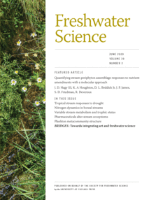
Freshwater Science
Fostering Dialogue in Aquatic ScienceFreshwater Science is a pivotal journal published by the University of Chicago Press, dedicated to advancing the understanding of freshwater ecosystems and their biodiversity. With an ISSN of 2161-9549 and an E-ISSN of 2161-9565, this journal has been a vital resource in the fields of Aquatic Science and Ecology, consistently ranked in the Q2 quartile across multiple categories in 2023. The journal encapsulates rigorous research and innovative studies aimed at addressing the ecological dynamics of freshwater environments from 2012 to 2024. Researchers and practitioners benefit from its open access options, which enhance the dissemination of knowledge while contributing to a better understanding of aquatic systems. With Scopus rankings that place it in the top 30% of its fields, Freshwater Science plays an influential role in fostering scientific dialogue and collaboration among professionals, making it an essential publication for anyone invested in freshwater conservation, management, and ecological impact.
ANIMAL BIOLOGY
Exploring the Intricacies of Animal LifeANIMAL BIOLOGY is a distinguished journal published by BRILL, focusing on the dynamic fields of Animal Science and Zoology, as well as Ecology, Evolution, Behavior, and Systematics. With an ISSN of 1570-7555 and an E-ISSN of 1570-7563, this quarterly journal serves as a pivotal platform for researchers and professionals seeking to contribute to the understanding of animal biology across diverse ecological contexts. The journal is recognized with a 2023 Scopus ranking of #234 out of 490 in the Animal Science and Zoology category, placing it within the 52nd percentile, alongside a rank of #409 out of 721 in Ecology, marking a solid contribution to the field. Although it currently holds a Q3 quartile in both categories, its commitment to quality research and novel insights continues to bolster its significance within the academic community. The open access option coupled with its publication history from 2003 to 2024 ensures a wide dissemination of knowledge, drawing in a global audience of researchers, professionals, and students eager to explore the intricacies of animal biology. By promoting high-quality discussions and innovative studies, ANIMAL BIOLOGY plays an essential role in advancing the understanding of life sciences and the evolution of biodiversity.
BIOLOGIA PLANTARUM
Connecting Researchers for a Greener TomorrowBIOLOGIA PLANTARUM, esteemed within the realms of horticulture and plant science, is a leading academic journal published by the Academy of Sciences of the Czech Republic, Institute of Experimental Botany. Established in 1959, this journal showcases innovative research and advancements in plant biology, focusing on a spectrum of topics including plant physiology, genetics, and biotechnology. With an impressive Scopus ranking in Horticulture (Rank #41/115) and Plant Science (Rank #221/516), it holds a significant place in the academic community, reflected in its Q2 and Q3 status within its respective categories. Although it is not open access, authors are encouraged to contribute to the growing body of knowledge that supports sustainable practices in agriculture and horticulture. Published in the Netherlands, BIOLOGIA PLANTARUM continues to foster collaboration and dialogue among researchers, professionals, and students dedicated to understanding and advancing plant sciences.

ZHURNAL OBSHCHEI BIOLOGII
Pioneering Discoveries in Ecology and MedicineZHURNAL OBSHCHEI BIOLOGII, published by MEZHDUNARODNAYA KNIGA in the Russian Federation, is a venerable journal with a rich history originating in 1945. Renowned for its contributions to the fields of Ecology, Evolution, Behavior, and Systematics, as well as Medicine (miscellaneous), this journal provides a platform for researchers and professionals to disseminate significant findings within these domains. Although currently not classified as an open access publication, ZHURNAL OBSHCHEI BIOLOGII holds a Q4 quartile designation in its respective categories, reflecting its unique positioning within the global research landscape. While its coverage in Scopus is limited, the journal remains an important resource for academics interested in the evolution of biological sciences, especially within the context of Russian research traditions. By fostering scholarly communication and collaboration, ZHURNAL OBSHCHEI BIOLOGII continues to play a critical role in advancing knowledge in the biological sciences.

ACTA ZOOLOGICA BULGARICA
Your Gateway to Contemporary Zoological InsightsACTA ZOOLOGICA BULGARICA is a prominent academic journal dedicated to advancing knowledge in the fields of Animal Science, Zoology, Aquatic Science, Ecology, Evolution, Behavior, and Systematics. Published by the Institute of Zoology, Bulgarian Academy of Sciences, this journal serves as an invaluable platform for researchers, professionals, and students to disseminate their findings and engage with contemporary issues in biodiversity and ecology. With an established history since its convergence in 2010 and an ongoing publication schedule through to 2024, the journal holds a Q4 category ranking in multiple disciplines, highlighting its role in fostering scholarly communication in these areas despite its recent entry into Scopus-indexed rankings. Although currently not an open-access journal, ACTA ZOOLOGICA BULGARICA remains a key resource for those interested in the latest research and developments, particularly within the ecological and zoological landscapes of Europe and beyond.

Fottea
Exploring the depths of algal biology and ecology.Fottea is a prestigious journal, published by the Czech Phycological Society, dedicated to advancing the field of plant sciences with a specific focus on freshwater algal research. Established in 2008, this quarterly publication has steadily gained recognition, evidenced by its impressive Q2 ranking in Plant Science and a solid placement within the 68th percentile among its peers in Scopus rankings. Fottea serves as a vital platform for researchers, professionals, and students to disseminate and access cutting-edge studies, fostering collaboration and innovation within the aquatic ecosystem research community. Although currently operating under a traditional publishing model without open access options, it remains committed to providing high-quality, peer-reviewed content that is essential for the progression of phycology and related disciplines. With its base in the beautiful Czech Republic, the journal aims to bridge local and global research efforts, contributing to the broader understanding of algal biology and ecology.