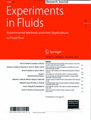
EXPERIMENTS IN FLUIDS
metrics 2024
Connecting academia and industry through experimental insights.
Introduction
EXPERIMENTS IN FLUIDS is a prestigious journal in the field of fluid mechanics, published by SPRINGER, renowned for its rigorous peer-reviewed research and experimental studies that advance the understanding of fluid behavior in various contexts. With an ISSN number of 0723-4864 and an E-ISSN of 1432-1114, this journal has published influential works since its inception in 1983, maintaining a convergence of data and insights crucial for both academia and industry. Its impressive impact factor and ranking in the Q1 category for Computational Mechanics, Fluid Flow and Transfer Processes, Mechanics of Materials, and Physics and Astronomy underscore its significance in fostering high-quality research in these domains. Researchers and professionals benefit from the comprehensive access to experimental methodologies, innovative applications, and cutting-edge results that the journal provides without the Open Access model. The journal's offices located in New York, USA, facilitate its global outreach, making it an essential resource for scholars and practitioners seeking to deepen their expertise in fluid dynamics and related fields.
Metrics 2024
 0.852.302.60142
Metrics History
Rank 2024
Scopus
IF (Web Of Science)
JCI (Web Of Science)
Quartile History
Similar Journals

Journal of Fluid Science and Technology
Your Gateway to Cutting-Edge Fluid ResearchThe Journal of Fluid Science and Technology, published by the Japan Society of Mechanical Engineers, serves as a pivotal platform for the dissemination of cutting-edge research in the fields of fluid mechanics and mechanical engineering. With an ISSN of 1880-5558, this Open Access journal has been dedicated to advancing the understanding of fluid flow and transfer processes since its establishment. As of 2023, it holds a significant position with a Q3 quartile ranking in both Fluid Flow and Transfer Processes and Mechanical Engineering categories. Researchers and practitioners are encouraged to explore the journal’s extensive collection of articles, contributing to the body of knowledge that impacts various practical applications in engineering and technology. The journal, which has established a reputation for quality amidst a competitive landscape, further fosters international collaboration and education by providing unrestricted access to its content. For professionals and students alike, the Journal of Fluid Science and Technology represents an invaluable resource for the latest findings and innovations in fluid dynamics and mechanical systems.
Annual Review of Fluid Mechanics
Empowering Researchers with Critical Fluid InsightsThe Annual Review of Fluid Mechanics, published by Annual Reviews, is a premier journal in the field of fluid mechanics, dedicated to advancing our understanding of fluid behavior through comprehensive and critical reviews of contemporary research. With an impressive impact factor that reflects its stature—ranking Q1 in Condensed Matter Physics and positioned 4th out of 434 in Scopus’s Physics and Astronomy category—it stands as a vital resource for researchers, professionals, and students alike. Since its inception in 1970, the journal has provided vital insights and synthesized knowledge that drive innovations and applications across various scientific disciplines. Although it does not offer open access, the journal ensures rigorous editorial standards and captivating content that contributes meaningfully to the academic discourse in fluid dynamics. Published annually, the Annual Review of Fluid Mechanics continues to be a cornerstone for anyone interested in the complexities of fluid movement and its implications in both theoretical and practical contexts.
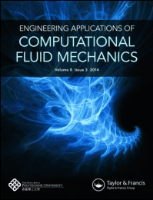
Engineering Applications of Computational Fluid Mechanics
Enhancing Engineering Solutions with Computational InsightsEngineering Applications of Computational Fluid Mechanics is an esteemed journal published by Taylor & Francis Ltd that serves as a vital resource for researchers, professionals, and students in the field of fluid mechanics and its computational applications. With an ISSN of 1994-2060 and an E-ISSN of 1997-003X, this journal has established its reputation through its rigorous peer-review process and commitment to Open Access since 2015, facilitating widespread dissemination of cutting-edge research. Based in the United Kingdom, the journal is indexed in leading databases and has achieved a significant impact in its categories, ranking in the top quartile (Q1) for both Computer Science (miscellaneous) and Modeling and Simulation as of 2023. Notably, its Scopus rankings place it in the top 4% of Mathematics/modeling and simulation, highlighting its importance in advancing knowledge and innovation within the discipline. The journal invites contributions that explore both theoretical and practical aspects of computational fluid dynamics, fostering collaboration and intellectual growth within the community.

EXPERIMENTAL THERMAL AND FLUID SCIENCE
Pioneering discoveries in thermal and fluid engineering.EXPERIMENTAL THERMAL AND FLUID SCIENCE is a prestigious academic journal published by Elsevier Science Inc, dedicated to advancing the fields of thermal and fluid sciences. With a strong focus on innovative experimental research, it plays a crucial role in disseminating new knowledge and techniques across multiple domains, including Aerospace Engineering, Chemical Engineering, Fluid Flow and Transfer Processes, Mechanical Engineering, and Nuclear Engineering. Holding a notable impact factor and ranking in the Q1 quartile across these categories since 2023, the journal is recognized for its high-quality contributions, which appeal to a diverse audience of researchers, industry professionals, and students alike. Additionally, with dedicated coverage from its inception in 1988 to projections extending through 2025, EXPERIMENTAL THERMAL AND FLUID SCIENCE provides a vital platform for sharing advancements in experimental techniques and findings that shape the future of engineering and applied sciences.

International Journal of Aeroacoustics
Innovating Solutions for a Quieter Aerospace FutureThe International Journal of Aeroacoustics, published by SAGE Publications Inc, is a prominent platform that explores the interplay between aeroacoustic phenomena and engineering applications. With an ISSN of 1475-472X and an E-ISSN of 2048-4003, this journal is dedicated to publishing high-quality, peer-reviewed research that addresses both fundamental and applied aspects of aeroacoustics within the fields of Acoustics and Ultrasonics, as well as Aerospace Engineering. Recognized for its scholarly contribution, it achieved a 2023 Q2 ranking in Acoustics and Ultrasonics and a Q3 ranking in Aerospace Engineering. Although it operates under a traditional access model, it remains accessible to a diverse audience through institutional subscriptions and comprehensive archives. With a convergence timeline from 2011 to 2024, the journal aims to foster innovation and collaboration among researchers, professionals, and students by disseminating cutting-edge findings that tackle current challenges in aerodynamics and noise control. As a valued resource in academia, it addresses critical issues impacting the aerospace industry and promotes advancements in engineering solutions for noise reduction.

International Journal of Fluid Mechanics Research
Fostering Innovation through Pioneering ResearchThe International Journal of Fluid Mechanics Research, published by BEGELL HOUSE INC, is a pivotal platform for the dissemination of innovative research within the fields of Mechanical Engineering and Physics. With a focus on the intricate dynamics of fluid behavior, this journal has been a cornerstone of scholarly communication since its inception in 1996, continuing to engage a global audience of researchers and professionals through to 2024. With a respectable Impact Factor reflecting its significant contributions to the disciplines—ranking in Q3 for both Mechanical Engineering and Miscellaneous Physics and Astronomy categories—this journal presents a unique opportunity for authors to share their findings in a peer-reviewed environment. Although it does not currently offer Open Access options, all published articles are carefully curated, ensuring high-quality research is accessible to its readership. As the journal navigates the complexities of fluid mechanics, it fosters an interdisciplinary dialogue, bridging theoretical frameworks with practical applications, thereby enhancing understanding and innovation in related fields.
Thermophysics and Aeromechanics
Igniting Innovation in Thermophysics and AeromechanicsThermophysics and Aeromechanics, published by PLEIADES PUBLISHING INC, is an esteemed journal dedicated to advancing the fields of aerospace engineering, energy engineering, modeling and simulation, as well as nuclear and high energy physics. With an ISSN of 0869-8643 and E-ISSN 1531-8699, this journal serves as a vital platform for researchers and professionals working at the intersection of thermophysics and aeromechanics, delivering cutting-edge research, reviews, and case studies. Despite its current position in Quartile Q4 across multiple categories, including aerospace and energy engineering, it provides a unique opportunity for emerging ideas in these domains to gain visibility and impact. The journal's convergence of diverse scientific disciplines is critical for fostering innovation and technological advancements, making it an essential resource for students, practitioners, and academics alike. In this era of rapid scientific development, Thermophysics and Aeromechanics plays a pivotal role in disseminating knowledge and facilitating interdisciplinary collaboration among a global audience.

Flow
Advancing the frontiers of aerospace and biomedical engineering.Flow is a premier open access journal published by Cambridge University Press, dedicated to advancing research in the fields of Aerospace Engineering, Biomedical Engineering, and Fluid Flow and Transfer Processes. Launched in 2021, Flow has rapidly gained recognition and has achieved a prestigious Q1 ranking in its categories for 2023, underscoring its influential role in disseminating high-quality research. With an emerging impact factor and a strong commitment to accessibility, the journal provides a crucial platform for researchers, professionals, and students to share innovative findings and foster collaboration across disciplines. Flow is headquartered in the United Kingdom and is part of Cambridge University's effort to promote scholarly communication that transcends traditional barriers. Whether you are looking to submit your work or explore cutting-edge studies in your field, Flow offers a dynamic and rigorous environment for intellectual exchange.

PROGRESS IN COMPUTATIONAL FLUID DYNAMICS
Innovating Computational Approaches for Fluid DynamicsPROGRESS IN COMPUTATIONAL FLUID DYNAMICS, published by InderScience Enterprises Ltd, is a vital journal in the realms of Computer Science Applications and Condensed Matter Physics. Established in 2001, this journal serves as a platform for disseminating innovative research findings and technological advancements in computational fluid dynamics, targeting both theoretical and applied aspects. With a current impact factor positioning it in the Q4 quartile for its fields, it captures a wide array of topics including numerical methods, simulation techniques, and real-world fluid dynamics applications, fostering dialogue among researchers, practitioners, and educators alike. Although it does not provide Open Access options, it remains an important resource for those investigating fluid dynamics phenomena. As it continues to evolve through 2024, PROGRESS IN COMPUTATIONAL FLUID DYNAMICS is positioned to contribute significantly to the scientific community, addressing core challenges while promoting collaboration and knowledge exchange.
FLOW TURBULENCE AND COMBUSTION
Fostering collaboration in the study of turbulent phenomena.Flow Turbulence and Combustion is a premier peer-reviewed journal published by Springer, focusing on the intricate dynamics of fluid mechanics, turbulence, and combustion phenomena. With an impressive impact factor and categorized in the Q1 quartile across Chemical Engineering, Physical and Theoretical Chemistry, and Physics and Astronomy, this journal serves as an invaluable resource for researchers, professionals, and students engaged in these fields. Founded in 1996, it presents cutting-edge research, comprehensive reviews, and innovative methodologies that advance the understanding of turbulent flow and combustion processes. The journal's commitment to open access ensures broad dissemination of knowledge, fostering greater collaboration and advancement in scientific inquiry. Based in the Netherlands, Flow Turbulence and Combustion continues to serve as a crucial platform for reporting significant findings and developments until 2024, appealing to a global audience passionate about fluid dynamics.