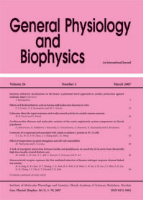
GENERAL PHYSIOLOGY AND BIOPHYSICS
Scope & Guideline
Fostering Innovation in Physiology and Biophysics
Introduction
Aims and Scopes
- Cellular and Molecular Physiology:
Research articles in this journal often delve into cellular mechanisms and molecular pathways that govern physiological functions, including cellular signaling, metabolism, and gene regulation. - Pathophysiology and Disease Mechanisms:
The journal features studies that investigate the physiological and biophysical alterations in various diseases, providing insights into disease mechanisms and potential therapeutic targets. - Bioinformatics and Computational Biology:
With the rise of big data in biomedical research, the journal increasingly publishes papers that employ bioinformatics tools and computational models to analyze biological data and predict disease outcomes. - Pharmacology and Therapeutics:
Research focusing on the pharmacological effects of compounds, including natural products and synthetic drugs, on physiological functions and disease states is a significant area of interest. - Innovative Experimental Techniques:
The journal encourages the use of innovative experimental methodologies, including advanced imaging techniques, electrophysiology, and molecular biology approaches, to study complex biological questions.
Trending and Emerging
- Molecular Signaling Pathways:
There is an increasing focus on detailed studies of molecular signaling pathways, particularly in relation to disease mechanisms, which is crucial for identifying new therapeutic targets. - Neurobiology and Neurophysiology:
Research related to the nervous system, including neuroinflammation and neurodegenerative diseases, is trending upwards, reflecting heightened interest due to the global burden of neurological disorders. - Microbiome and Host Interaction:
The role of the microbiome in health and disease is gaining traction, with studies exploring how microbial communities influence physiological processes and disease outcomes. - Regenerative Medicine and Stem Cell Research:
An emerging theme in the journal is the exploration of stem cells and regenerative medicine, focusing on their potential to repair or regenerate damaged tissues and organs. - Environmental Physiology:
Research examining the physiological effects of environmental factors, such as pollution and climate change, on health is becoming more prevalent, addressing urgent public health concerns.
Declining or Waning
- Traditional Pharmacological Studies:
While the journal has historically published extensive research on traditional pharmacology, there has been a decline in studies that focus solely on classical drug testing without incorporating modern molecular and systems biology approaches. - Basic Biophysics Studies:
There is a waning interest in purely theoretical or basic studies in biophysics that do not connect to physiological or pathological contexts, as the field increasingly values translational research. - Non-Integrated Approaches:
Research that does not integrate multiple biological systems or fails to connect cellular mechanisms with whole-organism physiology is becoming less common, reflecting a broader trend towards more holistic biological research.
Similar Journals

Physiological Reports
Transforming Physiological Understanding for a Global AudiencePhysiological Reports is a pioneering open-access journal published by WILEY, dedicated to advancing the field of physiology through the dissemination of high-quality research. Since its inception in 2013, this journal has provided a platform for innovative studies in both general physiology and medical physiology, making significant contributions to our understanding of biological processes. With an impact factor that reflects its growing influence—as evidenced by its placement in the Q2 category for physiology and medical physiology in 2023—Physiological Reports is positioned as a vital resource for researchers and practitioners alike. The journal encourages the submission of diverse studies ranging from cellular mechanisms to systemic physiology, presenting a unique opportunity for authors to reach a global audience without access barriers. It has established a reputation for rigorous peer review and timely publication, ensuring that cutting-edge research is readily available to stimulate further inquiry and collaboration in the scientific community.
Biochemistry Moscow Supplement Series A-Membrane and Cell Biology
Unveiling the Complexities of Cellular MechanismsBiochemistry Moscow Supplement Series A-Membrane and Cell Biology, published by PLEIADES PUBLISHING INC in the United States, is a pivotal journal in the fields of biochemistry, biophysics, and cell biology. Established in 2008, this journal has become a significant platform for disseminating novel research findings and reviews, fostering advanced studies in membrane dynamics and cellular processes. Although currently ranked in the Q4 quartile across its categories, the journal provides researchers and professionals with open access to a wealth of knowledge, helping to bridge gaps in understanding complex biochemical mechanisms. The journal’s commitment to quality and relevance is evident as it continues to contribute to the academic community through its coverage of innovative and emerging topics in cell and membrane biology. Researchers, practitioners, and students alike will find this resource invaluable for keeping abreast of the latest developments in the ever-evolving landscape of biochemistry and cellular research.
Doklady Biochemistry and Biophysics
Connecting Researchers through Innovative Biochemistry and Biophysics InsightsDoklady Biochemistry and Biophysics is a vital resource for the advancement of knowledge in the fields of biochemistry and biophysics, published by MAIK NAUKA/INTERPERIODICA/SPRINGER. Featuring an ISSN of 1607-6729 and an E-ISSN of 1608-3091, this journal plays a critical role in disseminating research findings and fostering scholarly discourse. Despite its recent ranking in the Q4 quartile for biochemistry and biophysics in 2023, it serves as an essential platform for researchers exploring these intertwined disciplines. The journal’s scope encompasses a wide variety of topics, enhancing the understanding of biochemical processes and physical principles in biological systems. With converged years of publication from 2001 to 2024, it stands as a continual source of knowledge for its readers, who include researchers, professionals, and students alike. While the journal currently does not offer open access options, its contributions remain significant within the scholarly community, illustrated by its competitive Scopus rankings across related fields.
PROGRESS IN BIOPHYSICS & MOLECULAR BIOLOGY
Exploring the molecular intricacies that shape our world.PROGRESS IN BIOPHYSICS & MOLECULAR BIOLOGY is a leading scholarly journal published by PERGAMON-ELSEVIER SCIENCE LTD, focusing on the rapidly advancing fields of biophysics and molecular biology. With a rich history dating back to 1960, this journal has become a pivotal platform for disseminating high-quality research and innovative findings from both established and emerging scientists alike. Leveraging an impressive Q1 ranking in Biophysics and a Q2 ranking in Molecular Biology as of 2023, it stands out in the academic landscape, garnering significant attention and citations. The journal is preeminent in providing researchers with a comprehensive forum to explore the intricate interactions at the molecular level, essential for breakthrough advancements in medicine, biotechnology, and environmental science. Though it does not offer open access, it continues to pursue excellence in publishing with a commitment to advancing knowledge and fostering collaborations across disciplines. As the field evolves, PROGRESS IN BIOPHYSICS & MOLECULAR BIOLOGY remains an invaluable resource for professionals and students aiming to stay at the forefront of biophysics and molecular biology research.
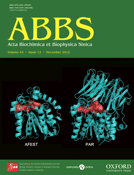
ACTA BIOCHIMICA ET BIOPHYSICA SINICA
Unveiling the Secrets of Life through Cutting-edge Science.ACTA BIOCHIMICA ET BIOPHYSICA SINICA, an esteemed journal published by SCIENCE PRESS, is a leading platform in the fields of biochemistry, biophysics, and molecular biology. Based in the United Kingdom, this journal has consistently ranked in the Q2 category for Biochemistry, Biophysics, and Medicine (miscellaneous) in 2023, showcasing its commitment to high-quality research and innovation in life sciences. With a convergence period extending from 1996 to 2024, it features critical insights into biochemical and biophysical processes that underlie biological phenomena. Researchers and professionals seeking to stay at the forefront of discoveries will find its articles to be both informative and transformative. Although not an open-access journal, ACTA BIOCHIMICA ET BIOPHYSICA SINICA aims to advance knowledge and foster collaboration among scientists worldwide, emphasizing its role in the dynamic landscape of biomedical research.

Biochemistry and Biophysics Reports
Charting new territories in molecular and cellular biology.Biochemistry and Biophysics Reports, published by Elsevier, serves as a vital platform for the dissemination of innovative research in the fields of biochemistry, biophysics, cell biology, and molecular biology. With an Open Access model initiated in 2015, this journal aims to facilitate the unimpeded sharing of knowledge, allowing researchers, professionals, and students free access to significant findings and developments. The journal has established a presence in the academic community, currently holding a Q3 ranking in Biochemistry, Q2 in Biophysics, alongside its Q3 standings in both Cell Biology and Molecular Biology categories for 2023. These metrics underscore its commitment to quality and relevance, garnering attention with Scopus ranks reflecting its emerging influence. Located in the Netherlands, Biochemistry and Biophysics Reports continues to foster dialogue and collaboration among the scientific community through high-quality research outputs, contributing to advancements in understanding the intricate biochemical processes and biophysical principles that underpin life sciences.
CELLULAR PHYSIOLOGY AND BIOCHEMISTRY
Exploring the Frontiers of Cellular ResearchCellular Physiology and Biochemistry is a premier Open Access journal published by the prestigious Cell Physiol Biochem Press GmbH & Co, dedicated to advancing research in the fields of physiology, biochemistry, and molecular biology. Since its inception in 1987 and transitioning to an Open Access model in 2013, the journal has established itself as a vital resource for the dissemination of high-quality research and reviews, showcasing innovative methodologies and groundbreaking findings in cellular processes. With an impressive ranking in the 2023 Scopus category as Q2 in Physiology and a robust percentile of 61, Cellular Physiology and Biochemistry is committed to fostering academic dialogue among researchers, professionals, and students alike. This journal not only provides unrestricted access to its articles, but also promotes the global sharing of knowledge, which is essential for the advancement of our understanding in these vital scientific areas. The journal's editorial team is dedicated to ensuring the highest standards of academic rigor and relevance, making it an indispensable addition to the libraries of those engaged in the life sciences.
Biophysical Reviews
Advancing the Frontiers of Biophysical ScienceBiophysical Reviews, published by SpringerNature, is a leading international journal focused on the interdisciplinary areas of biophysics, structural biology, and molecular biology. With an impressive 2023 impact factor, the journal ranks in the Q1 category for biophysics and is also highly regarded in structural and molecular biology, reflecting its commitment to advancing understanding in these critical fields. Operating since 2009 and converging toward its goal of comprehensive coverage by 2024, Biophysical Reviews provides a platform for researchers to share innovative insights and critical reviews that shape the future of biophysical sciences. Its rigorous peer-review process ensures high-quality publications that are closely monitored within the academic community, making it an essential resource for researchers, professionals, and students aiming to stay at the forefront of biophysical research. Access options are available for enhancing the dissemination of knowledge, supporting a broad audience dedicated to scientific excellence.
KOREAN JOURNAL OF PHYSIOLOGY & PHARMACOLOGY
Illuminating pathways in drug action and physiological understanding.Welcome to the Korean Journal of Physiology & Pharmacology, a pivotal academic platform dedicated to advancing the disciplines of physiology and pharmacology. Published by the esteemed Korean Journal of Physiology & Pharmacology, this journal has been disseminating valuable research findings since its inception in 1997 and continues to be a critical resource for researchers, professionals, and students in South Korea and beyond. With an ISSN of 1226-4512 and E-ISSN of 2093-3827, it offers insights into various aspects of drug action and physiological mechanisms. Although this journal currently does not subscribe to Open Access, it plays a vital role in bridging the gap between experimental and clinical studies, receiving commendations for its quality. In the 2023 Scopus rankings, it is notably positioned in the Q3 quartile for Pharmacology and Q4 for Physiology, reflecting its commitment to excellence. As the journal converges towards its comprehensive coverage in 2024, it remains a cornerstone for those looking to engage deeply with critical developments in these fields.

CELLULAR AND MOLECULAR BIOLOGY
Pioneering Discoveries in Cell BiologyCellular and Molecular Biology is a prominent academic journal published by C M B ASSOC, specializing in the dynamic fields of cellular and molecular biology. Established in 1977, this journal has consistently aimed to disseminate groundbreaking research that contributes to our understanding of biochemical processes, cell dynamics, and molecular mechanisms governing life. With its ISSN 0145-5680 and E-ISSN 1165-158X, the journal plays a vital role in the exchange of innovative ideas, evidenced by its coverage of research from 1977 to 2024. Although currently categorized in the Q4 quartile for major disciplines such as Biochemistry and Cell Biology, it is dedicated to fostering the development of the field by welcoming submissions that challenge the conventional understanding and lead to novel insights. Researchers and academics looking to contribute to or stay updated in the rapidly evolving landscape of molecular biology will find this journal a valuable resource for connecting with a global community of scientists.