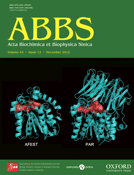
ACTA BIOCHIMICA ET BIOPHYSICA SINICA
Scope & Guideline
Fostering Global Collaboration in Biochemistry and Biophysics.
Introduction
Aims and Scopes
- Glycosylation and its Implications:
The journal has a strong emphasis on the role of glycosylation in disease mechanisms, particularly in cancer and neurodegenerative diseases. This includes studies on glyco-signatures and post-translational modifications that influence cellular functions. - Cancer Biology and Therapeutics:
A significant portion of the research is dedicated to understanding cancer biology, including tumor microenvironments, resistance mechanisms, and potential therapeutic targets. The journal publishes studies on cellular signaling pathways involved in cancer progression. - Immunology and Inflammation:
The journal covers research related to immune responses in various contexts, including cancer immunotherapy, autoimmune diseases, and inflammatory responses. This includes studies on macrophage polarization and the role of immune cells in disease progression. - Metabolism and Disease:
Research on metabolic pathways and their implications in diseases such as diabetes, obesity, and cardiovascular diseases is prevalent. This includes studies on metabolic reprogramming in cancer and the impact of dietary components on health. - Molecular Mechanisms and Target Identification:
The journal emphasizes the molecular mechanisms of action for various compounds, including natural products and synthetic drugs, aiming to identify new therapeutic targets for disease management.
Trending and Emerging
- Glycosylation as a Therapeutic Target:
Research on glycosylation has surged, particularly in its role in cancer and immune responses. This includes studies that explore glycosylation patterns as potential biomarkers and therapeutic targets, highlighting its significance in personalized medicine. - Metabolic Reprogramming in Cancer:
There is a growing focus on the intersection of metabolism and cancer biology, with studies exploring how metabolic changes drive tumorigenesis and treatment resistance. This area is increasingly relevant as researchers seek to understand cancer metabolism for therapeutic interventions. - Cellular Mechanotransduction:
Emerging studies are focusing on how mechanical forces influence cellular behavior, particularly in cancer and tissue regeneration. This theme reflects an interdisciplinary approach combining biology, physics, and engineering to understand cellular responses. - Role of Non-Coding RNAs:
Research on non-coding RNAs, particularly in the context of cancer and metabolic diseases, is gaining momentum. These studies are exploring their roles in gene regulation and potential as therapeutic targets. - Immunotherapy and Immune Modulation:
There is a significant increase in research related to immunotherapy, particularly in relation to cancer treatment. This includes studies on immune checkpoint inhibitors, CAR-T cell therapies, and the modulation of immune responses to enhance therapeutic efficacy.
Declining or Waning
- Traditional Medicinal Approaches:
There has been a noticeable decrease in studies exclusively focused on traditional Chinese medicine compared to previous years. This may suggest a shift towards more modern, mechanistic studies that integrate traditional knowledge with contemporary scientific methods. - Basic Biochemical Techniques:
Research that primarily focuses on basic biochemical techniques without application to specific diseases or therapeutic contexts appears to be waning. There is a trend towards more applied research that connects biochemical findings with clinical relevance. - Animal Models in Basic Research:
The use of animal models for purely basic research has seen a decline, likely due to increasing emphasis on translational research and the need for more human-relevant models that can better predict clinical outcomes.
Similar Journals

FASEB BioAdvances
Transforming Insights into Impactful ResearchFASEB BioAdvances, published by WILEY, is an esteemed open-access journal dedicated to advancing the fields of biochemistry, molecular biology, and physiology. Since its inception in 2019, the journal has rapidly established a significant presence within the academic community, boasting an impressive impact factor reflective of its Q2 and Q3 standings across various categories, including Biochemistry, Genetics and Molecular Biology, Cancer Research, Molecular Medicine, and Physiology. The journal aims to disseminate high-quality research and innovative findings to enhance the understanding of biological processes, making it a vital resource for researchers, professionals, and students alike. With its commitment to open access, FASEB BioAdvances ensures that groundbreaking research is available to a global audience, facilitating collaboration and exploration in these rapidly evolving scientific domains.

FEBS Journal
Connecting Researchers to Transformative DiscoveriesFEBS Journal is a prestigious, peer-reviewed publication dedicated to advancing the field of biochemistry, cell biology, and molecular biology. Published by WILEY in the United Kingdom, this journal boasts an impressive impact factor and ranks in the top quartile (Q1) across multiple relevant categories, including Biochemistry, Cell Biology, and Molecular Biology, reflecting its significant contribution to scientific research. With an ISSN of 1742-464X and an E-ISSN of 1742-4658, the FEBS Journal publishes original research and comprehensive reviews that push the boundaries of knowledge and innovation in the biosciences. As a vital resource for researchers, professionals, and students alike, the journal offers Open Access options, ensuring that cutting-edge discoveries are accessible to a broad audience. With a publication history converging from 2005 to the present and a robust emphasis on high-quality scholarly work, the FEBS Journal remains an essential platform for the dissemination of significant findings and advancements in the life sciences.
BIOCHEMICAL JOURNAL
Empowering Researchers with Cutting-Edge InsightsBIOCHEMICAL JOURNAL, published by Portland Press Ltd, stands as a leading publication in the fields of Biochemistry, Cell Biology, and Molecular Biology, reflecting a commitment to advancing scientific knowledge since its inception in 1945. With a distinguished Q1 ranking across these categories and impressive Scopus rankings, the journal serves as an invaluable resource for researchers, professionals, and students alike, facilitating critical discoveries and innovative research practices. Although not currently offering open access, the journal provides a platform for high-quality peer-reviewed articles, ensuring rigorous standards in the dissemination of biochemical research. Spanning over seven decades and continuing through to 2024, the BIOCHEMICAL JOURNAL fosters an environment where cutting-edge biochemical research thrives, supporting the global scientific community's efforts to address complex biological questions and enhance our understanding of fundamental cellular processes.
International Journal of Biological Sciences
Unlocking the Secrets of Biological InnovationInternational Journal of Biological Sciences (ISSN: 1449-2288, E-ISSN: 1449-2288) is a premier open-access journal published by IVYSPRING INTERNATIONAL PUBLISHING since 2005, located in Australia. With a commitment to advancing knowledge in the life sciences, this journal covers a wide spectrum of disciplines, including Applied Microbiology and Biotechnology, Cell Biology, Developmental Biology, Ecology, Evolution, Behavior and Systematics, and Molecular Biology, earning a distinguished Q1 ranking in these fields as of 2023. It stands out with exceptional Scopus rankings, placing in the top ranks across multiple categories, such as the 98th percentile in Ecology, Evolution, Behavior and Systematics and the 94th percentile in Applied Microbiology and Biotechnology. The journal fosters an open access philosophy, ensuring that research findings are readily available to the scientific community and the public, and invites original research articles, reviews, and commentaries. With its mission to disseminate high-quality research, the International Journal of Biological Sciences serves as an essential resource for researchers, professionals, and students seeking to deepen their understanding and drive innovation in biological sciences.
Doklady Biochemistry and Biophysics
Bridging Knowledge Gaps in Biochemical and Biophysical SciencesDoklady Biochemistry and Biophysics is a vital resource for the advancement of knowledge in the fields of biochemistry and biophysics, published by MAIK NAUKA/INTERPERIODICA/SPRINGER. Featuring an ISSN of 1607-6729 and an E-ISSN of 1608-3091, this journal plays a critical role in disseminating research findings and fostering scholarly discourse. Despite its recent ranking in the Q4 quartile for biochemistry and biophysics in 2023, it serves as an essential platform for researchers exploring these intertwined disciplines. The journal’s scope encompasses a wide variety of topics, enhancing the understanding of biochemical processes and physical principles in biological systems. With converged years of publication from 2001 to 2024, it stands as a continual source of knowledge for its readers, who include researchers, professionals, and students alike. While the journal currently does not offer open access options, its contributions remain significant within the scholarly community, illustrated by its competitive Scopus rankings across related fields.
MOLECULAR AND CELLULAR BIOCHEMISTRY
Elevating Knowledge in Biochemistry Since 1973MOLECULAR AND CELLULAR BIOCHEMISTRY, an esteemed journal published by SPRINGER, serves as a prominent platform in the fields of biochemistry and molecular biology. With a history of dissemination since 1973, this journal has made significant contributions to the understanding of biochemical processes at the molecular level. The MOLECULAR AND CELLULAR BIOCHEMISTRY journal focuses on a myriad of topics including but not limited to cellular biochemistry, clinical biochemistry, and interdisciplinary approaches in medicine, boasting a commendable categorization in the 2023 Scopus ranks where it falls under Q3 in Cell Biology, Q2 in Clinical Biochemistry, Q1 in Medicine (miscellaneous), and Q2 in Molecular Biology. Although the journal is not open access, it provides access options through institutional subscriptions, making valuable research accessible to a wider audience. With its rigorous peer-review process and high impact within the scientific community, this journal aims to advance knowledge and stimulate exploration in biochemical research, making it essential reading for researchers, professionals, and students alike.

Biochemistry and Biophysics Reports
Advancing the frontiers of life sciences research.Biochemistry and Biophysics Reports, published by Elsevier, serves as a vital platform for the dissemination of innovative research in the fields of biochemistry, biophysics, cell biology, and molecular biology. With an Open Access model initiated in 2015, this journal aims to facilitate the unimpeded sharing of knowledge, allowing researchers, professionals, and students free access to significant findings and developments. The journal has established a presence in the academic community, currently holding a Q3 ranking in Biochemistry, Q2 in Biophysics, alongside its Q3 standings in both Cell Biology and Molecular Biology categories for 2023. These metrics underscore its commitment to quality and relevance, garnering attention with Scopus ranks reflecting its emerging influence. Located in the Netherlands, Biochemistry and Biophysics Reports continues to foster dialogue and collaboration among the scientific community through high-quality research outputs, contributing to advancements in understanding the intricate biochemical processes and biophysical principles that underpin life sciences.

CELLULAR AND MOLECULAR BIOLOGY
Unveiling the Secrets of Biochemical ProcessesCellular and Molecular Biology is a prominent academic journal published by C M B ASSOC, specializing in the dynamic fields of cellular and molecular biology. Established in 1977, this journal has consistently aimed to disseminate groundbreaking research that contributes to our understanding of biochemical processes, cell dynamics, and molecular mechanisms governing life. With its ISSN 0145-5680 and E-ISSN 1165-158X, the journal plays a vital role in the exchange of innovative ideas, evidenced by its coverage of research from 1977 to 2024. Although currently categorized in the Q4 quartile for major disciplines such as Biochemistry and Cell Biology, it is dedicated to fostering the development of the field by welcoming submissions that challenge the conventional understanding and lead to novel insights. Researchers and academics looking to contribute to or stay updated in the rapidly evolving landscape of molecular biology will find this journal a valuable resource for connecting with a global community of scientists.

INDIAN JOURNAL OF BIOCHEMISTRY & BIOPHYSICS
Pioneering research for a healthier tomorrow.INDIAN JOURNAL OF BIOCHEMISTRY & BIOPHYSICS is a well-regarded academic journal that serves as a vital platform for researchers in the fields of biochemistry and biophysics. Published by the NATL INST SCIENCE COMMUNICATION-NISCAIR since its inception in 1972, this Open Access journal has committed itself to disseminating high-quality research and advancements in these dynamic fields, allowing readers worldwide to access vital findings since 2009. The journal maintains a robust presence in the academic landscape, achieving noteworthy rankings in 2023, placing it in the Q4 category for Biochemistry and Q3 for both Biophysics and miscellaneous Medicine, alongside its respectable Scopus rankings. With an emphasis on original research articles, reviews, and educational contributions, the INDIAN JOURNAL OF BIOCHEMISTRY & BIOPHYSICS plays an essential role in fostering scientific dialogue and collaboration among professionals and students alike. For scholars seeking to stay at the forefront of biochemistry and biophysics research, this journal is an indispensable resource that fosters knowledge exchange and elevates the field on both a national and international scale.

BIOSCIENCE REPORTS
Pioneering Insights in Biophysics and Molecular BiologyBIOSCIENCE REPORTS, published by Portland Press Ltd, is a prestigious journal dedicated to advancing the fields of biochemistry, biophysics, cell biology, and molecular biology. Founded in 1981, the journal has established itself as a vital resource for researchers and professionals, boasting a significant impact factor and high rankings within its categories, including Q2 in Biochemistry and Q1 in Biophysics as of 2023. The journal’s commitment to high-quality, peer-reviewed research ensures that it remains an influential platform for the dissemination of cutting-edge scientific findings. While it operates under a traditional subscription model, it offers various access options to accommodate the needs of the scientific community. With ongoing publication through 2024, BIOSCIENCE REPORTS continues to play a crucial role in shaping discussions in the life sciences and fostering innovative research in biology.