Gut Microbes
metrics 2024
Connecting Microbes to Health: A Scientific Journey
Introduction
Gut Microbes, published by TAYLOR & FRANCIS INC, stands as a leading academic journal in the fields of Gastroenterology, Infectious Diseases, and Microbiology, with a distinguished Q1 ranking in all relevant categories for 2023. With an ISSN of 1949-0976 and an E-ISSN of 1949-0984, this journal has been at the forefront of microbiome research since its inception in 2010 and continues to provide an essential platform for the dissemination of groundbreaking studies and reviews related to gut microbiota and health. Researchers and professionals benefit from an impressive impact factor, underlining the journal's commitment to high-quality peer-reviewed articles that push the boundaries of our understanding of microbial interactions and their implications in various medical contexts. While it operates under a traditional subscription model, the journal ensures that its content remains accessible to the global scientific community through institutional access programs. As we look ahead to converging years until 2024, Gut Microbes remains a pivotal resource for those seeking to explore the intricate connections between the gut microbiome, health, and disease.
Metrics 2024
 3.0812.2012.30110
Metrics History
Rank 2024
Scopus
IF (Web Of Science)
JCI (Web Of Science)
Quartile History
Similar Journals
Gastroenterology Research and Practice
Advancing Digestive Health Through Innovative ResearchGastroenterology Research and Practice is a leading Open Access journal dedicated to advancing the field of gastroenterology and hepatology. Published by HINDAWI LTD, this journal offers a platform for researchers, clinicians, and healthcare professionals to share their findings and insights on cutting-edge topics in digestive health. With an ISSN of 1687-6121 and an E-ISSN of 1687-630X, it has established its significance within the academic community, evidenced by its ranking in the 2023 Scopus metrics, where it is positioned in the third quartile for both gastroenterology and hepatology disciplines. The journal is recognized for disseminating high-quality, peer-reviewed articles that contribute to the understanding of gastrointestinal disorders, therapeutic advancements, and innovative practices. Since its inception as an Open Access journal in 2008, Gastroenterology Research and Practice has removed barriers to access, ensuring that vital research reaches a global audience. This ongoing commitment to increasing accessibility, alongside its continuous publication from 2009 to 2024, underscores its importance as a resource for the academic and clinical communities striving to improve patient outcomes in digestive diseases.
Gastroenterology Review-Przeglad Gastroenterologiczny
Exploring the Frontiers of Digestive HealthGastroenterology Review-Przeglad Gastroenterologiczny is a premier, peer-reviewed journal published by TERMEDIA PUBLISHING HOUSE LTD, focusing on the dynamic field of gastroenterology. Since its inception in 2006, it has embraced an Open Access model, ensuring that the latest research is readily accessible to a global audience, fostering collaboration and innovation. Based in Poland, this journal serves as a crucial platform for disseminating significant findings in gastrointestinal research, with a current Scopus rank placing it at the 39th percentile in its category. With a commitment to advancing the understanding of gastroenterological conditions, *Gastroenterology Review* publishes original articles, reviews, and case studies that contribute to both clinical practice and academic research. The journal is particularly aimed at researchers, healthcare professionals, and students who ignite dialogues that shape the future of gastrointestinal health. Explore the comprehensive insights that this journal offers, as it encapsulates vital developments from 2008 to 2024 in the ever-evolving landscape of gastroenterology.

Malaysian Journal of Microbiology
Empowering Scientists: Your Gateway to Microbiology DiscoveriesMalaysian Journal of Microbiology is a prestigious open-access journal dedicated to advancing the field of microbiology, published by the Malaysian Society for Microbiology. Since its inception in 2005, this journal has become an essential platform for researchers and practitioners, facilitating the dissemination of innovative studies in applied microbiology, biotechnology, and infectious diseases. Based in Penang, Malaysia, this journal not only focuses on local microbiological research but also positions itself within the broader global scientific community. Although currently placed in the Q4 category in several relevant fields—including Applied Microbiology and Biotechnology, Infectious Diseases, and Medical Microbiology according to the 2023 Scopus rankings—it plays a crucial role in encouraging novel research and fostering collaboration among scientists. The journal encourages submissions that contribute to the understanding of microbial processes, disease mechanisms, and novel biotechnological applications, thereby supporting the continuous growth of knowledge in microbiology. With open access since its launch, the Malaysian Journal of Microbiology ensures that all published works are freely available to the public, enhancing their visibility and impact within the scientific community.
FOOD AND AGRICULTURAL IMMUNOLOGY
Pioneering Research for Resilient Food SystemsFOOD AND AGRICULTURAL IMMUNOLOGY, published by Taylor & Francis Ltd, is a distinguished journal dedicated to the intersection of immunology and agricultural sciences, providing valuable insights in areas such as food safety, plant health, and disease resistance since its inception in 1989. Operating as an Open Access journal since 2017, it offers researchers and professionals unrestricted access to groundbreaking studies and reviews that advance the understanding of immunological responses in agricultural contexts. With its current quartile rankings of Q2 in Agronomy and Crop Science and Q3 in Food Science, as well as Q4 in Immunology, the journal has established itself as a vital resource for those aiming to enhance the quality and safety of food production through innovative research. By leveraging its impressive Scopus rankings across various categories, the journal promotes interdisciplinary collaboration and knowledge dissemination pertinent to both scientists and policymakers engaged in the agricultural and food sectors.
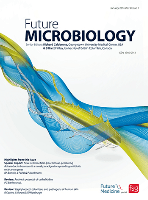
Future Microbiology
Shaping the Future of Microbial ResearchFuture Microbiology is a leading journal in the field of microbiology, published by FUTURE MEDICINE LTD in the United Kingdom. Since its inception in 2006, it has aimed to provide a comprehensive forum for the advancement of knowledge in microbiological research, particularly within the medical domain. With its current impact factor classifications placing it in Q3 for general microbiology and Q2 for medical microbiology as of 2023, it has established itself as a significant contributor to scientific discourse. The journal, featuring ISSN 1746-0913 and E-ISSN 1746-0921, actively engages researchers, professionals, and students, presenting them with novel insights and findings that enhance our understanding of microbial science. The publication is designed not only to showcase innovative research but also to foster collaborations and discussions across disciplines. While currently not offering open access, Future Microbiology remains committed to disseminating high-quality content that informs and inspires the ongoing exploration of microbiology and its critical role in healthcare.

Bioscience of Microbiota Food and Health
Elevating Understanding of Microbiota's Role in Human HealthBioscience of Microbiota Food and Health, an esteemed journal published by BMFH PRESS, serves as a pivotal platform for interdisciplinary research in the expanding fields of applied microbiology, food science, and gastroenterology. Since its inception in 2014, the journal has facilitated a critical exchange of scientific knowledge, promoting advancements in our understanding of microbiota's role in human health and nutrition. With its impressive 2023 category quartile rankings—Q2 in Applied Microbiology and Biotechnology, Food Science, and Gastroenterology—it stands out among its peers, appealing to researchers, professionals, and students alike. The journal does not follow an open-access model, which underscores its exclusivity while maintaining rigorous peer-review standards. Based in Japan, it provides a global forum for innovative studies that advance the field and enhance public health outcomes. As the journal converges into its next decade, it continues to uphold its commitment to disseminating high-quality research that bridges the gap between microbiota, food, and human health.
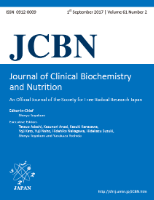
JOURNAL OF CLINICAL BIOCHEMISTRY AND NUTRITION
Bridging Biochemical Research and Nutritional PracticesJOURNAL OF CLINICAL BIOCHEMISTRY AND NUTRITION is a premier publication dedicated to the advancements in the fields of clinical biochemistry, nutrition, and dietary sciences. Published by the esteemed JOURNAL CLINICAL BIOCHEMISTRY & NUTRITION in Japan, this journal serves as a crucial platform for researchers and professionals to disseminate their findings and insights. With an ISSN of 0912-0009 and an E-ISSN of 1880-5086, it features a broad spectrum of original research articles, reviews, and case studies, fostering a deeper understanding of the interplay between biochemical processes and nutritional science. Notably, the journal has achieved significant rankings, placed in the Q3 and Q2 quartiles across various relevant categories, indicating its rising impact and relevance within the scientific community. Researchers will benefit from its rich repository of knowledge, while students and professionals will find it an invaluable resource for staying updated with the latest developments. Access options are available for interested readers, further contributing to the journal's objective of promoting open dialogue and research in clinical biochemistry and nutrition.

Nutrients
Exploring the vital links between nutrition and health.Nutrients is a premier, peer-reviewed open access journal published by MDPI, dedicated to advancing the field of nutrition and dietary research. Since its inception in 2009, this journal has consistently garnered acclaim, achieving a Q1 ranking in both Food Science and Nutrition and Dietetics, reflecting its significant impact in these vital areas of study. With a robust Scopus ranking of #40 out of 389 in Food Science and #18 out of 140 in Nutrition and Dietetics, Nutrients has established itself as a leading platform for researchers, practitioners, and students aiming to share and gain insights into nutritional epidemiology, dietary interventions, and policy implications. Hailing from Basel, Switzerland, the journal ensures broader accessibility through its open access model, inviting diverse contributions that enhance our understanding of nutrition in health and disease. By fostering collaboration across disciplines, Nutrients not only serves as a resource for high-quality research but also encourages innovation essential for tackling global nutritional challenges.

Gastroenterology Insights
Unlocking New Perspectives in GastroenterologyGastroenterology Insights is a premier open-access journal published by MDPI since 2009, focusing on essential research and developments within the fields of gastroenterology and hepatology. With a dedicated ISSN of 2036-7414 and E-ISSN 2036-7422, this journal serves as a vital platform for disseminating innovative studies and insights pertinent to gastrointestinal health, disorders, and treatment modalities. Based in Switzerland, Gastroenterology Insights boasts a significant academic presence, currently positioned in the Q3 quartile for both gastroenterology and hepatology categories as of 2023, reflecting its impactful contributions to the disciplines. With Scopus rankings placing it at the 94th and 48th positions in gastroenterology and hepatology respectively, the journal is committed to advancing knowledge and fostering collaboration among researchers, professionals, and students alike. By providing an open-access model, it ensures that high-quality research is accessible globally, thereby enhancing the reach and impact of crucial findings in the science of digestive health. Researchers looking to publish cutting-edge work will find Gastroenterology Insights a valuable resource for both sharing and acquiring knowledge.

GUT
Advancing the Frontiers of Gastrointestinal ScienceGUT is a premier journal in the field of gastroenterology, published by the esteemed BMJ Publishing Group. With a rich history dating back to 1960 and an impressive convergence of research expected to continue through 2024, GUT has established itself as a cornerstone of academic discourse in the gastrointestinal sciences. The journal boasts a remarkable impact factor, positioning it in the Q1 category for gastroenterology with an outstanding rank of #3 out of 167 in its Scopus ranking, reflecting its 98th percentile status among peers. Although it does not currently offer open access options, GUT remains dedicated to disseminating high-quality research, reviews, and clinical studies that advance the understanding of digestive health. Published in the United Kingdom, GUT serves as an essential resource for researchers, clinicians, and students aiming to stay at the forefront of innovations and developments in the field.