
ICONARP International Journal of Architecture and Planning
Scope & Guideline
Advancing innovative solutions in architecture and urban design.
Introduction
Aims and Scopes
- Sustainable Design and Green Architecture:
Focuses on methodologies and practices that promote environmentally friendly building techniques, including the integration of green roofs, energy-efficient designs, and assessments of thermal performance. - Cultural Heritage and Historical Context:
Investigates the preservation and adaptation of historical buildings, exploring the intersection of architecture and cultural narratives, as well as the impacts of urban development on historical sites. - Urban Livability and Accessibility:
Examines factors affecting urban quality of life, including accessibility to green spaces, public transportation, and social infrastructure, with a focus on improving living conditions in urban environments. - Innovative Planning Methodologies:
Introduces new approaches to urban planning, including psychogeography, space syntax, and participatory design, aimed at enhancing community engagement and spatial understanding. - Biophilic and Behavioral Design:
Explores the relationship between natural environments and human well-being, emphasizing biophilic design principles and their application in various settings, including educational and healthcare facilities. - Technological Integration in Architecture:
Focuses on the use of emerging technologies such as augmented reality and digital modeling in architectural practice and heritage preservation.
Trending and Emerging
- Climate Resilience and Adaptation:
An increasing number of studies are focusing on climate adaptation strategies in urban environments, highlighting the importance of resilience in planning against climate change impacts. - Health and Well-being in Design:
Research exploring the psychological and physical impacts of design on users, particularly in healthcare and educational settings, is on the rise, emphasizing the importance of creating supportive environments. - Digital Technologies in Architecture:
The integration of digital tools such as parametric design, augmented reality, and data analytics in architectural practices is gaining traction, reflecting a broader trend towards technological innovation. - Participatory and Community-Based Planning:
Emerging themes related to participatory design and community involvement in urban planning processes are becoming more prominent, underscoring the need for inclusive practices that consider diverse user perspectives. - Post-Pandemic Design Considerations:
The impact of the COVID-19 pandemic on design practices, particularly in residential and public spaces, is a growing area of interest, as researchers examine changes in user behavior and spatial requirements.
Declining or Waning
- Traditional Architectural Styles:
Research centered on traditional architectural styles and their applications has become less frequent, possibly due to a growing emphasis on contemporary design solutions and sustainability. - Historical Urban Morphology:
Studies specifically focused on historical urban morphology have decreased, suggesting a shift towards more contemporary urban issues and planning methodologies. - Comparative Analyses of Historical Structures:
Comparative research examining historical structures across different cultures or regions is less prevalent, indicating a potential decline in interest or funding for such studies. - Localized Architectural Practices:
There seems to be a reduced focus on localized architectural practices and vernacular architecture, as researchers increasingly pursue broader themes related to globalization and universal design principles.
Similar Journals

En Blanco-Revista de Arquitectura
Exploring the Intersection of Theory and Practice in ArchitectureEn Blanco - Revista de Arquitectura is a peer-reviewed journal published by UNIV POLITECNICA VALENCIA, EDITORIAL UPV, specializing in the field of architecture and design. This esteemed publication aims to bridge theoretical advances and practical applications within the architecture domain, showcasing innovative research, critical essays, and multidisciplinary approaches. With an emphasis on fostering dialogue among researchers, professionals, and students, En Blanco serves as an essential platform for disseminating cutting-edge ideas and discussions that define contemporary architectural practices. Although currently offering non-open access content, the journal is dedicated to promoting accessibility through insights that resonate beyond its pages. With an ISSN of 1888-5616 and E-ISSN of 2445-1215, En Blanco is a pivotal resource for any architecture enthusiast looking to enrich their understanding and contribute to the evolving discourse in architectural studies.

Prostor
Navigating the Complexities of Urban EnvironmentsProstor is an esteemed scholarly journal published by the University of Zagreb, Faculty of Architecture, dedicated to advancing knowledge in the fields of architecture, urban planning, and spatial studies. Since transitioning to an Open Access model in 2006, Prostor has made significant strides in providing unrestricted access to its contents, fostering a vibrant community of researchers, practitioners, and students interested in contemporary issues surrounding the built environment and social space. The journal's commitment to quality is reflected in its impressive rank within Scopus, particularly in the Arts and Humanities category (64th percentile) and within Engineering (Architecture) at the 49th percentile. Covering a broad array of interdisciplinary topics, Prostor serves as a vital platform for disseminating innovative research and fostering dialogue among professionals while engaging with practical and theoretical explorations of spatial design. With coverage spanning over two decades, Prostor remains a crucial resource for anyone seeking to navigate the complexities of architecture and urban studies.

i2 Investigacion e Innovacion en Arquitectura y Territorio
Exploring innovative pathways in urban planning and environmental design.i2 Investigacion e Innovacion en Arquitectura y Territorio is a leading open-access journal published by the University of Alicante, dedicated to advancing research and innovation in the fields of architecture and territorial development. Since its inception in 2013, this journal has aimed to provide a robust platform for scholarly discourse, promoting interdisciplinary approaches that connect academic insights with practical applications in urban planning and environmental design. With its commitment to accessibility, the journal ensures that cutting-edge findings and case studies are readily available to researchers, professionals, and students alike, fostering collaboration and informed decision-making. As the landscape of architecture and geography continues to evolve, the i2 journal stands out as a crucial resource for enhancing knowledge and cultivating innovative practices in these dynamic fields.

URBAN MORPHOLOGY
Unveiling the Layers of Urban DevelopmentURBAN MORPHOLOGY is a distinguished journal published by the International Seminar on Urban Form, centered on the critical study of urban spaces and their development over time. With an ISSN of 1027-4278, this journal provides a platform for interdisciplinary research, examining the interplay between urban design, architecture, and community dynamics. Although not Open Access, it offers valuable insights within the fields of Archeology and Urban Studies, reflecting its significant impact with rankings in the Q2 and Q3 quartiles as of 2023. It commands respect within the academic community, ranking in the 81st and 79th percentiles in its respective Scopus categories. As it converges from 1997 to 2024, URBAN MORPHOLOGY represents a critical resource for scholars and professionals seeking to deepen their understanding of urban environments. The journal also serves as an essential reference point for evolving discussions surrounding urban planning, sustainability, and heritage conservation, engaging researchers, professionals, and students alike in the vital dynamics of urban studies.

A + U-ARCHITECTURE AND URBANISM
Transforming Spaces: Where Architecture Meets Urban StudiesA + U - ARCHITECTURE AND URBANISM, published by A & U PUBL CO LTD, is a prominent Japanese journal that focuses on the interdisciplinary nexus of architecture, urban studies, and the visual arts. With an ISSN of 0389-9160, this publication aims to provide a platform for innovative research and discourse in the challenging and ever-evolving landscapes of architecture and urbanism. Despite being placed in Q4 of various categories according to Scopus ranks, this journal holds significance in fostering global dialogues on urban transformations and design strategies through its diverse range of articles. The journal emphasizes not only the aesthetic dimensions of architecture but also the social and cultural implications of urban development, thereby appealing to a broad audience of researchers, professionals, and students dedicated to these fields. With a commitment to enriching the academic community, A + U serves as a vital resource for those seeking to explore and contribute to the future of urban spaces and architectural practices.
VITRUVIO-International Journal of Architectural Technology and Sustainability
Fostering collaboration for a sustainable built environment.Welcome to the VITRUVIO-International Journal of Architectural Technology and Sustainability, a leading open-access journal published by UNIV POLITECNICA VALENCIA, EDITORIAL UPV since 2015 and based in Spain. With its ISSN 2444-9091, this journal is dedicated to advancing the field of architectural technology and sustainability, providing a vital platform for researchers, professionals, and students alike. The journal has made significant strides in the academic landscape, achieving a Q3 ranking in Architecture and a Q4 ranking in Building and Construction for 2023. It features a diverse range of scholarly articles that explore innovative practices, cutting-edge research, and sustainable solutions in architecture. With a Scopus ranking placing it at #70/189 in Architecture and #161/223 in Building and Construction, it is positioned within the 63rd percentile and 28th percentile respectively, demonstrating its increasing impact in these vital fields. We invite you to engage with our content and contribute to the ongoing discourse around sustainability in architectural practice.
Urban Design International
Elevating urban design practices for a sustainable tomorrow.Urban Design International, published by Palgrave Macmillan Ltd, stands as a pivotal journal in the fields of Urban Studies and Geography, Planning and Development. Since its inception in 1996, this UK-based journal has become a leading platform for innovative research and discourse, maintaining a Q1 classification in Urban Studies and a Q2 ranking in Geography, Planning and Development as of 2023. With an impressive Scopus ranking of 48 out of 279 in Urban Studies, the journal's contributions are recognized globally, evidenced by its 82nd percentile standing. While currently not an open-access publication, it provides a vital resource for academics, urban planners, and policymakers engaging with the complexities of urban environments. With an aim to foster interdisciplinary collaboration and critical analysis of urban design practices, Urban Design International is committed to pushing the boundaries of knowledge in sustainable urban development and design.
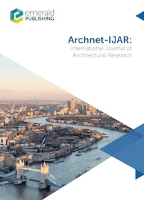
Archnet-IJAR International Journal of Architectural Research
Advancing architectural innovation through interdisciplinary dialogue.Archnet-IJAR International Journal of Architectural Research serves as an esteemed platform within the field of architecture and urban studies, published by Emerald Group Publishing Ltd. With an impressive impact reflected through its Q1 category rankings in both Architecture and Urban Studies, this journal highlights cutting-edge research and innovative practices spanning diverse architectural disciplines. The journal focuses on facilitating interdisciplinary dialogues, making it a vital resource for researchers, students, and professionals keen on advancing their understanding of architectural theories and urban design. With its commitment to quality, evidenced by high scores in various Scopus rankings, including a rank of 9th in Visual Arts and Performing Arts, Archnet-IJAR aims to publish work that not only challenges conventional boundaries but also enriches practical applications in the built environment. Its open-access model ensures wider dissemination of knowledge, fostering collaboration and growth within the international architectural community.
International Journal of Islamic Architecture
Bridging Cultures Through Architectural InnovationThe International Journal of Islamic Architecture, published by INTELLECT LTD in the United Kingdom, is a pivotal scholarly resource dedicated to the exploration of Islamic architecture, design, and cultural expressions within a contemporary framework. With ISSN 2045-5895 and E-ISSN 2045-5909, this journal targets an interdisciplinary audience by bridging the gap between architecture, geography, urban studies, and the arts. Established in 2012, it has swiftly garnered recognition, achieving notable rankings such as Q3 in Architecture and Q2 in Visual Arts and Performing Arts by 2023. Although it currently does not offer open access, its articles are meticulously peer-reviewed, ensuring high academic standards and relevance. Emphasizing the significance of Islamic architectural heritage in global contexts, the journal seeks to foster innovative perspectives and critical discourse, making it an essential platform for researchers, professionals, and students alike to engage with contemporary architectural practices and cultural dialogues.

Architecture Civil Engineering Environment
Bridging Architecture, Engineering, and Environment for a Greener FutureArchitecture Civil Engineering Environment, published by Silesian University of Technology, is an esteemed open-access journal dedicated to advancing research and scholarship in the fields of architecture, civil engineering, and environmental science. With its ISSN 1899-0142 and E-ISSN 2720-6947, the journal facilitates the dissemination of innovative practices and methodologies to an international audience. Since transitioning to open access in 2016, it has fostered a collaborative environment that empowers researchers and professionals to share their work freely, thus enhancing the visibility and impact of contemporary studies. The journal emphasizes interdisciplinary research, aiming to bridge gaps between architectural design, civil infrastructure development, and environmental sustainability. By publishing high-quality peer-reviewed articles, Architecture Civil Engineering Environment plays a crucial role in shaping the future of sustainable practices within these intertwined disciplines, making it an essential resource for scholars, practitioners, and students alike.