INTERNATIONAL JOURNAL OF AUDIOLOGY
Scope & Guideline
Fostering breakthroughs in hearing health and communication.
Introduction
Aims and Scopes
- Hearing Assessment Techniques:
Research focusing on various audiometric methods, including traditional pure-tone audiometry, remote self-testing, and advanced assessments like auditory brainstem responses and otoacoustic emissions. - Intervention Strategies:
Studies evaluating the effectiveness of different intervention strategies for hearing loss, including hearing aids, cochlear implants, and auditory training programs, emphasizing evidence-based practices. - Psychosocial Implications of Hearing Loss:
Exploration of the social, emotional, and psychological aspects of hearing loss, including stigma, quality of life, and the impact on mental health. - Innovative Audiology Technologies:
Research into the development and application of new technologies in audiology, including tele-audiology, mobile audiometry, and digital health solutions. - Public Health and Policy in Audiology:
Investigations into the broader implications of hearing health on public policy, health equity, and access to audiological care, particularly in underserved populations. - Cross-Cultural Studies:
Research examining audiology practices and hearing health outcomes across different cultural contexts, highlighting the need for culturally sensitive approaches to audiological care.
Trending and Emerging
- Tele-Audiology and Remote Services:
A significant increase in research focused on tele-audiology and remote service delivery, particularly in response to the COVID-19 pandemic, demonstrates the growing importance of accessible hearing care. - Mental Health and Hearing Loss:
Emerging studies emphasizing the intersection of mental health and hearing loss, exploring how audiological interventions can support psychological well-being. - Family-Centered Care Models:
An increasing focus on family-centered approaches in audiological practice, integrating the needs and experiences of families within intervention strategies. - Cochlear Implant Research:
Heightened interest in cochlear implants, including novel fitting strategies, long-term outcomes, and the experiences of users, reflects ongoing advancements in this area. - Bilingualism and Language Development:
Research exploring the effects of hearing loss on language development in bilingual populations, addressing both assessment and intervention strategies. - User-Centric Technology Development:
A trend toward developing user-friendly technologies for hearing assessment and rehabilitation, focusing on patient empowerment and engagement in their hearing health journey.
Declining or Waning
- Traditional Audiometric Methods:
There appears to be a waning focus on conventional audiometric methods as more researchers pivot towards innovative and technology-driven approaches, such as remote testing and digital assessments. - Occupational Noise Exposure Studies:
Research on occupational noise exposure and its direct effects on hearing is less prevalent, possibly due to a shift towards broader public health implications and preventive audiology. - Basic Research in Auditory Physiology:
While foundational studies in auditory physiology remain important, there has been a decline in papers solely dedicated to basic physiological research, with a trend towards applied research that addresses clinical outcomes.
Similar Journals
Indian Journal of Otology
Connecting Scholars in the World of Otology.Indian Journal of Otology, published by Wolters Kluwer Medknow Publications, is a prominent peer-reviewed journal dedicated to advancing the field of otology. Established in 1999, this journal serves as an essential platform for disseminating innovative research, reviews, and clinical practice advancements related to ear disorders and hearing sciences. With a current impact factor placing it in the Q3 quartile of *Otorhinolaryngology*, it reflects a robust commitment to quality and relevance in clinical practice. The journal's scope encompasses a wide range of topics, from surgical techniques to emerging therapies, making it indispensable for researchers, practitioners, and students in the audiology and otology communities. The Indian Journal of Otology is headquartered in Mumbai, India, and plays a crucial role in promoting scholarly communication within the region and beyond. Although it does not currently operate as an open-access journal, its rigorous academic standards ensure that each publication contributes meaningfully to the global understanding of ear health and related disorders.
INTERNATIONAL JOURNAL OF PEDIATRIC OTORHINOLARYNGOLOGY
Fostering excellence in the diagnosis and treatment of pediatric conditions.INTERNATIONAL JOURNAL OF PEDIATRIC OTORHINOLARYNGOLOGY, published by Elsevier Ireland Ltd, stands as a pivotal resource in the fields of pediatric otorhinolaryngology, pediatrics, and related medical disciplines. With a historical publication record spanning from 1979 to 2024, this journal is dedicated to advancing research and clinical practice in the diagnosis and treatment of ear, nose, and throat disorders in children. As evidenced by its 2023 rankings, the journal maintains a commendable position within the Q2 category of its field, reflecting its impact and the quality of research it disseminates, ranking #43 out of 123 in Otorhinolaryngology and #131 out of 330 in Pediatrics. Researchers, clinicians, and students alike can benefit from a wealth of studies and reviews designed to inform and enhance pediatric care. Although the journal does not currently offer open access, it remains an indispensable tool for those seeking to stay at the forefront of pediatric health and otolaryngological innovations.
SOUTH AFRICAN JOURNAL OF COMMUNICATION DISORDERS
Bridging Gaps in Communication ScienceSOUTH AFRICAN JOURNAL OF COMMUNICATION DISORDERS, published by AOSIS, is a prominent peer-reviewed journal dedicated to advancing research in communication disorders. With its ISSN 0379-8046 and E-ISSN 2225-4765, this open-access journal has been providing a platform for innovative research since 2010, facilitating the dissemination of knowledge within the South African context and beyond. Its scope encompasses various fields, achieving notable rankings such as Q1 in Linguistics and Language and Q2 in Communication for 2023, highlighting its strong commitment to quality research. The journal has successfully converged its publication years from 1977 to 2024, reflecting its longstanding contribution to the discipline. Researchers and professionals in fields such as cognitive neuroscience, linguistics, and speech and hearing will find this journal an invaluable resource for staying ahead of current trends and developments. As it continuously seeks to bridge gaps in communication disorder research, the journal aims to foster collaboration and innovation within the academic community.
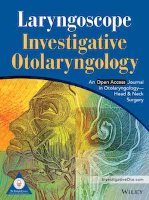
Laryngoscope Investigative Otolaryngology
Exploring Innovations in Surgical PracticesLaryngoscope Investigative Otolaryngology is a prominent open access journal published by Wiley, dedicated to advancing research and knowledge within the field of otolaryngology and surgical practices. Since its inception in 2016, this journal has undergone a transformative phase and has quickly established itself in the academic community, achieving Q2 quartile rankings in both Otorhinolaryngology and Surgery for the year 2023. With an ISSN of 2378-8038, it serves as a vital repository of innovative research, insights, and reviews, catering primarily to researchers, medical professionals, and students. The journal emphasizes accessibility, allowing wide dissemination of pivotal findings essential for fostering collaboration and enhancing clinical practices. Through its rigorous peer-review process and commitment to quality, Laryngoscope Investigative Otolaryngology seeks to contribute significantly to the ongoing dialogue and improvements within the health care landscape.
Journal of Audiology and Otology
Elevating the standards of auditory health and knowledge.The Journal of Audiology and Otology, published by the Korean Audiological Society, is a prominent peer-reviewed journal that seeks to advance the fields of audiology and otolaryngology. With its ISSN 2384-1621 and E-ISSN 2384-1710, this journal has carved out an important niche since its inception in 2016 and continues to contribute valuable research insights through to 2024. Focused on a range of topics including hearing disorders, audiological assessments, and innovations in surgical practices, the journal is categorized within the Q3 quartile in Otorhinolaryngology and has attained recognition across various related fields, achieving a Q2 ranking in Speech and Hearing. As an essential platform for professionals, researchers, and students devoted to the study of auditory and sensory systems, the Journal of Audiology and Otology is especially significant given its active engagement with the latest clinical practices and theoretical advancements in South Korea and beyond. Although it operates under a traditional access model, its rich content positioned at the intersection of clinical application and research remains critical for fostering development in the auditory sciences.
Indian Journal of Otolaryngology and Head & Neck Surgery
Pioneering Research in Otolaryngology and Head & Neck SurgeryIndian Journal of Otolaryngology and Head & Neck Surgery, published by SPRINGER INDIA, is a pivotal platform for researchers, practitioners, and students in the field of otolaryngology. With an ISSN of 2231-3796 and an E-ISSN of 0973-7707, this journal aims to disseminate cutting-edge research, innovative techniques, and surgical developments related to head and neck surgery. Recognized for its contributions, it holds a Q3 ranking in both Otorhinolaryngology and Surgery as per the 2023 category quartiles, demonstrating its relevance among the medical community. The journal, which has continually published since 1993, addresses a wide range of topics including clinical studies, surgical techniques, and research advancements, fostering knowledge that informs practice and enhances patient care. By being indexed in Scopus with notable rankings and percentiles, Indian Journal of Otolaryngology and Head & Neck Surgery serves as an essential resource for emerging research and development in this specialized field.

Auditory and Vestibular Research
Connecting Researchers for a Healthier Auditory FutureAuditory and Vestibular Research is an esteemed open-access journal published by Tehran University of Medical Sciences, dedicated to advancing the field of otorhinolaryngology and speech and hearing sciences. Established to foster scholarly communication, this journal has gained traction since its inception and has been openly accessible since 2015, encouraging a wider dissemination of research findings. With an E-ISSN of 2423-480X, it features a diverse range of studies and reviews that reflect the latest advancements and methodologies in auditory and vestibular functioning. As of 2023, the journal is ranked Q3 in both Otorhinolaryngology and Speech and Hearing categories, indicating a growing significance within the academic landscape, especially among researchers and healthcare professionals focusing on auditory health. By publishing quality research and facilitating dialogue within the community, Auditory and Vestibular Research plays a crucial role in informing practice and enhancing knowledge in these vital areas of medicine.
Audiology and Neurotology
Pioneering discoveries in otorhinolaryngology and neuroscience.Audiology and Neurotology, published by KARGER, stands at the forefront of research in the fields of otorhinolaryngology, audiology, and related neurosciences in Switzerland. With an impressive history of publication from 1996 to 2024, this journal caters to a diverse audience of researchers, clinicians, and students dedicated to advancing the understanding and treatment of auditory and balance disorders. Holding a significant Q1 category ranking in Otorhinolaryngology and Speech and Hearing and a commendable position in other related areas, it reflects a robust impact within its niche. Though currently operating under a subscription model, the journal remains accessible to an extensive readership striving to explore cutting-edge findings and implications for clinical practice. By disseminating high-quality research, Audiology and Neurotology continues to play a crucial role in shaping the landscape of audiological science and provides a platform for vital scholarly communication.
COCHLEAR IMPLANTS INTERNATIONAL
Connecting research and clinical practice in otorhinolaryngology.COCHLEAR IMPLANTS INTERNATIONAL is a premier journal dedicated to advancing the field of otorhinolaryngology and speech and hearing sciences. Published by Taylor & Francis Ltd, this esteemed periodical boasts a Q1 ranking in both its categories for 2023, reflecting its critical role in disseminating high-quality research. With an ISSN of 1467-0100 and E-ISSN 1754-7628, the journal encompasses a broad scope, publishing innovative studies and reviews related to cochlear implants, their applications, and the evolving technologies surrounding auditory rehabilitation. Although it does not offer open access, its exceptional reputation ensures that published works reach a wide audience of academics, healthcare professionals, and students worldwide. Through its commitment to exceptional scholarship, COCHLEAR IMPLANTS INTERNATIONAL continues to shape the future of hearing science and improve clinical practices, making it an essential resource for those engaged in this dynamic field.
JARO-JOURNAL OF THE ASSOCIATION FOR RESEARCH IN OTOLARYNGOLOGY
Exploring Innovations in Ear, Nose, and Throat MedicineJARO - Journal of the Association for Research in Otolaryngology is a premier scholarly journal dedicated to advancing research in the field of otolaryngology and sensory systems. Published by Springer, this journal aims to disseminate high-quality original research, reviews, and clinical studies that enhance the understanding of ear, nose, throat, and related structures' functions and diseases. With an ISSN of 1525-3961 and an E-ISSN of 1438-7573, JARO stands out in its category, currently ranked Q2 in Otorhinolaryngology and Q3 in Sensory Systems as per the 2023 category quartiles. The journal enjoys a respectable reputation, ranking 32nd out of 123 journals in Medicine - Otorhinolaryngology, placing it in the 74th percentile, and holds a rank of 19th out of 42 in the field of Neuroscience - Sensory Systems. Although it does not follow an Open Access model, JARO remains a key resource for researchers, clinicians, and students alike, facilitating the exchange of ideas and research outcomes that contribute to the evolution of practices and technologies in the fields it serves. Addressed from One New York Plaza, Suite 4600, New York, NY 10004, United States, JARO is committed to fostering innovative advancements in otolaryngology.