International Journal of Cultural Policy
Scope & Guideline
Unveiling Insights at the Intersection of Culture and Society
Introduction
Aims and Scopes
- Cultural Governance and Policy Frameworks:
The journal explores mechanisms of cultural governance and the frameworks that guide cultural policy development across different regions and contexts. - Impact of Cultural Policies on Society:
Research often examines how cultural policies affect societal structures, including issues of identity, participation, and access to cultural resources. - Cultural Heritage and Preservation:
A significant focus is placed on the safeguarding of tangible and intangible cultural heritage, including discussions on restitution, ownership, and the implications of heritage policies. - Digital Transformation in Cultural Sectors:
The journal addresses how digital technologies are reshaping cultural production, consumption, and policy-making, especially in the context of the COVID-19 pandemic. - Interdisciplinary Approaches:
Papers often draw on interdisciplinary methodologies, incorporating insights from sociology, anthropology, economics, and political science to analyze cultural phenomena and policies. - Global Perspectives and Local Practices:
The journal emphasizes the importance of examining cultural policies from a global perspective while also highlighting local practices and case studies that inform broader discussions.
Trending and Emerging
- Cultural Sustainability and Environmental Concerns:
Research is increasingly addressing the nexus between cultural practices and sustainability, exploring how cultural policies can support environmental goals and sustainable development. - Digital Culture and Policy Innovation:
Emerging discussions on digital culture, including the impacts of streaming services, social media, and digital heritage, are gaining traction as cultural sectors adapt to rapid technological changes. - Post-Pandemic Cultural Recovery:
The effects of the COVID-19 pandemic on cultural institutions and practices have led to a surge in studies focusing on recovery strategies, resilience, and the evolving role of culture in public health. - Social Justice and Cultural Equity:
There is a growing emphasis on social justice within cultural policy, with research investigating how policies can promote inclusivity, representation, and equity in cultural participation. - Cultural Policy and Global Governance:
Emerging themes reflect an interest in how cultural policy interacts with global governance structures, particularly in the context of international relations and cultural diplomacy.
Declining or Waning
- Traditional Cultural Diplomacy:
There has been a noticeable decline in papers focusing on conventional cultural diplomacy strategies, as newer forms of cultural exchange and soft power dynamics gain attention. - Monocultural Policies and Practices:
Research exploring monocultural or nationalistic approaches to cultural policy has decreased, possibly reflecting a growing recognition of the importance of multiculturalism and diversity in cultural governance. - Historical Cultural Policy Analysis:
While historical analyses remain relevant, there has been a reduction in studies focusing solely on historical cultural policies without connecting them to contemporary issues and challenges. - Art as a Commodity:
Discussion around the commercialization of art and culture as a primary focus of cultural policy has waned, as the journal increasingly emphasizes the broader social and political implications of cultural practices. - Cultural Policy and Economic Growth:
Papers linking cultural policy directly to economic growth outcomes have decreased, as the focus shifts towards understanding cultural policy as a tool for social equity and community building.
Similar Journals

AIB Studi
Empowering libraries through open access research.AIB Studi is a vital peer-reviewed journal published by the ASSOC ITALIANA BIBLIOTECHE-AIB, focusing on the dynamic field of Library and Information Sciences. Since its inception in 2012, the journal has embraced an Open Access model, ensuring that research is accessible to a global audience without financial barriers. Based in Italy, AIB Studi promotes scholarly discourse and innovative practices in the library sector. With an emerging reputation reflected in its 2023 Quartile Rank of Q3 in Library and Information Sciences and a current Scopus ranking of #210/280, it serves as an essential resource for professionals, researchers, and students seeking to advance their knowledge and contributions to the field. The journal publishes articles that delve into the evolving role of libraries in society, explore technological advancements, and examine information management strategies, fostering an environment of collaboration and progressive development in library sciences.

Jurnal Ilmiah Peuradeun
Connecting Scholars Through Open Access ResearchJurnal Ilmiah Peuradeun is a distinguished peer-reviewed journal published by SCAD INDEPENDENT, based in Banda Aceh, Indonesia. With an ISSN of 2338-8617 and an E-ISSN of 2443-2067, this journal has gained significant recognition in the fields of Linguistics and Language and Religious Studies, achieving a remarkable Q2 ranking in Linguistics and Language and a Q1 ranking in Religious Studies as of 2023. This reflects its commitment to high-quality research and scholarly contributions within these disciplines. Over its publication years from 2019 to 2024, the journal has fostered an open-access approach, making critical insights accessible to a global audience. With impressive Scopus ranks, including #87 out of 644 in Religious Studies and #336 out of 1088 in Language and Linguistics, Jurnal Ilmiah Peuradeun is essential for researchers, professionals, and students alike, serving as a vital resource for advancing knowledge and fostering scholarly discussion.
Cultural Trends
Innovating Perspectives in Cultural AnalysisCultural Trends is a seminal journal published by Routledge Journals, Taylor & Francis Ltd, dedicated to advancing the field of cultural studies through rigorous academic research and critical analysis. Established in 1989, this quarterly journal has continuously explored the intersections of culture, communication, and the arts, making significant contributions to scholarly conversations. With a notable impact factor and an impressive reputation demonstrated by its Q1 standings across Communication, Cultural Studies, and Visual Arts and Performing Arts, Cultural Trends ranks among the top echelons of academic journals globally, asserting its influence within the arts and humanities domain. The journal's comprehensive scope encompasses contemporary issues and methodological approaches, seeking to bridge theory and practice in cultural discourse. Researchers, professionals, and students alike will find valuable insights and innovative perspectives to enhance their knowledge and foster dialogue in an ever-evolving cultural landscape. Access to the journal is available through various institutional channels, ensuring broad dissemination of its pivotal findings.
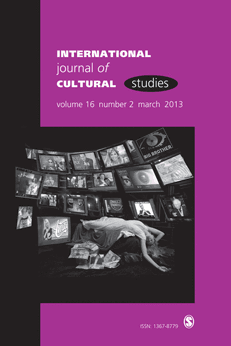
International Journal of Cultural Studies
Unveiling Innovative Perspectives on CultureInternational Journal of Cultural Studies, published by SAGE Publications Inc., is a leading peer-reviewed journal in the field of cultural studies. Established in 1998 and poised to continue its academic legacy into 2024, this journal maintains a prestigious position, reflected in its 2023 Q1 ranking within the cultural studies category and its impressive Scopus rank of #54 out of 1304, placing it in the 95th percentile among its peers. The journal serves as a critical platform for researchers, practitioners, and students alike, facilitating the dissemination of innovative ideas and research findings that shape our understanding of culture in a globalized world. Though not an open-access publication, it provides subscribers with rich insights and interdisciplinary approaches, making it crucial for anyone engaged in the study of cultural phenomena, societal developments, and theoretical perspectives.

Virajes-Revista de Antropologia y Sociologia
Empowering Research for a Better Understanding of HumanityVirajes-Revista de Antropologia y Sociologia, published by UNIV CALDAS, is a premier open-access journal that has been at the forefront of anthropological and sociological research since its inception in 2008. With the ISSN 0123-4471 and the E-ISSN 2462-9782, this journal offers a unique platform for scholars and practitioners to disseminate high-quality research that contributes to the understanding of social dynamics and cultural phenomena, particularly in the Latin American context. The journal seeks to foster an interdisciplinary approach, bridging theoretical and empirical research, and encouraging critical dialogues on contemporary issues in anthropology and sociology. By providing open access, Virajes ensures that its valuable content is available to a global audience, thus enhancing knowledge dissemination and engagement within the academic community. With its commitment to excellence and accessibility, Virajes stands as an essential resource for researchers, professionals, and students committed to exploring the complexities of human societies.
INFORMATION SOCIETY
Exploring the Dynamics of Information in SocietyINFORMATION SOCIETY, published by Taylor & Francis Inc, stands at the forefront of interdisciplinary inquiry, bridging the realms of cultural studies, information systems, and political science since its inception in 1981. With a commendable impact factor and recognized as a Q1 journal in multiple categories, including Cultural Studies and Management Information Systems, it serves as a pivotal platform for researchers, professionals, and students seeking insights into the ever-evolving dynamics of information in society. The journal, indexed by Scopus and ranked highly in various disciplines, not only highlights key theoretical developments but also addresses applied practices in information management within cultural and political contexts. While access is subscription-based, the journal’s impact and relevance ensure it remains essential reading for those engaged in the critical exploration of information's role in contemporary and future societies.

Sociologiceskoe Obozrenie
Empowering researchers with open access to transformative knowledge.Sociologiceskoe Obozrenie is a distinguished open-access journal published by the NATIONAL RESEARCH UNIVERSITY HIGHER SCHOOL OF ECONOMICS in the Russian Federation. Since its inception in 2001, this journal has made significant strides in bringing forth scholarly discussions in the realms of Cultural Studies, Philosophy, Sociology, and Political Science. With its established reputation, evidenced by its Q1 ranking in both Cultural Studies and Philosophy in 2023, and its notable Scopus ranks across disciplines, the journal provides a robust platform for researchers, professionals, and students alike to engage with contemporary sociological and philosophical thought. The journal's commitment to open access promotes the unrestricted dissemination of knowledge, making it an invaluable resource for the global academic community. With a focus on interdisciplinary approaches, Sociologiceskoe Obozrenie continues to address pressing societal issues, fostering an environment conducive to critical analysis and innovative research.
CULTURAL STUDIES
Decoding Cultural Narratives Across DisciplinesCULTURAL STUDIES, published by Routledge Journals, Taylor & Francis Ltd, is a prestigious academic journal dedicated to the exploration and analysis of cultural phenomena across diverse contexts. With an ISSN of 0950-2386 and an E-ISSN of 1466-4348, this journal has established itself as a leading platform for scholars, researchers, and practitioners interested in the intersections of culture, identity, and society. Since its inception, CULTURAL STUDIES has transitioned through several converged years of publication, currently producing cutting-edge research that reflects its strong positions in Q1 quartiles across multiple disciplines, including Anthropology, Social Sciences, and Arts and Humanities. With an impressive Scopus rank of 75/1304 in Cultural Studies, the journal is an essential resource for those seeking to engage with the latest theoretical frameworks and methodologies in understanding cultural dynamics. Although it is not currently open access, CULTURAL STUDIES remains a critical vessel for disseminating knowledge that impacts both academic and practical applications in cultural analysis. For scholars and students eager to contribute to this vibrant field, the journal serves not only as a repository of knowledge but also as an inspiration for further inquiry into the complexities of culture.

Ter es Tarsadalom
Fostering Dialogue on Social and Economic ChallengesTer es Tarsadalom is a leading open access journal published by the CENTRE ECONOMIC & REGIONAL STUDIES at the HUNGARIAN ACADEMY OF SCIENCES, INSTITUTE OF REGIONAL STUDIES. With the ISSN 2062-9923, this journal serves as a vital platform for scholars and practitioners working in the fields of social sciences, regional studies, and economic development. Since adopting an open access model in 2022, Ter es Tarsadalom has committed to making high-quality research widely accessible, driving innovation and collaboration among researchers, professionals, and students alike. The journal aims to foster discussions on pressing social issues, regional disparities, and economic policies, providing a comprehensive forum for multidisciplinary research. Its rigorous peer-review process ensures that published articles meet the highest academic standards, empowering the community with impactful knowledge that can inspire change in regional planning and policy formulation.

Revista Rupturas
Pioneering Open Access for Social Change.Revista Rupturas is a pioneering academic journal in the field of social sciences, published by UNIV ESTATAL DISTANCIA in Costa Rica. With its Open Access model established in 2011, the journal aims to create a platform for the dissemination of innovative research and critical discourse within the rapidly evolving socio-political landscape of Latin America and beyond. Through its commitment to accessibility, Revista Rupturas enables researchers, professionals, and students to engage with cutting-edge findings and theoretical advancements. Although specific metrics such as the HIndex and Scopus rankings are currently unlisted, the journal aspires to contribute significantly to scholarly discussions, foster collaboration among scholars, and serve as a valuable resource for those interested in contemporary social issues.