International Journal of Disaster Risk Science
metrics 2024
Pioneering research for a resilient future in disaster science.
Introduction
The International Journal of Disaster Risk Science, with ISSN 2095-0055 and E-ISSN 2192-6395, is a premier, peer-reviewed open-access journal published by Springer. Since its inception in 2011, the journal has been dedicated to advancing knowledge and practice in the field of disaster risk science, facilitating critical discussions around disaster preparedness, response, and resilience across various regions of the globe. This journal holds impressive rankings, including Q1 in Geography, Planning and Development, and Q1 in Safety Research for 2023, confirming its high impact within the academic community. With converged publication years from 2010 to 2024 and being ranked in the top 10% in multiple categories, it serves as an essential resource for researchers, professionals, and students alike. As an open-access journal, it ensures that cutting-edge research is freely available, promoting wider dissemination and engagement with topical issues in disaster risk management.
Metrics 2024
 0.752.904.3047
Metrics History
Rank 2024
Scopus
IF (Web Of Science)
JCI (Web Of Science)
Quartile History
Similar Journals
Journal of Disaster Research
Connecting research and policy for enhanced disaster preparedness.Journal of Disaster Research, published by FUJI TECHNOLOGY PRESS LTD, is a prominent Open Access journal that has been disseminating critical research on disaster management since its inception in 2007. Focusing on the interrelated fields of engineering and safety, the journal aims to advance knowledge and policy in disaster risk reduction, response, and resilience, making it an essential resource for researchers, practitioners, and policymakers alike. With an ISSN of 1881-2473 and E-ISSN 1883-8030, the journal covers a wide range of topics related to disaster studies, ensuring the dissemination of innovative solutions and diverse perspectives. Situated in Japan, the journal has been ranked Q3 in both Engineering (Miscellaneous) and Safety, Risk, Reliability, and Quality categories, showcasing its commitment to quality scholarship. As it converges its research contributions from 2006 to 2024, the Journal of Disaster Research continues to serve as a vital platform for advancing the science and practice of disaster research, thereby enhancing societal resilience against crises.
Environment and Urbanization ASIA
Advancing Knowledge for Sustainable Urban FuturesEnvironment and Urbanization ASIA is a leading academic journal published by SAGE Publications Ltd, focusing on the interplay between urbanization and environmental change across Asia. With an ISSN of 0975-4253 and E-ISSN 0976-3546, this peer-reviewed journal has established itself as an essential resource for scholars and practitioners alike, contributing significantly to the field of urban studies. Ranked in the Q1 category for Urban Studies in 2023 and positioned at 93rd out of 279 in Scopus, it reflects a robust percentile ranking of 66%, underscoring its impact and relevance. Published on a biannual basis, Environment and Urbanization ASIA aims to foster interdisciplinary dialogue and disseminate cutting-edge research that explores the complex dynamics of urbanization, sustainability, and environmental governance. Though it currently does not offer open-access options, its wealth of scholarly articles offers invaluable insights, making it a cornerstone for anyone engaged in addressing the challenges facing rapidly urbanizing regions in Asia. Join the community of researchers, professionals, and students dedicated to exploring innovative solutions in this critical area of study.

Journal of Indian Geophysical Union
Fostering Collaboration in Geophysical DiscoveriesThe Journal of Indian Geophysical Union, published by the Indian Geophysical Union (IGU), serves as a vital platform for disseminating research in the field of geophysics. With the ISSN 0257-7968, this journal primarily focuses on studies related to geophysical sciences, including but not limited to, seismicity, environmental geophysics, and geodynamics, contributing to a better understanding of the Earth's processes. The journal is committed to quality research and aims to foster a collaborative environment for researchers, professionals, and students in India and internationally. Although currently not designated as an Open Access publication, it plays an essential role in connecting academia with practical applications in geophysical research. Based in Hyderabad, India, the Journal of Indian Geophysical Union continues to be an essential resource for those seeking to expand their knowledge and engage with the latest findings in geophysics.

Prehospital and Disaster Medicine
Elevating Standards in Prehospital and Emergency NursingPrehospital and Disaster Medicine is a leading peer-reviewed journal published by Cambridge University Press that targets the ever-evolving fields of emergency medicine and disaster management. With an ISSN of 1049-023X and an E-ISSN of 1945-1938, this journal has established its significance within the academic community since its inception, with coverage extending from 1985 to the present. It is widely recognized within its category as evidenced by its 2023 rankings, which position it in the Q2 quartile for both Emergency Medicine and Emergency Nursing. The journal boasts impressive Scopus rankings, standing at Rank #7/32 in Emergency Nursing and Rank #31/109 in Emergency Medicine, demonstrating its relevance and impact in these critical areas. Although it does not offer Open Access, Prehospital and Disaster Medicine is committed to disseminating vital research and innovative practices that address prehospital care, disaster response, and the intersection of these fields, serving as an essential resource for researchers, professionals, and students alike.

CURRENT SCIENCE
Your Gateway to Cutting-Edge Scientific InsightsCURRENT SCIENCE, published by the Indian Academy of Sciences, is a distinguished multidisciplinary journal that has been a cornerstone of scientific literature since its inception in 1945. With an ISSN of 0011-3891, it provides a platform for high-quality research articles that span a wide array of scientific disciplines, reflecting the dynamic landscape of contemporary science. The journal is currently ranked in the Q2 category, demonstrating its significant impact and contribution to the field, as evidenced by its position at Rank #69 out of 171 in the Scopus ranking system, placing it within the 59th percentile among its peers. CURRENT SCIENCE is not only a vital resource for researchers and professionals seeking to stay abreast of advancements but also serves as an educational tool for students across various scientific domains. Although it does not offer open access options, its robust editorial standards and commitment to disseminating noteworthy research make it an essential read for anyone invested in the pursuit of knowledge and innovation. Based in Bangalore, India, the journal continues to engage a global audience, ensuring that cutting-edge scientific discoveries and interdisciplinary dialogues are accessible to the wider scientific community.
Jamba-Journal of Disaster Risk Studies
Pioneering Strategies for Disaster Resilience.Jamba-Journal of Disaster Risk Studies, published by AOSIS, serves as a vital resource in the fields of management, monitoring, policy, law, and safety research, with an ISSN of 1996-1421 and an E-ISSN of 2072-845X. Since its establishment as an Open Access journal in 2006, Jamba has dedicated itself to disseminating high-quality research that informs and enhances disaster risk management practices, particularly within the South African context and beyond. With a robust Impact Factor and acknowledgement in the Q2 and Q3 quartiles across critical categories in 2023, Jamba ranks favorably in Scopus, notably Rank #50/109 in Social Sciences (Safety Research) and Rank #218/399 in Environmental Science (Management, Monitoring, Policy and Law). The journal's convergence over the years—from 2013 to 2024—signals its commitment to adapting contemporary challenges in disaster risk studies. Scholars and practitioners are encouraged to explore Jamba as a go-to platform for innovative insights and collaborative discussions that impact policy-making and practical applications in disaster risk reduction.
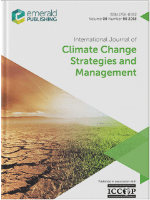
International Journal of Climate Change Strategies and Management
Exploring interdisciplinary strategies for climate resilience.Introducing the International Journal of Climate Change Strategies and Management, a premier publication dedicated to advancing the understanding and development of innovative strategies addressing climate change. Published by Emerald Group Publishing Ltd in the United Kingdom, this journal has established itself as a trusted source within the realms of development, geography, and environmental science. With an impressive 2023 impact factor reflecting its high citation rates and a Q1 classification in pivotal categories such as Development and Geography, the journal stands at the forefront of climate change discourse. Since adopting an Open Access model in 2018, it has broadened its reach, making cutting-edge research accessible to a global audience. The journal encompasses a wide array of topics essential for academics and practitioners alike, focusing on management, policy-making, and methods for effective monitoring of environmental strategies. By fostering interdisciplinary dialogue, the International Journal of Climate Change Strategies and Management is essential for those aiming to contribute to sustainable solutions in our rapidly changing world.
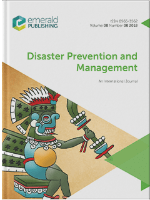
Disaster Prevention and Management
Fostering collaboration to mitigate disaster risks.Disaster Prevention and Management, published by Emerald Group Publishing Ltd, is a leading journal in the fields of disaster management, public health, and environmental policy. With an ISSN of 0965-3562 and an E-ISSN of 1758-6100, this journal has made significant contributions to both theoretical and practical advancements since its inception in 1992. Operating from the United Kingdom, it holds a Q2 ranking across various categories, including Business, Management and Accounting, Health (Social Science), and Public Health, reflecting its pivotal role in academic discourse and policy formulation. By engaging with contemporary issues related to disaster risk reduction, emergency preparedness, and resilience strategies, Disaster Prevention and Management aims to foster a multidisciplinary approach, making it a vital resource for researchers, practitioners, and students seeking to navigate the complexities of disaster scenarios effectively. With an impressive Scopus ranking across multiple categories, researchers are encouraged to explore its diverse range of articles and reports available for their academic and professional endeavors.
International Journal of Emergency Management
Transforming knowledge into action for emergency management excellence.International Journal of Emergency Management is a reputable publication within the fields of emergency medicine and strategic management, published by InderScience Enterprises Ltd. With its ISSN 1471-4825 and E-ISSN 1741-5071, this journal has been a crucial platform for scholarly research since its inception in 2003. The journal aims to disseminate high-quality, peer-reviewed articles that address critical issues related to emergency management, including but not limited to disaster preparedness, response strategies, recovery methods, and risk assessment. Despite being categorized in Q4 of both emergency medicine and strategy and management in 2023, the journal serves as an essential resource for researchers, professionals, and students looking to further explore the evolving dynamics of emergency management. It leverages its global presence, with its headquarters located in the United Kingdom, thus attracting a diverse array of contributions addressing international and interdisciplinary perspectives. The journal fosters an environment where innovative ideas can flourish, ultimately contributing towards enhancing global emergency management practices.

Geoenvironmental Disasters
Exploring the intersection of environment and engineering.Geoenvironmental Disasters, published by SPRINGERNATURE, is a leading open-access journal dedicated to advancing the interdisciplinary fields of environmental science, geography, and geotechnical engineering. Since its inception in 2014, the journal has made significant strides in disseminating high-quality research that addresses the challenges posed by geoenvironmental hazards and their impacts on society. With an impressive Q1 ranking across multiple categories, including Environmental Science (miscellaneous) and Geography, Planning and Development, it occupies a vital niche within the academic community. The journal’s rigorous peer-review process ensures that only the most insightful contributions are made available to a global audience. Researchers, professionals, and students are encouraged to engage with the content, which covers a wide range of topics, including disaster management, risk assessment, and stakeholder engagement in policy-making. This commitment to open-access accessibility since 2014 further enhances its reach and impact, providing a critical platform for advancing knowledge and innovation in managing geoenvironmental disasters.