INTERNATIONAL JOURNAL OF EARLY CHILDHOOD
Scope & Guideline
Elevating early childhood education through scholarly excellence.
Introduction
Aims and Scopes
- Early Childhood Development:
The journal emphasizes research on various aspects of early childhood development, including cognitive, social-emotional, and physical development, to provide insights into the holistic growth of young children. - Educational Practices and Policies:
A core area of the journal is the exploration of effective educational practices and policies in early childhood settings, considering factors such as teacher beliefs, curricula, and pedagogical approaches. - Parental and Community Involvement:
Research focused on the role of parents and communities in early childhood education is highlighted, emphasizing how family dynamics and social contexts influence children's learning and development. - Technology in Early Childhood Education:
The journal addresses the integration of technology in early childhood settings, including its impact on learning outcomes and the development of digital literacy among young children. - Cultural and Socioeconomic Influences:
The journal explores how cultural backgrounds and socioeconomic factors affect early childhood education and development, aiming to understand and address disparities and promote equity in educational opportunities.
Trending and Emerging
- Impact of Socioeconomic Factors:
Recent studies have increasingly focused on the impact of socioeconomic status on early childhood development and educational access, highlighting the need for policies that address these disparities. - Integration of Technology:
There is a growing emphasis on the role of technology in early childhood education, including studies on digital storytelling, technology-based assessments, and the effects of digital play on learning outcomes. - Social-Emotional Learning:
Research exploring social-emotional learning and its importance in early childhood education is trending, with a focus on how emotional competencies can be fostered in young children. - Environmental and Sustainability Education:
Emerging themes include the integration of sustainability education in early childhood settings, reflecting a growing awareness of environmental issues and the role of education in promoting sustainability from a young age. - Diversity and Inclusion:
The journal is increasingly addressing issues of diversity, equity, and inclusion in early childhood education, focusing on practices that support immigrant, refugee, and marginalized children's experiences in educational settings.
Declining or Waning
- Traditional Play Methods:
Research focused solely on traditional play methods in early childhood is becoming less frequent, as there is a growing emphasis on innovative and integrated approaches that combine play with technology and structured learning. - Single-Cultural Perspectives:
There seems to be a decline in studies that focus exclusively on single-cultural perspectives in early childhood education, as the journal increasingly highlights the importance of multicultural and inclusive practices. - Static Educational Frameworks:
Research that promotes static or rigid educational frameworks is waning, with a shift towards more dynamic, flexible approaches that adapt to the diverse needs of children and families in various contexts. - Purely Quantitative Studies:
There is a noticeable decrease in the publication of purely quantitative studies, as the journal is increasingly favoring mixed-methods and qualitative research that provide richer, more nuanced insights into early childhood education.
Similar Journals
COGNITIVE DEVELOPMENT
Transforming Perspectives on Developmental PsychologyCognitive Development is a prestigious academic journal published by Elsevier Science Inc, focusing on the critical area of developmental and cognitive psychology. With an ISSN of 0885-2014 and an E-ISSN of 1879-226X, this journal serves as a vital platform for the dissemination of innovative research, theories, and methodologies from 1986 to the present, with the latest articles contributing to a comprehensive understanding of cognitive processes in children and adolescents. Positioned in the second quartile (Q2) of both the Developmental and Educational Psychology and Experimental and Cognitive Psychology categories, Cognitive Development holds an essential place in shaping contemporary psychological research, boasting robust Scopus rankings of #175/360 and #90/165 in its respective fields. Though not an open-access journal, it provides valuable insights and rigorous studies essential for researchers, professionals, and students engaged in the intricate processes of cognitive development. Whether you're looking to publish significant findings or simply stay updated on the latest advancements, Cognitive Development is an indispensable resource in the psychological community.

PSYCHOLOGIE IN ERZIEHUNG UND UNTERRICHT
Empowering educators through cutting-edge psychological practices.PSYCHOLOGIE IN ERZIEHUNG UND UNTERRICHT, published by ERNST REINHARDT GMBH CO VERLAG, serves as a pivotal platform for research in the fields of Developmental and Educational Psychology. Since its inception, this esteemed journal has focused on disseminating groundbreaking insights and innovative practices from 1996 to the present, with expectations to continue through 2024. Despite its current ranking of Q4 in category quartiles and a Scopus rank of #309 out of 360, the journal remains a crucial resource for scholars, educators, and practitioners seeking to enhance their understanding of psychological principles within educational contexts. Situated in the vibrant academic landscape of Germany, the journal emphasizes both theoretical and practical perspectives, motivating interdisciplinary discussions that are vital in addressing contemporary challenges in education and human development. As the journal continues to evolve, it invites contributions that explore emerging trends, providing a rich source of information for both researchers and professionals dedicated to improving educational outcomes through psychological insights.
Journal of Human Capital
Advancing the understanding of human potential in the economy.Welcome to the Journal of Human Capital, an esteemed publication dedicated to advancing the discourse in the fields of human capital, economics, and finance. Published by the University of Chicago Press, this journal has established itself as a premier outlet for innovative research and critical analysis since its inception in 2009. With an impressive Q1 ranking in 2023 in the category of Economics, Econometrics and Finance, the journal consistently attracts high-impact articles that explore the multifaceted dimensions of human capital's role in economic theory and practice. Researchers, professionals, and students will find a treasure trove of scholarly work that not only enhances academic understanding but also informs practical applications in policy-making and organizational development. While currently not offering open access, the journal provides robust access options through institutional subscriptions. As we converge toward 2024, the Journal of Human Capital continues to be a vital resource for those looking to deepen their insights into the transformative power of human resources in an ever-evolving economic landscape.
CHILD DEVELOPMENT
Illuminating critical issues in child health and education.CHILD DEVELOPMENT, published by WILEY, stands as a premier journal in the fields of developmental and educational psychology, education, pediatrics, perinatology, child health, and social work. Established in 1945, it has consistently maintained a strong impact, underscored by its 2023 Q1 ranking in multiple relevant categories, as well as its esteemed positions within Scopus rankings, including a remarkable 14th place in Pediatrics. The journal serves as a vital resource for researchers and professionals, offering rigorous peer-reviewed articles that explore pivotal aspects of child development through a multidisciplinary lens. Although it does not currently offer open access options, CHILD DEVELOPMENT remains influential, addressing critical topics in child psychology, policy implications, and educational practices. Researchers and students alike will find the journal’s comprehensive scope instrumental in advancing their understanding and fostering an evidence-based approach to contemporary child development issues.

International Research in Early Childhood Education
Pioneering insights for educators and policymakers alike.International Research in Early Childhood Education, published by Monash University, Faculty of Education, is a premier journal dedicated to advancing the field of early childhood education. With an ISSN of 1838-0689, this journal serves as a critical platform for researchers, educators, and policymakers to disseminate innovative research and insights that shape early educational practices worldwide. Although currently not open access, the journal prioritizes rigorously peer-reviewed studies that explore diverse themes in early childhood pedagogy, curriculum development, and educational policy. It aims to foster dialogue among professionals and contribute to the enhancement of educational quality for young learners. With its commitment to high standards of research and practical relevance, International Research in Early Childhood Education is a vital resource for anyone involved in early childhood studies and represents an important contribution to this evolving field.
EARLY CHILDHOOD RESEARCH QUARTERLY
Empowering Educators Through Rigorous ResearchEARLY CHILDHOOD RESEARCH QUARTERLY, published by Elsevier Science Inc, stands as a pivotal journal in the fields of Developmental and Educational Psychology, Education, and Sociology and Political Science. With an impressive ranking in the 2023 Q1 category and notable Scopus standings (e.g., 84th percentile in Sociology and Political Science), the journal is recognized for its rigorous and impactful research contributions spanning the years from 1986 to 2024. Although it does not offer open access, the journal ensures a widespread influence by providing essential insights into early childhood development, educational practices, and sociopolitical dynamics affecting young learners. The importance of this journal cannot be overstated; it serves as a critical resource for researchers, educators, and policy-makers dedicated to enhancing the quality of early childhood education and understanding the complexities of development in these formative years. Its curated content not only drives academic discourse but also informs practical applications in the field, making it an essential read for those committed to advancing knowledge and practice in early childhood education.
Early Years
Empowering Educators with Evidence-Based InsightsEarly Years is a pioneering journal in the field of developmental and educational psychology, published by Routledge Journals, Taylor & Francis Ltd. Since its inception in 1980, it has served as a critical platform for the dissemination of research that informs practices, policies, and theories surrounding early childhood development and education. With an impressive scope spanning from developmental psychology to contemporary educational practices, this journal holds a Q3 category ranking in Developmental and Educational Psychology and a Q2 ranking in Education as of 2023, cementing its relevance and influence in these fields. Despite its absence of open access, Early Years remains a vital resource for researchers, educators, and students alike, providing insights that shape early learning environments and contribute to the well-being and growth of children. It continues to adapt to the evolving educational landscape through its commitment to high-quality research and scholarship.
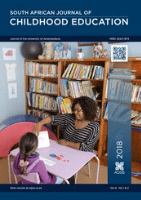
South African Journal of Childhood Education
Innovating educational practices for South Africa's youngest learners.South African Journal of Childhood Education, published by AOSIS, serves as a crucial platform for the dissemination of research focused on early childhood education and developmental psychology in South Africa and beyond. With an Open Access model initiated in 2011, it ensures that valuable insights and findings are accessible to a broad audience, fostering collaboration and innovation in educational practices. The journal's impact in the field is reflected in its rankings, placing it in Q3 and Q4 categories for Education and Developmental and Educational Psychology, respectively. It ranks at #824 out of 1543 in Social Sciences - Education and #240 out of 360 in Psychology, highlighting its relevance and academic rigor. By bridging theoretical perspectives with practical implications, the journal aims to advance understanding in childhood education, making it an essential resource for researchers, educators, and students committed to improving educational outcomes in early development.

International Journal of Childrens Spirituality
Nurturing the Spirit: Insights into Child DevelopmentThe International Journal of Childrens Spirituality is a leading academic forum dedicated to the exploration of spiritual development in children, bridging the disciplines of psychology, education, philosophy, and religious studies. Published by ROUTLEDGE JOURNALS, TAYLOR & FRANCIS LTD, this journal has gained notable recognition with its quartile rankings in Q3 for Developmental and Educational Psychology, Q2 in Education, and esteemed Q1 positions in both Philosophy and Religious Studies for 2023. Spanning from 1996 to 2024, the journal aims to foster interdisciplinary dialogue and contribute to the understanding of spirituality's role in childhood development. Scholars benefit from its rigorous peer-review process and its presence in prominent academic indices, which ensures high visibility and impact within the research community. Dedicated to nurturing both theoretical and practical insights, the journal serves as an essential resource for researchers, educators, and practitioners invested in the spiritual dimensions of child development and education.

He Kupu
Fostering dialogue and innovation in educational research.He Kupu is a prominent academic journal published by the New Zealand Tertiary College, focused on advancing the field of educational research and discourse in Aotearoa New Zealand. With the ISSN 1179-6812, this journal provides a vital platform for scholars, educators, and practitioners to engage with contemporary issues, practice innovations, and collaborative research findings that shape tertiary education and beyond. Although currently not listed as an open access journal, He Kupu plays a critical role in promoting indigenous perspectives and enhancing educational practices through its diverse range of articles, essays, and reviews. As a valuable resource for researchers and students alike, He Kupu contributes significantly to the ongoing discourse in higher education, making it an essential read for those committed to fostering educational excellence and cultural competence in New Zealand.