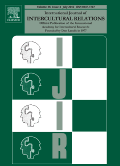
International Journal of Intercultural Relations
Scope & Guideline
Cultivating Insights for a Global Society
Introduction
Aims and Scopes
- Intercultural Communication:
Research on how individuals from different cultural backgrounds communicate, including the barriers and facilitators of effective intercultural communication. - Acculturation Processes:
Studies focusing on how individuals and groups adapt to new cultural environments, including the psychological, social, and economic factors influencing these processes. - Cultural Identity and Belonging:
Exploration of how cultural identities are formed, negotiated, and maintained in multicultural contexts, including issues of inclusion and exclusion. - Social Dynamics in Multicultural Settings:
Investigating the social relationships and power dynamics that exist within and between cultural groups, particularly in educational and community contexts. - Impact of Migration on Intercultural Relations:
Analysis of how migration affects cultural interactions, identity formation, and social cohesion in receiving societies. - Methodological Innovations:
Development of new research methodologies and theoretical frameworks for studying intercultural relations, including qualitative, quantitative, and mixed-method approaches.
Trending and Emerging
- Mental Health and Acculturation:
An increasing focus on the intersection of mental health and acculturation processes, particularly as they relate to international students and migrants, reflecting a growing recognition of the psychological aspects of cultural adaptation. - Digital and Online Intercultural Interactions:
Research on online intercultural communication and digital platforms as new contexts for cultural exchange is gaining traction, especially in light of the COVID-19 pandemic and the rise of virtual interactions. - Intersectionality in Cultural Studies:
An emerging emphasis on intersectionality, examining how various social categories such as race, gender, and class interact to shape individuals' experiences in multicultural societies. - Crisis and Resilience in Intercultural Contexts:
Themes related to crisis management, resilience, and adaptation in the face of global challenges such as migration crises, pandemics, and social unrest are increasingly prominent. - Cultural Intelligence and Competence:
A growing interest in the development of cultural intelligence and competence among individuals and organizations, highlighting the need for skills that facilitate effective intercultural interactions.
Declining or Waning
- Traditional Models of Acculturation:
There is a noticeable decline in research focusing solely on traditional, linear models of acculturation, which may be giving way to more complex, multidimensional frameworks that better capture the realities of cultural interactions. - Static Cultural Identity Studies:
Studies that treat cultural identities as fixed or unchanging are becoming less common, as contemporary research increasingly recognizes the fluid and dynamic nature of identity. - Research on Assimilation:
The focus on assimilation as a primary outcome of intercultural interactions is waning, with a shift towards exploring integration and pluralism instead. - Single-Country Studies:
There is a decrease in research that examines intercultural relations within a single national context, as scholars increasingly adopt comparative and transnational approaches. - Overreliance on Quantitative Methods:
A reduction in the number of studies employing purely quantitative methods is observed, as the field moves toward embracing qualitative and mixed-methods research that provides deeper insights.
Similar Journals
Language Culture and Curriculum
Fostering Scholarly Dialogue in Language and EducationLanguage Culture and Curriculum is a premier academic journal published by Routledge Journals, Taylor & Francis Ltd, dedicated to advancing knowledge in the fields of Education and Linguistics. With a distinguished history since 1988 and converging through to 2024, this journal is highly regarded, reflecting its exemplary standing with a 2023 Q1 ranking in both Education and Linguistics. Currently among the top 3% of publications in Language and Linguistics and ranked 27th in Social Sciences, Language Culture and Curriculum fosters the exploration of language education within diverse cultural contexts. Through rigorous peer-reviewed research, it serves as an essential platform for researchers, educators, and policymakers alike, promoting innovative practices and theoretical frameworks in language teaching and curriculum development. Although it does not offer Open Access, the journal remains an invaluable resource in academic circles, supporting scholarly discourse and advancing educational methodologies.
International Communication of Chinese Culture
Bridging Cultures, Enriching Perspectives.International Communication of Chinese Culture is a distinguished journal published by SPRINGER NATURE, dedicated to exploring the multifaceted exchanges and interactions of Chinese culture within the global context. With an ISSN of 2197-4233 and an E-ISSN of 2197-4241, this journal aims to provide a comprehensive platform for researchers, professionals, and students to engage with innovative ideas and methodologies that bridge cultural boundaries. Although it operates on a unique access model, the journal's emphasis on scholarly rigor ensures valuable contributions from esteemed academics in the field. Covering topics such as cultural diplomacy, intercultural communication, and the impact of digital media on cultural exchange, the journal plays a pivotal role in fostering a deeper understanding of Chinese culture's influence worldwide. Join the discourse and contribute to the vibrant research landscape surrounding one of the world's oldest civilizations.
Intercultural Education
Bridging Cultures: Insights for Educators and ResearchersIntercultural Education is a premier journal published by Routledge Journals, Taylor & Francis Ltd, dedicated to exploring the dynamic interplay between education and cultural diversity. With its ISSN 1467-5986 and E-ISSN 1469-8439, the journal has affirmed its significant presence in the academic landscape with an impressive Q1 ranking in Cultural Studies and Q2 in Education as of 2023. Its broad scope encompasses a variety of topics related to intercultural exchange, educational practices, and sustainable pedagogical models that support diverse learning environments. Enabling discussion among researchers, educators, and practitioners, Intercultural Education serves as a vital resource for understanding and effectively managing the complexities of multicultural education. With its consistent release from 2010 to 2024, this journal not only contributes to the academic dialogue but also reflects current trends and challenges in intercultural education, thus appealing to anyone invested in this critical field.
Recherches Sociographiques
Pioneering Perspectives in the Study of SocietyRecherches Sociographiques, published by the Department of Sociology at Université Laval, stands as a prominent journal in the field of sociology. With its ISSN 0034-1282, it provides a vital platform for the dissemination of innovative research and critical analyses that shape contemporary sociological discourse. Although currently not an open-access journal, it offers insightful contributions that are pivotal for both emerging and established scholars, practitioners, and students. The journal prioritizes high-quality, peer-reviewed articles that advance the understanding of social phenomena, making it an essential resource for anyone engaged in sociological studies. With a commitment to academic excellence, Recherches Sociographiques has established itself as a vital reference point for sociological research in Canada and beyond, fostering intellectual exchange and collaboration among the global academic community.

Revista Tefros
Unveiling Social Dynamics Through Interdisciplinary ResearchRevista Tefros is a premier academic journal published by UNIV NACL RIO CUARTO and TALLER ETNOHISTORIA FRONTERA SUR, focusing on the interdisciplinary fields of social sciences and humanities with a particular emphasis on ethnography and cultural studies. Since its launch in 2005, this Open Access journal has provided an invaluable platform for researchers, professionals, and students to disseminate their findings and engage with innovative scholarship. With an ISSN of 1669-726X and an E-ISSN of 1667-9229, Revista Tefros invites contributions that explore diverse cultural narratives and social dynamics, thereby enriching the academic dialogue. The journal is dedicated to promoting accessibility in research publication, ensuring that valuable insights are available to a broader audience. As part of its commitment to excellence, the journal strives to uphold high standards of scholarship and aims to contribute meaningfully to the academic community in Argentina and beyond.

Cultura Lenguaje y Representacion-Revista de Estudios Culturales de la Universitat Jaume I
Exploring the Intersections of Culture and LanguageCultura Lenguaje y Representacion - Revista de Estudios Culturales de la Universitat Jaume I is a premier open-access journal dedicated to the exploration of cultural studies, linguistic discourse, and literary theory, published by the esteemed Universitat Jaume I. Since its inception in 2004, the journal has consistently aimed to provide a vibrant platform for interdisciplinary research and critical reflection within the fields of communication, literature, and cultural representation. With its impressive rankings in the Scopus database—placing in the 93rd percentile for Literature and Literary Theory and the 73rd percentile for Cultural Studies—this journal is recognized for its impactful contributions to academic discussions. Operated out of Castelló de la Plana, Spain, the publication not only welcomes contributions from seasoned scholars but also encourages emerging researchers to submit innovative works. By maintaining a dedication to accessibility and quality, Cultura Lenguaje y Representacion positions itself as an essential resource for scholars, practitioners, and students seeking to deepen their understanding of the intricate relationship between culture, language, and representation.
Multilingua-Journal of Cross-Cultural and Interlanguage Communication
Cultivating Knowledge Across Linguistic BoundariesMultilingua: Journal of Cross-Cultural and Interlanguage Communication is a premier academic journal published by DE GRUYTER MOUTON, specializing in the dynamic fields of communication and linguistics. Established in 1982, this journal has significantly contributed to the discourse surrounding multilingualism, intercultural interactions, and language acquisition, with a notable reputation backed by an impressive Q1 ranking in both Communication and Linguistics and Language for 2023. Positioned strategically at the heart of Germany, the journal serves as a vital platform for researchers, professionals, and students alike, fostering scholarly exchange and insights into cross-cultural communication practices. With rankings placing it in the top percentiles across key categories in Scopus, including Arts and Humanities and Social Sciences, Multilingua exemplifies the highest standards of academic excellence. Although currently not an Open Access journal, it continues to provide a wealth of knowledge to the global research community.

Multicultural Education Review
Illuminating Multicultural Perspectives in LearningWelcome to the Multicultural Education Review, an esteemed academic journal published by ROUTLEDGE JOURNALS, TAYLOR & FRANCIS LTD. As a prominent resource in the fields of Anthropology and Education, this journal aims to foster the understanding of multicultural perspectives in educational practices. With a robust impact factor and recognition in the Q1 and Q2 quartiles across its categories, the journal offers a vital platform for researchers, educators, and students to share innovative studies and discussions related to multicultural education. Though operating under a subscription model, the journal's content is pivotal for advancing scholarship and dialogue in diverse educational contexts. Since its inception in 2009, the journal continues to shape the discourse on inclusivity, equity, and cultural diversity, ensuring eligibility for a broad readership keen on addressing contemporary educational challenges.
Journal of International and Intercultural Communication
Fostering Global Perspectives in Cultural StudiesThe Journal of International and Intercultural Communication, published by Routledge Journals, Taylor & Francis Ltd, is a pivotal resource in the fields of communication and cultural studies. With an ISSN of 1751-3057 and an E-ISSN of 1751-3065, this journal is recognized for its high impact, currently holding a Q2 ranking in Communication and a Q1 ranking in Cultural Studies as of 2023. This positioning underscores its significance, as it ranks 67 out of 1304 in Cultural Studies and 101 out of 511 in Communication according to Scopus, demonstrating its authoritative voice in the scientific community. Spanning converged years from 2008 to 2024, the journal features rigorous peer-reviewed articles that illuminate the complexities of intercultural interactions in an increasingly globalized world. Though it does not currently offer an open access model, its insights are indispensable for researchers, professionals, and students seeking to navigate and understand the nuances of international communication.
Journal of Intercultural Studies
Connecting Scholars Through Interdisciplinary InsightsWelcome to the Journal of Intercultural Studies, a premier publication in the fields of Cultural Studies, History, Sociology, and Political Science, brought to you by Routledge Journals, Taylor & Francis Ltd. With an impressive Q1 ranking in both Cultural Studies and History, as well as a solid performance in Sociology and Political Science, this journal stands as a vital resource for researchers, academics, and students seeking to explore the complexities of intercultural engagement and historical narratives from 1980 to 2024. Indexed in Scopus with high percentiles, the journal not only contributes to scholarly discourse but also facilitates access to a diverse range of interdisciplinary insights. While it currently does not offer open access, its comprehensive studies and authoritative articles are indispensable for those committed to understanding the nuances of cultural interactions and their societal implications.