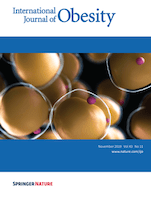
INTERNATIONAL JOURNAL OF OBESITY
Scope & Guideline
Elevating Understanding of Obesity and Health Outcomes
Introduction
Aims and Scopes
- Obesity Epidemiology and Public Health:
Focuses on the epidemiological studies related to obesity prevalence, risk factors, and impacts on public health, emphasizing the need for effective population-level interventions. - Metabolic and Physiological Mechanisms:
Investigates the biological and physiological mechanisms underlying obesity, including metabolic pathways, hormonal regulation, and the role of gut microbiota. - Clinical and Behavioral Interventions:
Explores clinical approaches to obesity management, including dietary, physical activity, and behavioral interventions, as well as pharmacological treatments and surgical options. - Childhood and Adolescent Obesity:
Addresses the rising prevalence of obesity in younger populations, examining factors contributing to childhood obesity and effective prevention and treatment strategies. - Obesity and Comorbidities:
Examines the relationship between obesity and various comorbid conditions such as diabetes, cardiovascular diseases, and mental health issues, highlighting the interconnected nature of these health challenges. - Socioeconomic and Environmental Influences:
Studies the impact of socioeconomic status, environmental factors, and policies on obesity prevalence and management, advocating for equitable solutions.
Trending and Emerging
- Gut Microbiome and Obesity:
A rising interest in the role of gut microbiota in obesity development and management, highlighting the importance of microbiome composition in metabolic health. - Precision Medicine in Obesity Treatment:
An emerging focus on personalized obesity treatment strategies that consider genetic, metabolic, and psychosocial factors, aiming for tailored interventions. - Longitudinal Studies on Childhood Trajectories:
Increased research on longitudinal data examining childhood obesity trajectories and their long-term health impacts, emphasizing the need for early intervention. - Impact of Environmental Factors:
Growing attention to how environmental and socioeconomic factors influence obesity, including studies on urban planning, food deserts, and policy interventions. - Mental Health and Obesity:
An expanding body of research linking mental health disorders with obesity, exploring the bidirectional relationship and emphasizing integrated treatment approaches. - Technology in Weight Management:
The use of mobile health technologies and digital interventions for obesity management is gaining momentum, reflecting the integration of technology in healthcare.
Declining or Waning
- Traditional Dieting Approaches:
Research on conventional dieting methods, such as calorie restriction alone, seems to be waning, as there is a growing preference for holistic and sustainable approaches, including lifestyle modifications and behavioral strategies. - Simple Obesity Metrics:
Studies relying solely on BMI as a measure of obesity are becoming less frequent, with a shift towards more comprehensive assessments of body composition and metabolic health. - Static Interventions:
There is a noticeable decline in research focusing solely on static interventions without considering dynamic, personalized approaches that adapt to individual responses and behaviors. - Obesity Stigma and Bias:
While still important, the focus on weight stigma and bias appears to be less prevalent in recent publications, possibly overshadowed by more direct obesity treatment and prevention strategies. - Solely Pharmacological Solutions:
Research dedicated exclusively to pharmacological solutions without considering integrative approaches involving lifestyle changes is less common, reflecting a shift towards comprehensive treatment paradigms.
Similar Journals
Annals of Pediatric Endocrinology & Metabolism
Elevating standards in pediatric endocrine research and practice.Annals of Pediatric Endocrinology & Metabolism, published by the Korean Society of Pediatric Endocrinology, is a vital resource for researchers, healthcare professionals, and students in the fields of endocrinology, diabetes, and pediatric health. With its commitment to open access since 2012, the journal facilitates the dissemination of groundbreaking research on pediatric endocrine disorders and metabolic diseases, ensuring that vital knowledge is accessible to a global audience. The journal maintains a reputable standing with a 2023 Scopus rank of #92 in Pediatrics and a Q3 quartile in Endocrinology, highlighting its impact on the field. Originating from South Korea, the journal fosters a collaborative network of researchers and advocates best practices in pediatric care through interdisciplinary studies. The Annals not only enhances scientific understanding but also emphasizes practical applications aimed at improving child health outcomes, making it an essential publication for academics and practitioners alike.
ENDOCRINE JOURNAL
Empowering research to unlock hormonal mysteries.ENDOCRINE JOURNAL, published by the Japan Endocrine Society, is a pivotal resource for researchers and professionals in the field of endocrinology, diabetes, and metabolism. With a long history dating back to 1954, this journal encompasses a comprehensive range of topics including hormonal regulation, pathophysiology of endocrine diseases, and innovative therapeutic approaches. Despite its classification as open access, the journal remains a beacon of knowledge, with impressive rankings—Q2 in Endocrinology, Diabetes and Metabolism and Q3 in Endocrinology for 2023—ensuring it is a respected source in the academic community. It serves as a critical platform for the dissemination of cutting-edge research, encouraging collaboration and facilitating advancements in understanding complex endocrine disorders. By subscribing to this journal, researchers and students gain access to seminal studies, clinical insights, and a wealth of information that drives this vital field forward.

Pediatric Obesity
Empowering Solutions for Pediatric WellnessPediatric Obesity, published by WILEY, is a leading international journal dedicated to advancing research and practices in the prevention and management of pediatric obesity. With an impressive impact factor and recognized as a Q1 journal in categories including Health Policy, Nutrition and Dietetics, and Pediatrics, it provides a vital platform for scientists, healthcare professionals, and policymakers to disseminate findings that shape public health initiatives. The journal's commitment to open access facilitates broad dissemination of high-quality research, ensuring vital insights reach a global audience. Since its inception in 2012, Pediatric Obesity has consistently ranked among the top in its field, reflecting its critical role in addressing the growing epidemic of childhood obesity and influencing evidence-based strategies for healthier futures. Researchers and practitioners alike will find value in its rich assortment of articles, reviews, and case studies that foster an interdisciplinary approach to tackling this pressing health issue.

Journal of the Endocrine Society
Advancing endocrinology, one discovery at a time.Journal of the Endocrine Society, published by the ENDOCRINE SOC, stands as a prominent platform for disseminating significant research and findings within the field of endocrinology, diabetes, and metabolism. Established as an Open Access journal since 2017, it aims to increase the visibility and accessibility of vital scholarly contributions, allowing researchers and professionals from various backgrounds to engage with the latest insights in this rapidly evolving discipline. With an impressive Q2 ranking in Endocrinology, Diabetes and Metabolism, the journal is recognized for its impact, ranking #100 out of 244 in Scopus, highlighting its role in advancing scientific knowledge and fostering innovation. The journal, based in the United States at 2055 L ST NW, SUITE 600, WASHINGTON, DC 20036, continues to enrich the academic landscape by converging state-of-the-art research and clinical applications through its publication cycle from 2017 to 2024. Researchers, students, and healthcare professionals are encouraged to explore this essential resource to stay at the forefront of endocrinological advancements.
Metabolic Syndrome and Related Disorders
Pioneering Research in Endocrinology and MetabolismMetabolic Syndrome and Related Disorders is an esteemed journal published by MARY ANN LIEBERT, INC, focusing on the multifaceted aspects of metabolic syndrome, including its interaction with chronic diseases such as diabetes, cardiovascular conditions, and obesity. Since its inception in 2003, this journal has established itself as a vital resource for researchers, healthcare professionals, and students dedicated to advancing knowledge in the fields of endocrinology, internal medicine, and metabolic disorders. With an impact factor reflective of its academic significance, Metabolic Syndrome and Related Disorders is recognized within the Q2 and Q3 quartiles in its respective categories, solidifying its reputation among scientific and clinical communities. Although it does not currently offer open access options, the journal remains committed to disseminating high-quality research and reviews that foster innovative solutions and improve patient outcomes. The journal's gradual convergence towards 2024 presents an exciting opportunity for continued exploration and dialogue about metabolic-related health challenges.
DIABETES OBESITY & METABOLISM
Bridging science and clinical practice in metabolic health.DIABETES OBESITY & METABOLISM, published by Wiley, is a premier international journal dedicated to the fields of endocrinology, diabetes, and metabolic disorders. With an impressive impact factor and its status as a Q1 journal in multiple categories—including Endocrinology and Internal Medicine—this publication is highly regarded in the academic community. Since its inception in 1999, the journal has served as a crucial platform for the dissemination of cutting-edge research, reviews, and clinical studies, driving advancements in understanding and treatment of diabetes and obesity. Researchers and professionals alike benefit from its rigorous peer-review process and extensive reach, as it aims to bridge the gap between laboratory findings and clinical applications. Although not an Open Access journal, articles are accessible through institutional subscriptions, ensuring that vital knowledge reaches those committed to enhancing patient care and expanding the scientific body of work in these pivotal areas.
AMERICAN JOURNAL OF PHYSIOLOGY-ENDOCRINOLOGY AND METABOLISM
Connecting research and practice in physiological sciences.American Journal of Physiology-Endocrinology and Metabolism, published by the American Physiological Society, stands as a leading platform for disseminating high-quality research in the fields of endocrinology, diabetes, and metabolism, as well as general physiology. With an impressive impact factor placing it within the Q1 category across multiple relevant disciplines (Endocrinology, Diabetes and Metabolism; Physiology; and Medical Physiology), this journal reflects its authoritative position in the scientific community. Spanning from 1980 to 2024, the journal consistently publishes groundbreaking studies and significant findings that advance our understanding of hormonal regulation and metabolic processes. Although it does not currently offer open access, it provides valuable resources for researchers, professionals, and students alike, eager to stay at the forefront of advancements in physiological sciences. Addressed in Rockville, Maryland, its commitment to excellence and rigorous peer review ensures that every article contributes essential insights to the field.
Nature Reviews Endocrinology
Transforming knowledge into clinical practice.Nature Reviews Endocrinology is a premier journal published by NATURE PORTFOLIO, providing comprehensive and critical reviews in the rapidly evolving field of endocrinology. Established to foster advanced understanding, it has become a vital resource for researchers, professionals, and students alike. With an impressive impact factor and a prominent ranking of Q1 in both Endocrinology and Endocrinology, Diabetes, and Metabolism categories for 2023, the journal is recognized for its high-quality research dissemination, evidenced by its rankings of #2 out of 244 in Medicine and #2 out of 128 in Biochemistry, Genetics, and Molecular Biology. Spanning the years from 2009 to 2024, it focuses on publishing cutting-edge information that shapes current scientific knowledge and clinical practices. The journal offers open access options, ensuring greater visibility and reach for its articles. Located in Germany, this journal remains at the forefront of endocrinology research, significantly contributing to the understanding of hormonal functions and their implications on health. Discover the latest advancements and insights by exploring Nature Reviews Endocrinology.
TRENDS IN ENDOCRINOLOGY AND METABOLISM
Shaping the future of endocrinology and diabetes.TRENDS IN ENDOCRINOLOGY AND METABOLISM, published by CELL PRESS, stands as a pivotal resource in the fields of endocrinology, diabetes, and metabolism. With its ISSN 1043-2760 and E-ISSN 1879-3061, this esteemed journal has been a leading platform since its inception in 1989, currently projected to span until 2024. Recognized within the top quartile (Q1) of its category, it boasts impressive Scopus rankings, holding the 4th position in Endocrinology and 8th in Endocrinology, Diabetes, and Metabolism. These rankings underscore its significant impact, evidenced by an impressive percentile rank of 97th and 96th respectively. The journal is committed to facilitating the dissemination of cutting-edge research and innovative insights, making it an essential read for researchers, clinicians, and students seeking to stay informed on the latest advancements in these critical fields. With a robust focus on providing thorough reviews and original research articles, TRENDS IN ENDOCRINOLOGY AND METABOLISM continues to shape the understanding and treatment of metabolic disorders.
Clinical Obesity
Shaping the Future of Obesity Treatment and PreventionClinical Obesity, published by WILEY, is a leading journal in the field of Endocrinology, Diabetes, and Metabolism that strives to advance the understanding of obesity-related health issues. With an ISSN of 1758-8103 and an E-ISSN of 1758-8111, this journal provides a platform for cutting-edge research and findings pertaining to the epidemiology, pathophysiology, prevention, and treatment of obesity. Recognized with a Q2 ranking in both Endocrinology, Diabetes and Metabolism and Medicine (miscellaneous) categories, and boasting a Scopus rank of #90 out of 244, Clinical Obesity encompasses innovative studies that influence clinical practice and public health policies. While this journal operates under a subscription model, its discipline-specific contributions are invaluable for researchers, healthcare professionals, and students keen on addressing the complexities of obesity in a comprehensive manner.