International Multilingual Research Journal
Scope & Guideline
Exploring the intersections of language, culture, and education.
Introduction
Aims and Scopes
- Critical Multilingual Education:
The journal emphasizes research on educational practices that recognize and support multilingual learners, promoting strategies that enhance learning outcomes in diverse linguistic contexts. - Language Ideologies and Social Justice:
It explores the impact of language ideologies on educational practices and policies, aiming to uncover how these ideologies can perpetuate or dismantle inequities in multilingual settings. - Translanguaging and Pedagogy:
The journal investigates the concept of translanguaging as a pedagogical approach, focusing on how this practice can facilitate language learning and empower multilingual students. - Cultural and Linguistic Identity:
Research in this journal examines how language practices shape cultural identities and the implications for students' integration and engagement in educational environments. - Teacher Education and Professional Development:
The journal looks into the preparation and ongoing development of teachers working in multilingual classrooms, emphasizing the need for critical language awareness and responsive teaching practices.
Trending and Emerging
- Critical Language Awareness:
There is an increasing emphasis on developing critical language awareness among educators, enabling them to recognize and challenge the social and political dimensions of language use in classrooms. - Intersectionality in Language Education:
Research is increasingly examining how various social identities intersect, particularly in the context of language learning and teaching, highlighting the complexities faced by multilingual and multicultural students. - Community and Family Engagement:
Emerging themes focus on the role of families and communities in supporting multilingual learners, stressing the importance of collaboration between schools and families in fostering educational success. - Sociocultural Competence in Education:
Publications are trending towards exploring how sociocultural competence can enhance teaching practices in multilingual classrooms, promoting inclusivity and responsiveness to diverse learners. - Innovative Pedagogical Strategies:
There is a growing interest in innovative teaching strategies, such as project-based learning and culturally sustaining pedagogies, that actively engage multilingual learners and validate their linguistic and cultural identities.
Declining or Waning
- Traditional Bilingual Education Models:
There has been a noticeable shift away from conventional bilingual education frameworks towards more dynamic and inclusive approaches such as translanguaging, indicating a declining interest in rigid bilingual models. - Language Maintenance Practices:
Research focusing solely on heritage language maintenance without considering broader sociocultural contexts appears to be decreasing, as scholars increasingly recognize the importance of integrating language maintenance within multifaceted identity and community frameworks. - Standardized Language Assessment:
The emphasis on standardized language assessments for multilingual learners is waning, as the field moves towards more holistic and context-sensitive evaluation methods that consider individual learner experiences and backgrounds. - Monolingual Pedagogies:
There is a decreasing focus on monolingual teaching methodologies in favor of approaches that actively embrace and utilize students' full linguistic repertoires. - Deficit Perspectives on Multilingualism:
Research adopting deficit perspectives on multilingual learners is declining, reflecting a broader recognition of the strengths and resources that multilingual students bring to educational contexts.
Similar Journals
Linguistics and Education
Innovating Pedagogy with Linguistic ResearchLinguistics and Education, published by Elsevier, is a premier journal dedicated to advancing the understanding of the intersections between linguistics and educational practices. With its ISSN 0898-5898 and E-ISSN 1873-1864, this journal has established itself as a significant platform since its inception in 1988, continuing to produce impactful research up to 2024. It enjoys a prestigious Q1 ranking in both the Education and Linguistics and Language categories, reflecting its high-quality contributions and leading role in the field. The journal’s Scopus rankings further underscore its influence, being placed in the 87th percentile for Arts and Humanities in Language and Linguistics, and the 86th percentile in Social Sciences in Linguistics and Language. Although it operates under traditional subscription access, its contributions are essential for researchers, professionals, and students alike, making substantial strides in the understanding of language, learning environments, and pedagogical strategies. The journal's objective is to foster interdisciplinary dialogue and disseminate innovative research that informs educational policy and practice.
Bilingual Research Journal
Championing Research that Shapes Multilingual FuturesBilingual Research Journal, published by Taylor & Francis Ltd, is a leading interdisciplinary platform that fosters research in the realms of education and linguistics, with a particular focus on bilingualism and language learning. Since its inception in 1992, the journal has evolved through several segments, currently converging from 2009 to 2024, and it proudly holds a distinguished Q1 ranking in Linguistics and Language and Q2 in Education for 2023, reflecting its impactful contributions to these critical fields. The journal is indexed in Scopus, ranking in the 86th percentile in Language and Linguistics and 85th percentile in Social Sciences, underscoring its relevance and scientific rigor. With professionals, researchers, and students as its primary audience, Bilingual Research Journal provides an essential repository of knowledge, facilitating the exchange of innovative ideas and findings that shape the understanding of bilingual education and language acquisition.
MODERN LANGUAGE JOURNAL
Shaping the Future of Language Learning and TeachingThe MODERN LANGUAGE JOURNAL, published by WILEY, stands as a premier academic resource in the field of linguistics and language studies. With its strong legacy dating back to 1916, this journal has evolved to address contemporary issues and trends in language learning, teaching, and research. It holds a prestigious Q1 ranking in both Linguistics and Language categories as of 2023, reflecting its high impact and relevance in scholarly discourse, supported by notable Scopus rankings that place it in the top percentiles of its field. The journal serves as an essential conduit for researchers, educators, and students seeking to contribute to and stay abreast of advancements in language education and linguistic theory. Although it does not currently offer open access options, the journal remains committed to disseminating significant findings that inspire innovative methodologies within the realm of modern languages.

Advanced Education
Bridging Linguistics and Technology for Tomorrow's LearningAdvanced Education is a distinguished open-access journal dedicated to the interdisciplinary study of educational methodologies and innovations, published by the National Technical University of Ukraine - Kyiv Polytechnic Institute, Faculty of Linguistics. Since its inception in 2014, the journal has endeavored to disseminate high-quality research findings and theoretical work that contribute to advancements in educational practices and policy-making. With the increasing need for accessible education resources in our rapidly evolving global landscape, Advanced Education plays a critical role in bridging gaps between linguistic studies and educational technology, providing a platform for scholars, educators, and practitioners to share their insights. The journal aspires to enhance educational quality and effectiveness, making it an indispensable resource for researchers, professionals, and students engaged in the field of education.
TESOL QUARTERLY
Exploring the Frontiers of TESOL ScholarshipTESOL Quarterly, published by Wiley, is a premier academic journal in the fields of Education and Linguistics, noted for its significant contributions to the study of Teaching English to Speakers of Other Languages. Since its inception in 1981, this journal has established itself as a vital platform for researchers and educators, emphasizing empirical studies, innovative teaching practices, and critical reviews that inform policy and pedagogy. With an impressive impact factor, it consistently ranks in the Q1 Quartile across multiple categories in both Education and Linguistics, highlighting its influence and reach within the scholarly community. The journal boasts strong Scopus rankings, placing it in the top 96th percentile among related publications, further affirming its essential role in disseminating cutting-edge research. Although it does not offer open access, TESOL Quarterly remains dedicated to promoting high-quality scholarship that advances the understanding of language education practices globally.
RELC Journal
Elevating Academic Discourse in Language StudiesRELC Journal, published by SAGE Publications Ltd, stands as a leading platform in the fields of Education and Linguistics, boasting an impressive Q1 ranking in both categories according to the latest metrics. Established in 1970 and continuing its commitment to academic excellence through 2024, the journal features rigorous peer-reviewed research that explores the intersections of language, culture, and pedagogy. With a notable Scopus ranking that places it in the 98th percentile for both Language and Linguistics (Rank #16/1088) and Education (Rank #91/1543), the RELC Journal is essential for scholars, educators, and practitioners seeking to contribute to and stay abreast of cutting-edge developments in their respective fields. Although currently not open access, the journal remains accessible to a diverse audience and invites contributions that challenge conventional perspectives and inspire innovative practices in language education.
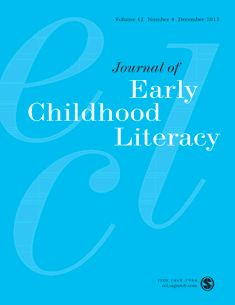
Journal of Early Childhood Literacy
Fostering Literacy Development in Young LearnersJournal of Early Childhood Literacy, published by SAGE PUBLICATIONS LTD, is a leading international journal dedicated to the exploration and dissemination of research in the field of early childhood literacy. With a robust impact factor and a distinguished ranking in the Q1 category of Education, this journal is at the forefront of publishing innovative studies and theoretical frameworks that shape literacy practices and policies for young learners. Operating from its base in the United Kingdom, it serves as a crucial platform for researchers, educators, and practitioners alike, providing insights into literacy development, pedagogical strategies, and the socio-cultural contexts affecting literacy acquisition. Researchers can access a wealth of articles that reflect the journal’s commitment to advancing knowledge and understanding in early childhood literacy, making it an essential resource for anyone dedicated to fostering literacy in the formative years. The journal has consistently maintained a strong reputation, ranking in the top 82nd percentile among its peers in Social Sciences - Education according to Scopus metrics. Engage with the vibrant discourse and contribute to the evolving landscape of early literacy by exploring the latest findings published in the Journal of Early Childhood Literacy.
Journal of English as a Lingua Franca
Innovating Research on Language in a Globalized WorldJournal of English as a Lingua Franca, published by WALTER DE GRUYTER GMBH, stands at the forefront of academic discourse in the fields of linguistics and communication. With an impressive impact factor placed in the Q1 and Q2 quartiles for Linguistics and Communication respectively, this journal serves as a critical platform for researchers and educators interested in the dynamics of English as a global lingua franca. Since its inception in 2012, the journal has actively contributed to the understanding of language use across diverse communities and contexts, addressing the implications of English as a shared mode of communication. Housed in Germany, the journal's open-access model fosters accessibility and encourages knowledge sharing within the global academic community. By providing rigorous peer-reviewed articles, the Journal of English as a Lingua Franca remains an essential resource for those committed to advancing research in this vibrant linguistic landscape.
JOURNAL OF MULTILINGUAL AND MULTICULTURAL DEVELOPMENT
Bridging Cultures with Scholarly ExcellencePublished by Routledge Journals, Taylor & Francis Ltd, the JOURNAL OF MULTILINGUAL AND MULTICULTURAL DEVELOPMENT has established itself as a premier platform for scholarly discourse in the fields of cultural studies, linguistics, and education since its inception in 1980. With a significant focus on the multifaceted nature of language and culture, this journal offers invaluable insights that contribute to our understanding of multilingualism and multiculturalism in a globalized world. The journal commands an impressive impact, holding Q1 rankings across three critical categories as of 2023, reflecting its influence within the academic community: 22nd percentile in Cultural Studies, 45th in Linguistics and Language, and 215th in Education. Relevant researchers, professionals, and students are encouraged to engage with groundbreaking research, methodologies, and discussions that highlight the dynamic interconnection of language and culture. To access the journal, please visit Routledge’s dedicated platform, where you can explore a wealth of resources and stay updated on the latest findings up to 2024.
Profile-Issues in Teachers Professional Development
Innovative Insights: Shaping the Future of Teacher TrainingProfile - Issues in Teachers Professional Development is a distinguished open access journal published by the Universidad Nacional de Colombia, Facultad Ciencias Humanas, aimed at fostering research and discourse surrounding critical issues in educators' ongoing professional development. Since its inception in 2005, the journal has established itself as a significant resource within the fields of Education and Linguistics and Language, reflecting its relevance through its category quartiles, being positioned in Q3 in Education and an impressive Q1 in Linguistics and Language for 2023. The journal boasts a commendable Scopus ranking, reflecting its impact and commitment to advancing scholarly discussion, with rankings of #236 out of 1167 in Linguistics and Language, and #818 out of 1543 in Education. With a converged timeline from 2018 to 2024, it serves as a vital platform for educators, researchers, and students alike, encouraging the dissemination of innovative practices and insights essential for the evolution of teacher training and professional growth in a rapidly changing educational landscape.