Journal of Academic Ethics
Scope & Guideline
Navigating the Complexities of Academic Ethics
Introduction
Aims and Scopes
- Academic Integrity:
The journal emphasizes the importance of academic integrity, investigating factors that influence cheating, plagiarism, and misconduct among students and faculty. - Ethics Education:
A core area of focus is on the development and evaluation of ethics education programs across various disciplines, aiming to enhance ethical awareness and decision-making among students. - Research Ethics:
The journal explores ethical considerations in research practices, including the role of ethics review boards, informed consent, and the challenges faced by researchers in maintaining integrity. - Policy Analysis:
It critically analyzes institutional policies related to academic integrity, aiming to identify best practices and areas for improvement within educational frameworks. - Cultural Perspectives on Ethics:
The journal examines how cultural differences impact perceptions of academic integrity and ethical practices, providing a global perspective on these issues. - Emerging Technologies and Ethics:
It investigates the ethical implications of technology use in academia, including the impact of AI tools like ChatGPT on academic writing and integrity.
Trending and Emerging
- Impact of Technology on Academic Integrity:
There is a growing emphasis on how technologies, especially AI tools, affect academic integrity, including the exploration of generative AI in writing and potential for misuse. - Student Perspectives and Experiences:
Recent papers increasingly focus on gathering qualitative insights from students regarding their experiences with academic integrity, cheating, and the ethical implications of their actions. - Mental Health and Academic Dishonesty:
Emerging research highlights the relationship between mental health issues and academic dishonesty, reflecting a broader concern for student well-being in relation to ethical behavior. - Cross-Cultural Studies of Ethics:
There is a noticeable trend towards examining academic integrity and ethical perceptions across different cultural contexts, providing a more globalized understanding of these issues. - Interdisciplinary Approaches to Ethics Education:
The journal is increasingly featuring interdisciplinary studies that integrate ethics education across various fields, reflecting a more holistic approach to developing ethical competencies.
Declining or Waning
- Traditional Forms of Cheating:
Research on traditional forms of cheating, such as in-person exam misconduct, has decreased as newer technologies and methods for cheating, particularly online, have taken precedence. - General Discussions on Academic Freedom:
While still relevant, discussions specifically focused on academic freedom without a direct tie to ethical implications have become less frequent, possibly overshadowed by more pressing ethical dilemmas. - Institutional Responses to Misconduct:
Analysis of institutional responses to academic misconduct has seen a decline, as the focus has shifted towards more proactive measures in ethics education and prevention rather than reactive policies. - Historical Perspectives on Ethics in Academia:
There appears to be a waning interest in historical analyses of academic ethics, as the journal pivots more towards contemporary issues and forward-looking solutions. - Individual Case Studies of Misconduct:
The focus on individual case studies detailing specific instances of misconduct has diminished, with a broader thematic analysis becoming more prevalent.
Similar Journals
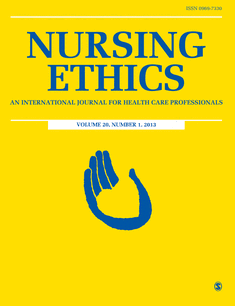
NURSING ETHICS
Exploring the Moral Compass of NursingNURSING ETHICS, published by SAGE PUBLICATIONS LTD, is a premier international journal dedicated to the exploration and examination of ethical issues within the field of nursing. Since its inception in 1994, the journal has consistently provided a critical platform for scholars and practitioners to discuss ethical dilemmas and address complex legal aspects affecting nursing practice. With a remarkable Q1 ranking in the categories of Issues, Ethics, and Legal Aspects, it ranks in the top percentile, boasting a 92nd percentile position among its peers. Although currently not an Open Access journal, NURSING ETHICS plays a crucial role in fostering dialogue and advancing knowledge in the rapidly evolving landscape of nursing ethics, making it an invaluable resource for researchers, professionals, and students alike. The journal's commitment to high-quality research ensures that vital ethical considerations remain at the forefront of nursing education and practice, reinforcing its significance in a field that is continually impacted by ethical challenges.
SCIENCE AND ENGINEERING ETHICS
Championing Integrity in Scientific and Engineering PracticesSCIENCE AND ENGINEERING ETHICS is a prestigious journal published by Springer, focusing on the intersection of ethics in scientific and engineering practices. With ISSN 1353-3452 and E-ISSN 1471-5546, this journal has been a critical platform for the dissemination of research from 1995 and continues to thrive as it approaches its convergence in 2024. The journal commands a significant reputation in its field, boasting Q1 rankings across multiple categories, including Health Policy, Health (Social Science), Issues, Ethics and Legal Aspects, and Management of Technology and Innovation in the 2023 category quartiles. Researchers and professionals will find it indispensable, as it ranks impressively in various Scopus metrics, particularly in Nursing and Health Policy, where it consistently places in the top percentiles. While the journal is not open access, its robust contribution to ongoing debates in ethics surrounding science and engineering makes it an essential read for scholars and practitioners seeking to navigate the complex moral landscapes of their fields.
Journal of Bioethical Inquiry
Advancing Discourse on Bioethical ChallengesThe Journal of Bioethical Inquiry, published by Springer, is a prominent academic journal in the fields of bioethics, health policy, and social sciences. Established in 2004 and running through 2024, it is recognized for providing a critical platform for the exploration of ethical issues arising in the contexts of healthcare and policy making. With an ISSN of 1176-7529 and an E-ISSN of 1872-4353, this esteemed journal holds a Q2 quartile ranking in both Health Policy and Health (Social Science) categories, indicating its significant impact and contributions to the field. It boasts impressive Scopus rankings, with a standing of #70 out of 371 in Social Sciences _ Health (Social Science) and #68 out of 310 in Medicine _ Health Policy, representing its relevance and authority in these domains. Although it does not currently offer open access options, the Journal of Bioethical Inquiry remains a vital resource for researchers, practitioners, and students eager to engage with the complexities of bioethical challenges and to advance the discourse on health policies.
International Journal of Technoethics
Fostering critical insights into technoethical challenges.International Journal of Technoethics, published by IGI Global, stands at the forefront of interdisciplinary research, bridging the fields of technology, ethics, and society. With an ISSN of 1947-3451 and an E-ISSN of 1947-346X, this celebrated journal focuses on the critical examination of ethical issues emerging from technological advancements, propelling discourse among researchers, professionals, and students alike. Since its inception in 2010, it has thrived in esteemed categories, boasting a Q2 ranking in both Engineering (miscellaneous) and Social Sciences (miscellaneous), with impressive Scopus rankings placing it in the top 12% and 27% within these fields respectively. With the aim of fostering a deeper understanding of technology's impact on society, the journal provides a platform for scholarly articles, case studies, and comprehensive reviews, contributing significantly to the global conversation on technoethics. Published from the United States, International Journal of Technoethics is pivotal for those seeking to navigate the complexities of innovation while maintaining a strong ethical foundation.
Ethics Policy & Environment
Bridging Ethics and Ecology for a Sustainable FutureEthics Policy & Environment is a prominent interdisciplinary journal published by Routledge Journals, Taylor & Francis Ltd, focusing on the complex interplay between ethical considerations, policy-making, and environmental issues. With an ISSN of 2155-0085 and an E-ISSN of 2155-0093, this journal serves as a critical platform for researchers, professionals, and students engaged in the fields of geography, policy, and philosophy. Highlighting the latest research and theoretical advances, it occupies a strong position within academic discourse, evidenced by its Q2 status in Geography, Planning and Development and Q1 in Philosophy for 2023. The journal has established itself as a key resource for understanding the ethical dimensions of environmental policy, making it essential for stakeholders navigating the challenges of sustainable development. With its coverage from 2011 to 2024, it is a timely source of knowledge that invites contributions that advance the conversation on ethics and the environment.

Journal of Practical Ethics
Exploring Ethics for a Complex WorldJournal of Practical Ethics is an esteemed open-access journal published by the Oxford Uehiro Centre for Practical Ethics, dedicated to enhancing the discourse surrounding ethical issues in various fields, including healthcare, technology, and social policy. Since its inception in 2013, the journal has fostered a robust academic platform for researchers, professionals, and students to explore and publish innovative ideas and solutions to real-world ethical dilemmas. The journal's commitment to making research freely accessible emphasizes its role in bridging the gap between academic inquiry and practical application, thereby encouraging a broader engagement with ethical considerations across disciplines. As the importance of ethical frameworks continues to grow in an increasingly complex world, the Journal of Practical Ethics stands as a vital resource for those seeking to influence policy and practice through rigorous ethical analysis.
ZEITSCHRIFT FUR EVANGELISCHE ETHIK
Fostering Interdisciplinary Dialogues in Evangelical ThoughtZEITSCHRIFT FUR EVANGELISCHE ETHIK, published by WALTER DE GRUYTER GMBH, is a leading journal in the field of Religious Studies, noted for its critical examination of evangelical ethics and theological perspectives. With an ISSN of 0044-2674 and E-ISSN of 2197-912X, this journal serves as a pivotal platform for scholars seeking to explore contemporary issues through a rigorous ethical lens. Based in Germany, it engages readers with a rich tapestry of interdisciplinary insights, contributing significantly to ongoing discussions within the realm of religious ethics. The journal enjoys a commendable position in the Scopus rankings, placed in the Q3 quartile and ranking #476 out of 644 in its category, reflecting its dedication to quality scholarship. Spanning over two decades, with converged years from 2002 to 2024, it fosters valuable dialogues between researchers, professionals, and students alike. Although not Open Access, the journal's subscription options ensure accessibility to essential scholarly works that can impact both academic and practical applications in religious thought.
JOURNAL OF BUSINESS ETHICS
Exploring the intersection of ethics and business strategy.JOURNAL OF BUSINESS ETHICS is a premier scholarly journal published by Springer, dedicated to the exploration of ethical issues in business practices and corporate governance. With an impressive impact factor placing it in the Q1 quartile across multiple disciplines including Arts and Humanities, Business Management, and Law, this journal plays a critical role in advancing discussions around ethical decision-making and social responsibility in the corporate world. Since its inception in 1982, the journal has been a vital resource for researchers, professionals, and students, providing a platform for high-quality interdisciplinary research that drives ethical standards in business. The JOURNAL OF BUSINESS ETHICS boasts high rankings in Scopus metrics, including a remarkable 99th percentile ranking in Social Sciences and Law, underscoring its influence and reach within the academic community. The journal is historically published in the Netherlands and is renowned for its commitment to rigorous research methodologies and impactful insights. Through its comprehensive approach, it aims not only to illuminate pressing ethical dilemmas but also to foster a dialogue among stakeholders about sustainable business practices.
International Journal of Ethics and Systems
Redefining Ethical Boundaries in Interdisciplinary Research.International Journal of Ethics and Systems is a pioneering publication within the realm of ethics and systems, dedicated to the exploration of complex ethical frameworks and their applications across various domains, especially in economics and philosophy. Published by Emerald Group Publishing Ltd, this journal stands out with an impressive impact factor and robust rankings; it is classified within the Q1 quartile for Philosophy and Q3 for Economics and Econometrics in 2023, showcasing its interdisciplinary significance. With a wide readership scope and an exceptional Scopus ranking—32nd out of 806 in Philosophy—this journal serves as an essential resource for researchers, professionals, and students eager to engage with contemporary debates and innovative approaches in ethical theory and systemic analyses. Although it currently does not offer Open Access, the journal is readily accessible for those affiliated with institutions providing library subscriptions, reflecting its commitment to facilitate high-quality scholarly discourse. The journal's convergence period from 2018 to 2024 highlights its ongoing relevance and responsiveness to emerging trends in ethical inquiry.
Research Ethics
Fostering Integrity in Academic Inquiry.Research Ethics is a leading journal published by SAGE Publications Inc that fosters scholarly discourse at the intersection of ethical considerations and research practices. As an Open Access platform since 2018, it ensures that critical insights on ethical dilemmas faced by researchers are freely available to a global audience, significantly enhancing its reach and impact. With an impressive impact factor reflected in its Q1 and Q2 rankings in Philosophy and Education respectively for 2023, this journal occupies a vital space for researchers and professionals aiming to navigate the complex ethical landscape of contemporary research. As indicated by its strong Scopus rankings, falling into the 95th percentile in Arts and Humanities (Philosophy) and 77th percentile in Social Sciences (Education), Research Ethics is essential for anyone interested in contributing to or understanding ethical practices in research. The journal encompasses a broad scope, encouraging submissions that explore diverse aspects of research ethics, promoting high standards and integrity across disciplines. Join a community dedicated to advancing ethical research methodologies and contributing meaningfully to the dialogue that shapes the future of moral practices in academia.