
Journal of Agricultural Safety and Health
Scope & Guideline
Championing health and safety in agricultural workspaces.
Introduction
Aims and Scopes
- Research on Injury Prevention and Safety Protocols:
This includes studies that explore injury trends, risk factors, and effective safety interventions within agricultural settings, aiming to enhance the well-being of workers. - Assessment of Occupational Health Risks:
The journal emphasizes research that identifies and evaluates health risks associated with agricultural work, including exposure to hazardous materials, ergonomics, and the physical demands of various tasks. - Psychosocial Factors and Mental Health:
A focus on understanding work-related stress, mental health issues, and demographic influences on agricultural workers, aiming to promote psychological well-being in the agricultural community. - Technological Innovations in Safety Practices:
Research that integrates technology, such as machine learning and automated systems, to enhance safety measures and operational efficiency in agriculture. - Education and Training Programs:
The journal aims to disseminate findings on effective education and training strategies that inform agricultural workers about safety practices and health risks. - Impact of Environmental Factors:
Studies that explore the influence of environmental conditions, such as climate change and exposure to extreme weather, on agricultural practices and worker safety.
Trending and Emerging
- Integration of Advanced Technology:
An increasing number of studies are focusing on the application of machine learning, automated systems, and smart technologies to improve safety measures and operational efficiency in agriculture. - Mental Health and Well-Being:
Research examining the psychological aspects of agricultural work, including stress management and mental health support for workers, has gained traction, reflecting a growing recognition of its importance. - Impact of COVID-19 on Agricultural Workers:
The pandemic has prompted a surge in research addressing the unique challenges faced by farmworkers, including stress related to health risks and economic pressures, highlighting the need for tailored support. - Demographic Influences on Safety Practices:
There is a growing emphasis on understanding how demographic factors, such as age, gender, and cultural background, influence safety behaviors and perceptions among agricultural workers. - Environmental and Climate Change Effects:
Emerging studies are increasingly addressing how climate change impacts agricultural practices and worker safety, reflecting the urgent need to adapt to changing environmental conditions.
Declining or Waning
- Traditional Injury Reporting Methods:
Research focused on conventional injury reporting mechanisms has decreased as newer methodologies and technologies are adopted to gather more comprehensive data. - General Agricultural Practices without Safety Focus:
There has been a noticeable reduction in studies that address agricultural practices in isolation from safety considerations, as the integration of safety into all aspects of agricultural research becomes more prevalent. - Focus on Non-Occupational Health Issues:
Themes addressing health issues not directly related to agricultural work, such as general public health, have waned, as the journal increasingly concentrates on occupational health specifically. - Limited Scope on Historical Data Analysis:
While historical data remains important, there is a declining emphasis on retrospective analyses of past injury trends without actionable insights for current practices.
Similar Journals
Journal of Occupational Medicine and Toxicology
Empowering research for a healthier workforce.The Journal of Occupational Medicine and Toxicology, published by BMC, is a pivotal open access journal that has been at the forefront of advancing knowledge in the fields of workplace health, environmental safety, and toxicology since its inception in 2006. With a robust impact factor and a distinguished reputation, this journal occupies a significant position in academic rankings, including Q2 in Public Health and Occupational Health, and Q1 in both Safety Research and Toxicology for 2023. Renowned for its rigorous peer-review process, it serves as a vital resource for researchers, professionals, and students aiming to disseminate and access high-quality research and innovative practices in occupational health and toxicological studies. Based in the United Kingdom, the journal prioritizes global access to research, ensuring that critical information reaches a diverse audience, conducive to the advancement of public health and safety. As it converges towards 2024, the journal continues to lead discussions that shape policies and practices related to workforce environments, chemical exposure, and preventative strategies in health management.
JOURNAL OF OCCUPATIONAL HEALTH
Championing excellence in public health and worker safety.JOURNAL OF OCCUPATIONAL HEALTH, published by WILEY, serves as a vital platform for sharing research and advancements in the field of public health, with a specific focus on occupational health and safety. With an impact factor that underscores its significance—ranking in the Q2 category of Public Health, Environmental and Occupational Health—this journal has established a reputation for excellence, reflected by its position in the 76th percentile of its category according to Scopus. This Open Access journal, available since 2018, ensures that valuable research findings are accessible to a global audience, enhancing collaboration and innovation in addressing occupational health challenges. Covering a wide array of topics from workplace safety to the impacts of environmental factors on worker health, the JOURNAL OF OCCUPATIONAL HEALTH invites researchers, professionals, and students to contribute and engage with the latest developments in the field, thereby fostering a healthier work environment for all.
Archives of Environmental & Occupational Health
Advancing knowledge for a healthier planet.Archives of Environmental & Occupational Health is a prestigious journal published by Routledge Journals, Taylor & Francis Ltd, dedicated to advancing research and knowledge in the realms of environmental science, occupational health, and toxicology. With an ISSN of 1933-8244 and an E-ISSN of 2154-4700, this peer-reviewed journal has gained significant recognition, currently holding a Q2 ranking in Environmental Science and Q3 rankings in Health, Toxicology and Mutagenesis, and Public Health. Established in 2005, it serves as a vital platform for researchers, practitioners, and policymakers alike who aim to address and disseminate findings on pressing environmental and occupational health issues. The journal is not open access, allowing for rigorous peer review processes while still reaching a broad readership. As it converges through 2024, the Archives of Environmental & Occupational Health continues to play a critical role in shaping discourse and fostering innovation in the field, making it an essential resource for those committed to improving both human health and the environment.
International Journal of Injury Control and Safety Promotion
Fostering interdisciplinary insights for a safer tomorrow.International Journal of Injury Control and Safety Promotion, published by Taylor & Francis Ltd, is a pivotal academic platform dedicated to advancing the field of public health and safety research. With an ISSN of 1745-7300 and an E-ISSN of 1745-7319, this journal is based in the United Kingdom and encompasses a wide range of topics related to injury prevention, safety promotion, and environmental health. Established in 2005, it stands out with a commendable Q2 ranking in both the Public Health and Safety Research categories for the year 2023, reflecting its significant influence in these domains. The Scopus rankings also highlight its stature, placing it in the 75th and 66th percentiles within its respective fields. Although the journal does not offer open access, its comprehensive reviews, original research articles, and critical commentaries provide essential insights for researchers, professionals, and students dedicated to improving health outcomes and promoting safety. By fostering interdisciplinary collaboration and disseminating innovative findings, the International Journal of Injury Control and Safety Promotion plays a crucial role in shaping the future of public health strategies and interventions.
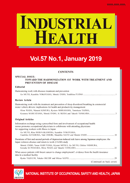
INDUSTRIAL HEALTH
Fostering Excellence in Public and Occupational HealthINDUSTRIAL HEALTH is a premier journal dedicated to the dissemination of innovative research in the fields of public health, environmental and occupational health, as well as toxicology and mutagenesis. Published by the National Institute of Occupational Safety and Health in Japan, the journal has been a critical resource for over six decades, covering essential topics from 1963 to the present day. With an impressive placement in the second quartile (Q2) of the Public Health, Environmental and Occupational Health category and a third quartile (Q3) in Health, Toxicology, and Mutagenesis, it is recognized for its significant contribution to advancing knowledge and improving practices within the industry. While not an open-access journal, INDUSTRIAL HEALTH offers researchers and students access to a wealth of knowledge through its rich archive of articles, fostering a deeper understanding of health and safety challenges in industrial settings. The journal’s dedication to high-quality research and its strategic role in promoting occupational safety make it an invaluable asset for professionals seeking to enhance health standards and safety protocols worldwide.

Indian Journal of Occupational and Environmental Medicine
Exploring Critical Issues in Public Health and SafetyIndian Journal of Occupational and Environmental Medicine, published by Wolters Kluwer Medknow Publications, is a pivotal resource in the field of public health, focusing on the critical intersections of occupational safety and environmental health. With the ISSN 0973-2284 and E-ISSN 1998-3670, this journal has been a beacon of knowledge since its inception in 1999 and continues to influence scholarly discourse through its convergence years culminating in 2024. Recognized for its contribution to the field with a 2023 Scopus categorization of Q3 in Public Health, Environmental and Occupational Health, it has secured its place among the top journals, ranked #453 out of 665 within its specialty, reflecting a respectable 31st percentile. While it operates on a subscription basis, the journal ensures comprehensive coverage of significant research, thereby enhancing occupational health practices and environmental health policies. It serves as a vital platform for researchers, professionals, and students dedicated to advancing knowledge and improving outcomes in these crucial areas of health. The journal's commitment to excellence is evident as it continues to cater to a diverse readership from its base in Mumbai, India.
OCCUPATIONAL AND ENVIRONMENTAL MEDICINE
Advancing health in workplaces and communities.OCCUPATIONAL AND ENVIRONMENTAL MEDICINE is a leading academic journal dedicated to the field of public health, with a specific emphasis on environmental and occupational health. Published by the esteemed BMJ PUBLISHING GROUP, this journal has established itself as a crucial resource for researchers, professionals, and students alike, achieving a remarkable impact factor that reflects its high-quality research contributions. With a distinguished Q1 ranking in its category and a strong position in Scopus rankings—placing it at #59 out of 665—this journal showcases top-tier studies and findings from 1994 to its anticipated convergence in 2024. Set in the United Kingdom, the journal aims to advance understanding and practices relating to health in the workplace and environmental settings, making it an indispensable platform for the dissemination of knowledge in this vital area. Although not an open-access journal, it provides a valuable repository of articles that influence policy and practice worldwide, ensuring that critical information is accessible to those dedicated to promoting safer, healthier working and living environments.
SAFETY SCIENCE
Pioneering research in safety and risk management.SAFETY SCIENCE, published by Elsevier in the Netherlands, is a premier international journal dedicated to advancing the fields of safety research, public health, environmental and occupational health, and risk management. With an impressive impact factor and recognized as a Q1 journal in multiple categories for 2023, its rigorous peer-reviewed articles are essential for researchers, professionals, and students alike. The journal covers a wide range of topics designed to influence safety practices and policies globally. Although Open Access options are not available, the substantial insights provided in each issue underscore the journal's critical role in enhancing the understanding of safety and risk dynamics in a constantly evolving world. With a convergence of knowledge from the years 1991 to 2025, SAFETY SCIENCE remains at the forefront of evidence-based research, stimulating essential dialogues and innovations that shape our approach to safety in various domains.
JOURNAL OF OCCUPATIONAL AND ENVIRONMENTAL MEDICINE
Elevating standards in occupational health.JOURNAL OF OCCUPATIONAL AND ENVIRONMENTAL MEDICINE, published by Lippincott Williams & Wilkins, is a premier journal dedicated to advancing the field of occupational and environmental health. With a rich history dating back to 1959 and a notable impact factor reflecting its relevance, the journal operates at the intersection of public health and environmental science, ranking in the Q2 category in the 2023 Scopus rankings within its field. It caters to a diverse audience of researchers, healthcare professionals, and students, providing a vital platform for peer-reviewed articles that address critical issues in occupational and environmental medicine. The journal’s mission is to disseminate innovative research findings and establish best practices that improve workplace safety and public health. With a focus on high-quality, evidence-based content, JOURNAL OF OCCUPATIONAL AND ENVIRONMENTAL MEDICINE plays a crucial role in shaping policy and fostering interdisciplinary collaboration among practitioners and scholars in the health sector.

Medicina del Lavoro
Elevating standards in public health and safety.Medicina del Lavoro, published by MATTIOLI 1885, is a distinguished academic journal that has been a pivotal resource for the fields of medicine and public health since its inception in 1947. With an ISSN of 0025-7818, this journal focuses on disseminating high-quality research relevant to environmental and occupational health, positioning itself in the Q2 category for both Medicine (miscellaneous) and Public Health, Environmental and Occupational Health. Its notable Scopus ranking places it within the top 69th percentile of its field, reflecting its commitment to scholarly excellence. While the journal is not open access, it offers a range of informative articles, including original research, reviews, and case studies, that are essential for researchers, professionals, and students committed to advancing their understanding of workplace health and safety. With articles converging up to 2024, Medicina del Lavoro continues to illuminate critical issues and foster discussion within the global health community.