Zentralblatt fur Arbeitsmedizin Arbeitsschutz und Ergonomie
Scope & Guideline
Exploring Cutting-edge Solutions for Occupational Health
Introduction
Aims and Scopes
- Occupational Health and Safety Research:
The journal extensively covers research on various aspects of occupational health, including the identification of risk factors and the implementation of safety measures to protect workers from potential hazards. - Mental Health in the Workplace:
A significant focus is placed on understanding mental health issues such as burnout, stress, and the psychological impacts of work conditions, particularly in high-interaction jobs and during crises like the COVID-19 pandemic. - Workplace Ergonomics and Physiology:
The journal publishes studies related to ergonomics, including assessments of physical strain and musculoskeletal disorders among different occupational groups, aiming to improve workplace design and worker comfort. - Impact of Technology on Work:
Research on how digitalization and technological advancements affect worker health and productivity is a key area, including studies on technostress and the adaptation of work environments to new technologies. - Public Health and Policy in Occupational Settings:
The journal also addresses broader public health issues related to occupational health, including policy recommendations and evaluations of health interventions in various work settings.
Trending and Emerging
- Health Impacts of COVID-19:
Research focusing on the implications of the COVID-19 pandemic for workplace health, including studies on mental health, stress management, and infection control measures, has surged, highlighting the pandemic's profound impact on work environments. - Psychosocial Risks and Support Systems:
There is an increasing emphasis on understanding psychosocial risks, including the second victim phenomenon and mental health support systems for employees, particularly in high-stress occupations like healthcare. - Telework and Work-Life Balance:
Emerging studies on the effects of telework on employee health, including social isolation and work-life balance, reflect the shift towards remote working arrangements and their implications for occupational health. - Ergonomics in Digital Work Environments:
With the rise of digital work, there is a growing interest in ergonomic practices tailored for remote work settings, addressing new challenges posed by prolonged computer use and home office setups. - Diversity and Inclusion in Occupational Health:
Recent publications are increasingly addressing issues related to diversity, equity, and inclusion in the workplace, exploring how these factors influence health outcomes and employee well-being.
Declining or Waning
- Traditional Occupational Diseases:
There has been a noticeable decrease in publications specifically addressing traditional occupational diseases, such as silicosis and other industrial-related illnesses, as newer health issues gain more focus. - Generalized Health Risk Assessments:
The journal has seen fewer studies on generalized health risk assessments without specific occupational context, indicating a shift towards more targeted and nuanced investigations. - Historical Analyses of Occupational Health:
Research focusing on historical perspectives or retrospective analyses of occupational health practices has become less frequent, possibly overshadowed by contemporary studies addressing current challenges.
Similar Journals
AMERICAN JOURNAL OF INDUSTRIAL MEDICINE
Empowering Health Through Occupational InsightsAMERICAN JOURNAL OF INDUSTRIAL MEDICINE, published by Wiley, stands out as a premier journal dedicated to the field of industrial medicine, emphasizing comprehensive research related to occupational health and safety. With an impressive impact factor, the journal holds a distinguished position in its category, ranked in the Q1 quartile for Public Health, Environmental and Occupational Health as of 2023. It has garnered respect within the academic community, ranking #141 out of 665 in Scopus, placing it in the 78th percentile. Research published here spans various topics from epidemiological studies to interventions aimed at improving worker health outcomes, appealing to a diverse audience of researchers, professionals, and students alike. The AMERICAN JOURNAL OF INDUSTRIAL MEDICINE is committed to advancing knowledge and practice in industrial health, fostering an environment where important discussions and discoveries can shape the future of occupational health globally.
OCCUPATIONAL MEDICINE-OXFORD
Uncovering Trends that Shape the Future of Occupational HealthOccupational Medicine-Oxford is a leading journal in the fields of public health and occupational health, published by Oxford University Press. With an ISSN of 0962-7480 and an E-ISSN of 1471-8405, this esteemed journal has been disseminating critical research findings since its inception in 1948. Ranked in the Q2 category for both Medicine (miscellaneous) and Public Health, Environmental, and Occupational Health, it occupies a significant spot in the academic community, with a Scopus ranking of #147 out of 665 in its categories, placing it within the 77th percentile. The journal aims to enhance the understanding of occupational health issues and promote practices that improve worker safety and well-being. As a vital resource for researchers, professionals, and students alike, Occupational Medicine-Oxford provides insights into emerging trends, comprehensive reviews, and original research articles that pave the way for future innovations in occupational health strategies. Explore the journal for the latest developments in this critical field, and gain access to a wealth of knowledge that can make a meaningful impact on public health policies and occupational practices worldwide.
Medycyna Pracy-Workers Health and Safety
Exploring the future of worker safety and health.Medycyna Pracy - Workers Health and Safety is a distinguished open-access journal published by the NOFER Institute of Occupational Medicine in Poland, dedicated to advancing the field of occupational health and safety. Established in 1953, this journal has evolved to provide a vital platform for researchers, practitioners, and students to disseminate their findings and insights regarding worker health and well-being. With a Q3 ranking in both Medicine (miscellaneous) and Public Health, Environmental and Occupational Health categories, it reflects a commitment to high-quality scholarship despite its recent Scopus percentile (35th). The journal's rich history encompasses issues from 1953 to the present, allowing for a comprehensive examination of trends and developments in the field. Since adopting an open-access model in 2013, Medycyna Pracy has broadened its reach, ensuring that critical research is freely available to anyone seeking to enhance workplace safety and health outcomes. By fostering dialogue among multidisciplinary professionals, this journal aims to impact policy, practice, and education in occupational health, making it an essential resource for anyone engaged in this vital area of study.
JOURNAL OF OCCUPATIONAL HEALTH
Connecting global minds for healthier work environments.JOURNAL OF OCCUPATIONAL HEALTH, published by WILEY, serves as a vital platform for sharing research and advancements in the field of public health, with a specific focus on occupational health and safety. With an impact factor that underscores its significance—ranking in the Q2 category of Public Health, Environmental and Occupational Health—this journal has established a reputation for excellence, reflected by its position in the 76th percentile of its category according to Scopus. This Open Access journal, available since 2018, ensures that valuable research findings are accessible to a global audience, enhancing collaboration and innovation in addressing occupational health challenges. Covering a wide array of topics from workplace safety to the impacts of environmental factors on worker health, the JOURNAL OF OCCUPATIONAL HEALTH invites researchers, professionals, and students to contribute and engage with the latest developments in the field, thereby fostering a healthier work environment for all.
Annals of Occupational and Environmental Medicine
Transforming Insights into Action for Global HealthAnnals of Occupational and Environmental Medicine is a premier open-access journal dedicated to the interdisciplinary study of occupational and environmental health, published by the Korean Society for Occupational & Environmental Medicine. Since its inception in 2013, this journal has become a key platform for researchers, professionals, and students alike to disseminate findings that contribute to the understanding and improvement of health in the workplace and surrounding environments. With an ISSN of 2052-4374 and ranked in the Q3 category (2023) in Public Health, this journal emphasizes innovative research and evidence-based practices in the field. Insights from the Scopus ranking, placing it at #428 out of 665 in its category, highlight its growing impact, despite being positioned in the 35th percentile. Its open-access model ensures that valuable knowledge is readily available, fostering collaboration and progression towards healthier work and living conditions globally. With an ambitious convergence of research spanning from 2014 to 2024, the journal stands as an essential resource for those committed to advancing occupational and environmental health.

Medicina del Lavoro
Innovating for healthier working environments.Medicina del Lavoro, published by MATTIOLI 1885, is a distinguished academic journal that has been a pivotal resource for the fields of medicine and public health since its inception in 1947. With an ISSN of 0025-7818, this journal focuses on disseminating high-quality research relevant to environmental and occupational health, positioning itself in the Q2 category for both Medicine (miscellaneous) and Public Health, Environmental and Occupational Health. Its notable Scopus ranking places it within the top 69th percentile of its field, reflecting its commitment to scholarly excellence. While the journal is not open access, it offers a range of informative articles, including original research, reviews, and case studies, that are essential for researchers, professionals, and students committed to advancing their understanding of workplace health and safety. With articles converging up to 2024, Medicina del Lavoro continues to illuminate critical issues and foster discussion within the global health community.
International Journal of Occupational Safety and Ergonomics
Pioneering insights for a safer, more ergonomic future.International Journal of Occupational Safety and Ergonomics, ISSN 1080-3548, is a leading multidisciplinary journal published by TAYLOR & FRANCIS LTD with a dedicated focus on advancing research and practices in occupational safety and ergonomics. Since its inception in 1995, this journal has provided a platform for the dissemination of innovative studies that address critical issues in public health, environmental and occupational health, and safety research. Recognized for its rigorous peer-review process, the journal holds a respectable position in the Q2 quartile rankings across multiple categories as of 2023, reflecting its impact and relevance within the academic community. It ranks 24th out of 109 in Safety Research, 198th out of 665 in Public Health, and 66th out of 207 in Safety, Risk, Reliability and Quality, showcasing its influence in these essential fields. The journal's broad scope aims to bridge gaps between research and application, ensuring that findings contribute to effective safety practices in various industries. While not an Open Access journal, the International Journal of Occupational Safety and Ergonomics remains an invaluable resource for researchers, professionals, and students seeking to stay informed about the evolving landscape of occupational safety. Its headquarters are located in Abingdon, England, serving as a conduit for scholarly communication in this vital area of study.
International Journal of Human Factors and Ergonomics
Enhancing Interaction, Elevating UsabilityWelcome to the International Journal of Human Factors and Ergonomics, a premier platform dedicated to the exploration and advancement of research in the increasingly vital fields of human factors and ergonomics. Published by INDERSCIENCE ENTERPRISES LTD, this journal serves an international audience of researchers, practitioners, and students, facilitating the dissemination of knowledge that aims to enhance the interaction between people and systems. With its ISSN 2045-7804 and E-ISSN 2045-7812, the journal actively contributes to the academic community's understanding of human capabilities and limitations, striving to improve product design, work environments, and overall usability. Despite its classification in Q4 of the 2023 Human Factors and Ergonomics category and a Scopus ranking reflecting the competitive landscape—where it stands at #37 out of 46 in its field—the journal is committed to building a strong foundation of evidence-based practices through rigorous peer-reviewed articles. Through its convergence efforts from 2016 to 2024, it aims to bridge theoretical research with practical applications to promote safety, efficiency, and user satisfaction across various domains.
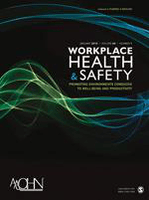
Workplace Health & Safety
Empowering safer work environments with innovative insights.Workplace Health & Safety is a prominent peer-reviewed journal published by SAGE Publications Inc, aiming to advance the field of occupational health and safety through rigorous research and practical applications. With an impact factor reflecting its significant contributions to the fields of nursing and public health, this journal ranks in the second quartile (Q2) for both Nursing (miscellaneous) and Public Health, Environmental and Occupational Health, showcasing its standing among peers. Since its inception in 2003, the journal has been committed to disseminating insights that enhance workplace safety and health practices, making it a vital resource for researchers, professionals, and students alike. Readers can access a wealth of knowledge through its open access option, fostering a broader understanding and discussion around critical health and safety issues in various work environments. With a consistent commitment to excellence and relevance, Workplace Health & Safety is essential for anyone dedicated to improving workplace environments and promoting health and safety standards.

Indian Journal of Occupational and Environmental Medicine
Transforming Insights into Action for Healthier WorkplacesIndian Journal of Occupational and Environmental Medicine, published by Wolters Kluwer Medknow Publications, is a pivotal resource in the field of public health, focusing on the critical intersections of occupational safety and environmental health. With the ISSN 0973-2284 and E-ISSN 1998-3670, this journal has been a beacon of knowledge since its inception in 1999 and continues to influence scholarly discourse through its convergence years culminating in 2024. Recognized for its contribution to the field with a 2023 Scopus categorization of Q3 in Public Health, Environmental and Occupational Health, it has secured its place among the top journals, ranked #453 out of 665 within its specialty, reflecting a respectable 31st percentile. While it operates on a subscription basis, the journal ensures comprehensive coverage of significant research, thereby enhancing occupational health practices and environmental health policies. It serves as a vital platform for researchers, professionals, and students dedicated to advancing knowledge and improving outcomes in these crucial areas of health. The journal's commitment to excellence is evident as it continues to cater to a diverse readership from its base in Mumbai, India.