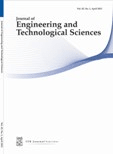
Journal of Engineering and Technological Sciences
Scope & Guideline
Bridging Theory and Practice in Engineering
Introduction
Aims and Scopes
- Engineering Innovations:
The journal covers groundbreaking advancements in engineering practices, methodologies, and technologies across various fields, including civil, mechanical, electrical, and materials engineering. - Sustainable Technologies:
A significant focus on sustainable engineering solutions, including renewable energy systems, waste reduction techniques, and eco-friendly materials, reflecting a commitment to environmental stewardship. - Interdisciplinary Research:
Encourages cross-disciplinary studies that integrate engineering with other fields such as environmental science, biotechnology, and information technology, fostering holistic approaches to problem-solving. - Experimental and Computational Methods:
Utilizes a variety of research methodologies, including experimental analysis, computational modeling, and simulation techniques, to validate findings and enhance the reliability of results. - Applied Research:
Emphasizes practical applications of research findings, targeting real-world challenges faced by industries and communities, thus driving innovation and economic growth.
Trending and Emerging
- Renewable Energy and Sustainability:
A significant increase in research related to renewable energy technologies, including solar, wind, and bioenergy systems, as well as studies focusing on sustainable engineering practices and carbon footprint reduction. - Smart Technologies and Automation:
Emerging trends in smart technologies, including the integration of artificial intelligence, machine learning, and IoT in engineering solutions, reflecting the growing importance of automation and smart systems in various industries. - Environmental Engineering:
A rising interest in environmental engineering topics, particularly in relation to waste management, pollution control, and innovative water treatment solutions, demonstrating a commitment to addressing global environmental challenges. - Advanced Materials and Nanotechnology:
Increased focus on the development and application of advanced materials, including nanomaterials and composites, which are critical for enhancing the performance and sustainability of engineering solutions. - Disaster Resilience and Risk Management:
Growing attention to research that addresses disaster resilience, including structural engineering for seismic performance and risk assessment methodologies, highlighting the importance of preparing for natural disasters.
Declining or Waning
- Traditional Material Sciences:
There has been a noticeable reduction in papers focusing on traditional materials science, such as studies solely centered on conventional concrete and metals, as researchers increasingly explore advanced materials and composites. - Conventional Energy Systems:
With the growing emphasis on renewable energy technologies, research on conventional energy systems, like fossil fuel-based generation, has seen a decline, reflecting the industry's shift towards sustainability. - Purely Theoretical Studies:
The journal has shifted away from purely theoretical research devoid of practical application, favoring studies that demonstrate tangible impacts and real-world applicability.
Similar Journals

Sigma Journal of Engineering and Natural Sciences-Sigma Muhendislik ve Fen Bilimleri Dergisi
Empowering Innovation, Bridging DisciplinesSigma Journal of Engineering and Natural Sciences (Sigma Mühendislik ve Fen Bilimleri Dergisi) is a distinguished open-access journal published by Yıldız Technical University in Turkey since 2004. With an emphasis on the interdisciplinary fields of engineering and natural sciences, this journal caters to researchers, professionals, and students seeking to share innovative research and developments. Although currently positioned in the Q4 quartile across several categories including Computational Mechanics and Mechanics of Materials, Sigma is committed to enhancing its scientific impact and accessibility. The journal invites contributions that enrich knowledge in areas of energy and engineering, addressing complex challenges with a regional and global perspective. Researchers can freely access and disseminate their findings, fostering collaborative advancements in the community. By continually striving for excellence, Sigma Journal serves as a crucial platform for scholarly discourse and innovative research in engineering and natural sciences.

Journal of Materials and Engineering Structures
Exploring Cutting-Edge Research in Engineering StructuresJournal of Materials and Engineering Structures is a pioneering Open Access journal published by MOULOUD MAMMERI UNIVERSITY OF TIZI-OUZOU, dedicated to advancing the field of materials science and engineering. Since its inception in 2014, the journal has aimed to provide researchers, professionals, and students with a platform for sharing cutting-edge research and innovative applications in materials engineering and construction structures. Although the HIndex and Scopus ranking data are not specified, the journal plays a crucial role in disseminating knowledge that contributes to the development of sustainable and efficient engineering practices. With its commitment to accessibility and knowledge sharing in the heart of Algeria, the Journal of Materials and Engineering Structures is poised to make a significant impact on both local and global academic communities.

SN Applied Sciences
Pioneering research for a sustainable future.SN Applied Sciences, published by Springer International Publishing AG, is an esteemed open-access journal that has been serving the scientific community since 2021. With an ISSN of 2523-3963 and an E-ISSN of 2523-3971, this journal encompasses a broad scope of research areas including Chemical Engineering, Earth and Planetary Sciences, Engineering, Environmental Science, Materials Science, and Physics and Astronomy. Notably, it has achieved a strong standing in the scholarly landscape, ranked in the Q2 quartile across multiple categories in 2023, with impressive Scopus rankings such as #39 in Earth and Planetary Sciences (79th percentile) and #55 in General Engineering (81st percentile). As a journal dedicated to the rapid dissemination of cutting-edge research findings, SN Applied Sciences plays a crucial role in facilitating knowledge exchange and advancing interdisciplinary collaborations, making it an indispensable resource for researchers, professionals, and students alike.
Archives of Civil and Mechanical Engineering
Fostering Knowledge in Civil and Mechanical DisciplinesArchives of Civil and Mechanical Engineering is a distinguished peer-reviewed journal published by SpringerNature, focusing on advancing the fields of civil and mechanical engineering. With an impressive Q1 ranking in both categories in 2023, this journal caters to a global audience, addressing the evolving challenges and innovations within these vital engineering disciplines. The journal has been a pivotal platform since its inception in 2006, and it continues to be essential for researchers and practitioners seeking to publish and access high-quality research. The absence of an Open Access option ensures that published works maintain rigorous academic standards, thereby enhancing their value within institutional repositories. With a robust impact factor and high visibility on Scopus—ranking #122 out of 672 in Mechanical Engineering and #74 out of 379 in Civil and Structural Engineering—this journal is an ideal venue for professionals, researchers, and students dedicated to advancing their knowledge and contributing to cutting-edge engineering practices. Based in Germany and operating internationally, the Archives of Civil and Mechanical Engineering invites submissions that address critical issues and solutions in contemporary engineering.
Alexandria Engineering Journal
Connecting scholars and practitioners in engineering excellence.Alexandria Engineering Journal is a premier open access publication dedicated to advancing the field of engineering. Published by ELSEVIER and headquartered in Amsterdam, the Netherlands, this journal has been at the forefront of disseminating innovative research since its inception in the year 2000. With its impressive Q1 ranking within the Engineering (miscellaneous) category and a notable position as #20 out of 307 in the Scopus rankings, it serves as a vital resource for scholars and practitioners alike, ensuring that cutting-edge findings reach a global audience. The journal is accessible to all since adopting open access policies in 2010, thereby facilitating the sharing of valuable insights without barriers. As we approach the convergence of years from 2000 to 2024, the Alexandria Engineering Journal continues to play a pivotal role in shaping engineering practices and underpinning significant advancements in the field.

Journal of Engineering Science and Technology
Fostering Interdisciplinary Collaboration in EngineeringThe Journal of Engineering Science and Technology, published by TAYLORS UNIV SDN BHD, is a noteworthy open-access publication dedicated to advancing knowledge across various engineering disciplines. Since its inception in 2006, this journal has provided a vital platform for researchers, professionals, and students to disseminate their findings and innovations in engineering. With a focus on interdisciplinary approaches, it aims to bridge the gap between theoretical studies and practical applications, fostering collaboration among academia and industry. Currently ranked in the Q3 quartile for General Engineering by Scopus, the journal highlights emerging trends and promotes high-quality research in engineering fields. Based in Malaysia, the journal invites contributors worldwide, making it a significant contributor to the global engineering community's discourse. With its ongoing commitment to accessibility and scholarly integrity, the Journal of Engineering Science and Technology continues to play an essential role in shaping the future of engineering research.

World Journal of Engineering
Bridging Theory and Practice in Engineering AdvancesWorld Journal of Engineering, published by EMERALD GROUP PUBLISHING LTD, stands as a premier platform for disseminating high-quality research across various engineering disciplines. Since its inception in 2014, the journal has built a reputation for its rigorous peer-review process and commitment to advancing knowledge in the fields of Civil and Structural Engineering, Electrical and Electronic Engineering, Geotechnical Engineering, Mechanical Engineering, and Mechanics of Materials. With its categorization in the Q3 quartile across multiple engineering domains and notable Scopus rankings, the journal positions itself as a valuable resource for researchers, professionals, and students seeking to stay abreast of innovations and critical developments in engineering. While the journal currently operates under a subscription model, its comprehensive scope ensures that it remains a vital reference point for contemporary engineering challenges and solutions throughout the United Kingdom and beyond.
Bulletin of the Polish Academy of Sciences-Technical Sciences
Empowering Research Through Open AccessBulletin of the Polish Academy of Sciences-Technical Sciences is a distinguished peer-reviewed journal published by the Polish Academy of Sciences, focusing on a broad spectrum of disciplines within technical sciences. With an E-ISSN of 2300-1917 and an established presence since 1983, this journal transitioned to an Open Access model in 2009, ensuring wide dissemination of innovative research findings. Recognized for its contributions, the journal boasts notable rankings in various categories, including Q4 in Artificial Intelligence and Q3 in fields such as Computer Networks and Communications and Atomic and Molecular Physics, as indicated by its Scopus rankings. With its strategic location in Warsaw, Poland, and a commitment to advancing knowledge and technology, the Bulletin serves as a vital platform for researchers, professionals, and students to share and engage with cutting-edge developments in engineering and related fields. Emphasizing high-quality research, this journal offers an essential resource for anyone looking to enhance their understanding of current trends and breakthroughs in technical sciences.

Ciencia e Ingenieria
Fostering Collaboration in Research ExcellenceCiencia e Ingenieria is a peer-reviewed journal published by the UNIV ANDES, FAC INGENIERIA, based in Bogotá, Colombia. The journal's ISSN is 1316-7081 while its E-ISSN is 2244-8780, ensuring a broad reach within the academic community. Focusing on advanced research and innovations in engineering and science, Ciencia e Ingenieria serves as a critical platform for publication and dissemination of high-quality, original research articles, review papers, and case studies. Though currently not listed as Open Access, the journal aims to provide valuable insights in diverse areas of engineering, fostering collaboration and knowledge exchange among researchers and professionals. With a commitment to addressing contemporary challenges and technological advancements, Ciencia e Ingenieria plays a vital role in shaping the discourse within its field and is essential for anyone engaged in scientific and engineering studies.

International Journal of Engineering Research in Africa
Pioneering Engineering Excellence in AfricaThe International Journal of Engineering Research in Africa is a pivotal academic resource for researchers, professionals, and students interested in the multifaceted field of engineering within the African context. Published by TRANS TECH PUBLICATIONS LTD, this journal facilitates the dissemination of innovative research, covering a myriad of topics in engineering, from advanced materials to sustainable practices. With an ISSN of 1663-3571 and E-ISSN 1663-4144, this publication not only fosters scholarly communication but also contributes to the global engineering discourse, as evidenced by its current Q3 ranking in the Engineering (miscellaneous) category in 2023. Operating from its base in Switzerland, the journal has been actively publishing since 2010 and continues to play a vital role in the advancement of engineering knowledge, particularly in the African landscape. Although it does not offer an open access model, the journal's commitment to quality research ensures that it remains a valuable asset for those seeking to understand and innovate within the engineering sector. Its integration in Scopus with a rank of #175 out of 307 in General Engineering further underscores its relevance and impact in the engineering community.