
Journal of the Global Power and Propulsion Society
Scope & Guideline
Driving the Future of Aerospace and Mechanical Engineering
Introduction
Aims and Scopes
- Turbomachinery Design and Optimization:
The journal focuses on the design and optimization of turbomachinery components such as compressors and turbines, utilizing advanced computational fluid dynamics (CFD) and experimental techniques to enhance performance and efficiency. - Aerodynamics and Heat Transfer:
Research in this area explores the aerodynamic characteristics and heat transfer processes in various propulsion systems, including studies on cooling techniques, flow separation, and thermal management. - Machine Learning and Data-Driven Approaches:
The integration of machine learning and artificial intelligence in the analysis and optimization of propulsion systems is a significant focus, with studies aimed at predictive maintenance and performance enhancement. - Additive Manufacturing and Material Innovations:
The journal addresses advancements in additive manufacturing technologies for creating complex geometries in turbomachinery components, emphasizing their impact on performance and reliability. - Sustainability and Decarbonization Efforts:
Research related to sustainable propulsion technologies, including hydrogen-fueled systems and hybrid-electric propulsion, reflects the journal's commitment to addressing environmental challenges in power and propulsion.
Trending and Emerging
- Advanced Simulation Techniques:
There is a growing trend towards employing advanced simulation methods, including large-eddy simulations and multi-fidelity approaches, to enhance the accuracy of aerodynamics and thermodynamics analyses in turbomachinery. - Hybrid and Electric Propulsion Systems:
Research on hybrid and electric propulsion technologies is rapidly increasing, driven by the aviation industry's push for more sustainable solutions, resulting in innovative designs and performance assessments. - Integration of AI and Machine Learning:
The application of artificial intelligence and machine learning in the predictive modeling and optimization of propulsion systems is gaining popularity, highlighting a shift towards data-driven decision-making. - Environmental Impact and Decarbonization:
Research focusing on reducing the environmental footprint of propulsion systems, including studies on alternative fuels and energy-efficient designs, is becoming increasingly significant. - Additive Manufacturing Applications:
The use of additive manufacturing in the design and production of turbomachinery components is trending, with studies exploring its potential to create lightweight and complex geometries that enhance performance.
Declining or Waning
- Traditional Combustion Techniques:
Research centered on conventional combustion methods has seen a decline, likely due to the increased emphasis on sustainable and clean energy solutions, such as hydrogen and hybrid systems. - Low-Fidelity Simulation Methods:
There is a noticeable reduction in studies relying on simpler, low-fidelity simulation techniques as the field shifts towards more complex, high-fidelity simulations that provide greater accuracy and insight. - Fundamental Fluid Mechanics Studies:
While foundational fluid mechanics remains important, the focus on purely theoretical studies has decreased in favor of applied research that addresses specific engineering challenges. - Static Component Analysis:
Research focused solely on the static analysis of components without considering dynamic interactions and operational conditions is becoming less prevalent, reflecting a shift towards more holistic approaches. - Generalized Performance Metrics:
The use of broad, generalized performance metrics without context-specific applications is declining, as researchers increasingly seek to develop tailored metrics that reflect real-world operational conditions.
Similar Journals
International Journal of Turbomachinery Propulsion and Power
Leading the charge in turbomachinery research and development.The International Journal of Turbomachinery Propulsion and Power, published by MDPI, is a pivotal scholarly platform devoted to advancing the field of turbomachinery, propulsion technology, and power systems. Since its inception in 2016, this open-access journal has provided an invaluable resource for researchers, professionals, and students within the realms of Aerospace Engineering, Energy Engineering, and Mechanical Engineering. With its current ranking in the Q3 category across these disciplines and its strategic placement in Scopus, the journal facilitates the dissemination of cutting-edge research findings and innovative solutions. The commitment to open access, effective from 2017, ensures that high-quality research is readily accessible, fostering collaboration and knowledge sharing in the global academic community. As it continues to expand its scope through 2024, the journal remains a crucial avenue for discussion, experimentation, and advancement in turbomachinery and energy-related studies.
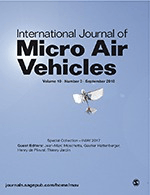
International Journal of Micro Air Vehicles
Exploring New Horizons in Aerospace EngineeringThe International Journal of Micro Air Vehicles, published by SAGE Publications Ltd, stands as a pioneering platform for cutting-edge research in the rapidly evolving field of micro air vehicle (MAV) technology. With an ISSN of 1756-8293 and an E-ISSN of 1756-8307, this journal caters to a diverse readership, including aerospace engineers, researchers, and industry professionals who are at the forefront of innovation in aerospace engineering. It holds a commendable position within the Q3 category of Aerospace Engineering for 2023 and is ranked 65th out of 153 in Scopus, placing it in the 57th percentile among its peers. As a vital resource since its inception in 2010, the journal emphasizes advancements in design, performance, and applications of MAVs, while facilitating knowledge sharing and collaboration across disciplines. Although it operates on a subscription model, the journal ensures accessibility of pivotal research findings for professionals and scholars alike, aiming to shape the future of aerospace applications through rigorous academic inquiry.

Journal of Aeronautics Astronautics and Aviation
Pioneering Insights in the World of Flight and BeyondJournal of Aeronautics Astronautics and Aviation, published by the Aeronautical & Astronautical Society Republic of China, is a premier scholarly journal dedicated to advancing knowledge in the dynamic fields of aerospace engineering and space sciences. Operating under the ISSN 1990-7710, this journal plays a pivotal role in disseminating innovative research and practice-oriented studies that address both theoretical and applicative aspects of aeronautics and astronautics. With an impressive history spanning from 2006 to 2024, the journal has established itself as a valuable resource for researchers, professionals, and students alike, featuring contributions that reflect the latest developments and trends within the industry. In the latest rankings, it holds a Q3 classification in Aerospace Engineering and Q4 in Space and Planetary Science, indicating its growing influence despite its niche scope. With an open access model that facilitates widespread readership, the Journal of Aeronautics Astronautics and Aviation strives to foster collaboration and knowledge sharing in these ever-evolving scientific domains.
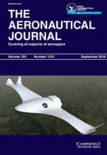
AERONAUTICAL JOURNAL
Advancing aerospace knowledge since 1969.Aeronautical Journal, published by Cambridge University Press, is a premier scholarly journal dedicated to advancing the field of aerospace engineering. With a notable impact factor, this journal holds a strong position in the academic community, ranked #53 out of 153 in the Scopus category of Aerospace Engineering, placing it in the 65th percentile. The journal has been providing a platform for groundbreaking research since its inception in 1969, and continues to be a vital resource for researchers, professionals, and students involved in aeronautics. As a Q2 journal in the 2023 Aerospace Engineering category, it offers high-quality articles that cover a range of topics within the discipline, contributing to the ongoing discourse and innovation in aerospace technologies. Although not an open-access journal, it remains accessible to a vast readership through institutional subscriptions and partnerships. The Aeronautical Journal is a crucial publication for those seeking to stay at the forefront of aerospace research and development.
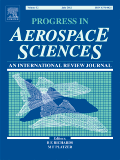
PROGRESS IN AEROSPACE SCIENCES
Elevating the future of flight with cutting-edge insights.PROGRESS IN AEROSPACE SCIENCES is a prestigious journal published by PERGAMON-ELSEVIER SCIENCE LTD, recognized as a leading platform in the field of aerospace engineering, mechanical engineering, and mechanics of materials. With an impressive history dating back to 1961, the journal covers a wide spectrum of topics pivotal to advancing aerospace technology and innovation. Its recent ranking as Q1 in multiple engineering categories underscores its significance, ranking #1 in Aerospace Engineering and placing within the top 20 percentile in both Mechanical Engineering and Mechanics of Materials, according to Scopus assessments. Researchers, professionals, and students looking to engage with high-impact research will find PROGRESS IN AEROSPACE SCIENCES an invaluable resource, offering insights into cutting-edge developments and methodologies. Although it does not operate under an open-access model, the journal upholds rigorous peer-review standards, ensuring that the published content meets the highest academic integrity. Situated in the United Kingdom, it plays a critical role in fostering international collaboration and knowledge-sharing in the aerospace sector.
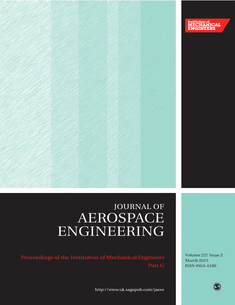
PROCEEDINGS OF THE INSTITUTION OF MECHANICAL ENGINEERS PART G-JOURNAL OF AEROSPACE ENGINEERING
Fostering Collaboration in Aerospace ResearchPROCEEDINGS OF THE INSTITUTION OF MECHANICAL ENGINEERS PART G-JOURNAL OF AEROSPACE ENGINEERING, published by SAGE PUBLICATIONS LTD, stands as a pivotal resource for those immersed in the disciplines of aerospace and mechanical engineering. With an ISSN of 0954-4100 and E-ISSN of 2041-3025, this journal not only contributes to the academic community but also reflects a robust commitment to advancing knowledge within these fields. Operating from the United Kingdom, it has garnered a respectable reputation, evidenced by its category quartiles—ranking Q3 in both Aerospace Engineering and Mechanical Engineering as of 2023. Established in 1989, the journal has evolved substantially over the years, serving as a platform for groundbreaking research and innovative methodologies. Researchers, professionals, and students alike will find a wealth of insights that foster collaboration and advance the frontiers of engineering. Although currently not available as an Open Access publication, the journal remains a critical reference point for those looking to deepen their understanding and contribute to ongoing developments in aerospace technology.
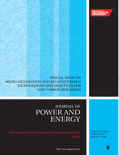
PROCEEDINGS OF THE INSTITUTION OF MECHANICAL ENGINEERS PART A-JOURNAL OF POWER AND ENERGY
Exploring the Frontiers of Mechanical EngineeringPROCEEDINGS OF THE INSTITUTION OF MECHANICAL ENGINEERS PART A-JOURNAL OF POWER AND ENERGY, published by SAGE PUBLICATIONS LTD, is a pivotal journal dedicated to advancing the fields of mechanical engineering and energy technology. With a history spanning from 1983 to 2024, this journal provides a respected platform for researchers and practitioners to disseminate findings that address contemporary challenges in power generation, energy efficiency, and sustainable engineering practices. As evidenced by its quarter ranking in Q3 within the categories of Energy Engineering and Power Technology, and Mechanical Engineering, it serves as a significant resource for academics aiming to enhance their understanding and explore innovation in these critical areas. While currently not an open-access journal, the research published here is invaluable for both ongoing education and professional practice, making it an essential read for anyone engaged in the engineering disciplines.
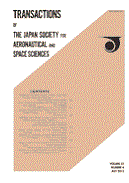
TRANSACTIONS OF THE JAPAN SOCIETY FOR AERONAUTICAL AND SPACE SCIENCES
Fueling the Future of Aerospace EngineeringTRANSACTIONS OF THE JAPAN SOCIETY FOR AERONAUTICAL AND SPACE SCIENCES is a distinguished journal published by the Japan Society for Aeronautical and Space Sciences, focusing on the latest advancements and research in the fields of aerospace engineering and space and planetary science. With a broad range covering theoretical studies, practical applications, and experimental research, this journal serves as a vital platform for researchers, professionals, and students keen to explore the intricacies of aeronautics and space technologies. Although currently closed to open access, the journal maintains a significant presence in the academic community, boasting a 2023 Scopus ranking of Q3 in both of its respective fields and offering insights that contribute to ongoing discussions and innovations in aerospace. Since its inception in 1969 and with publications extending to 2024, the journal not only reflects the evolving landscape of aeronautics and space sciences but also encourages discourse that paves the way for future breakthroughs. For your engagement and contributions to this dynamic field, the TRANSACTIONS OF THE JAPAN SOCIETY FOR AERONAUTICAL AND SPACE SCIENCES stands as an essential resource.
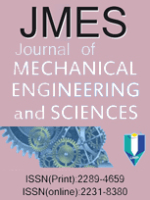
Journal of Mechanical Engineering and Sciences
Pioneering Insights in Industrial and Manufacturing EngineeringThe Journal of Mechanical Engineering and Sciences (ISSN: 2289-4659, E-ISSN: 2231-8380), published by UNIV MALAYSIA PAHANG, is a prominent open access journal established in 2011, dedicated to advancing the field of mechanical engineering and associated sciences. Covering a wide array of topics from industrial manufacturing processes to computational mechanics, the journal serves as a vital platform for researchers, professionals, and students to disseminate innovative findings and methodologies. With impressive Scopus rankings, including a place in the 60th percentile for Industrial and Manufacturing Engineering, the journal holds a significant position among its peers, facilitating global academic discourse. Located in Kuantan, Pahang, Malaysia, the journal emphasizes accessibility and collaboration within the engineering community, encouraging submissions that contribute to both theoretical and applied aspects of mechanical engineering.
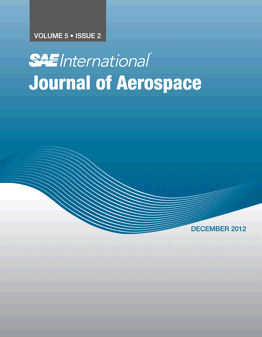
SAE International Journal of Aerospace
Pioneering Insights in Aerospace Engineering.The SAE International Journal of Aerospace, published by SAE International, serves as a critical platform for innovative research and advancements within the field of aerospace engineering. With an ISSN of 1946-3855 and an E-ISSN of 1946-3901, this esteemed journal contributes significantly to the body of knowledge in the aerospace sector, boasting a convergence span from 2008 to 2024. While currently categorized in Q4 of Aerospace Engineering, the journal is dedicated to fostering emerging ideas, technologies, and methodologies that could eventually elevate its standing. Although it does not offer open access options, the journal ensures wide dissemination of its well-curated articles to aid researchers, professionals, and students in staying abreast of the latest developments and trends. Given its distinct focus and commitment to the aerospace community, the SAE International Journal of Aerospace plays an essential role in bridging theory and practice, making it a valuable resource for those within this vital and evolving field.