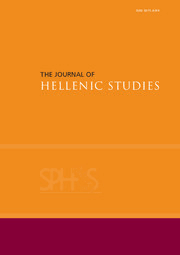
JOURNAL OF HELLENIC STUDIES
Scope & Guideline
Exploring the Depths of Ancient Greek Heritage
Introduction
Aims and Scopes
- Ancient Greek Literature:
The journal frequently publishes studies on classical texts, including works by Homer, Thucydides, and Aristophanes. It delves into their themes, narrative techniques, and cultural significance, fostering critical discourse on Greek literary traditions. - Philosophy and Ethics:
Philosophical inquiries form a core focus, examining the contributions of figures like Plato, Aristotle, and Epicurus. Articles often explore ethical frameworks and philosophical dialogues, highlighting their relevance to modern thought. - Archaeology and Material Culture:
Research on archaeological findings and material culture is prevalent, linking physical artifacts to historical narratives. This area includes studies on inscriptions, pottery, and ancient sites, revealing insights into daily life and societal structures. - Cultural Studies and Reception:
The journal also emphasizes the reception of ancient Greek culture in later periods, analyzing how classical themes resonate in contemporary contexts. This includes discussions of modern adaptations and interpretations of ancient texts. - Interdisciplinary Approaches:
The Journal of Hellenic Studies encourages interdisciplinary research, integrating insights from history, literature, archaeology, and philosophy to provide comprehensive analyses of Hellenic subjects.
Trending and Emerging
- Intersection of Myth and Modern Experience:
There is a growing interest in exploring how ancient myths and narratives relate to contemporary societal issues, as seen in studies that bridge ancient texts with modern experiences and interpretations. - Digital Humanities and Textual Analysis:
The integration of digital tools and methodologies in textual analysis is becoming increasingly prominent, allowing for new insights and interpretations of ancient texts through quantitative and qualitative approaches. - Cultural Plurality and Cross-Cultural Interactions:
Research that examines the interactions between Greek culture and other ancient civilizations is on the rise, reflecting a broader interest in cultural exchange and the complexities of identity in the ancient world. - Environmental Perspectives in Ancient Studies:
There is a notable trend towards incorporating environmental themes into Hellenic studies, analyzing how ancient Greeks interacted with their environment and how these interactions inform contemporary discussions on sustainability. - Gender Studies in Ancient Contexts:
The journal is increasingly publishing works that focus on gender dynamics within ancient Greek society, exploring the roles and representations of women and their implications for understanding ancient cultures.
Declining or Waning
- Traditional Historical Narratives:
The emphasis on straightforward historical accounts has waned, as scholars increasingly seek to challenge and reinterpret established narratives, favoring critical and theoretical frameworks instead. - Textual Analysis of Lesser-Known Works:
There is a noticeable decrease in studies centered on less prominent ancient texts or authors, as contemporary scholarship tends to prioritize more significant figures and works that resonate with current academic discussions. - Monographic Studies:
The journal has seen a decrease in standalone monographs focused on single topics or texts, shifting towards thematic collections or interdisciplinary studies that reflect broader trends and connections.
Similar Journals
Schole-Filosofskoe Antikovedenie i Klassicheskaya Traditsiya-Schole-Ancient Philosophy and the Classical Tradition
Connecting Past Insights with Present PerspectivesSchole-Filosofskoe Antikovedenie i Klassicheskaya Traditsiya-Schole-Ancient Philosophy and the Classical Tradition is a peer-reviewed academic journal published by NOVOSIBIRSK STATE UNIV, specializing in the fields of Classics and Philosophy. Since its establishment, and particularly with its transition to Open Access in 2007, this journal has become a significant platform for scholarly discourse on ancient philosophical thought and its enduring influence on the classical tradition. The journal's commitment to high academic standards is evidenced by its impressive category quartiles, ranking Q1 in Classics and Q2 in Philosophy as of 2023. With a Scopus rank of #70/170 in Classics and #462/806 in Philosophy, Schole serves as an essential resource for researchers, professionals, and students interested in the intersections of ancient thought and contemporary philosophical inquiry. The journal is based in the Russian Federation and is dedicated to fostering a global dialogue on subjects that shape our understanding of ancient and classical ideas.

Antichthon
Bridging Past and Present in Classical ResearchAntichthon, published by Cambridge University Press, stands as a vital platform within the field of Classics. Established in 1986, the journal has evolved to encompass scholarly contributions that explore various dimensions of classical studies, including literature, history, and cultural studies. With its rich publication history extending from 2011 to 2023, Antichthon boasts a commendable Q2 ranking in the latest 2023 Category Quartiles for Classics, reflecting its significant impact in the academic community. Although the journal does not offer an Open Access option, it continues to engage researchers and academics with its curated selection of articles, reviews, and critical insights. Located at the Edinburgh Building, Shaftesbury Rd, Cambridge, England, this journal remains an essential resource for both established scholars and students aiming to deepen their understanding of classical antiquity and its enduring relevance.

Ancient Civilizations from Scythia to Siberia
Advancing Knowledge of Eurasia's Historical HeritageAncient Civilizations from Scythia to Siberia, published by BRILL, is a pivotal journal dedicated to the exploration and scholarly analysis of ancient cultures in Eurasia, with a focus spanning from the Scythian tribes to the Siberian territories. With an ISSN of 0929-077X and an E-ISSN of 1570-0577, this journal plays a significant role in the fields of Archeology, Classics, and History, holding esteemed rankings in Q3 and Q1 categories, thus affirming its status in the academic community. Covering a wide temporal range from 1995 to 2024, the journal aims to provide a comprehensive platform for researchers and students to disseminate their findings and foster collaborative discourse. With impact rankings in the 86th and 75th percentiles for Classics and History, respectively, it is recognized for its high-quality contributions that advance knowledge in these areas. Although currently not an open-access journal, it offers various options for accessing its rich content. By bridging gaps in historical understanding and engaging with the complexities of ancient societies, Ancient Civilizations from Scythia to Siberia remains an essential resource for those passionate about uncovering the narratives of our past.
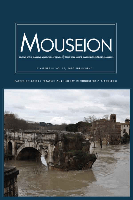
Mouseion-Journal of the Classical Association of Canada
Fostering interdisciplinary dialogue in Classics.Mouseion - Journal of the Classical Association of Canada, published by University of Toronto Press Inc, stands as a vital academic resource in the fields of Classics and Archaeology. With a focus on promoting scholarly discourse, this journal provides a platform for original research, critical reviews, and interdisciplinary studies that engage with ancient cultures and their legacies. Since its convergence in 2019, Mouseion has quickly established itself within the academic community, achieving a commendable Q1 ranking in Classics and Q2 in both Archaeology categories in 2023, showcasing its commitment to excellence. While not an open-access journal, it is positioned among the top 29% of classics journals, reflecting its impact and the quality of publications. Nestled within Canada, this journal addresses a global audience of researchers, professionals, and students dedicated to the exploration of the classical world, and it endeavors to contribute significantly to the scholarly understanding of cultural heritage.

QUADERNI URBINATI DI CULTURA CLASSICA
Exploring the Rich Tapestry of Classics and LinguisticsQUADERNI URBINATI DI CULTURA CLASSICA is a distinguished academic journal dedicated to the interdisciplinary exploration of Classics, Linguistics, and Literary Theory. Published by ACCADEMIA EDITORIALE PISA-ROMA, this journal serves as a vital scholarly platform for researchers and professionals alike, facilitating in-depth discussions and analyses that contribute to these evolving fields. With an ISSN of 0033-4987 and an E-ISSN of 1724-1901, it boasts a robust Scopus ranking, placing it within the second quartile in Classics and the third quartile in related disciplines as of 2023. Although it is not an open-access journal, QUADERNI URBINATI DI CULTURA CLASSICA remains essential for those engaged in the study of language, literature, and classical cultures, encouraging scholarly exchange and innovation from its base in Rome, Italy. Researchers and students will find valuable insights and methodologies within its pages, making it a key resource for fostering academic growth and understanding.
Emerita
Fostering Scholarly Excellence in Language and LiteratureEmerita is a distinguished academic journal published by CONSEJO SUPERIOR INVESTIGACIONES CIENTIFICAS-CSIC in Spain, focusing on the fields of Classics and Linguistics. With its roots dating back to 1971, Emerita has established itself as an open-access publication since 1974, ensuring broad accessibility for researchers, professionals, and students alike. This journal's commitment to scholarly excellence is reflected in its 2023 Q2 classification in Classics and Q3 in Linguistics and Language, making it a vital resource for those engaged in classical studies and language research. In the Scopus rankings, it holds respectable standings, including Rank #76/170 in Arts and Humanities Classics and Rank #695/1088 in Language and Linguistics, demonstrating its significant presence and influence within these academic disciplines. The editorial office is located at Editorial CSIC, C/VITRUVIO 8, 28006 MADRID, SPAIN, where it continues to curate important research that contributes to the understanding and appreciation of classical literature and linguistic theory.

Acta Classica
Bridging the Past and Present through Scholarly DiscourseActa Classica is a distinguished journal dedicated to the field of Classics, published by the Department of English in Classical Languages at the University of Free State, South Africa. With its ISSN 0065-1141 and E-ISSN 2227-538X, this journal has been a pivotal platform for scholarly discourse since its inception in 1973, notably converging and evolving significantly in its content from 2010 to 2023. Although it currently holds a Q4 classification in Classics, its Scopus ranking at #88 out of 170 in the Arts and Humanities reflects its relevance in academic circles, with a 47th percentile standing. The journal aims to publish high-quality research articles, reviews, and critical essays that not only explore the rich tapestry of ancient civilizations but also contribute to contemporary understandings of classical languages and literature. While its content is not openly accessible, Acta Classica remains an essential resource for researchers, professionals, and students who seek to deepen their knowledge and engagement with Classical studies.
AMERICAN JOURNAL OF PHILOLOGY
Cultivating Critical Thought in Literature and LanguageThe American Journal of Philology is a premier scholarly publication dedicated to the field of classics, literature, cultural studies, and linguistics. Published by Johns Hopkins University Press, this esteemed journal boasts an impressive reputation, reflected in its high impact factor and robust rankings—achieving a prestigious Q1 classification in Classics and Literary Theory, while securing a Q2 in Cultural Studies and Linguistics for 2023. The journal provides a rigorous platform for original research, critical essays, and innovative inquiries, contributing significantly to contemporary discourse in the humanities. Its comprehensive scope encompasses interdisciplinary studies, making it a vital resource for researchers, professionals, and students alike. Although it does not operate under an open-access model, the journal ensures that its content remains accessible to a wide audience through institutional subscriptions. With a publication history dating from 1972 to the present, the American Journal of Philology continues to be pivotal in fostering academic excellence and enriching the understanding of philological studies.
Transactions of the American Philological Association
Championing Rigorous Research in Classics and LanguageTransactions of the American Philological Association, published by Johns Hopkins University Press, is a leading academic journal dedicated to advancing the study of classics, linguistics, and literary theory. With an impressive impact factor solidified by its 2023 rankings—Q1 in Classics and Literature and Literary Theory, and Q2 in Linguistics and Language—this journal stands as a pivotal resource for scholars and practitioners in the humanities. The journal boasts a rich history of published research dating back to 2002, providing insights that address both contemporary and historical inquiries within its fields of study. Although it does not follow an Open Access model, its rigorous peer-review process ensures high-quality contributions that are essential for those engaged in advanced research. With an extensive reach, reflected in its robust Scopus rankings, Transactions of the American Philological Association plays an indispensable role in shaping the discourse for academics and students alike.

LATOMUS
Delving into the Legacy of Language and CultureLATOMUS is a distinguished academic journal published by Peeters in Belgium, offering a rich platform for scholarly discourse in the fields of Classics, Archaeology, History, Literature, and Linguistics. With the ISSN 0023-8856 and E-ISSN 2294-4427, it has established itself as an essential resource for researchers and professionals seeking to contribute to and engage with critical debates within these disciplines. While not an Open Access journal, LATOMUS is recognized for its robust impact in the academic community, achieving Q2 and Q3 rankings across various categories, including Classics and Archaeology, according to the latest 2023 evaluations. The journal publishes articles that span a range of topics relevant to antiquity and its influences, making it a vital resource for those exploring historical narratives and linguistic developments. As a publication dedicated to advancing scholarly knowledge since its inception in 1971, LATOMUS continues to serve as a cornerstone of academic inquiry within the humanities, promoting intellectual engagement and disseminating high-quality research in its converged years from 1971 to 1974, 1980, and from 2002 to the present.