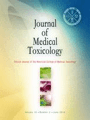
Journal of Medical Toxicology
Scope & Guideline
Unraveling the Complexities of Toxic Exposures
Introduction
Aims and Scopes
- Clinical Management of Toxic Exposures:
The journal emphasizes the clinical aspects of managing toxic exposures, including case reports and clinical guidelines that provide insights into best practices and therapeutic interventions. - Research and Development in Toxicology:
There is a strong focus on original research that investigates the mechanisms of toxicity, pharmacokinetics, and the development of new therapeutic strategies, including antidotes and treatment protocols. - Epidemiology and Public Health:
The journal addresses public health issues related to toxic exposures, including the epidemiology of poisonings and the impact of substance use on community health. - Education and Professional Development:
A unique contribution of the journal is its dedication to educational initiatives, such as curriculum development for medical toxicology training and mentorship programs. - Policy and Advocacy in Toxicology:
The journal engages in discussions surrounding policy implications and advocacy for improved practices in medical toxicology, including responses to emerging public health crises.
Trending and Emerging
- Impact of Novel Psychoactive Substances (NPS):
There is an increasing focus on the clinical implications and public health challenges posed by novel psychoactive substances, reflecting the changing landscape of drug use and associated toxicities. - Integration of Technology in Toxicology:
Emerging themes include the use of digital tools, such as mobile applications for toxic plant identification and data analytics in toxicology research, highlighting a trend towards technological integration in clinical practice. - Substance Use Disorder and Opioid Crisis:
Research addressing the opioid crisis and substance use disorders has gained significant traction, with a focus on clinical management strategies and the role of medical toxicologists in these contexts. - Diversity and Inclusion in Toxicology:
The journal is increasingly addressing issues related to diversity, equity, and inclusion within the field, as evidenced by publications that advocate for diverse representation in medical toxicology. - Environmental and Public Health Toxicology:
Emerging themes also include the exploration of environmental toxicology and its public health implications, particularly in light of increasing awareness of pollution and its health effects.
Declining or Waning
- Traditional Toxicology Case Reports:
Although case reports remain a staple in the journal, there is a noticeable decline in the publication of traditional case reports, possibly due to a shift towards more comprehensive studies and data-driven research. - Focus on Rare Toxic Substances:
Research on rare toxic substances has decreased, as attention has shifted towards more prevalent and emerging toxicological issues, particularly in the context of public health. - Historical Toxicology Practices:
There appears to be a waning interest in historical analyses of toxicology practices and case studies, as current research emphasizes contemporary challenges and innovative solutions. - Basic Research without Clinical Application:
Basic science research that lacks direct clinical relevance may be less represented as the journal prioritizes studies that have immediate implications for clinical practice and patient care.
Similar Journals

Medeniyet Medical Journal
Empowering healthcare insights for a healthier future.Medeniyet Medical Journal, published by GALENOS PUBL HOUSE, is a prominent open access journal based in Turkey, dedicated to advancing research and education in the field of medicine. Since its inception in 2001, this journal has provided a platform for sharing innovative research, case studies, and reviews across various aspects of general medicine, garnering a Q3 ranking in the 2023 category of Medicine (miscellaneous) with an impressive position in the Scopus ranks. With an essential focus on bridging theoretical and practical insights, Medeniyet Medical Journal aims to foster collaboration among researchers, healthcare professionals, and students globally. The journal's commitment to open access ensures that vital medical knowledge is readily available to all, enhancing global health literacy and enabling informed decision-making in clinical practices. Researchers and professionals are encouraged to contribute to this dynamic space and engage with a rapidly growing body of work that is critical to the advancement of healthcare.

Cyprus Journal of Medical Sciences
Uncovering breakthroughs in medical science and practice.Welcome to the Cyprus Journal of Medical Sciences, a distinguished publication dedicated to the advancement of medical knowledge and research. Published by GALENOS PUBL HOUSE, this journal endeavors to uphold the highest standards of scientific inquiry in the medical field. With its ISSN 2149-7893 and E-ISSN 2536-507X, the journal serves as an essential resource for researchers, healthcare professionals, and students seeking to stay abreast of innovative findings and clinical practices. Although currently not listed under Open Access, this journal prioritizes rigorous peer review and the dissemination of impactful research aimed at driving improvements in medical science. The journal welcomes submissions that cover diverse areas within the medical realm, contributing to a more profound understanding of healthcare challenges and solutions. Join us in exploring the frontiers of medical sciences and contributing to a healthier future.
DRUG METABOLISM REVIEWS
Unraveling the complexities of drug interactions.Drug Metabolism Reviews is a premier journal dedicated to the dissemination of scientific research and reviews in the field of pharmacology, toxicology, and pharmaceutics, published by Taylor & Francis Ltd. With its inception dating back to 1972, this journal has consistently provided an authoritative platform for scholars and professionals from diverse disciplines to explore the intricate mechanisms of drug metabolism and their implications for therapeutic applications. The journal enjoys commendable rankings, placing in the Q2 quartile for Pharmacology (medical) and the Q1 quartile in the miscellaneous subfield, signaling its significant impact within the community. Notably, it is recognized within the top 96th percentile in General Pharmacology, Toxicology and Pharmaceutics, affirming its esteemed position among academic publications. Although it operates under a subscription model, Drug Metabolism Reviews remains an essential resource for researchers, professionals, and students seeking to deepen their understanding of drug interactions, safety, and efficacy. The insights shared within its pages contribute vital knowledge to the global discourse on drug development and personalized medicine.

Kuwait Medical Journal
Advancing medical knowledge in the Gulf and beyond.Kuwait Medical Journal is a prominent scholarly publication dedicated to advancing medical knowledge and practice in the Gulf region and beyond. Published by the Kuwait Medical Association, this journal has been a crucial platform for disseminating research findings since its inception in 1973. Despite its discontinuation in Scopus coverage after 1990, it remains significant within the Q4 category in Medicine (miscellaneous), serving as a valuable resource for healthcare professionals, researchers, and students alike. The journal is based in Kuwait and aims to foster academic dialogue by featuring original research articles, reviews, and case studies that highlight the evolving landscape of medical science and practice. While currently not an open-access platform, the Kuwait Medical Journal continues to uphold the integrity and quality of medical research, contributing to the broader discourse in healthcare.

European Journal of Therapeutics
Empowering healthcare through evidence-based therapies.European Journal of Therapeutics is a distinguished journal dedicated to advancing the field of therapeutic sciences through high-quality research and innovative clinical practice. Published by Pera Yayincilik Hizmetleri, this interdisciplinary journal aims to facilitate knowledge dissemination in areas such as pharmacology, clinical medicine, and public health, thereby supporting both researchers and practitioners in improving therapeutic outcomes. Although the journal operates under a subscription model, its commitment to rigorous peer review ensures that published articles reflect the latest advancements and methodologies. With a growing emphasis on evidence-based therapies, the European Journal of Therapeutics serves as a vital platform for dialogue among healthcare professionals and researchers, enhancing the understanding of therapeutic interventions on a global scale. It welcomes contributions ranging from original research to review articles, making it an essential resource for those seeking to enrich their knowledge and influence practice in therapeutic approaches.

Open Veterinary Journal
Fostering Innovation in Veterinary Medicine, One Article at a TimeOpen Veterinary Journal, published by the University of Tripoli, Faculty of Veterinary Medicine, offers a vital platform for the dissemination of research in the field of veterinary sciences. With an ISSN of 2226-4485 and an E-ISSN of 2218-6050, this journal has been committed to open access since 2011, allowing for unfettered access to its content, which ensures that researchers, practitioners, and students worldwide can benefit from the latest veterinary research findings. Operating from Libya, it has garnered an important position within the academic community, achieving a Q2 quartile ranking in the scope of veterinary (miscellaneous) and maintaining a Scopus rank of 104 out of 194 within the general veterinary category, indicating its growing influence and reach. The journal focuses on a diverse array of topics pertinent to contemporary veterinary practice, aiming to bridge gaps in knowledge and foster collaboration among scholars and practitioners. As it continues to publish original research and reviews, Open Veterinary Journal stands as a crucial resource for advancing veterinary medicine, supporting innovative research, and enhancing educational outcomes within the profession.

International Journal of Medical Toxicology and Forensic Medicine
Exploring Critical Issues in Toxicology and Forensic ScienceInternational Journal of Medical Toxicology and Forensic Medicine, published by Shaheed Beheshti Medical University of Medical Sciences & Health Services, is a pioneering platform dedicated to advancing knowledge within the critical fields of toxicology and forensic medicine. Established as an Open Access journal since 2011, it ensures wide dissemination of research findings, catering to a global audience of researchers, healthcare professionals, and students. With an ISSN of 2251-8762 and an E-ISSN of 2251-8770, the journal covers a diverse range of topics relevant to the medical community, albeit being categorized as Q4 in both Pathology and Forensic Medicine and Toxicology in 2023, indicating emerging significance in these disciplines. Geographically based in Tehran, Iran, it aspires to bridge gaps in scientific research and practice, particularly in regions where such expertise is critical. The journal welcomes submissions that investigate pressing issues in medical toxicology and forensic science, fostering an interdisciplinary dialogue essential for innovative solutions and improved public health outcomes.
CELL BIOLOGY AND TOXICOLOGY
Connecting Cell Biology with Toxicological InsightsCELL BIOLOGY AND TOXICOLOGY, published by SPRINGER, stands as a vital journal within the realms of cell biology and toxicology, boasting an impressive 2023 Q1 ranking in its fields, alongside robust Scopus rankings placing it in the top 11th percentile for Toxicology and the 22nd for Health, Toxicology and Mutagenesis. With an ISSN of 0742-2091 and an E-ISSN of 1573-6822, the journal has been a cornerstone of scientific discourse since its inception in 1984, and will continue to converge innovative research until 2024. The journal focuses on the interplay between cellular mechanisms and toxicological implications, making it an essential resource for researchers, healthcare professionals, and students keen on advancing their understanding of these critical areas. Although it does not offer open access, its high impact and prestigious standing ensure that its publications reach a wide audience dedicated to significant advancements in the life sciences.
Cardiovascular Toxicology
Elevating the standard of research in cardiovascular toxicology.Cardiovascular Toxicology is a pivotal journal dedicated to advancing the understanding of the interplay between toxic substances and cardiovascular health. Published by HUMANA PRESS INC, this journal serves as a critical resource for researchers and professionals in the fields of cardiology, toxicology, and molecular biology. With an ISSN of 1530-7905 and an E-ISSN of 1559-0259, it has established itself as a key source of high-quality research since its inception in 2001, continuing to contribute valuable insights through 2024. The journal enjoys a robust reputation, evidenced by its Q2 ranking in both Cardiology and Cardiovascular Medicine and Toxicology, along with a Q3 ranking in Molecular Biology for 2023. With Scopus rankings placing it in the 80th percentile for Cardiology and 71st for Toxicology, Cardiovascular Toxicology attracts submissions that reflect cutting-edge research and innovative methodologies. Notably, the journal prioritizes stringent peer review and scholarly rigor, ensuring that published works significantly impact the understanding of cardiovascular responses to various toxic agents. Though not an open-access journal, its content remains highly sought after in a diverse scholarly community, making it indispensable for those dedicated to enhancing cardiovascular disease prevention, diagnosis, and treatment through toxicological insights.
Toxicologie Analytique et Clinique
Empowering Insights in Analytical and Clinical ToxicologyToxicologie Analytique et Clinique is a distinguished journal published by ELSEVIER MASSON SAS EDITEUR, specializing in the ever-evolving fields of toxicology and clinical analysis. With its ISSN number 2352-0078 and E-ISSN 2352-0086, this journal has been contributing to the scientific dialogue since its inception in 2014, with a converged publication timeline extending to 2024. Despite its current standing in the Q4 category for both Health, Toxicology and Mutagenesis, and Toxicology in the 2023 metrics, as indicated by its rankings on Scopus, Toxicologie Analytique et Clinique remains a crucial platform for disseminating vital research within these domains. The journal's focus on analytical and clinical toxicology makes it an invaluable resource for researchers, practitioners, and students, seeking to enhance their understanding and methodologies in toxicological studies. As a vital contributor to the academic landscape, Toxicologie Analytique et Clinique aims to provide a rich repository of knowledge that promotes innovation and safety in clinical practices and environmental science.