
Journal for Multicultural Education
Scope & Guideline
Advancing multicultural understanding through education.
Introduction
Aims and Scopes
- Multicultural Education Research:
The journal emphasizes research on multicultural education, exploring how diverse cultural backgrounds influence teaching and learning processes. - Culturally Responsive Pedagogy:
It promotes practices that recognize and incorporate students' cultural references in all aspects of learning, aiming for educational equity. - Social Justice in Education:
The journal is dedicated to examining social justice issues within educational contexts, advocating for systemic changes that address inequality. - Teacher Education and Development:
Research on the preparation and ongoing professional development of educators in multicultural settings is a core focus, particularly how they navigate diversity in classrooms. - Community Engagement and Family Involvement:
The journal highlights the importance of community and family engagement in education, particularly in multicultural contexts, fostering connections that enhance student learning. - Critical Pedagogies:
It explores critical theories and pedagogies that challenge traditional educational practices and promote transformative learning experiences.
Trending and Emerging
- Impact of COVID-19 on Multicultural Education:
Recent publications increasingly address the implications of the COVID-19 pandemic on multicultural education, focusing on remote learning, digital divides, and the unique challenges faced by diverse populations. - Critical Race Theory and Education:
There is a growing interest in integrating critical race theory within educational practices, exploring how race and identity influence learning experiences and teacher-student dynamics. - Identity and Intersectionality:
Emerging themes focus on the complexities of identity, particularly how intersecting identities (e.g., race, gender, immigration status) affect educational experiences and outcomes. - Global Perspectives on Multicultural Education:
The journal is increasingly publishing studies that examine multicultural education from a global viewpoint, addressing issues faced by immigrant communities and international students. - Digital Literacy and Multicultural Education:
A trend towards exploring digital literacy in multicultural contexts, including how technology can be leveraged to enhance learning and engagement among diverse student populations.
Declining or Waning
- Traditional Multicultural Education Models:
There is a noticeable decline in the emphasis on traditional models of multicultural education that do not incorporate critical perspectives or address systemic inequalities. - Focus on Single-Culture Studies:
Research centered solely on individual cultural experiences without intersectional analysis is becoming less frequent, as the journal shifts towards more complex, multifaceted explorations of identity. - Historical Analysis of Multicultural Education:
Papers focusing exclusively on historical perspectives of multicultural education are less prevalent, indicating a move towards contemporary issues and practical applications. - Standardized Testing and Multicultural Education:
Discussion around standardized testing as a primary focus within multicultural education contexts has waned, suggesting a shift towards more holistic and inclusive assessment methods.
Similar Journals
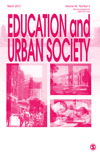
EDUCATION AND URBAN SOCIETY
Connecting Scholars to Urban Educational DynamicsEDUCATION AND URBAN SOCIETY is a prestigious academic journal published by SAGE PUBLICATIONS INC, focusing on the intersection of education and urbanization, integral to understanding contemporary societal dynamics. Since its inception in 1968, the journal has maintained a commitment to publishing high-quality research that informs policy, practice, and scholarship within the fields of Education and Urban Studies. With a notable impact factor reflected in its Q2 rankings for both categories in 2023 and a strong standing in Scopus rankings, the journal serves as a critical platform for researchers and practitioners seeking to address the complex challenges facing urban education systems. Although it does not currently offer open access, the journal ensures wide dissemination of knowledge through its rigorous peer-reviewed processes, making it an essential resource for anyone involved in the study or practice of education in urban contexts. For scholars aiming to explore the revolutionary changes in these fields leading up to 2024 and beyond, EDUCATION AND URBAN SOCIETY continues to be a vital source of innovative research and discourse.

ZEITSCHRIFT FUR PADAGOGIK
Bridging the gap between education and child well-being.ZEITSCHRIFT FUR PADAGOGIK is a pivotal academic journal published by VERLAG JULIUS BELTZ that focuses on education and child health, making it a significant resource for researchers, professionals, and students interested in the intersections of pedagogy and pediatric health. Although the journal is not currently Open Access, it has provided a vast collection of scholarly articles and insights from 1996 until 2019, with additional coverage in 2021. The journal is recognized for its contributions to the field, holding a Q4 quartile ranking in both Education and Pediatrics, Perinatology, and Child Health categories as of 2023, reflecting its dedication to promoting understanding in these areas. Despite its more modest rank—887th in Education and 187th in Pediatrics—among a competitive cohort, the journal plays a crucial role in fostering academic discourse and providing a platform for innovative research. Located in Weinheim, Germany, ZEITSCHRIFT FUR PADAGOGIK continues to be a valuable asset for educators, health professionals, and students alike, promoting interdisciplinary collaboration and the advancement of knowledge in educational practices and child health.
AUSTRALIAN EDUCATIONAL RESEARCHER
Shaping Tomorrow’s Education Through Rigorous ResearchAustralian Educational Researcher, an esteemed publication within the field of education, is published by Springer and serves as a vital platform for the dissemination of high-quality research in educational practice and policy. With an impressive Q1 ranking in the 2023 category of Education and a remarkable Scopus rank placing it in the top 20% of its field, this journal provides a prestigious venue for scholars aiming to influence educational outcomes and reforms. Spanning over three decades, from 1985 to 1996 and then again from 2003 to 2024, the journal features a diverse array of research articles that tackle critical issues in education, catering to a wide audience of researchers, educators, and policymakers. Potential contributors and readers will appreciate its commitment to advancing knowledge and improving educational practices, further fostering a community dedicated to educational excellence.
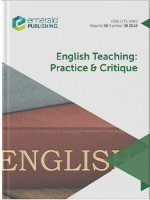
English Teaching-Practice and Critique
Cultivating Knowledge and Innovation in English EducationEnglish Teaching-Practice and Critique is an esteemed journal published by Emerald Group Publishing Ltd, focusing on the interdisciplinary fields of Education and Linguistics. With a commitment to advancing knowledge and practice in English language teaching, the journal offers a platform for innovative research, critical reflections, and practical insights that are vital for educators, researchers, and students alike. The journal has established itself in the academic community, achieving a Q3 ranking in Education and a prestigious Q1 ranking in Linguistics and Language as of 2023, highlighting its impact and relevance. Although not an open-access journal, its curated content remains accessible to a global audience, facilitating meaningful discourse and development in English language education. The journal spans articles from 2008 to 2014 and 2016 to 2024, making it a valuable resource for ongoing scholarly dialogue and pedagogical advancement. It is particularly recognized within Scopus rankings, standing at the 76th percentile in Arts and Humanities as well as the 74th percentile in Social Sciences, underscoring its significance and standing in these domains.
Education 3-13
Bridging theory and practice in early educational development.Education 3-13, published by Routledge Journals, Taylor & Francis Ltd, stands as a vital resource in the fields of education and life-span studies. With an ISSN of 0300-4279 and an E-ISSN of 1475-7575, this esteemed journal has consistently disseminated high-quality research since its inception in 1973, with coverage extending through to 2024. It boasts a respectable Q2 quartile ranking in Education and a Q3 ranking in Life-span and Life-course Studies as of 2023, reflecting its influence and relevance within the academic community. With its Scopus ranks showing it placed in the 58th percentile in Education, and the 40th percentile in Life-span and Life-course Studies, Education 3-13 is pivotal for scholars and practitioners aiming to explore innovative pedagogical approaches and the implications of developmental research. This journal promotes scholarly dialogue and showcases cutting-edge studies that contribute to the advancement of educational practices, making it an indispensable reference for researchers, educators, and students alike.

In Education
Elevating educational discourse with diverse perspectives.In Education is a prestigious open-access journal published by the Faculty of Education at the University of Regina, dedicated to advancing research in the field of education. With its ISSN 1927-6117, the journal has been a vital platform for scholarly work since 2009, providing a significant avenue for educators, researchers, and practitioners to share innovative ideas and research findings. Committed to fostering a rich dialogue on educational practices and policies, In Education publishes a diverse range of articles that cover theoretical and empirical research, ensuring a comprehensive exploration of contemporary educational issues. By encouraging open access, the journal promotes widespread dissemination of knowledge, facilitating greater accessibility for students and professionals alike. As a contributor to the evolving landscape of educational research, In Education serves as an essential resource for those aiming to transform educational practices through informed, evidence-based insights.
Curriculum Studies in Health and Physical Education
Exploring the Synergy of Health, Education, and Active Living.Curriculum Studies in Health and Physical Education, published by Taylor & Francis Ltd, is a leading academic journal that focuses on the intersection of health, physical education, and curriculum development. Since its inception in 2018, this journal has dedicated itself to advancing knowledge and practices within the fields of education, orthopedics, and sports medicine, achieving impressive quartile rankings in 2023 (Q2) across these disciplines. With its ISSN 2574-2981 and E-ISSN 2574-299X, it has established a robust academic footprint, ranking #533 in Social Sciences - Education and #93 in Health Professions - Physical Therapy as per Scopus metrics. This journal offers an essential platform for researchers, educators, and practitioners to disseminate cutting-edge research while fostering collaborative dialogue in the pursuit of enhanced health and physical education curricula. The journal's commitment to open access ensures that significant contributions to the field remain accessible to a global audience, promoting widespread knowledge-sharing and innovative solutions in health and physical education.

Journal of Education and Future-Egitim ve Gelecek Dergisi
Cultivating interdisciplinary approaches to learning.Journal of Education and Future - Egitim ve Gelecek Dergisi is a prominent academic journal dedicated to advancing knowledge and research in the field of education. Published by NESIBE AYDIN EDUCATION INST, this journal provides a platform for innovative educational theories, practices, and policies that shape the future of learning and teaching. With an ISSN of 2146-8249, the journal aims to disseminate high-quality research and insights to researchers, professionals, and students interested in the transformative potential of education. Although currently not indexed in major databases like Scopus, the journal strives to establish its impact in the scholarly community by fostering collaboration and dialogue among educators and thought leaders. The focus on interdisciplinary studies within the realm of education positions it as a vital resource for those looking to engage with emerging trends and challenges in the educational landscape. Serving as a conduit for new ideas, the journal is dedicated to fostering an inclusive and reflective discourse around future educational practices.

TEACHERS COLLEGE RECORD
Connecting Research and Practice for Educational AdvancementTeachers College Record is a prestigious academic journal in the field of education, published by SAGE Publications Inc., that has been a leading resource since its inception in 1976. This journal serves as a platform for scholarly articles, research studies, and critical analyses that inform and advance the understanding of educational theory, policy, and practice. With an impressive Scopus Rank placing it at #490 out of 1543 in the Social Sciences - Education category and a Q2 quartile ranking for 2023, it is recognized for its rigorous peer-review process and significant contributions to the field. Researchers, educators, and students can expect to find cutting-edge discussions on contemporary issues, innovative methodologies, and evidence-based practices. Although the journal does not currently offer open access, it remains a vital asset for those dedicated to enhancing educational outcomes and fostering intellectual discourse.

Multicultural Education Review
Cultivating Understanding in Multicultural Learning EnvironmentsWelcome to the Multicultural Education Review, an esteemed academic journal published by ROUTLEDGE JOURNALS, TAYLOR & FRANCIS LTD. As a prominent resource in the fields of Anthropology and Education, this journal aims to foster the understanding of multicultural perspectives in educational practices. With a robust impact factor and recognition in the Q1 and Q2 quartiles across its categories, the journal offers a vital platform for researchers, educators, and students to share innovative studies and discussions related to multicultural education. Though operating under a subscription model, the journal's content is pivotal for advancing scholarship and dialogue in diverse educational contexts. Since its inception in 2009, the journal continues to shape the discourse on inclusivity, equity, and cultural diversity, ensuring eligibility for a broad readership keen on addressing contemporary educational challenges.