Jurnal Penelitian dan Pembelajaran IPA
Scope & Guideline
Unlocking Knowledge for Tomorrow's Scientists
Introduction
Aims and Scopes
- Integration of Technology in Science Education:
The journal emphasizes the incorporation of digital tools and resources, such as e-modules and mobile applications, to enhance science teaching and learning, reflecting the growing importance of technology in education. - STEM Education and Practices:
A significant focus is on STEM (Science, Technology, Engineering, Mathematics) education, exploring various pedagogical approaches and their effectiveness in fostering critical thinking and problem-solving skills among students. - Teacher Preparation and Professional Development:
Research related to the experiences and competencies of pre-service and in-service science teachers is prevalent, addressing challenges and opportunities in teacher training and instructional practices. - Student-Centered Learning Approaches:
The journal promotes methodologies that engage students actively in their learning processes, such as inquiry-based learning, project-based learning, and community-based education, to enhance scientific literacy and critical thinking. - Environmental Education and Awareness:
There is a consistent focus on integrating environmental issues into science curriculum, emphasizing the importance of fostering eco-literacy and sustainable practices among students.
Trending and Emerging
- E-Books and Digital Learning Resources:
The rise of e-books and digital resources in science education is a growing theme, showcasing innovative ways to engage students and enhance learning experiences through technology. - Critical Thinking and Problem-Solving Skills Development:
There is an increasing emphasis on fostering critical thinking and problem-solving abilities in students through various instructional approaches, particularly in STEM education. - Impact of COVID-19 on Science Education:
Research exploring the effects of the COVID-19 pandemic on teaching methodologies and student engagement is prevalent, reflecting the need to adapt to new educational challenges. - Culturally Relevant and Context-Based Learning:
Emerging studies focus on integrating local culture and context into science education, promoting relevance and engagement in learning through culturally responsive teaching practices. - Virtual and Remote Learning Experiences:
The exploration of virtual internships and remote learning strategies for science teachers and students is gaining traction, highlighting the shift towards online education in response to contemporary challenges.
Declining or Waning
- Traditional Lecture-Based Teaching Methods:
There is a noticeable decrease in publications centered on conventional teaching methods, suggesting a shift towards more interactive and student-centered approaches in science education. - General Science Content Knowledge Assessments:
Research focusing solely on assessments of general science content knowledge without a specific pedagogical or technological context is less prevalent, indicating a trend towards more integrated and applied assessment strategies. - Basic Science Conceptual Understanding:
While foundational understanding remains important, there has been a decline in studies exclusively addressing basic science concept comprehension, with a move towards more complex, applied learning contexts.
Similar Journals
Independent Journal of Teaching and Learning
Connecting Researchers and Practitioners for Educational Growth.Independent Journal of Teaching and Learning is a prominent publication dedicated to advancing the discourse within the field of education. Published by the Independent Institute of Education (IIE), this journal serves as a platform for researchers, educators, and practitioners to disseminate their findings and innovative practices related to teaching and learning methodologies. With an ISSN of 1818-9687, the journal emphasizes open access to foster widespread knowledge sharing and accessibility among its readers. The journal is strategically positioned in South Africa, situated at ADVTECH HOUSE, INANDA GREENS, 54 WIERDA RD W, WIERDA VALLEY, SANDTON, and aims to provide rigorously peer-reviewed content that supports the professional development of educators while addressing contemporary challenges in education. Recognized for its commitment to quality scholarship, the Independent Journal of Teaching and Learning is an indispensable resource for anyone engaged in the pursuit of educational excellence.
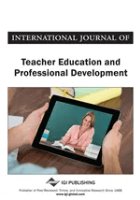
International Journal of Teacher Education and Professional Development
Navigating the Future of Teacher EducationThe International Journal of Teacher Education and Professional Development, published by IGI GLOBAL, is a pivotal resource in the fields of education and professional development, dedicated to advancing scholarship and practice within teacher education. With a focus on innovative methodologies, current challenges, and best practices, this journal provides a platform for researchers, practitioners, and educators to disseminate their findings and insights. Although it currently operates under a non-open access model, articles are rigorously peer-reviewed to maintain high academic standards and contribute meaningfully to the discourse on effective teaching and learning strategies. By embracing diverse educational contexts and promoting a global perspective on teacher training, this journal serves as an essential tool for those committed to enhancing educational outcomes worldwide. Its engagement with contemporary issues ensures its relevance in academic circles and practical applications alike, making it a must-read for stakeholders in the educational landscape.
International Journal of Instruction
Elevating the discourse in education through peer-reviewed scholarship.International Journal of Instruction is a distinguished peer-reviewed journal dedicated to advancing the field of education through high-quality research and innovative instructional practices. Published by GATE Association for Teaching & Education in Switzerland, this open-access journal has been a beacon of knowledge since its inception in 2008, ensuring that impactful educational research is freely accessible to scholars, educators, and practitioners worldwide. With an impressive Q2 ranking in Education and a notable position in the 80th percentile within its category in Scopus, the journal showcases cutting-edge studies and discussions that reflect current trends and methodologies in teaching and learning. The scope of the journal includes a wide array of topics, ranging from instructional strategies to curriculum development, making it a vital resource for anyone engaged in the dynamic landscape of education. Explore the International Journal of Instruction today to contribute to and benefit from the collective wisdom of the global educational community.
Pegem Egitim ve Ogretim Dergisi
Nurturing Knowledge for the Evolving ClassroomPegem Egitim ve Ogretim Dergisi is a prominent academic journal published by PEGEM AKAD YAYINCILIK EGITIM DANISMANLIK HIZMETLERI TIC LTD STI, specializing in the field of education. Based in Turkey, this journal offers a platform for scholarly discourse, catering to both emerging and established researchers in the educational domain. With its ISSN 2148-239X, the journal aims to provide insights into contemporary educational practices, pedagogical innovations, and research findings that influence teaching and learning. Although classified in the Q4 quartile of the education category as of 2022 and achieving a Scopus rank of 1178 out of 1469, it remains a valuable resource for practitioners and academics alike. The journal ceased Scopus coverage in 2023, yet it continues to be a relevant outlet for educational research in Turkey and beyond. While it operates under traditional access models, the potential for collaborative research and knowledge sharing makes it a noteworthy choice for those engaged in the evolving landscape of education.
School Science and Mathematics
Fostering excellence in science and mathematics through peer-reviewed scholarship.School Science and Mathematics is a prestigious academic journal published by WILEY, focusing on the intersection of education, mathematics, and the sciences. With an ISSN of 0036-6803 and an E-ISSN of 1949-8594, this journal has been a vital resource for educators, researchers, and practitioners since its inception. Indexed in top-tier databases, it boasts impressive Scopus rankings with a Q1 classification in History and Philosophy of Science and a consistent Q2 positions in Education and Engineering, showcasing its impact within the academic community. The journal aims to enhance the teaching and learning of science and mathematics by publishing high-quality, peer-reviewed research that informs best practices and innovative approaches in education. Operating from the United States, it attracts contributions that influence educational strategies and curriculum development across varied disciplines, making it an essential venue for those engaged in advancing knowledge within these fields. Access to its insightful articles can enrich your understanding and drive dialogue among scholars dedicated to improving science and mathematics education.
International Journal of Education in Mathematics Science and Technology
Fostering dialogue and collaboration for a brighter educational future.The International Journal of Education in Mathematics Science and Technology (ISSN: 2147-611X, E-ISSN: 2147-611X) is an esteemed publication dedicated to advancing knowledge and research in the fields of mathematics, science, and technology education. Published by Necmettin Erbakan University in Turkey, this journal serves as a vital platform for educators, researchers, and professionals to disseminate innovative methodologies, pedagogical strategies, and educational technologies. With a commendable Q2 ranking in both the Education and Mathematics categories for the year 2022, it clearly exemplifies its impact in these domains, boasting a Scopus rank of #19 out of 74 in Mathematics (miscellaneous) and a position in the 75th percentile. Although the journal has transitioned into open access, it remains committed to fostering a rich dialogue among scholars and practitioners dedicated to enhancing educational outcomes in mathematics and science. Researchers and educators interested in contributing to pedagogical advancements are encouraged to submit their work, thereby playing a part in influencing the future of education.
Research in Science & Technological Education
Advancing the Future of STEM EducationResearch in Science & Technological Education, published by Routledge Journals, Taylor & Francis Ltd, is a leading international journal dedicated to advancing the field of education within the realms of science and technology. With its ISSN 0263-5143 and E-ISSN 1470-1138, this prestigious journal provides a platform for innovative and rigorous research from 1983 to the present, thus offering critical insights into pedagogical practices, curriculum development, and policy-making. Boasting a remarkable impact, it ranks in the top quartile (Q1) in both Education and Multidisciplinary categories as of 2023, with an impressive Scopus ranking of #270 out of 1543 in Social Sciences _ Education, placing it in the 82nd percentile. Researchers, educators, and students will find invaluable resources and discussions that shape the future of science and technological education in an increasingly complex world. Although this journal does not offer Open Access, it maintains a strong commitment to disseminating high-quality research, making it an essential read for those invested in the evolution of educational practices and outcomes in the STEM fields.
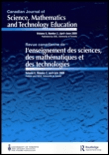
Canadian Journal of Science Mathematics and Technology Education
Shaping the Future of Science and Technology EducationCanadian Journal of Science Mathematics and Technology Education (ISSN: 1492-6156; E-ISSN: 1942-4051) is a prominent publication by SPRINGER based in Switzerland, dedicated to exploring innovative methodologies and practices in the fields of science, mathematics, and technology education. Established in 2001 and continuing to 2024, the journal maintains a strong reputation within the academic community, reflected in its Q2 ranking in the Education category for 2023 and a commendable Scopus ranking that places it in the top 25% of journals within the social sciences education domain (Rank #383/1543). This journal serves as a critical platform for researchers, educators, and practitioners interested in the latest developments, research findings, and discussions pertaining to instructional strategies and curricular advancements. Although it is not open access, the journal's insights and contributions are invaluable for those aiming to elevate educational practices and address contemporary challenges in STEM education.
Guiniguada
Advancing educational innovation through open dialogue.Guiniguada is a leading open-access journal established in 2015, published by the University of Las Palmas de Gran Canaria within its Public and Scientific Diffusion Services. With its ISSN 0213-0610 and E-ISSN 2386-3374, the journal provides a platform for innovative research and critical discourse in the field of education sciences, fostering a multidisciplinary approach to educational practices and policies. Situated at the heart of Spain's vibrant academic community, Guiniguada aims to bridge the gap between theoretical frameworks and practical applications, making it an invaluable resource for researchers, educators, and students alike. As an open-access journal, it enhances the global dissemination of knowledge, ensuring that cutting-edge research is freely available to all. The journal's commitment to advancing educational research underscores its significance in shaping contemporary educational practices and influencing policy decisions.
Journal of Baltic Science Education
Empowering Educators Through Research and DiscourseThe Journal of Baltic Science Education, with ISSN 1648-3898, is a leading academic journal published by the SCI METHODICAL CENTRE - SCI EDUCOLOGICA in Lithuania. This esteemed journal, established in 2008, has gained recognition within the educational sector, boasting a notable impact factor that places it in the Q2 category for the year 2023, highlighting its significance in advancing educational research. With Scopus rankings reflecting a commendable placement at #659 out of 1543 in the Education category, the journal serves as a vital platform for disseminating knowledge and fostering discourse among researchers, professionals, and students in the field of science education across the Baltic region and beyond. The journal’s objectives include promoting innovative educational practices, sharing empirical research findings, and contributing to the development of effective science teaching methodologies, ensuring that it remains at the forefront of academic inquiry in education.